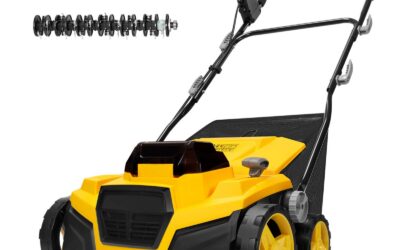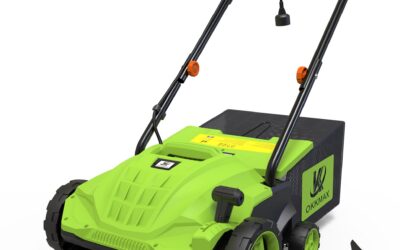


LawnMaster GVB1316 Electric 16" 13 Amp Dethatcher and Scarifier with 12 Gallon Collection Bag
As an Amazon Associate we earn from qualifying purchases. Product prices and availability are accurate as of the date/time indicated.
Introduction
A lush, green lawn is the pride of any homeowner — but achieving that magazine-worthy yard requires more than just regular mowing and watering. Over time, a dense layer of dead grass, roots, and organic debris called thatch builds up between the soil surface and the green blades of grass. This layer chokes your lawn, blocking water, nutrients, and air from reaching the root zone where they’re needed most. If you’ve ever noticed your lawn looking tired, patchy, or water-repellent despite your best efforts, thatch is likely the culprit.
Enter the LawnMaster GVB1316 Electric 16″ 13 Amp Dethatcher and Scarifier — a dual-function lawn care tool designed to tackle thatch buildup and improve soil health in one efficient pass. Priced at just $104, this electric machine promises professional-level dethatching and scarifying without the noise, fumes, or maintenance headaches of a gas-powered alternative. But does it deliver on its promises? In this comprehensive review, we’ll break down every feature, weigh the pros and cons, analyze real customer feedback, and help you decide if this is the right tool for your lawn care routine in 2026.
Product Overview
The LawnMaster GVB1316 is a 2-in-1 electric dethatcher and scarifier built for homeowners who want to restore their lawn’s health without breaking the bank or their backs. At its core is a robust 13-amp motor that spins up to 3,700 RPM, generating enough power to pull through thick thatch layers and cut grooves into compacted soil. The machine covers a 16-inch wide path with each pass, which strikes a practical balance between coverage speed and maneuverability around garden beds, walkways, and tight corners.
One of the standout features is its 14-position height adjustment system. The scarifying attachment offers a range from -0.35″ to 0.19″, while the dethatcher attachment adjusts from -0.19″ to 0.35″. This level of granularity allows you to fine-tune the depth of treatment based on your lawn’s specific conditions — whether you’re dealing with a light thatch layer or a heavily compacted lawn that needs aggressive scarification. Swapping between the two attachments is straightforward and doesn’t require specialized tools, making it easy to switch functions mid-session.
Debris collection is handled by an included 12-gallon collection bag that attaches to the rear of the unit. This bag captures the dead grass, thatch, and soil debris as you work, eliminating the need for manual raking afterward — a significant time and labor saver. The handlebar is also height-adjustable, which is a thoughtful ergonomic touch for users of different heights who may be working for extended periods.
The package includes the main electric dethatcher/scarifier unit, the dethatcher attachment, the scarifier attachment, and the collection bag. It’s a complete kit that’s ready to use right out of the box. The entire unit is corded electric, so you’ll need access to an outdoor-rated extension cord, but this also means unlimited runtime — no battery to charge, no gas to mix.
Pros: What Makes the LawnMaster GVB1316 Stand Out
1. True 2-in-1 Dual Functionality
Most dethatchers on the market do one thing well. The LawnMaster GVB1316 does two things well. The dethatcher attachment uses spring-loaded tines to pull up dead grass and thatch from the surface, while the scarifier attachment uses sharp blades to cut grooves into the soil, improving water infiltration and root growth. Having both capabilities in a single machine means you can address multiple lawn health issues in one session without purchasing two separate tools. For homeowners dealing with both thatch buildup and compacted soil, this dual functionality is a genuine money-saver and time-saver.
2. Powerful 13-Amp Motor with 3,700 RPM
With 13 amps of power and a rotational speed of up to 3,700 RPM, this machine doesn’t struggle with thick thatch or compacted soil. Many competing electric dethatchers in this price range top out at 10 or 12 amps, so the extra power here is a meaningful advantage. In practical terms, this means fewer passes over the same area, less fatigue, and more consistent results even on challenging lawns. The motor maintains its speed under load, which is critical for uniform dethatching across your entire yard.
3. 16-Inch Coverage Path
The 16-inch wide path is an ideal middle ground for residential lawns. It’s wide enough to cover a standard suburban yard in a reasonable amount of time, yet narrow enough to navigate around flower beds, trees, and tight spaces. Larger commercial dethatchers with 18- or 20-inch paths may cover more ground per pass, but they’re often cumbersome in residential settings. The 16-inch width keeps the machine nimble and user-friendly without sacrificing productivity.
4. Exceptional 14-Position Height Adjustment
Having 14 height positions is a standout feature at this price point. Many competitors offer only 3 to 5 adjustment levels, which limits your ability to tailor the treatment to your lawn’s specific needs. The LawnMaster’s fine-grained adjustment — ranging from -0.35″ to 0.35″ depending on the attachment — lets you start conservatively and increase intensity as needed. This is especially valuable for scarifying, where going too deep can damage healthy grass roots. The ability to dial in the exact depth gives you precise control over the aggressiveness of the treatment.
5. 12-Gallon Collection Bag Eliminates Manual Cleanup
One of the most underappreciated aspects of dethatching is the cleanup. Without a collection system, you’re left with piles of dead grass and thatch scattered across your lawn — essentially creating a second job. The 12-gallon collection bag on the GVB1316 captures debris as it’s generated, keeping your lawn tidy throughout the process. The bag is large enough to handle a substantial amount of material before needing to be emptied, and its rear-mounted design doesn’t interfere with the machine’s balance or maneuverability.
6. Comfortable, Adjustable Handlebar
Lawn care can be physically demanding, and an uncomfortable handle height can turn a 30-minute job into an aching ordeal. The adjustable handlebar on the GVB1316 accommodates users of varying heights, promoting better posture and reducing strain on the back and shoulders. Combined with the machine’s relatively lightweight design and sturdy wheels, the overall ergonomics make it easy to push and maneuver across your lawn without excessive fatigue.
7. Excellent Value for the Price
At $104, the LawnMaster GVB1316 offers remarkable value. Comparable 2-in-1 dethatcher/scarifier units from premium brands often retail for $150 to $250 or more. For homeowners who dethatch once or twice a year, paying top dollar for a premium brand may not be justified. The GVB1316 delivers the core functionality — effective dethatching, scarifying, and debris collection — at a price point that’s accessible to virtually any homeowner. It’s a budget-friendly investment that can significantly improve your lawn’s health and appearance.
LawnMaster GVB1316 Electric 16" 13 Amp Dethatcher and Scarifier with 12 Gallon Collection Bag
As an Amazon Associate we earn from qualifying purchases. Product prices and availability are accurate as of the date/time indicated.
Cons: Where the LawnMaster GVB1316 Falls Short
1. Corded Electric Design Limits Mobility
The most obvious limitation is the corded electric power source. While you’ll never run out of battery or fuel, you are tethered to an extension cord for the entire duration of use. For small to medium-sized lawns, this is rarely an issue. However, if you have a large property or a yard with many obstacles, managing the cord can become frustrating. There’s also the added cost of purchasing a heavy-duty outdoor extension cord if you don’t already own one, which can add $30 to $60 to your total investment. Additionally, you must be cautious not to run over the cord during operation.
2. Not Ideal for Very Large Lawns
The 16-inch path width, while perfect for small and medium yards, means that owners of larger properties (half an acre or more) will spend significantly more time dethatching. Combined with the corded design, the GVB1316 is best suited for lawns under approximately 5,000 square feet. If you’re managing a larger property, you may want to consider a wider, gas-powered, or battery-powered alternative for greater efficiency.
3. Collection Bag Can Clog with Heavy Thatch
While the 12-gallon collection bag works well for light to moderate dethatching sessions, several users have reported that it can clog when dealing with heavy thatch buildup. When the bag fills quickly, the airflow is restricted, which reduces the machine’s ability to pull debris into the bag. This means you may need to stop frequently to empty the bag during intensive dethatching sessions. It’s a minor inconvenience but worth noting if your lawn has a particularly thick thatch layer.
4. Build Quality Is Adequate but Not Premium
At this price point, the build quality is acceptable but reflects the budget positioning of the product. The housing is primarily plastic, and while it feels sturdy enough for regular residential use, it doesn’t have the tank-like durability of commercial-grade machines. The height adjustment mechanism, while functional, can feel slightly stiff when new. Users who expect premium materials and fit-and-finish may be mildly disappointed, though it’s important to evaluate the machine relative to its price point rather than against $300+ competitors.
5. Corded Design May Not Suit All Users
For users who prioritize the freedom of cordless operation, the GVB1316’s reliance on a power cord may be a dealbreaker. The corded design also means you’ll need an accessible outdoor power outlet, which not all homeowners have conveniently located near their lawn. This is a design limitation inherent to all corded electric lawn tools, but it’s worth highlighting for potential buyers who are weighing their options between corded, battery, and gas-powered alternatives.
Customer Reviews Analysis
With a rating of 4.1 out of 5 stars from 1,184 reviews, the LawnMaster GVB1316 enjoys generally positive feedback from the homeowner community. A rating above 4.0 across more than a thousand reviews indicates that the majority of buyers are satisfied with their purchase, which is a strong signal of reliability and performance at this price tier.
Positive themes that emerge consistently from customer reviews include the machine’s ease of use, effective dethatching performance, and excellent value for money. Many reviewers report visible improvement in their lawn’s health and appearance after just one or two dethatching sessions. The 2-in-1 functionality is frequently praised as a convenient feature, and several users note that the machine is surprisingly lightweight and easy to maneuver. Customers upgrading from manual dethatching rakes describe the GVB1316 as a game-changer that saves hours of backbreaking labor.
Negative themes tend to center on the collection bag’s capacity, which some users find insufficient for heavy thatch conditions, and the cord management challenges inherent to a corded electric design. A smaller subset of reviewers mention concerns about durability over multiple seasons of use, with occasional reports of the height adjustment mechanism loosening over time. However, these complaints represent a minority of the total review pool and are largely consistent with expectations for a tool in this price range.
Overall, the review profile suggests that the LawnMaster GVB1316 exceeds expectations for its price point while falling slightly short of the durability and refinement found in premium alternatives. For the vast majority of residential users, the performance-to-value ratio is compelling.
Frequently Asked Questions
How often should I dethatch my lawn?
Most lawns benefit from dethatching once or twice per year, typically in early spring or early fall when grass is actively growing. Thatch layers exceeding ½ inch in thickness generally need to be addressed. Dethatching too frequently can stress your lawn, so it’s important to assess your thatch level before each session. The adjustable height settings on the GVB1316 make it easy to perform a light pass if your thatch layer is moderate, or a more aggressive treatment if buildup is severe.
Can I use this machine on all grass types?
The LawnMaster GVB1316 is suitable for most common cool-season and warm-season grasses, including Kentucky bluegrass, fescue, ryegrass, Bermuda grass, and zoysia. However, extremely delicate or shallow-rooted grass varieties may be damaged by aggressive scarifying. It’s always advisable to start with the shallowest depth setting and gradually increase if needed. Warm-season grasses like Bermuda and zoysia tend to tolerate scarifying better than cool-season varieties.
Do I need a specific extension cord for this dethatcher?
Yes. Because the GVB1316 draws 13 amps, you’ll need a heavy-duty outdoor-rated extension cord rated for at least 12 or 14 gauge, depending on the length. A 100-foot cord should be 12-gauge for safe and efficient operation. Using an undersized cord can cause voltage drops that reduce motor performance and may create a safety hazard. Always use a cord rated for outdoor use and ensure it’s in good condition before each session.
What’s the difference between dethatching and scarifying?
Dethatching uses spring-loaded tines to pull up dead grass, roots, and organic debris from the surface and upper thatch layer. It’s a relatively gentle process that removes buildup without significantly disturbing the soil. Scarifying uses sharp blades to cut grooves into the soil surface, breaking up compaction and allowing water, air, and nutrients to penetrate deeper into the root zone. Scarifying is more aggressive than dethatching and is typically used on lawns with compacted soil or poor drainage. The GVB1316 includes both attachments, allowing you to choose the appropriate treatment for your lawn’s condition.
Is assembly difficult?
Assembly of the LawnMaster GVB1316 is straightforward and typically takes 15 to 20 minutes. The package includes the main unit, both attachments, and the collection bag. Most users report that basic assembly involves attaching the handlebar and connecting the collection bag. No specialized tools are required beyond what’s commonly found in a home toolkit. The included instructions are generally clear, though a few reviewers have noted that the diagrams could be more detailed.
Who Should Buy This Product
The LawnMaster GVB1316 is an excellent choice for:
- Homeowners with small to medium-sized lawns (under 5,000 square feet) who want an affordable, effective solution for thatch removal and soil aeration.
- Budget-conscious buyers who need professional-level dethatching and scarifying functionality without the premium price tag of commercial-grade equipment.
- First-time dethatcher users who want an easy-to-operate, forgiving machine with adjustable settings that allow them to learn as they go.
- Homeowners upgrading from manual rakes who want to save time and physical effort while achieving more consistent results.
- Users who prefer electric over gas-powered tools and want a quieter, lower-maintenance alternative with no fuel mixing or engine servicing required.
- Suburban homeowners who value the 2-in-1 versatility and want a single tool that handles both dethatching and scarifying.
This product may not be the best fit for users with very large properties, commercial landscapers, or those who require the unrestricted mobility of a battery-powered or gas-powered unit.
Final Verdict
The LawnMaster GVB1316 Electric 16″ 13 Amp Dethatcher and Scarifier is a well-designed, capable, and affordable lawn care tool that delivers genuine value for residential homeowners. Its dual-function design, powerful 13-amp motor, wide 16-inch path, and 14-position height adjustment system give you the versatility and control needed to tackle a wide range of lawn conditions. The included 12-gallon collection bag streamlines cleanup, and the adjustable handlebar adds a welcome layer of ergonomic comfort.
Is it perfect? No. The corded design limits mobility, the collection bag can struggle under heavy loads, and the build quality, while adequate, won’t impress those accustomed to premium tools. But at $104, holding it to the standard of machines costing two or three times as much would be unfair. Within its price category, the GVB1316 punches well above its weight.
If your lawn is struggling with thatch buildup, poor drainage, or compacted soil, and you want an effective solution that won’t empty your wallet, the LawnMaster GVB1316 deserves serious consideration. It’s a practical, no-nonsense tool that gets the job done — and for most homeowners, that’s exactly what matters.
Composite Score: 4.1 / 5
Recommendation: If you’re a homeowner with a small to medium-sized lawn looking for an affordable, effective 2-in-1 dethatcher and scarifier, the LawnMaster GVB1316 is a smart buy. At $104, it offers outstanding value and the performance you need to revitalize your lawn this season. Add it to your cart and give your lawn the fresh start it deserves.