
Introduction
The 25HP Remote Control Robotic Lawn Mower with 100m Range is not a casual backyard tool. It is a specialized machine built for steep slopes, rough terrain, orchards, farms, parks, and other areas where a standard push mower or even a conventional riding mower may struggle. At a listed price of 5,499, this is a high-stakes purchase, so the central question is simple: does it earn its cost compared with cheaper alternatives?
In short, this product appears designed for buyers who need remote operation, track traction, and the ability to cut grass in difficult conditions without placing an operator directly in harm’s way. That combination is useful, but it is also a narrow use case. If your property is mostly flat or only lightly sloped, you can likely spend far less and still get a better overall value from a conventional zero-turn mower, a battery riding mower, or even a strong walk-behind model.
This review looks at the features, the likely strengths and weaknesses, and whether the price makes sense for real-world buyers. Since there are 0 reviews available, the evaluation must rely heavily on the listed specs and on value comparison versus alternatives.
Product Overview
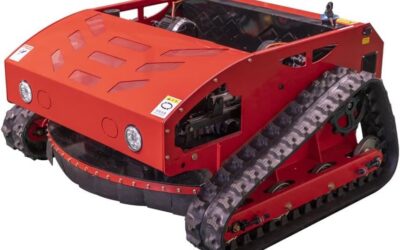
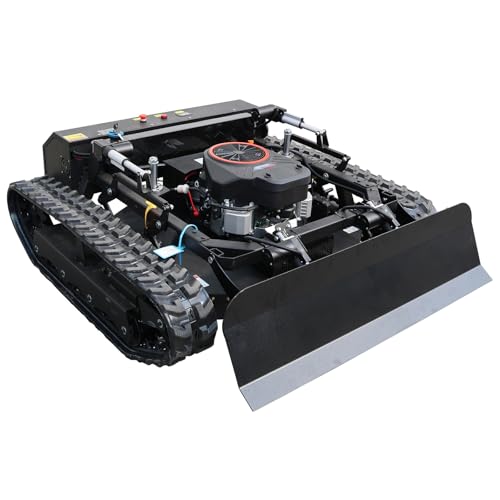
The 25HP Remote Control Robotic Lawn Mower with 100m Range is described as a 25HP oil-electric hybrid crawler track mower with a 100m remote range, 35-inch cutting width, adjustable cutting height, and an included snowplow attachment. It is marketed as a tough-terrain machine capable of handling slopes up to 30%, loose soil, ditches, and overgrown vegetation.
The headline features matter because they point to a very specific niche:
- Remote control operation for safer use on hazardous terrain.
- Rubber tracks for traction on slopes and uneven ground.
- Hybrid oil-electric power intended to balance cutting performance and control.
- 35-inch cutting width that is larger than many consumer walk-behind mowers, but smaller than larger commercial units.
- Adjustable height for moving between manicured turf and heavier grass.
- Snowplow accessory that may improve off-season utility if it is well built and easy to mount.
What stands out most is not raw lawn-care convenience, but risk reduction. Remote operation can be valuable where slope angle, hidden drop-offs, unstable surfaces, or debris create safety concerns. That is the primary reason to consider a product like this rather than a cheaper mower.
Pros
1. Remote control improves operator safety
The biggest advantage of the 25HP Remote Control Robotic Lawn Mower with 100m Range is obvious: you do not need to stand next to the machine while it works. That matters on embankments, ditches, roadside areas, and rough fields where a slip or rollover could cause injury. For buyers with hazardous terrain, this safety benefit may justify a higher price better than any cosmetic or comfort feature ever could.
2. Track system should outperform wheels on rough ground
Rubber tracks generally provide better traction and stability than standard wheels on loose soil, wet grass, and moderate slopes. For orchards, farms, and rough-cut environments, track drive is a real advantage. Cheaper wheeled mowers may be faster on flat land, but they often lose grip when the terrain gets uneven or soft.
3. Better fit for specialized properties
This mower is not trying to be all things to all people. Its strongest case is for acreage owners, groundskeepers, and operations with difficult terrain. If your property includes slopes, drainage trenches, edges, or unmanaged sections, a machine like this can reduce manual labor and improve consistency.
4. 35-inch cutting width is a practical middle ground
The 35-inch deck is wide enough to make progress faster than a walk-behind mower, but still compact enough to maneuver in tighter spaces than larger commercial mowers. That makes it potentially useful for properties with both open stretches and obstacle-heavy areas.
5. Adjustable cutting height adds flexibility
Being able to change cut height is essential when dealing with different vegetation types. Lower settings help with cleaner turf, while higher settings are useful for more aggressive cutting. This versatility is important in a machine meant for uneven and changing terrain.
6. Potential year-round utility with snowplow attachment
The inclusion of a snowplow suggests this machine may be positioned as more than a seasonal mower. If the attachment is effective, it could increase the value proposition by giving the unit an additional use in colder months. That said, this only matters if the snowplow is durable and practical rather than a token accessory.
7. Heavy-duty design may reduce downtime in demanding use
The product description emphasizes rugged construction and simplified maintenance features. For commercial or semi-commercial users, ease of upkeep matters because downtime costs money. If the enclosed lines and rear-access fuel tank are thoughtfully implemented, that can improve serviceability compared with more awkwardly designed competitors.
Cons
1. The price is high for a product with zero reviews
At 5,499, this is a serious commitment. With no customer reviews to validate build quality, reliability, or support quality, buyers are taking on more risk than they would with a proven machine. In value terms, this is the biggest weakness of the listing.
2. Narrow audience compared with cheaper alternatives
If your yard is flat, moderately sized, or already manageable with conventional equipment, there are many cheaper alternatives. A strong riding mower, zero-turn, or even a good walk-behind mower can cost substantially less and handle most residential needs better. In other words, this mower is only worth the premium if the terrain truly demands it.
3. Hybrid complexity can mean higher maintenance risk
Oil-electric hybrid systems and track-based drivetrains often add mechanical complexity. More systems can mean more things that may need service over time. Cheaper alternatives usually have simpler parts, lower repair costs, and a larger pool of local technicians.
4. A 35-inch deck may still be slow for large open areas
While the cutting width is decent, it is not especially large for commercial-scale mowing. Buyers with broad open acreage may find larger ride-on or autonomous commercial mowers more efficient per pass. If your terrain is not especially difficult, this machine may be overbuilt in one way and under-optimized in another.
5. Marketing claims need real-world proof
Claims such as “conquers steep slopes” and “tackles thick brush” sound promising, but without independent testing or user feedback, they remain claims. For expensive equipment, evidence matters more than promotional language.
Customer Reviews Analysis
There are currently 0 reviews, so there is no actual buyer feedback to analyze. That is a major limitation. For a product in this price bracket, a lack of reviews usually means one of three things: the product is new, it is niche, or it has not yet established trust in the market.
From a buyer’s perspective, this creates an important pricing question: Why pay top-tier money for an unproven product when more established alternatives exist for 30% less or more?
Cheaper alternatives may not match every feature, but they often win on practical value:
- Gas zero-turn mowers from known brands are often cheaper and faster on flat to mildly sloped properties, though they are not ideal on very steep or unstable ground.
- Battery-powered riding mowers can cost less and require less maintenance, but they usually lack the terrain capability and range of a track-driven remote mower.
- Heavy-duty walk-behind brush mowers can be far cheaper and better for some rough-cut jobs, though they require the operator to remain on foot and do not offer the same safety advantage.
Where the 25HP Remote Control Robotic Lawn Mower with 100m Range may still justify itself is in the very specific case where operator safety and slope handling are more important than purchase price. If that is not your situation, the value argument weakens quickly.
Frequently Asked Questions
1. Is the 25HP Remote Control Robotic Lawn Mower with 100m Range suitable for residential lawns?
It can be used on residential property, but it is likely overkill for a typical suburban lawn. Most homeowners will get better value from a much cheaper mower unless they have challenging slopes, ditches, or rough ground.
2. How does this compare with a traditional riding mower?
A traditional riding mower is usually cheaper, more familiar, and easier to service. However, it cannot match the safety profile of remote operation on dangerous terrain. If your biggest concern is stability on steep or hazardous ground, the 25HP Remote Control Robotic Lawn Mower with 100m Range has the edge.
3. Is the snowplow attachment a major value-add?
Potentially, but only if it is robust and useful in real conditions. A snowplow accessory can improve year-round value, yet it should not be the main reason to buy. The core value of this product remains mowing difficult terrain.
4. What type of buyer should avoid this product?
Buyers with flat, manageable lawns, limited storage space, or a tight budget should probably skip it. You are paying for specialized capability, and if you do not need that capability, the price is difficult to justify.
5. When is the best time to buy?
If you decide this machine is a fit, the best time to buy is usually during major sale events such as Black Friday, Prime Day, and end-of-season clearance periods when outdoor power equipment often drops in price. Also watch for model refreshes; when updated versions appear, current inventory often gets discounted. For a product with limited review history, waiting for a meaningful discount is especially sensible.
Who Should Buy This Product
The 25HP Remote Control Robotic Lawn Mower with 100m Range makes the most sense for buyers who need a remote-controlled mowing solution for genuinely difficult terrain. That includes:
- Orchard and farm owners with uneven ground
- Property managers responsible for slopes or embankments
- Grounds crews working near drop-offs, drainage ditches, or unstable soil
- Buyers who value operator safety more than upfront price
- Users who need a versatile machine that may also handle snow removal tasks
It is less suitable for buyers whose land is mostly flat, whose grass is easy to manage, or who want the lowest total cost of ownership. In those cases, a cheaper mower is usually the smarter purchase. Remember: if an equivalent option exists for 30% less, that cheaper option deserves serious consideration unless this machine solves a problem the alternatives cannot.
Final Verdict
The 25HP Remote Control Robotic Lawn Mower with 100m Range is a niche, specialized machine with a clear purpose: safely mowing difficult terrain from a distance. That purpose is legitimate, and for the right user it can be extremely useful. The track drive, remote control, and rough-terrain positioning all point toward a machine built for conditions where ordinary mowers fail or become unsafe.
However, the value proposition is constrained by three major issues: the high price, the lack of reviews, and the existence of cheaper alternatives that are good enough for many buyers. If your property does not truly require remote operation and track traction, this product is hard to recommend at full price.
If you need the capability, the cost may be justified. If you merely want a more powerful mower, you can likely spend less and get a better-known model with stronger resale value, more service support, and less risk. In that sense, this is a classic case where the right buyer exists, but the wrong buyer will overpay.
Best buying strategy: wait for a major sale unless you need it immediately for safety or terrain reasons. If a competing track mower or commercial brush mower offers similar performance for substantially less, that alternative may be the smarter spend.
| Decision | Best For | Why |
|---|---|---|
| Buy Now | Buyers with dangerous slopes, rough fields, or safety-critical mowing needs | The remote-control and track setup may justify the premium if no cheaper machine can handle the terrain safely |
| Wait for Sale | Buyers who want this feature set but are not in urgent need | Major sales and model refresh periods are the best chance to offset the high asking price |
| Skip and buy X instead | Most homeowners and buyers with flat or moderately sloped land | A cheaper zero-turn mower, battery riding mower, or heavy-duty brush mower will usually deliver better value for 30% less or more |