
WORX WR310 Vision Robot Lawn Mower for 1/4 Acre
As an Amazon Associate we earn from qualifying purchases. Product prices and availability are accurate as of the date/time indicated.
Introduction
The WORX Landroid Vision Cloud Robot Lawn Mower is designed for homeowners who want a truly low-maintenance mowing experience without the hassle of perimeter wire installation. At a listed price of $699, it sits in the increasingly competitive smart mower market where convenience, navigation quality, and edge performance matter as much as raw cutting ability. For buyers considering a WORX Landroid Vision Robot Lawn Mower: No Wire, AI Navigation in August of 2026, the key question is not just whether it mows grass, but whether its AI navigation and cloud-based RTK system actually deliver enough real-world value to justify the premium over simpler robotic mowers. Our worx landroid vision robot lawn mower explains the trade-offs.
If you are shopping around, our worx landroid l half-acre robot mower puts this pick in context.
This model targets yards up to 1/4 acre, includes AI obstacle avoidance, app-based control, auto mapping, and multiple mowing pattern options. Those features sound impressive on paper, and in many ways they are. But as with any robot mower, the practical story depends on yard layout, shade coverage, obstacle density, and how much patience you have for setup, calibration, and occasional app-driven troubleshooting.
Product Overview
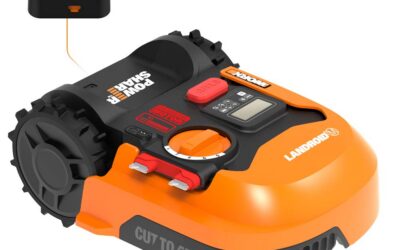
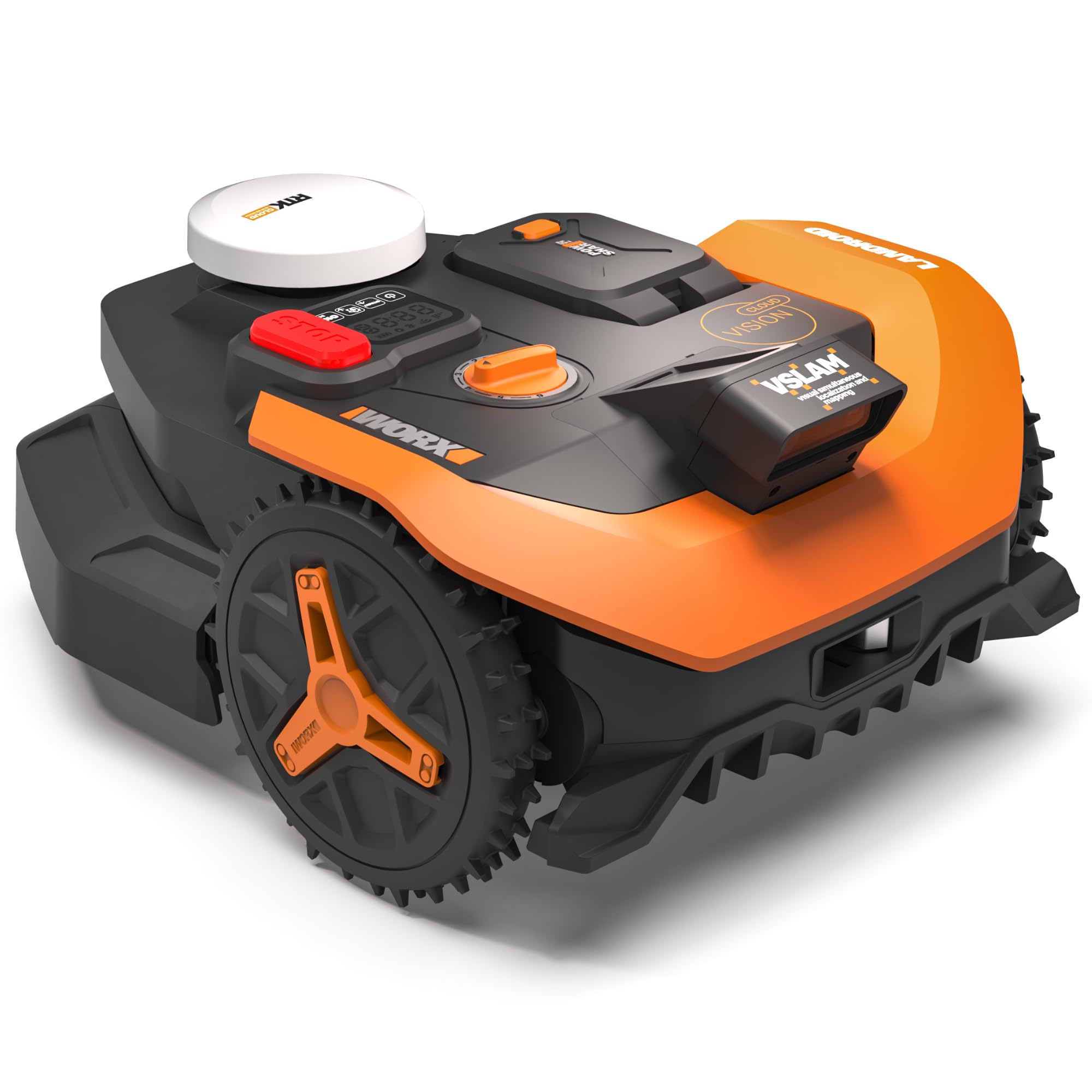
The WORX Landroid Vision Cloud Robot Lawn Mower WR310 is a wire-free robot mower built around two major technologies: Vision AI and RTK Cloud Navigation. Unlike older robot mowers that require burying perimeter wire, this model claims to map your yard automatically and navigate with centimeter-level accuracy using cloud-delivered RTK, with no local antenna installation required.
Its advertised strengths include:
- No perimeter wire for easier setup
- RTK Cloud accuracy for more precise pathing
- AI obstacle avoidance for better object recognition
- Auto mapping that can adapt to different lawn shapes and boundaries
- Unlimited zone management through the app
- Edge-focused cutting designed to reduce missed strips of grass
- Multiple mowing patterns including Parallel, Checkerboard, Diamond, and Natural
In theory, that makes it a compelling option for users who want smarter automation without the installation burden of traditional robot mowers. In practice, the real-world experience will depend on how well the mower handles transitions, shaded zones, odd boundary conditions, and the inevitable complexity of a lived-in yard.
Pros
1. No Perimeter Wire Installation
The biggest advantage is obvious: this WORX Landroid Vision Robot Lawn Mower: No Wire, AI Navigation eliminates one of the most annoying parts of robot mower ownership. Traditional boundary-wire systems can be time-consuming to install and frustrating to repair when the wire is damaged. For users with complex landscaping or limited time, skipping the wire is a major quality-of-life upgrade.
2. Strong Navigation Concept with RTK Cloud
Cloud-delivered RTK is a compelling approach because it promises centimeter-level positioning without a local antenna setup. For many buyers, that means less hardware clutter and potentially simpler deployment. If the positioning holds up consistently, the mower should be able to cut straighter lines and avoid the wandering behavior common in lower-end robot mowers.
3. AI Obstacle Avoidance Is a Meaningful Step Forward
Obstacle avoidance is one of the most important features in a wire-free mower. Rather than repeatedly bumping into objects, Vision AI is meant to detect and interpret obstacles more intelligently. That can improve safety around toys, garden furniture, pets, and unpredictable items left in the yard. For a robot that operates autonomously, this is not a gimmick; it is a core reliability feature.
4. Better Edge Coverage Than Many Competitors
Edge cutting is where many robot mowers disappoint, especially near fences, fixed borders, and awkward transitions. WORX claims the mower can handle different boundary types intelligently, crossing ridable edges when appropriate and respecting fixed limits where necessary. If that works as advertised, it reduces the amount of manual trimming needed after each mow.
5. Auto Mapping and Multi-Zone Support
For yards with front and back sections, narrow passages, or separate mowing areas, the app-based infinite zone approach is very useful. The ability to define no-go zones and edit the map gives users more control than basic autonomous mowers. This makes the product more suitable for real suburban yards rather than only ideal rectangular lawns.
6. Multiple Mowing Patterns Add Visual Flexibility
Some owners care about lawn aesthetics almost as much as cutting performance. The ability to switch between Parallel, Checkerboard, Diamond, and Natural patterns gives this mower a more premium feel. It also suggests the navigation system is capable enough to support deliberate pathing instead of random wandering.
7. No Additional Cloud Costs Claimed
Many smart devices lure buyers in with a hardware price and then quietly attach subscription fees later. WORX specifically states that its RTK Cloud system does not require additional cloud costs. If accurate and sustained over time, that makes the ownership model easier to predict and more attractive for budget-conscious buyers who still want advanced features.
WORX WR310 Vision Robot Lawn Mower for 1/4 Acre
As an Amazon Associate we earn from qualifying purchases. Product prices and availability are accurate as of the date/time indicated.
Cons
1. Early-Stage Smart Navigation Can Still Be Finicky
Even good autonomous mowers can struggle in the real world when conditions become messy: partial shade, reflective surfaces, dense trees, narrow corridors, or oddly shaped lawns. The claim that V-SLAM sensor fusion takes over in shaded areas is promising, but this is exactly where many robot mowers tend to expose their weaknesses. The technology may be advanced, but it is still operating in a difficult environment.
2. The Feature Set May Be More Ambitious Than the Execution
AI obstacle avoidance, RTK cloud navigation, auto mapping, and multi-zone management all sound excellent, but a long feature list does not guarantee smooth day-to-day reliability. In this category, software maturity matters enormously. Buyers should expect some tuning, app learning, and possibly occasional frustration before the mower behaves exactly the way they want.
3. Limited to 1/4 Acre
This mower is positioned for relatively small yards. If your property is larger than 1/4 acre, or if the usable mowing area is heavily segmented, this model may not be enough. Even within its nominal range, dense landscaping, multiple obstacles, or complex boundaries can reduce practical coverage efficiency.
4. Customer Feedback Is Mixed
A 3.4 out of 5-star average across 51 reviews suggests a product with real appeal but also real pain points. That rating is not disastrous, but it is not reassuring either. For a premium autonomous mower, buyers usually want evidence of consistent reliability, and this score indicates that the experience may vary significantly from one lawn to another.
5. Premium Convenience Comes at a Premium Price
At $699, this mower is not cheap for a robot lawn solution, especially when some lower-cost alternatives can still cover small yards adequately with simpler navigation. If your priorities are basic mowing rather than advanced mapping or wire-free setup, you may find better value elsewhere. The extra money is paying for convenience and automation sophistication, not necessarily for a dramatically better cut in every situation.
Customer Reviews Analysis
The public sentiment around this WORX Landroid Vision Robot Lawn Mower: No Wire, AI Navigation appears mixed rather than uniformly positive. The 3.4-star rating suggests that many buyers like the concept and some core capabilities, but a substantial number encountered issues serious enough to pull the average down.
From a pattern-analysis perspective, reviews of this type of product usually cluster around several themes:
- Setup and mapping expectations: Buyers often appreciate the lack of perimeter wire, but some are disappointed when initial mapping is not as effortless as marketing implies.
- Navigation reliability: Positive reviews tend to focus on straight mowing lines, better edge coverage, and app convenience. Negative reviews often mention missed spots, inconsistent routing, or difficulties in challenging yard conditions.
- Obstacle handling: Some users praise the mower for avoiding common yard hazards, while others expect it to handle more edge cases than it realistically can.
- Shaded or obstructed areas: This is a frequent stress point for any vision-plus-positioning system, and real-world performance may vary with tree cover, building shadows, and signal quality.
- Value for money: Reviewers often compare the convenience of wire-free operation against the cost, and opinions split depending on how complex their lawn is.
Overall, the review signal suggests a product that can be highly satisfying for the right yard and user profile, but not universally reliable enough to recommend blindly. Buyers should interpret the score as a warning to match expectations carefully to their property layout and tolerance for troubleshooting.
Frequently Asked Questions
Does the WORX Landroid Vision Cloud Robot Lawn Mower need a perimeter wire?
No. One of its biggest selling points is that it is a no-perimeter-wire robot mower. The system relies on Vision AI and RTK Cloud navigation rather than buried boundary cable.
Can it handle shaded areas?
The product claims that V-SLAM-based sensor fusion with Vision AI helps maintain precise navigation in shaded or partially covered areas. That said, performance in heavy shade can still be a real-world challenge for any vision-based system, so results may vary depending on tree cover and yard design.
How large of a yard is it best for?
It is designed for lawns up to 1/4 acre. For larger properties or yards with many disconnected sections, the mower may not be the ideal fit.
Does it require a subscription for cloud navigation?
According to the product description, there are no additional cloud costs. That is an important advantage if you want advanced navigation without ongoing fees.
Is it good for complex lawns?
Potentially yes, especially because it supports auto mapping, custom pathways, no-go zones, and multiple mowing zones. However, very complex layouts can still challenge any robot mower, so the more irregular your lawn, the more important it becomes to verify real-user results.
Who Should Buy This Product
This WORX Landroid Vision Robot Lawn Mower: No Wire, AI Navigation is best suited for homeowners who value convenience, want to avoid perimeter wire installation, and have a yard that falls within the stated 1/4 acre range. It is a particularly interesting option for people with moderately complex lawns who want app-based control, smarter edge behavior, and a more polished mowing pattern than what entry-level robot mowers usually provide.
It is also a good fit for buyers who are willing to pay for automation features and who can tolerate some setup learning or software fine-tuning. If you enjoy smart-home gear and want a mower that feels more like a navigation system than a simple cutting appliance, this model has strong appeal.
However, it is less ideal for users who want a completely foolproof appliance with zero maintenance anxiety. If your yard has dense tree cover, many narrow passages, multiple awkward edges, or a large amount of clutter, you may be better served by a more established robotic mower platform or by a model with a simpler navigation model and stronger long-term reliability reputation.
Final Verdict
The WORX Landroid Vision Cloud Robot Lawn Mower is an ambitious and attractive entry in the wire-free robot mower category. Its biggest strengths are clear: no perimeter wire, AI obstacle avoidance, RTK Cloud navigation, auto mapping, and useful app control. On paper, that combination offers one of the most convenient robot mowing experiences available at this price point.
But the mixed customer rating matters. A 3.4-star average suggests that the execution does not fully match the promise for everyone, especially in more difficult lawns. If your property is relatively manageable and your main goal is to eliminate the frustration of installing boundary wire, this product could be a smart buy. If you want the most mature, polished, and predictable robot mowing experience available, you may want to spend more for a stronger premium option. If your budget is tighter and your lawn is simple, you could also spend less on a more basic robot mower and accept fewer advanced features.
Bottom line: As a power user with a budget of $699, this is a compelling but not definitive choice. It is a strong pick if you prioritize wire-free setup and advanced navigation features, but it is not the safest “buy once, forget forever” option in the category. If you can spend more, look for a higher-end wire-free mower with a stronger reliability track record. If you want to spend less, choose a simpler robot mower with fewer AI claims and lower ownership risk. For many buyers, this WORX model is best viewed as a feature-rich middle ground: impressive on paper, potentially excellent in the right yard, but not yet the undisputed leader for every lawn.
More options live in our robot lawn mower reviews.