

Can Lawn Mowers Explode? The Direct Answer
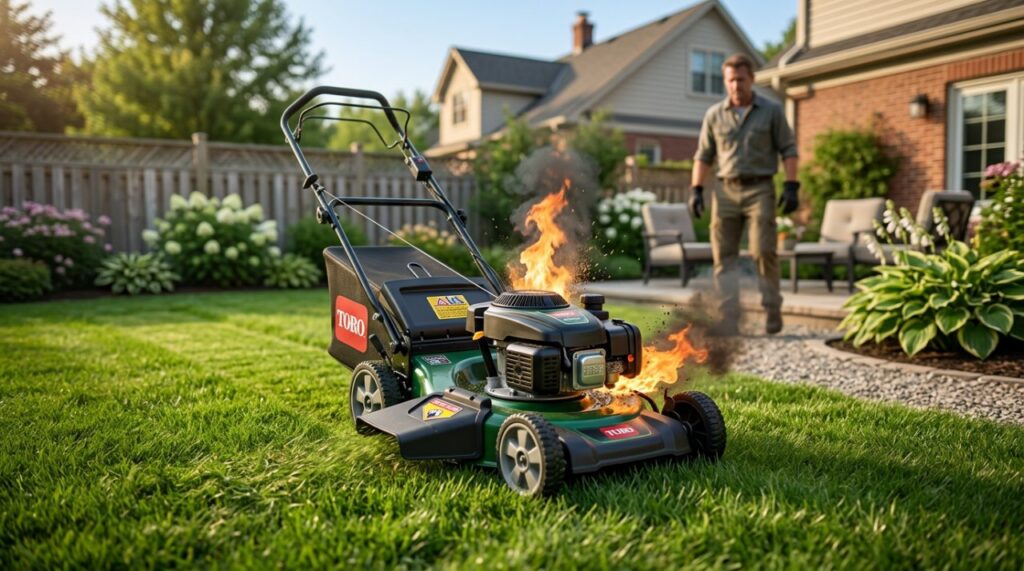
Yes, lawn mowers can explode or catch fire, but such incidents are uncommon when equipment is maintained and operated correctly. The main risks are gasoline vapors, fuel leaks, overheated engines, damaged lithium-ion batteries, and improper storage. Recognizing warning signs early can prevent fires, injuries, and costly equipment damage.
Expert Summary>
– Gas lawn mowers may catch fire when leaking fuel or gasoline vapor reaches a hot engine component, spark, or open flame. – Battery-powered lawn mowers can experience thermal runaway if a lithium-ion battery is damaged, defective, overheated, wet, or charged with incompatible equipment. – A hot engine alone does not mean a mower will explode, but smoke, fuel odors, battery swelling, hissing, or fluid leaks require immediate shutdown. – Never remove a gas cap, refuel a mower, or touch electrical components while the machine is hot. – If a mower is burning or its battery is venting, move away, call emergency services, and do not attempt repairs.
Step 1: Understand How Lawn Mowers Can Explode
Identify the mower’s power source first. Gasoline and battery-operated lawn mowers present different fire hazards, so the correct response depends on whether the machine uses combustible fuel or a lithium-ion battery.
In everyday language, people may ask, “Can lawn mowers blow up?” A dramatic explosion is rare, but a mower can experience a fuel-vapor ignition, battery rupture, flash fire, or pressurized release that looks and sounds like an explosion.
How a Gas Lawn Mower Can Catch Fire
A gasoline mower needs fuel, oxygen, and an ignition source for combustion. A dangerous event can occur when leaking gasoline or concentrated vapor reaches a spark, hot muffler, damaged wire, or open flame.
Common causes include:
- A cracked fuel tank or fuel line
- A loose, damaged, or missing fuel cap
- Gasoline spilled onto a hot engine
- A leaking carburetor
- Fuel stored in an unsuitable container
- Dry grass packed around the muffler
- Damaged electrical wiring
- Refueling while the engine is running
- Smoking near fuel or the mower
- Storing the mower near a furnace, heater, or pilot light
Liquid gasoline does not need to ignite inside the tank for a serious fire to occur. Gasoline vapor is highly combustible, and an enclosed garage or shed can allow vapor to accumulate near an ignition source.
How a Battery Lawn Mower Can Catch Fire
Battery mowers do not carry gasoline, but they are not risk-free. Most cordless models use lithium-ion battery packs, which store substantial energy in compact cells.
A damaged cell can enter thermal runaway, a chain reaction in which rising heat causes further internal breakdown. The battery may hiss, vent gas, smoke, ignite, or rupture.
Possible triggers include:
- Impact from dropping the battery
- Puncture or crushing damage
- Water intrusion
- Internal manufacturing defects
- Charging at extreme temperatures
- Using an incompatible charger
- Short-circuited terminals
- Improvised battery repairs
- Prolonged exposure to high heat
- Charging a visibly swollen or damaged pack
So, do battery operated lawn mowers overheat? They can, especially when airflow is restricted, the cutting load is excessive, or the battery has been stored or charged outside its approved temperature range.
Step 2: Compare the Main Explosion and Fire Risks
Match the warning signs to the mower type. Gas mowers are primarily vulnerable to fuel ignition, while electric models are more likely to experience electrical overheating or battery failure.
| Mower type | Main hazard | Early warning signs | Immediate action |
|---|---|---|---|
| Gas push mower | Fuel leak or vapor ignition | Strong gasoline smell, wet fuel, smoke, unusual heat | Stop the engine, move away, and allow it to cool |
| Gas riding mower | Fuel, wiring, or engine-compartment fire | Smoke under the hood, fuel odor, melted wiring | Shut down only if safe, dismount, and move away |
| Corded electric mower | Damaged cable, short circuit, or motor overheating | Hot-plastic smell, sparking, damaged insulation | Release the controls and disconnect power if safe |
| Battery mower | Battery thermal runaway | Swelling, hissing, popping, chemical odor, smoke | Move away immediately and call emergency services |
| Robotic mower | Battery damage or charging-station fault | Charging errors, unusual heat, deformation, smoke | Isolate power if safe and follow manufacturer guidance |
Practical verdict: A properly maintained