
Do They Still Make Dixie Chopper Lawn Mowers?
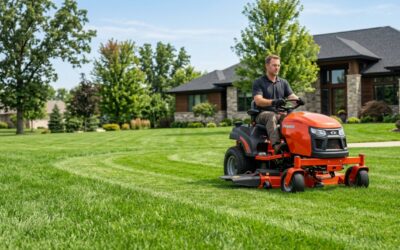
Yes, Dixie Chopper lawn mowers are still made and sold. The brand currently offers commercial and residential zero-turn mowers, which steer by controlling two drive levers independently. Availability varies by model and location, so confirm current inventory, warranty coverage, and local service support before buying.
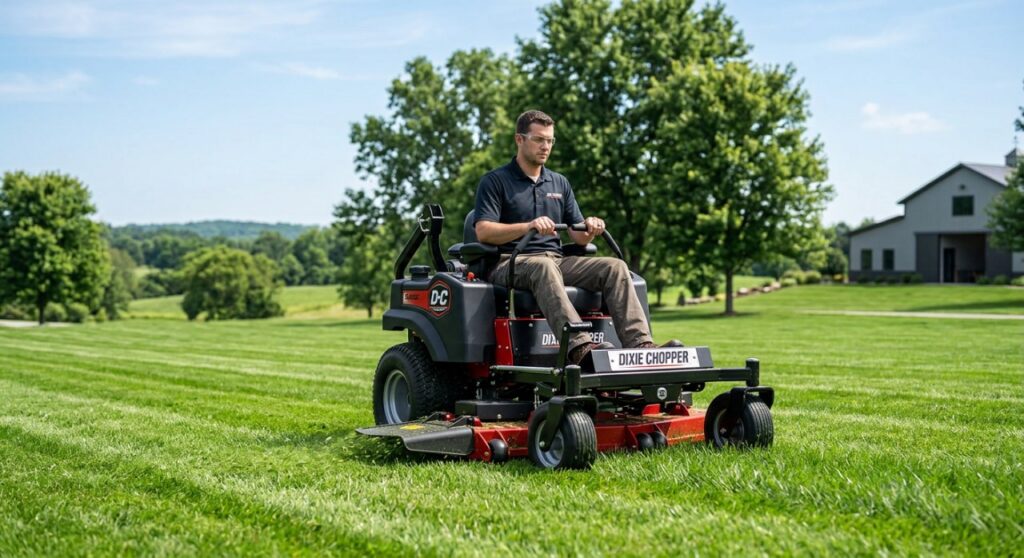
Expert Summary>
– Dixie Chopper is an active lawn mower brand, not merely a source of discontinued used machines. – Alamo Group Inc. owns Dixie Chopper, while authorized dealers handle most local sales, setup, warranty support, and repairs. – The current lineup centers on zero-turn riding mowers designed for fast mowing and tight turns. – A nearby servicing dealer is often more important than choosing the mower with the highest advertised horsepower. – Before purchasing, verify the mower’s model year, serial number, written warranty, parts support, and out-the-door price.
Step 1: Confirm Whether Dixie Chopper Mowers Are Still Made
Verify the brand through its official website and authorized dealer network. This is the fastest way to separate current models from discontinued machines that may still appear in used listings or old dealer advertisements.
The short answer to How to do they still make dixie chopper lawn mowers: A Step-by-Step Guide is yes. However, that does not mean every Dixie Chopper model found online remains in production.
Check the official product lineup
Visit the official Dixie Chopper website and open the mower or product section. A current product page should normally provide model families, specifications, available accessories, and a dealer locator.
Look for these signs of an active model:
- A dedicated model page
- Current specifications
- Downloadable operator or parts manuals
- Available accessories
- A dealer inquiry or purchase option
- Warranty information
A mower appearing in a search result is not enough proof that it is current. Search engines often retain old product pages, archived brochures, and listings for inventory that has already sold.
Contact an authorized Dixie Chopper dealer
Call at least one authorized dealer and ask a direct question:
“Is this model currently being manufactured, or is it leftover inventory from an earlier model year?”
Leftover inventory means a new, unused mower manufactured in a previous model year. It may still include a factory warranty, but the warranty start date and parts availability should be confirmed in writing.
Ask the dealer to identify:
- The exact model number
- The mower’s model year
- Whether it is new, used, or a demonstration unit
- When the warranty begins
- Whether the dealer performs warranty repairs
- Whether common replacement parts are stocked locally
Do not rely only on marketplace listings
Used-equipment websites may contain older Dixie Chopper lawn mowers that have not been produced for years. The brand can still be active even when a specific mower series has been discontinued.
Treat phrases such as “new,” “current,” and “latest model” cautiously unless the seller supplies a model number and serial number. A serial number is the mower’s unique identification code, similar to a vehicle identification number on a car.
Step 2: Identify Who Makes Dixie Chopper Lawn Mowers
Dixie Chopper is owned by Alamo Group Inc., an equipment manufacturer with multiple vegetation-management brands. Local authorized dealers typically sell, prepare, service, and support the mowers purchased by consumers.
People asking who makes Dixie Chopper lawn mowers are often trying to answer three different questions:
- Who owns the brand?
- Who manufactures the equipment?
- Who provides repairs and warranty service?
These questions matter because the company name on the mower does not automatically tell you where to obtain local parts or repairs.
Understand the ownership history
Dixie Chopper has experienced ownership and production changes during its history. That history can create confusion because older online discussions may say the company stopped making mowers.
A simplified timeline is more useful than relying on forum posts:
- Dixie Chopper became known for powerful, fast zero-turn mowers.
- The brand later operated under Textron Specialized Vehicles.
- Production was discontinued under Textron.
- Alamo Group Inc. subsequently acquired Dixie Chopper assets.
- The brand returned to the market with an active mower lineup and dealer network.
This explains why two apparently contradictory statements may both reflect different periods. Production stopped under a previous owner, but the brand did not remain permanently discontinued.
Know what ownership means for a buyer
The parent company matters, but your practical experience will depend heavily on the dealer. A reliable local dealer can assemble the mower, perform the initial inspection, explain the controls, process warranty claims, and obtain parts.
Before buying, determine who will help if the mower develops a problem. A lower online price may provide little value if the nearest authorized repair location is several hours away.
Step 3: Gather the Information Needed Before Shopping
Measure your property and write down your mowing conditions before comparing models. This prevents you from paying for commercial capability you do not need—or buying a mower too small for the job.
You do not need specialized tools. A few basic measurements and photographs are enough to begin.
Tools and information needed
| Item | Why You Need It | Simple Alternative |
|---|---|---|
| Property measurement | Helps estimate the mower size and productivity needed | Use an online satellite map |
| Gate-width measurement | Ensures the mower deck fits through fenced areas | Use a tape measure |
| Photos of slopes and obstacles | Helps a dealer recommend a safer configuration | Take phone photos |
| Current mowing time | Shows how much time a faster mower may save | Estimate from recent mowing |
| Storage dimensions | Confirms the mower fits inside your shed or garage | Measure the doorway and floor space |
| Trailer dimensions and capacity | Prevents transport and weight problems | Request dealer delivery |
| Budget range | Narrows the model and financing options | Set a maximum out-the-door price |
Measure the narrowest access point
Measure gates, paths, shed doors, and spaces between landscaping features. Do not choose a mower based only on open-lawn acreage.
The mower’s deck width is the width of the cutting assembly beneath the machine. Think of it like the width of a vacuum cleaner head: a wider head covers more ground, but it may not fit into narrow spaces.
The complete mower can be wider than its stated deck size. Ask for the mower’s total width with the discharge chute, the side component that directs grass clippings away from the deck.
Estimate the actual mowing area
Property size and mowing area are not always the same. A five-acre property may contain a house, driveway, pond, trees, and unmanaged land, leaving only two or three acres of grass.
Estimate the area you mow regularly, then note:
- Number of trees
- Flower beds and landscaped islands
- Fence lines
- Ditches
- Wet areas
- Slopes
- Rough or uneven ground
- Grass thickness and typical height
These details affect mower choice more than acreage alone.
Evaluate slope conditions carefully
Zero-turn mowers work best on relatively open and reasonably level ground. Their handling can become less predictable on steep slopes, especially when the grass is wet.
Ask the dealer to explain the manufacturer’s slope limits for the exact model. Do not assume that a heavy commercial mower is automatically safe on every hill.
Step 4: Choose the Right Dixie Chopper Mower Category
Match the mower to your weekly workload rather than buying the largest available machine. Residential users usually prioritize comfort and manageable size, while commercial operators need longer service life, repair access, and productivity.
Dixie Chopper’s available model names and specifications can change. Confirm the lineup shown by the manufacturer in August 2026 rather than relying on an older model list.
Residential versus commercial mowers
A residential mower is designed mainly for homeowners who mow fewer hours each week. A commercial mower is built for repeated professional use, much like the difference between a household drill and a contractor-grade drill.
| Buying Factor | Residential Zero-Turn | Commercial Zero-Turn |
|---|---|---|
| Best for | Home lawns and lighter weekly use | Large properties and professional crews |
| Typical priority | Price, comfort, easy storage | Durability, speed, serviceability |
| Frame and components | Designed for moderate use | Designed for longer operating hours |
| Purchase cost | Usually lower | Usually higher |
| Weight | Often lighter | Often heavier |
| Maintenance demands | Moderate | More frequent under intensive use |
| Transport needs | May fit smaller trailers | May require larger trailers and tow capacity |
A commercial mower can be a good choice for a homeowner with several acres, but it may create hidden costs. These can include a larger trailer, more storage space, higher fuel use, and more expensive replacement tires or blades.
Select an appropriate cutting width
A wider deck can reduce mowing time on open land. It can also be harder to maneuver through gates, around trees, and over uneven ground.
Use this practical approach:
- Choose a smaller deck for fenced yards and many obstacles.
- Choose a medium-width deck for mixed residential properties.
- Consider a wider deck for large, open mowing areas.
- Avoid a deck wider than the contours of your lawn can support.
A very wide deck may scalp uneven ground. Scalping occurs when a blade cuts too close because part of the deck passes over a raised area, similar to shaving over a bump.
Compare engine power correctly
Horsepower is a measurement of engine output. It is useful, but it should not be your only comparison point.
Two mowers with similar horsepower can perform differently because of:
- Mower weight
- Deck design
- Blade condition
- Engine torque
- Transmission capacity
- Grass thickness
- Travel speed
- Operator technique
Torque is rotational pulling force. A simple analogy is loosening a tight jar lid: torque describes the twisting force available, while horsepower reflects how quickly work can continue.
Do not automatically buy the highest horsepower rating. Choose an engine and drivetrain designed to work together under your expected mowing conditions.
Understand the transmission
Most zero-turn mowers use a hydrostatic transmission, which transfers engine power through pressurized fluid. It works somewhat like an automatic transmission because the operator can change speed without manually shifting gears.
Commercial models may use heavier-duty drive components designed for longer operating hours. Ask whether the transmission is serviceable and whether filters or fluid require periodic replacement.
A sealed residential drive system is not necessarily poor quality. It simply may not offer the same repair options or operating-life expectations as a commercial system.
Step 5: Verify Dealer Support, Parts, and Warranty Coverage
Confirm service support before comparing final prices. A mower is easier to own when a nearby dealer can obtain blades, belts, filters, tires, and model-specific repair parts.
This step is especially important for buyers worried about purchasing from a brand that changed ownership in the past.
Ask who performs warranty work
Do not assume every seller is an authorized repair center. Some businesses sell equipment but send warranty work elsewhere.
Ask these questions:
- Do you perform Dixie Chopper warranty repairs at this location?
- How long is the typical service wait during mowing season?
- Do you offer pickup and delivery?
- Is transportation covered by the warranty?
- Do you stock common maintenance parts?
- Can you service the engine brand used in this mower?
The mower manufacturer and engine manufacturer may provide separate warranty coverage. For example, an engine problem may be handled under the engine company’s terms rather than the mower brand’s general warranty.
Read the warranty instead of relying on a sales summary
A limited warranty covers specified problems under stated conditions; it does not mean every repair is free. Wear items and damage caused by misuse are commonly excluded.
Possible wear items include:
- Blades
- Belts
- Tires
- Filters
- Spark plugs
- Brake components
- Batteries after a defined period
Verify whether the warranty changes based on use. Some products have different terms for residential, commercial, rental, or municipal operation.
Confirm parts support for older models
If you are buying used, provide the serial number to a dealer before paying. Ask whether the dealer can still obtain essential parts for that exact unit.
Pay particular attention to:
- Deck spindles
- Drive pumps or transaxles
- Pulleys
- Belts
- Electrical switches
- Control arms
- Body panels
- Model-specific brackets
A deck spindle is the shaft and bearing assembly that allows each mower blade to rotate. It functions much like the hub that lets a wheel spin smoothly.
Common engine parts may be easy to find even when mower-specific body or deck components are not. That is why identifying the complete mower—not merely the engine—is essential.
Step 6: Inspect a New or Used Dixie Chopper Before Buying
Inspect the mower in person and test every major function. A clean appearance does not prove that the deck, transmission, engine, or safety switches are in good condition.
Ask the seller not to warm the engine before you arrive. Starting a cold engine can reveal problems that become less obvious once it is hot.
Inspect a new mower
Even a new machine should receive a pre-delivery inspection, often shortened to PDI. This is the mower equivalent of a final safety and setup check before handing a new car to its owner.
Confirm that the dealer has:
- Checked engine oil
- Adjusted tire pressure
- Leveled the mower deck
- Tested safety switches
- Checked belt routing and tension
- Charged the battery
- Tightened accessible hardware
- Registered the warranty
- Demonstrated the controls
Request the operator’s manual, warranty documents, and all supplied keys. Photograph the serial-number plate for your records.
Inspect a used mower
Check the hour meter, but do not treat it as the complete history. An hour meter records operating time, similar to how a car’s odometer records distance.
Inspect the following areas:
- Cold-start performance
- Exhaust smoke
- Fluid leaks
- Uneven engine noise
- Steering response
- Vibration
- Deck rust or welded repairs
- Blade spindle movement
- Tire wear
- Seat condition
- Safety-switch operation
- Parking brake
- Mower engagement
Blue exhaust smoke can indicate oil burning, while persistent white or black smoke may signal other engine or fuel problems. A brief puff at startup does not always mean the engine is failing, so obtain a professional inspection if uncertain.
Check for transmission weakness
Drive the mower after it reaches normal operating temperature. Some hydrostatic transmission problems become more noticeable when the fluid is warm.
Test:
- Straight-line travel
- Forward and reverse response
- Left and right turns
- Operation on a mild incline
- Unusual whining or grinding sounds
- Whether one side feels weaker than the other
If the seller refuses a reasonable test drive, consider another mower. The cost of replacing major drive components can erase the savings from a low purchase price.
Examine the deck underneath
Ask the seller to lift or safely access the deck according to the manufacturer’s guidance. Never crawl beneath a mower supported only by an unstable jack.
Look for:
- Cracks
- Bent metal
- Heavy corrosion
- Poor-quality weld repairs
- Missing guards
- Damaged blade tips
- Loose spindles
- Grass buildup around pulleys
A heavily damaged deck can cut unevenly and create safety risks. Cosmetic paint wear is less concerning than structural cracks or misaligned spindle mounts.
Step 7: Test-Drive the Mower Safely
Test the controls at low speed in an open area before making a decision. Zero-turn steering feels different from a steering wheel, but most first-time users can learn it with patient practice.
The two steering levers control the rear drive wheels. Pushing both forward moves the mower ahead; moving one lever differently from the other causes the mower to turn.
Start with the engine at a controlled speed
Ask the dealer to demonstrate:
- Starting and stopping
- Engaging the parking brake
- Moving forward slowly
- Reversing
- Making gradual turns
- Engaging the blades
- Shutting down safely
Do not begin by attempting a tight zero-radius turn. Sudden lever movements can damage grass and make the mower feel more difficult than it really is.
Test comfort and visibility
Sit on the mower for at least several minutes. Check whether you can reach all controls without stretching or twisting.
Evaluate:
- Seat adjustment
- Legroom
- Lever position
- Vibration
- Forward visibility
- View of the deck edges
- Ease of entering and leaving the seat
- Foot-platform space
Comfort is not merely a luxury. An uncomfortable operator becomes tired sooner and may make poorer decisions around obstacles.
Learn how to avoid turf damage
A zero-turn mower can pivot within a very small area. If one rear tire remains nearly stationary while the other moves, the stationary tire may tear the grass.
Use a gentle three-point turn, similar to turning a car in a narrow road:
- Continue moving slowly.
- Begin a gradual turn.
- Reverse briefly if necessary.
- Realign for the next mowing pass