
Expert Summary: How to Winterize Lawn Mowers
To winterize a lawn mower, you must perform essential maintenance to protect its engine from cold, moisture, and fuel degradation. This process prevents costly repairs, ensures a reliable start in spring, and extends the machine’s lifespan. Follow these key actions: stabilize or drain the fuel, change the oil, clean or replace the spark plug, and thoroughly clean the deck before storing it in a dry, protected location.
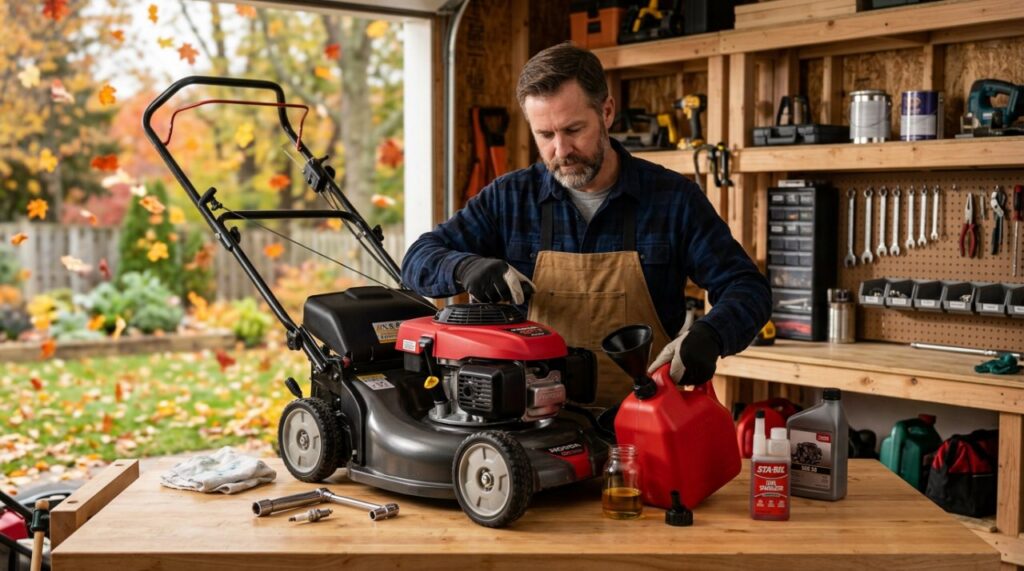
Tools and Materials You’ll Need
Having everything ready before you start makes the process smooth and efficient.
| Category | Item | Why You Need It |
|---|---|---|
| Fuel System | Fuel stabilizer | Prevents gasoline from breaking down and gumming up the carburetor. |
| Fuel siphon or drain pan | To safely remove old fuel if you choose to drain the tank. | |
| Engine Care | Socket wrench set | For removing the spark plug and accessing other engine parts. |
| Fresh engine oil & filter | For an oil change, which removes acidic, contaminated oil. | |
| Funnel | To add new oil without spills. | |
| Cleaning | Putty knife or scraper | To remove caked-on grass from the mower deck. |
| Garden hose & brush | For washing the exterior and underside. | |
| Compressed air (optional) | To blow out debris from the engine fins and air filter area. | |
| Protection | Fuel-safe container | For storing drained gasoline properly. |
| Waterproof tarp or mower cover | To protect the stored mower from dust and moisture. |
Step-by-Step Guide: How to Winterize Lawn Mowers
Step 1: Stabilize or Drain the Fuel System
Prevent the number one cause of spring starting problems: degraded gasoline. Old fuel can leave sticky deposits that clog the carburetor and fuel lines.
- Option A (Recommended for most users): Use a fuel stabilizer.
- Option B: Drain the fuel completely.
Step 2: Change the Engine Oil
Removing old, acidic oil prevents internal engine corrosion during months of inactivity. Used oil contains contaminants that can etch metal parts over time.
- Run the engine for a few minutes to warm the oil, which helps it drain faster.
- Locate the oil drain plug (refer to your owner’s manual). Place a drain pan underneath.
- Remove the plug and let the oil drain completely. Replace the plug securely.
- Refill with the correct type and amount of new oil. Check the dipstick to ensure the level is correct.
Step 3: Replace or Clean the Spark Plug
A fresh spark plug guarantees a strong spark for an easy start next season. It’s an inexpensive part that makes a big difference.
- Disconnect the spark plug wire for safety.
- Use a socket wrench to remove the old spark plug.
- Inspect the plug. If the electrode is worn or covered in carbon, replace it with a new one specified for your engine model. If it’s clean, you can clean it with a wire brush.
- Install the new or cleaned plug and tighten it securely. Reconnect the wire.
Step 4: Clean the Mower Thoroughly
A clean mower prevents rust, deters pests, and makes inspection easier. Caked grass holds moisture, which leads to corrosion on the steel deck.
- Disconnect the spark plug wire.
- Scrape the underside of the deck with a putty knife to remove all built-up grass clippings and mud.
- Wash the exterior and underside with a garden hose. Avoid spraying directly into the engine’s air intake or electrical components.
- Dry the mower completely with a towel or let it air dry in the sun.
Step 5: Lubricate Moving Parts
Light lubrication prevents parts from seizing and protects against rust.
- Apply a light oil or lubricant (like WD-40 or a silicone spray) to the wheel bearings, height adjustment mechanisms, and any pivot points.
- Lubricate the control cables by spraying lubricant where the cable enters the sheath. Work the handle back and forth to distribute it.
Step 6: Final Prep and Storage Location
Proper storage is the final defense against winter damage. Where you store the mower is as important as how you prep it.
- Remove the battery (if applicable). For riding mowers or electric start models, disconnect the battery, clean the terminals, and store it in a cool, dry place on a trickle charger if possible.
- Choose the right storage location. The best place to store lawn mowers in winter is a dry, covered area like a garage, shed, or basement. Avoid leaving it outside under a tarp, as temperature swings cause condensation.
- Cover the mower with a breathable cover or tarp to keep dust off, but ensure air can circulate to prevent moisture buildup.
Pro Tips for Perfect Winter Storage
- Run the Engine Dry (If Draining): If you opt to drain the fuel, always run the engine until it stalls. This ensures no fuel is left sitting in the carburetor bowls.
- Treat the Fuel for Ethanol Blends: Most pump gas contains ethanol, which attracts water and can cause corrosion. A quality fuel stabilizer is essential for any gasoline that will sit for more than 30 days.
- Check the Air Filter: While you’re at it, inspect the air filter. A dirty filter reduces engine efficiency. Replace paper filters or wash foam filters with soap and water (letting them dry completely).
- For Riding Mowers: In addition to the steps above, inflate tires to the recommended PSI to prevent flat spots. Consider placing the mower on jack stands to take the weight off the tires.
Common Mistakes to Avoid
- Skipping the Fuel Stabilizer: This is the most critical step. Leaving untreated gas in the system is the primary reason mowers won’t start in spring.
- Storing with a Dirty Deck: Leaving grass caked on the underside guarantees rust and corrosion will develop over the winter.
- Forgetting to Change the Oil: Old oil is acidic and will slowly corrode internal engine parts.
- Storing in a Damp Location: A damp shed or leaving it outside under a plastic tarp traps moisture, promoting rust and electrical issues.
Frequently Asked Questions (FAQ)
Q: How do you winterize lawn mowers with a 4-stroke engine?
A: The process is the same as above: stabilize fuel, change oil, replace spark plug, and clean. 4-stroke engines have a separate oil reservoir, making the oil change straightforward.
Q: How to winterize small engine lawn mowers like a push mower?
A: The steps are identical for all small engine mowers. The key is still addressing the fuel system, oil, spark plug, and cleaning, regardless of the mower’s size.
Q: Where to store lawn mowers in winter if I don’t have a garage?
A: A dry shed, covered porch, or even a basement is ideal. If you must store it outdoors, use a breathable, waterproof cover and elevate it off the ground on a pallet to avoid contact with wet soil.
Q: Do I need to winterize a brand-new lawn mower?
A: Yes. Even new fuel can degrade over winter. Stabilizing the fuel and running it through the system is a simple step that protects your investment.
Q: What happens if I don’t winterize my lawn mower?
A: You risk gummed-up fuel systems, hard or impossible starts in spring, battery death, internal engine corrosion, and potentially expensive repairs that could have been avoided with simple prep.
Conclusion: Secure Your Mower’s Performance for Next Season
Knowing how to winterize lawn mowers is a straightforward process that saves time, money, and frustration. By taking about an hour to stabilize the fuel, change the oil, replace the spark plug, and clean the machine, you ensure it will start reliably and run efficiently when spring arrives.
Your Simple Winterizing Checklist:
- Did you add fuel stabilizer and run the engine, or drain the tank?
- Did you change the engine oil?
- Did you replace or clean the spark plug?
- Did you scrape and wash the mower deck clean?
- Is the mower stored in a dry, covered location?
If you answer Yes to at least 3, your mower is ready for winter. Share this guide with a neighbor who might need help, and enjoy a worry-free off-season!