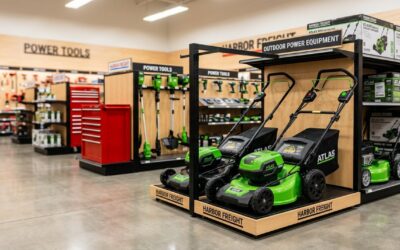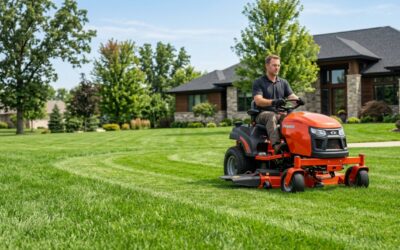

Quick Answer / TL;DR: No — not all lawn mowers are self-propelled. Mowers fall into three drive types: manual push (you supply all the force), self-propelled (the engine or motor drives the wheels), and riding mowers. If squeezing a bail lever makes the mower roll forward on its own, it’s self-propelled; otherwise you’re pushing a manual model.
What You Need
Before you can identify or compare mower drive types, gather a few basics:
- Owner’s manual or model number — the fastest way to confirm whether your mower has a drive system.
- Flat, open test area — a driveway or level patch of grass to safely check for self-propulsion.
- Work gloves and safety glasses — basic PPE whenever you inspect running equipment.
- Flashlight — to look under the deck for drive belts, chains, or transaxle housings.
Preparation: Park the mower on level ground, let the engine cool, disconnect the spark plug wire (or remove the battery pack on cordless models) before inspecting anything underneath the deck.
Step-by-Step Guide: Identifying and Choosing the Right Mower Type
Step 1: Understand What “Self-Propelled” Actually Means
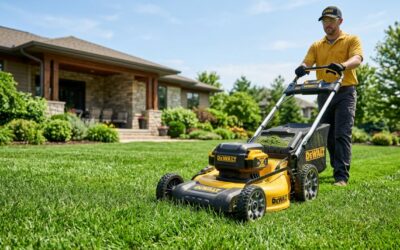
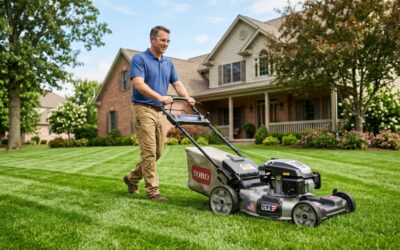
A self-propelled mower uses energy from its engine or battery to turn one or more wheels, moving the machine forward while you steer. A manual push mower delivers power to the blade only — every inch of forward motion comes from your arms and legs. Corded electric, cordless battery, and gasoline mowers all exist in both configurations, although self-propelled corded models are uncommon.
💡 Pro Tip: Look for two control bars on the handle. One engages the blade; the second (usually a bail lever you squeeze against the handle) engages the drive. Two levers = self-propelled. One lever = push mower.
Step 2: Check the Drive Layout (FWD vs. RWD vs. AWD)
Squeeze the drive lever and watch which wheels spin. Front-wheel drive (FWD) models are easier to pivot and maneuver on flat lawns — lift the front slightly and the mower turns on a dime. Rear-wheel drive (RWD) delivers the best traction on slopes and in tall, wet grass. All-wheel drive (AWD) handles the most demanding terrain but costs more.
⚠️ Warning: Never lift or tilt a mower while the blade is engaged or the engine is running. Shut it off completely before checking which wheels are powered.
Step 3: Match the Mower Type to Your Lawn
For lawns under a quarter acre and mostly flat, a manual push mower keeps cost and maintenance low. For a half acre or more, slopes, or thick grass, self-propulsion dramatically cuts fatigue. For anything over an acre, step up to a riding mower instead.
Step 4: Weigh the Ownership Costs
Self-propulsion reduces physical effort but adds weight, moving parts, and repair potential. Drive belts, transaxles, and (on cordless models) battery degradation become the deciding factors after about 18 months of ownership. Check replacement-part availability for your model before buying — a cheap mower with no parts support becomes expensive fast.
💡 Pro Tip: For a hands-on look at what a well-built drive system looks like, see our review of the self-propelled 3-in-1 gas lawn mower, 173cc, and our guide to the cordless self-propelled lawn mower with remote for battery-powered options.
Step 5: Test Before You Commit
If you’re shopping in person or testing a unit you already own, run the mower across a slight incline at variable speeds. A quality self-propelled system holds a steady ground speed without surging or requiring you to push. Variable-speed drives should adjust smoothly between the slowest and fastest settings.
More maintenance walkthroughs live in our how-to guides.
Common Mistakes & Troubleshooting
- Assuming “push mower” means no engine. Gas and electric push mowers still power the blade — they just don’t drive the wheels. “Self-propelled” refers to wheel drive, not the engine itself.
- Confusing a dead drive belt with a dead transmission. If the wheels stop pulling on a gas mower, inspect the drive belt first. It’s a $10–20 part most owners can replace in under an hour; the transaxle is far more expensive.
- Buying FWD for a hilly yard. Front-wheel-drive mowers lose traction going uphill because weight shifts rearward. Choose rear-wheel drive for slopes.
- Ignoring drive-cable stretch. If your self-propelled mower creeps slowly or won’t engage, the drive cable has likely stretched. Most bail-lever cables adjust at the handle bracket — tighten the adjuster a few turns before replacing parts.
- Judging a battery mower by day-one performance. On cordless self-propelled models, battery capacity fades over 2–4 years. A mower that ran 45 minutes new may only manage 25 after two seasons. Factor replacement battery cost into the purchase decision.
Frequently Asked Questions
Are all lawn mowers self-propelled?
No. Many mowers are manual push models where you supply all forward force. Self-propelled mowers add a wheel-drive system engaged by a bail lever, and riding mowers move entirely under their own power.
Can you still push a self-propelled mower?
Yes. With the drive disengaged, a self-propelled mower pushes like a manual one — though it’s heavier due to the transmission. Many models let you disengage the drive entirely to conserve fuel or battery.
Do battery mowers come in self-propelled versions?
Yes, and they’re increasingly common. Cordless self-propelled mowers draw drive power from the same battery as the blade, which shortens runtime by roughly 10–25% compared to blade-only operation.
Is a self-propelled mower worth the extra money?
For lawns over a quarter acre, with slopes, or with thick grass — yes. The added cost pays for itself in reduced fatigue. For small, flat lawns, a manual push mower is cheaper and has fewer parts to maintain.
What’s the difference between front-wheel and rear-wheel drive?
Front-wheel drive is easier to turn and ideal for flat lawns with obstacles. Rear-wheel drive offers better traction on slopes and in wet or tall grass, because the drive wheels carry most of the mower’s weight on an incline.
How long does a self-propelled drive system last?
With annual belt inspection and cable adjustment, most drive systems last 8–10 years or more. Belts typically need replacing every 3–5 seasons; transaxles rarely fail but are costly to replace when they do.