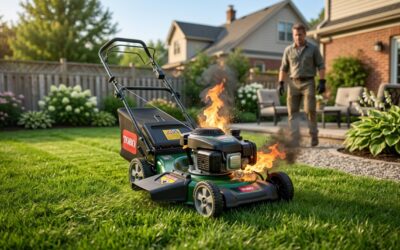

Quick Answer / TL;DR: Yes, corded lawn mowers are safe when used properly. Connect them to a GFCI/RCD-protected outlet, use an outdoor-rated extension cord with the correct wire gauge, mow only in dry conditions, and keep the cord behind you and out of the cutting path. Follow these four rules and the electric shock, cord-cutting, blade, and debris risks drop dramatically.

Expert Summary: “In 20+ years servicing garden equipment, I’ve seen far more corded-mower accidents caused by wrong extension cords and wet grass than by any manufacturing defect. The machine is safe — the setup is what matters.” — Garden Equipment Technician, gardenreview.us
When to Use (and When to Avoid) a Corded Lawn Mower
A corded electric mower is a good, safe choice for small to medium, mostly flat lawns where you can reach every area with one or two extension cords. Avoid or pause mowing entirely when:
- The grass is wet, damp, or covered in dew
- The lawn has rocks, glass, wire, or loose debris you haven’t cleared
- Your outlet has no GFCI/RCD protection
- The mower’s cable, plug, or insulation shows any damage
What You Need
Tools
- Outdoor-rated extension cord (correct wire gauge and length for your mower — check the manual)
- GFCI/RCD-protected outdoor outlet or portable RCD adapter
- Cord retainer/hook check on the mower handle (to stop accidental unplugging)
Materials & Preparation
- Dry grass — wait at least 2–3 hours after rain or morning dew
- Clear lawn: pick up stones, sticks, toys, and wire before starting
- Safety glasses, sturdy closed-toe (ideally steel-toe) footwear, long trousers
- Inspect the mower’s cable, plug, and switch before every use
New to mower care? Our how-to guides hub and the who makes Dewalt lawn mowers explainer on corded vs. battery trade-offs are good starting points.
Step-by-Step Guide: Using a Corded Lawn Mower Safely
Step 1: Understand the Four Main Hazards
Before you mow, know exactly what you’re controlling. A corded mower combines a fast-spinning blade, household electricity, and a trailing cable — safe operation means managing all three.
- Electric shock — damaged insulation, wet connectors, undersized extension cords, or an unprotected outlet can expose you to current.
- Blade contact — the blade keeps spinning briefly after switch-off. Never reach under the deck before unplugging.
- Flying debris — stones, glass, and wire are thrown from the discharge opening at high speed.
- Cord damage and entanglement — the cable can be cut by the blade, snagged on shrubs, pulled from the outlet, or trip you.
Are electric mowers more dangerous than petrol mowers? No — the risk profile is just different. Corded models eliminate fuel storage, exhaust fumes, and spills, but add electrical and cable hazards that petrol and battery mowers don’t have.
Step 2: Plug Into a GFCI/RCD-Protected Outlet
Always connect the mower to an outlet protected by a ground fault circuit interrupter (GFCI) or residual current device (RCD). This device detects electrical leakage and cuts power in milliseconds — the difference between a fright and a fatality if something goes wrong.
💡 Pro Tip: If your outdoor outlets aren’t GFCI-protected, buy a portable inline RCD adapter (under $25). It’s the single best safety upgrade for any corded garden tool.
Step 3: Use the Correct Outdoor-Rated Extension Cord
Use only a cord marked for outdoor use, with the wire gauge (AWG) and maximum length specified in your mower’s manual. An undersized cord causes voltage drop, motor strain, overheating — and eventually premature motor failure.
⚠️ Warning: Indoor-rated cords, light-duty “lamp cords,” and daisy-chained extension cords are the #1 cause of corded mower electrical failures and fires. One correctly rated cord, full stop.
Step 4: Secure the Cord at the Handle
Loop the cord through the mower’s built-in cord retainer before plugging in. This prevents the plug from being yanked out — or worse, half-seated, which can arc and melt.
💡 Pro Tip: The “over-under” loop-and-lock method through the retainer keeps tension off the plug pins even when the cord snags.
Step 5: Mow Away From the Outlet, Cord Behind You
Start mowing near the outlet and work outward in a back-and-forth pattern so the cord always trails behind you, outside the cutting path. Throw the cord over your shoulder or drape it along the mowed strip to keep it visible and clear.
⚠️ Warning: Never mow in circles around the cord or let it cross your cutting line. If you run over the cord, unplug immediately and inspect it for cuts before reuse.
Step 6: Shut Down and Unplug Before Any Blade Work
When finished or before clearing a clog, switch the mower off, unplug it from the outlet, and wait for the blade to come to a complete stop. With a corded mower, unplugging — not just switching off — is the true safety lockout, because someone could plug it back in while your hands are under the deck.
💡 Pro Tip: Unplug at the wall, not just at the mower. Keep the wall plug in sight while working under the deck.
Common Mistakes & Troubleshooting
Mistake 1: Mowing Wet Grass
Problem: Wet grass conducts electricity, clogs the deck, and increases shock risk through damp shoes and connectors.
Fix: Wait until the grass is dry. If you must mow damp ground, wear rubber-soled boots, keep connectors off the ground, and check that your RCD trips correctly with its test button first.
Mistake 2: Using an Undersized or Indoor Extension Cord
Problem: Symptoms include the motor bogging down in thick grass, the plug getting hot, and breakers tripping.
Fix: Match the manual’s gauge/length spec — typically 12 AWG for runs over 50 ft on most electric mowers. Replace, don’t repair, damaged plugs.
Mistake 3: Running Over the Cord
Problem: A nicked or severed cord can short out, trip the RCD, or expose live conductors on the next use.
Fix: Unplug immediately. If the outer jacket is cut but conductors are intact, repair with a proper outdoor cord-repair kit — or replace the cord. Never wrap a cut in electrical tape and keep using it.
Mistake 4: Reaching Under the Deck While Plugged In
Problem: Blades coast for several seconds after switch-off, and a “switched off” mower can be restarted by anyone plugging it in.
Fix: Unplug at the wall, wait for the blade to stop fully, and tilt the mower with the air vents/carb-side up only as the manual directs.
Mistake 5: Bypassing or Taping Down the Safety Switch
Problem: Defeated dead-man switches mean the blade spins whenever the mower is plugged in — a severe injury waiting to happen.
Fix: If the switch lever is broken or the motor won’t stay running with the lever held, service the switch assembly. Never zip-tie or tape it engaged.
Mistake 6: Neglecting Cord and Plug Inspections
Problem: Cracked insulation, loose pins, and bent blades of the plug develop gradually and get overlooked.
Fix: Inspect the full cord length and plug before every mow. Run your hand along the cord (unplugged) feeling for soft spots or breaks in the jacket.
Frequently Asked Questions
Are corded lawn mowers safe in the rain?
No. Never mow in rain or on wet grass with a corded mower. Water dramatically increases shock risk through wet grass, damp shoes, and moist connectors. Wait until both the grass and the operator’s footing are dry.
What gauge extension cord do I need for an electric lawn mower?
Follow your mower’s manual, but as a rule of thumb: 14 AWG for runs up to 50 ft, and 12 AWG for 50–100 ft. The cord must be outdoor-rated (SJTW or similar marking on the jacket). Undersized cords cause voltage drop, motor strain, and overheating.
Do I really need a GFCI outlet for a corded mower?
Yes — this is the most important safety requirement. A GFCI/RCD detects current leakage (for example, through a damaged cord into wet grass and then through you) and cuts power in milliseconds. Every corded mower manual lists it as a mandatory condition, not a suggestion.
What happens if I accidentally mow over the cord?
Unplug the mower at the wall immediately and inspect the full length of the cord. If the outer jacket is damaged in any way, replace or professionally repair the cord before the next use. A taped-over cut is not a repair — insulation damage can cause shock or fire on the next start.
Are corded mowers safer than battery or petrol mowers?
Each type has a different risk profile. Corded mowers carry electric shock and cord-cutting risks but no fuel, fumes, or large lithium battery. Petrol mowers add fire, exhaust, and refueling hazards. With correct setup — GFCI, proper cord, dry conditions — all three types are comparably safe for typical home use.
Can the mower blade keep spinning after I switch it off?
Yes. The blade coasts for several seconds after the motor stops. Always switch off, unplug from the outlet, and visually confirm the blade has stopped before clearing clogs, adjusting height, or doing any maintenance.
Comparing mower types before you buy? See our who makes Dewalt lawn mowers guide for corded vs. battery trade-offs, and browse all our how-to guides for more maintenance tips.