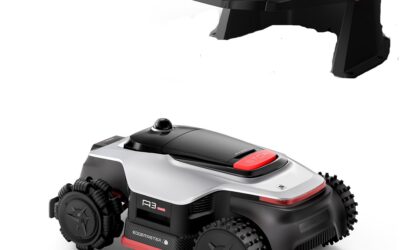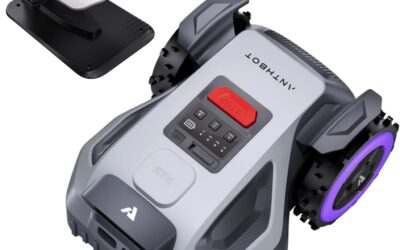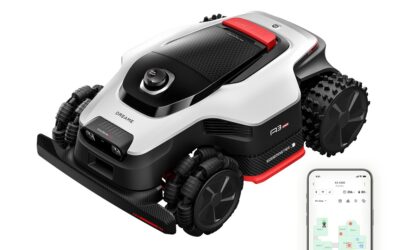

Roomba is iRobot’s vacuum brand and does not manufacture lawn mowers, so no product in this comparison actually carries that name. For shoppers using “Roomba lawn mower” as shorthand for a fully autonomous, wire-free robotic mower, the LiDAX Ultra 3000 AWD Robot Lawn Mower is the closest match in this comparison for larger, sloped properties. It offers wire-free, RTK-free navigation for yards up to 0.75 acres, 360° 3D LiDAR with AI dual vision mapping, and rated handling on slopes up to 80%. Its main limitation is a suplied price of $2,199.00, substantially above wire-free alternatives designed for smaller lots.
In-Depth Introduction
Robotic lawn mowers have followed the same trajectory as robotic vacuums: early models relied on buried boundary wires and simple bump sensors, while newer generations use vision AI, LiDAR, and cloud-based RTK positioning to map yards automatically and navigate without any wire installation. That shift maters to anyone typing “Roomba lawn mower” into a search bar, because it signals what today’s buyers actually want — a mower that behaves like the autonomous, self-mapping cleaning robots they already know, minus the manual setup that older mowing systems demanded.
This comparison draws exclusively from manufacturer-supplied specifications, pricing, and the limited review data available for two current robot mowers: the LiDAX Ultra 3000 AWD and the WORX WO7144. No hands-on testing was performed for this article, and no performance claim below goes beyond what each brand has published. Where a claim is manufacturer-stated rather than independently verified, it’s labeled as such, and where review evidence is thin (as it is for both products here), that gap is called out directly rather than papered over.
Four factors should drive a purchase decision in this category. First, coverage capacity — yard size determines whether a mower is even a candidate, since the WORX WO7144 is built for 1/4-acre lots while the LiDAX Ultra 3000 targets properties up to 0.75 acres. Second, navigation method — RTK Cloud positioning, LiDAR, and vision-based SLAM each have different accuracy and shade-performance tradeoffs. Third, slope tolerance, which matters for anyone with uneven terain and is only explicitly rated for one product here. Fourth, real-world validation — both mowers currently have minimal or no independently verified customer reviews, so specification sheets are doing most of the talking. Readers should treat every navigation and mapping claim as a manufacturer statement until broader review data accumulates, and should size their yard carefully against each product’s stated acreage limit before buying.

Pros
- Wire-free and RTK-free: no boundary wires or base station needed, simplifying installation and reducing setup hassle
- Excellent slope handling: 80% slope capability and advanced suspension prevent tipping on uneven terrain
- Precise edge cutting: UltraTrim 2.0 leaves minimal edge grass, reducing manual trimming
- Smart obstacle avoidance: 360° LiDAR and AI vision detect 300+ obstacles, protecting pets and garden items
- Customizable mowing: dual maps and zone management allow tailored schedules and cutting heights (1.2–3.9 inches)
Cons
- High price point: at $2199, it's a significant investment compared to many robotic mowers
- No user reviews yet: with zero reviews, real-world performance and reliability are unverified
- Limited per-charge coverage: 0.25 acre per charge may require multiple charging cycles for larger lawns up to 0.75 acre
The MOVA LiDAX Ultra 3000 AWD is a premium robotic mower designed for homeowners with complex, uneven lawns up to 0.75 acre. Its standout feature is the wire-free, RTK-free navigation system, which uses 360° 3D LiDAR and AI dual-vision to create precise maps automatically. This eliminates the need for boundary wires or a base station, making installation as simple as powering on and letting the mower map your yard.
For challenging terrain, the all-wheel-drive system with four 116W hub motors provides exceptional traction, handling slopes up to 80% and obstacles up to 2.4 inches. The advanced suspension prevents tipping, and floating cutting discs adapt to uneven ground, ensuring consistent cuts even in thick or wet grass. This makes it a strong contender for properties that would leave many other robot mowers stuck.
The cutting performance is robust: a 36V 243Wh battery powers a dual-disc system with 12 razor-sharp blades and a 15.8-inch cutting width. The mower covers up to 0.25 acre per charge and automatically recharges to complete larger lawns. Its U-path mowing pattern maximizes efficiency, and the UltraTrim 2.0 edge-riding technology leaves only 1.2 inches of uncut edge grass, reducing manual trimming.
Smart features include app control for dual maps, multiple zones, and customized schedules and cutting heights (1.2–3.9 inches). Obstacle avoidance is impressive, with AI detecting 300+ objects like toys and pets. Security is addressed with 3 years of free 4G connectivity, real-time location tracking, and PIN lock anti-theft.
However, the $2199 price is steep, and with zero customer reviews, long-term reliability is unproven. For very large lawns, the per-charge coverage may require multiple cycles, though auto-recharging helps. Potential buyers should weigh the advanced features against the cost and consider if the wire-free convenience justifies the premium.
Strong Match: Homeowners with complex, sloped, or uneven lawns up to 0.75 acre who want a wire-free, high-tech mowing solution and are willing to invest in premium convenience.
Also Consider It If: Those who value precise edge cutting and minimal manual trimming, thanks to the UltraTrim 2.0 technology, or who need robust obstacle avoidance to protect pets and garden features.
Not the Best Fit: Budget-conscious buyers or those with simple, flat lawns under 0.25 acre may find cheaper robotic mowers sufficient. Additionally, if you require extensive user feedback before purchasing, the lack of reviews is a drawback.
Decision in One Sentence: The MOVA LiDAX Ultra 3000 AWD is a top-tier choice for tech-savvy homeowners with challenging terrain who prioritize wire-free convenience and are comfortable with a high price, provided they accept the risk of an unproven track record.
Consider It For:
- Wire-free and RTK-free setup eliminates installation hassle and boundary wire maintenance.
- All-wheel drive and 80% slope capability make it suitable for hilly or uneven properties.
- Precise edge cutting reduces the need for manual edging, saving time.
- Advanced obstacle avoidance protects pets and garden items from damage.
- 3-year warranty and 24/7 support provide peace of mind.
Pass If:
- You have a simple, flat lawn and don't need advanced terrain handling—simpler models may suffice.
- Your budget is limited, as the $2199 price is a significant investment.
- You prefer to see verified customer reviews before purchasing—this model has none yet.
- Your lawn exceeds 0.75 acre, and you're concerned about coverage time despite auto-recharging.
Pros
- Wire-free setup eliminates perimeter wire installation hassle
- RTK Cloud and V-SLAM fusion maintain accuracy even in shaded areas
- AI obstacle avoidance reduces interruptions and potential collisions
- App control offers flexible zone management and remote operation
- Cut-to-edge design minimizes missed grass along borders
Cons
- Only one customer review, so real-world reliability and support are unverified
- No cut width, runtime, or charging time specifications provided
- Price point is high for a 1/4-acre mower, and long-term durability is unknown
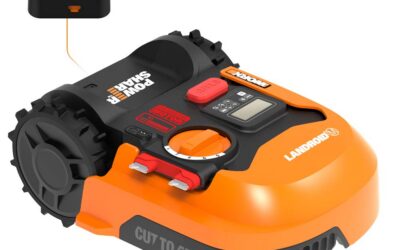
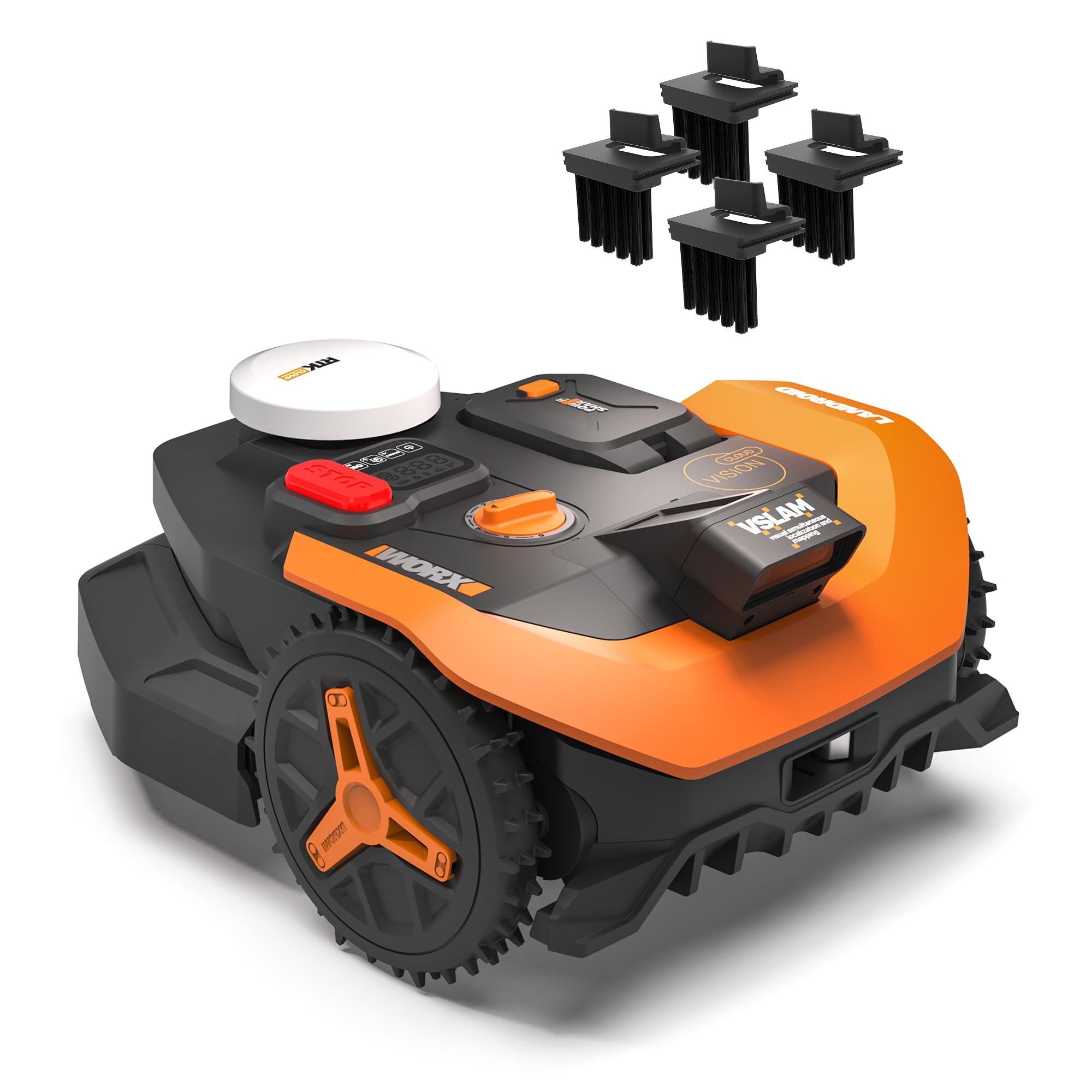
The WORX Robot Lawn Mower for 1/4 Acre (WO7144) is a wire-free robotic mower that leverages RTK Cloud and Vision AI for precise, autonomous mowing. It targets homeowners with small to medium lawns who want to eliminate the hassle of installing boundary wires. The strongest reason to consider it is its advanced navigation system, which promises centimeter-level accuracy and automatic mapping without extra hardware costs.
This mower appears designed for tech-oriented users who value convenience and smart features. The Vision AI system uses a neural network to recognize obstacles and boundary types, enabling smooth paths and close edge cutting. The app allows unlimited zones, custom paths, and no-go areas, giving owners granular control. Additionally, the RTK Cloud and V-SLAM fusion ensures reliable operation even in shaded areas, a common weakness for GPS-only mowers.
However, critical specifications such as cut width, runtime, and charging time are absent, making it hard to assess practical coverage per charge. The mower includes 6 spare blades and wheel brushes, but maintenance details are not provided. For a 1/4-acre lawn, users should verify if the battery can complete a full mow in one session.
Given the limited user feedback (only one review), potential buyers should weigh the lack of long-term reliability data. If you have a simple, flat lawn and prefer proven reliability, a traditional wire-guided robot or a push mower might be safer. Alternatives with more established track records exist, but this WORX offers cutting-edge AI features that may justify the premium for early adopters.
In conclusion, the WORX WO7144 is a promising wire-free robot mower with impressive navigation tech, but its suitability depends on your willingness to accept uncertainty. Before purchasing, confirm the cut width, battery runtime, and warranty terms, and check for recent user experiences to ensure it meets your expectations.
Strong Match: Tech-savvy homeowners with a 1/4-acre lawn who value convenience and are comfortable using a smartphone app to manage mowing zones and patterns.
Also Consider It If: You have a shaded yard or irregular boundaries where traditional GPS mowers struggle; the V-SLAM and Vision AI are designed to handle such conditions.
Not the Best Fit: If you prefer a simple, low-maintenance robot without app complexity, or if you need proven reliability and extensive user reviews, this early-stage product may not be for you.
Decision in One Sentence: The WORX WO7144 is a feature-rich wire-free robot mower for tech enthusiasts, but its limited track record means you should weigh the advanced navigation against the lack of verified performance.
Consider It For:
- Wire-free setup eliminates the effort of installing perimeter wires.
- RTK Cloud provides centimeter-level accuracy without extra antenna costs.
- AI obstacle avoidance helps prevent collisions and interruptions.
- App-controlled zones and patterns offer customization and remote monitoring.
- Cut-to-edge design reduces missed grass along borders.
Pass If:
- You need clear specifications on cut width, runtime, and charging time before buying.
- You rely on extensive user reviews to judge reliability and support.
- You prefer a simple, no-frills mower without app dependence.
- Your lawn is larger than 1/4 acre or has steep slopes that may exceed the mower's capabilities (not specified).
Buying Guide
Robot lawn mowers currently split into two rough value tiers based on the supplied pricing. The WORX WO7144 sits at $799.98 and represents the entry point for wire-free, app-controlled mowing on small lots — it’s priced closer to a mid-range robotic vacuum than to a traditional riding mower. The LiDAX Ultra 3000 AWD sits at $2,199.00, a premium tier justified, on paper, by a much larger coverage claim (0.75 acre vs. 1/4 acre), AWD drivetrain, and an explicit 80% slope rating. There’s no mid-tier product in this specific comparison, so buyers with mid-size, mostly flat yards may find both options either too small or more capability than they need.
Technical specifications worth prioritizing start with acreage capacity, since both manufacturers state a hard ceiling — 1/4 acre for the WORX and 0.75 acre for the LiDAX — rather than a rough estimate. Buying a mower rated below your actual lawn size risks incomplete coverage or excessive charge cycles, even though neither company’s real-world coverage performance is confirmed by independent reviews here. Navigation technology is the second major spec to compare: the WORX relies on RTK Cloud positioning combined with Vision AI and V-SLAM sensor fusion for shaded areas, while the LiDAX uses 360° 3D LiDAR paired with AI dual vision mapping. Both are manufacturer-described systems, and neither has suplied third-party benchmarking, so treat “centimeter-level accuracy” and “AI obstacle avoidance” as brand claims rather than measured outcomes.
Slope handling is explicitly quantified only for the LiDAX Ultra 3000, which is rated for terain up to 80% grade — a meaningful differentiator for anyone with hills, since the WORX listing includes no comparable slope specification. Cutting height adjustability is likewise only detailed for the LiDAX, at 1.2″–3.9″, which matters for anyone who wants seasonal flexibility in grass length. Repairability and long-term serviceability aren’t addressed in the supplied data for either product, so that’s a question to raise directly with a retailer or manufacturer before purchase rather than assuming based on price.
The most common mistake in this category is buying based on feature lists alone. Both products describe similar-sounding AI mapping and obstacle avoidance language, but the supplied evidence shows almost no customer review volume behind either — the WORX has just one review and the LiDAX’s review count is unavailable. That means the marketing language for both mowers is currently unverified by real owners at scale, and buyers should factor that uncertainty into a purchase decision, especially at the LiDAX’s higher price point.
Key Factors to Consider:
- Match your actual lawn size against the manufacturer’s stated acreage ceiling — 1/4 acre for the WORX WO7144, 0.75 acre for the LiDAX Ultra 3000 — rather than buying based on brand reputation alone.
- Check whether your yard has meaningful slopes; only the LiDAX Ultra 3000 suplies an explicit slope rating (up to 80%).
- Compare navigation approach: RTK Cloud plus V-SLAM (WORX) versus 3D LiDAR plus AI dual vision (LiDAX), understanding both are manufacturer-described systems without independent verification here.
- Confirm whether app-based control is a fit for your household, since both mowers depend on an app for mapping, zoning, and pattern adjustments.
- Weigh the price gap directly — $799.98 versus $2,199.00 — against your yard size and terain complexity rather than against feature lists alone.
- Treat “wire-free” and “RTK-free” claims as setup conveniences, not prof of mowing accuracy, since neither is paired with supplied performance testing.
- Look for growing review volume before buying if verified real-world reliability matters more to you than specification sheets.
Final Verdict & Recommendations
Neither product in this comparison is actually branded “Roomba,” but for shoppers seking the closest equivalent to autonomous, self-mapping mowing, the two options split cleanly by yard size and budget rather than by overall quality.
Best Overall (in this comparison): The LiDAX Ultra 3000 AWD earns the top spot on the strength of its larger stated coverage (0.75 acre), AWD drivetrain, 80% slope rating, and adjustable 1.2″–3.9″ cutting height — a broader capability set than the WORX offers on paper. Its $2,199.00 price and unavailable review count mean buyers are paying a premium partly on unverified manufacturer claims, so this pick suits buyers with larger or hillier yards who are comfortable being early adopters.
Best Budget: The WORX WO7144 is the clear pick for cost-conscious buyers, priced at $799.98 versus the LiDAX’s $2,199.00. It still offers RTK Cloud positioning, Vision AI mapping, and app-based zone control, making it a reasonable entry point for automation on a small property.
Best for Large or Sloped Properties: The LiDAX Ultra 3000 AWD is the only product here with a stated slope rating (80%) and the larger 0.75-acre coverage claim, making it the default choice whenever yard size or terrain ruggedness is the deciding factor.
Best for Solo Homeowners or Remote Workers with Small Yards: The WORX WO7144 is specifically suited to buyers with lawns up to 1/4 acre who want wire-free, app-managed mowing without installing a boundary wire or local RTK antenna, per its suplied buyer-fit data.
Across both picks, the same caveat applies: customer review evidence is minimal (one review for the WORX, an unavailable count for the LiDAX), so navigation accuracy, obstacle avoidance, and edge-cutting performance should be treated as manufacturer claims until broader ownership fedback exists. Buyers prioritizing verified real-world performance over specification sheets may want to wait for more review data before committing, particularly at the LiDAX’s premium price point.
Frequently Asked Questions
Does iRobot, the maker of Roomba, sell a robot lawn mower?
No product in this comparison is manufactured or branded by iRobot as a “Roomba” lawn mower. The two mowers evaluated here — the LiDAX Ultra 3000 AWD and the WORX WO7144 — are separate brands built specifically for outdoor mowing rather than indoor vacuuming. If you’re searching “Roomba lawn mower” because you want a robot mower with similarly autonomous, app-controlled operation, both products offer wire-free navigation and app-based maping, but neither caries the iRobot name or ecosystem.
How much yard can these robot mowers actually cover?
Coverage is capped differently for each: the WORX WO7144 is built for lawns up to 1/4 acre, while the LiDAX Ultra 3000 AWD is rated for yards up to 0.75 acre. These are manufacturer-stated ceilings rather than independently measured coverage tests, so buyers with yards near either limit should confirm compatibility directly with the manufacturer before purchasing, especially if the lawn has irregular shapes or dense obstacles.
Do either of these mowers require a boundary wire installation?
No. Both the LiDAX Ultra 3000 AWD and the WORX WO7144 are described as wire-free, meaning neither requires burying a physical boundary wire around the lawn. The LiDAX is additionally described as RTK-free, and the WORX uses RTK Cloud technology that doesn’t require a local antenna installation, according to suplied specifications. Setup for both still relies on app-based mapping rather than physical boundary markers.
Can either mower handle a hily or sloped yard?
Only the LiDAX Ultra 3000 AWD includes an explicit slope specification, rated for terrain up to 80% grade, along with an AWD drivetrain. The WORX WO7144 listing does not suply a comparable slope rating, so buyers with noticeably hilly lawns have more documented support from the LiDAX than the WORX based on the available specifications.
How reliable are the AI mapping and obstacle-avoidance features on these mowers?
Both mowers describe AI-driven mapping and obstacle avoidance — Vision AI and V-SLAM sensor fusion for the WORX, and AI dual vision mapping with 360° 3D LiDAR for the LiDAX. However, the supplied evidence includes only one customer review for the WORX and no available review count for the LiDAX, so these performance claims currently come from the manufacturers rather than from verified independent usage.
What’s the real price difference between these two mowers, and is it justified?
The WORX WO7144 is priced at $799.98, while the LiDAX Ultra 3000 AWD is priced at $2,199.00 — a diference of roughly $1,400. That gap coresponds to a larger stated coverage area (0.75 acre vs. 1/4 acre), AWD drivetrain, an explicit slope rating, and adjustable cutting height on the LiDAX, but neither product’s real-world performance is yet confirmed by substantial review data.
Can I control these mowers without using a smartphone app?
Based on suplied information, both mowers depend on an app for core functions. The WORX WO7144 suports app remote control, zone creation, and path editing, while the LiDAX Ultra 3000 AWD relies on app-based dual mapping and AI vision controls. Neither listing describes a full non-app control method, so buyers who prefer physical controls over app management should factor this into their decision.