
Quick Answer / TL;DR: Most electric lawn mowers do not have a replaceable engine air filter because their motors don’t burn fuel or need combustion air. Instead, they rely on cooling vents, intake screens, and foam barriers that must be kept clean to prevent overheating and power loss. Only electric-start gasoline mowers require true air-filter maintenance.
How to do electric lawn mowers have air filters: A Step-by-Step Guide

Expert Summary: “After 20+ years servicing mowers, the most common mistake I see is owners hunting for an air filter on a battery mower. Electric motors need cooling airflow, not filtered combustion air — blocked vents cause the same symptoms a clogged filter causes on a gas engine: bogging down, shutdowns, and shortened motor life.” — Senior Equipment Technician, GardenReview.us

For a related comparison on combustion maintenance parts, see our guide to whether Craftsman lawn mowers have oil filters. And before you start, our team has a full breakdown of the Husqvarna lawn tractor electric starter if you’re troubleshooting starting issues on a gas model.

What You Need

Tools

  • Soft-bristle brush (an old toothbrush works well)
  • Shop vacuum with brush attachment
  • Compressed air canister or low-pressure air blower (used carefully)
  • Screwdriver or Torx bit set for removable debris covers
  • Dry microfiber cloths
  • Flashlight for inspecting vents and battery bays

Materials

  • Mild dish soap and water (for exterior housing only)
  • Isopropyl alcohol and cotton swabs (for battery contacts, if your manual permits)
  • Replacement foam screen — only if your model’s manual specifies one

Preparation

  • Remove the battery pack or unplug the corded mower completely.
  • Allow the motor to cool for at least 15–30 minutes after mowing.
  • Locate your owner’s manual (or download it from the manufacturer’s site) and confirm whether your model has a foam screen or filter-like component.
  • Work in a dry area — never clean electrical components outdoors in damp conditions.

⚠️ Safety Warning: Never wash motor vents, battery compartments, or any electrical components with a hose or pressure washer. Water intrusion into sealed electronics is the leading cause of premature electric mower failure we see in the shop.

Step-by-Step Guide

Step 1: Identify What Type of Lawn Mower You Have

Confirm the power system before looking for an air filter. Battery, corded, hybrid, and electric-start gasoline mowers have completely different maintenance requirements. Many owners confuse a true electric lawn mower with a gasoline mower that merely has an electric starter — that distinction determines everything that follows.

Battery-powered electric mower: Uses rechargeable lithium-ion packs to drive the motor. No gasoline engine, carburetor, spark plug, fuel tank, or combustion air filter. It will still have cooling vents around the motor housing, battery bay, and electronic controller.

Corded electric mower: Draws power through an extension cord from a household outlet. No internal-combustion engine, so no replaceable engine air filter. Expect vent slots in the upper housing that must stay free of packed grass.

Electric-start gasoline mower: Electricity only operates the starter; gasoline powers the cutting system. Do electric-start lawn mowers work like fully electric mowers? No. These still require engine air filter, oil, fuel, and spark plug maintenance.

Hybrid or specialty mower: Commercial, robotic, and hybrid machines may use dust screens, cooling filters, or sealed electronic compartments. Always check the model-specific manual when your mower doesn’t clearly fit a standard category.

Mower TypePower SourceConventional Air Filter?Cooling Component to Inspect
Battery mowerRechargeable batteryUsually noMotor and battery vents
Corded mowerHousehold electricityUsually noMotor housing vents
Electric-start gas mowerGasoline engineUsually yesEngine air-filter housing
Robotic mowerRechargeable batteryUsually noUnderside and charging contacts
Hybrid/commercial modelModel dependentPossiblyDust screens per manual

💡 Pro Tip: Check the fuel tank. If there’s a gas cap, you own a gasoline mower with electric start — and it has a real air filter that needs seasonal replacement.

Step 2: Locate the Cooling Vents and Intake Screens

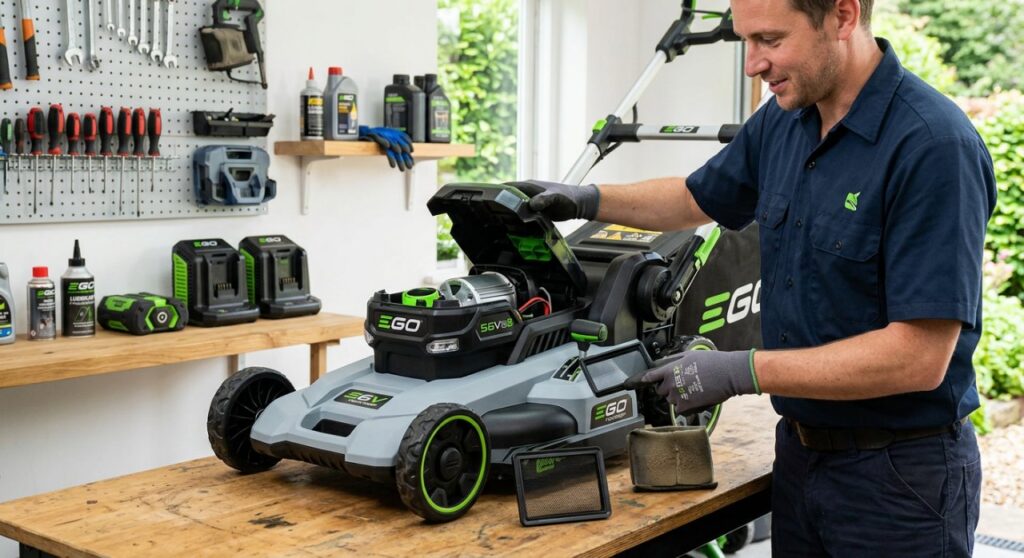
With the battery removed or cord unplugged, use a flashlight to find the ventilation openings. On most electric mowers they appear in three places: the motor housing (usually under a plastic shroud on the deck), around the battery bay, and near the electronic controller. Some models add a foam barrier or intake screen over these openings to block fine debris.

💡 Pro Tip: Photograph the vent locations with your phone during your first inspection. Next season, you’ll know exactly where debris accumulates and can check in under two minutes.

Step 3: Remove Debris Covers and Inspect

Using the correct screwdriver or Torx bit, remove any plastic debris covers your manual identifies as serviceable. Inspect the foam screen or vent interior for packed grass clippings, dust, and leaf fragments. Hold components up to a light source — a screen that blocks light is restricting airflow to your motor.

⚠️ Warning: Never force a cover that resists removal. Some housings hide wiring harnesses under clips you can’t see. If it doesn’t come off with light hand pressure, recheck the manual before prying.

Step 4: Clean the Vents, Screens, and Foam Barriers

  • Vacuum loose debris from vents using the brush attachment.
  • Brush packed grass from vent slots with the soft-bristle brush, working outward so you don’t push debris deeper.
  • Wash a removable foam screen in mild soapy water, rinse, then let it dry completely — 24 hours minimum — before reinstalling.
  • Use short bursts of compressed air at low pressure to dislodge dust from tight vent channels. Keep the nozzle several inches away from electronics.
  • Wipe the exterior housing with a damp (not wet) microfiber cloth.

⚠️ Warning: If a foam screen or filter-like component is torn, oil-soaked, or crumbling, do not reinstall it. Check the manual for a replacement part number — improvised substitutes can let debris reach the motor windings.

Step 5: Reassemble and Test

Reinstall all covers and confirm every fastener is seated. Reinsert the battery or reconnect the cord, then run the mower for two to three minutes on pavement with the blade engaged. Listen for the cooling fan tone — it should sound consistent, not strained. After the test, feel the motor housing briefly; warmth is normal, but a housing too hot to touch within minutes signals a remaining airflow restriction.

💡 Pro Tip: Make vent cleaning part of your routine after every 5–10 mows, or after any session in dry, dusty, or heavy-grass conditions. It takes two minutes and prevents most overheating shutdowns we see on corded and battery models.

Common Mistakes & Troubleshooting

Mistake 1: Washing the Mower with a Hose

Hosing down the deck forces water into motor vents, battery bays, and controller seals. Fix: Clean the deck by scraping and wiping only. If water has already intruded, remove the battery, let the unit dry for 48–72 hours in a warm indoor space, and test cautiously. Persistent faults after drying require professional service.

Mistake 2: Buying a Gas-Engine Air Filter for an Electric Mower

We regularly see owners order paper air filters sized for small gas engines, assuming all mowers share the part. Fix: Electric mowers don’t use combustion air filters. If your manual lists a “filter” or “screen,” it’s a foam debris barrier specific to your model — order by part number only.

Mistake 3: Ignoring Overheating Shutdowns

An electric mower that cuts out mid-mow and restarts after cooling is telling you its thermal protection is tripping — usually from blocked vents. Fix: Clean all vents and screens before the next use. Repeated thermal trips shorten battery and motor life; if shutdowns continue after cleaning, have the controller checked.

Mistake 4: Reinstalling a Damp Foam Screen

A wet foam screen traps debris instantly and can allow moisture against the motor housing. Fix: Air-dry foam components a full 24 hours. If you must mow before it dries, run without the screen for one session only, then reinstall the dry screen.

Mistake 5: Servicing a Battery Mower with the Pack Installed

Cleaning near live battery terminals risks short circuits, especially with metal tools. Fix: Always remove the battery pack (or unplug corded models at the wall, not just the mower end) before any inspection or cleaning.

Frequently Asked Questions

Do electric lawn mowers have air filters at all?

No — true electric mowers (battery and corded) do not have conventional engine air filters, because electric motors don’t burn fuel and don’t need combustion air. Some models include a foam screen or debris barrier over cooling vents, which serves a filtering purpose but is not an engine air filter. Only electric-start gasoline mowers have genuine air filters.

What happens if the cooling vents on my electric mower get clogged?

Blocked vents restrict airflow to the motor, battery, and controller. Expect reduced power, sluggish blade speed in thick grass, and eventually automatic thermal shutdown. Long-term, chronic overheating degrades lithium-ion battery cells and can damage motor windings — a far costlier repair than two minutes of vent cleaning.

How often should I clean the vents on an electric mower?

Inspect vents every 5–10 mowing sessions, and always after cutting dry, dusty, or tall grass. A quick visual check takes seconds; a full cleaning with the brush and vacuum takes under five minutes. Robotic mowers that run daily should be checked weekly.

Can I wash the foam screen on my electric mower with water?

Yes, if the manual confirms it’s removable and washable — wash it in mild soapy water, rinse thoroughly, and let it dry completely for at least 24 hours before reinstalling. Never wash the screen while it remains attached to the mower, and never hose down the housing itself.

My mower has an electric start — does it need an air filter?

If the mower has a gas tank, yes. “Electric start” describes only the ignition method; the machine still runs on gasoline with a four-stroke or two-stroke engine that requires a combustion air filter, engine oil, and spark plug maintenance. Check the paper filter element each season and replace it when dirty, torn, or oil-soaked.

Why does my electric mower shut off when it gets hot?

That’s the thermal protection circuit doing its job. It cuts power when the motor or controller exceeds a safe temperature — almost always due to blocked cooling vents, mowing grass taller than the mower’s capacity, or a degrading battery. Clean the vents first; if shutdowns persist on a clean machine, the battery pack or controller likely needs professional diagnosis.