
Do Robot Lawn Mowers Avoid Dog Poop? The Direct Answer
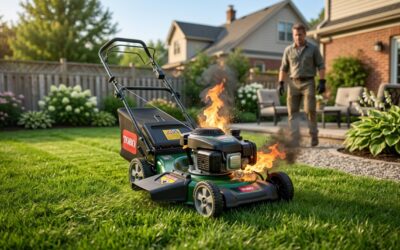
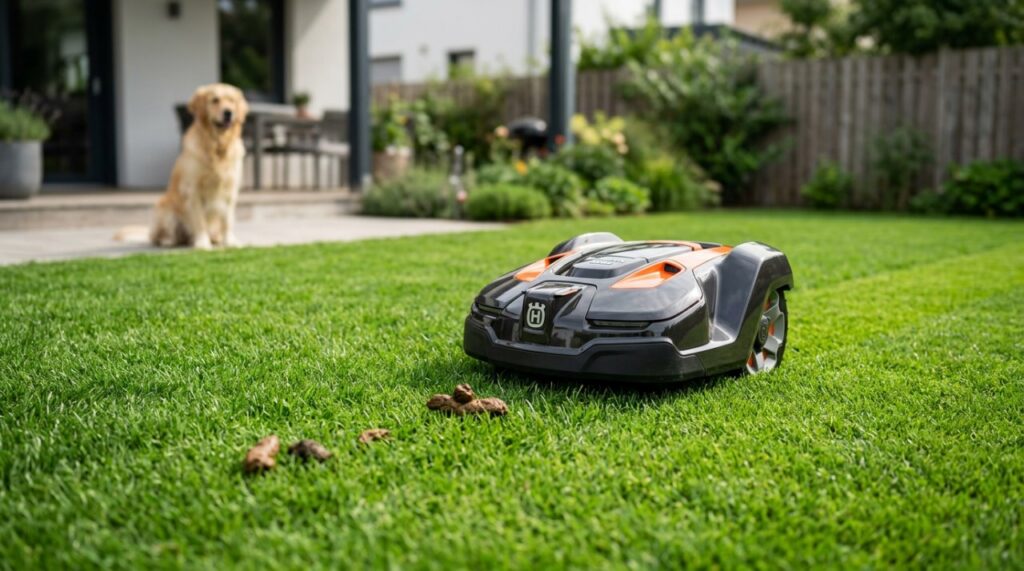
Most robot lawn mowers do not reliably avoid dog poop. Standard models usually treat it like grass, leaves, or a small obstacle, so they may drive over it and spread the mess across the lawn, wheels, and cutting deck. I recommend clearing the yard before every mowing cycle unless the mower specifically supports effective camera-based obstacle recognition.
Expert Summary>
– Robot lawn mowers with basic bump, tilt, or ultrasonic sensors rarely identify dog poop as a separate obstacle. – Camera-based AI vision may improve avoidance, but detection depends on the waste’s size, shape, visibility, and position in the grass. – The most reliable solution is still a quick manual yard inspection before the mower starts. – Scheduling mowing after the dog’s normal bathroom and cleanup routine reduces both mess and maintenance. – If a mower runs over dog poop, I recommend stopping it immediately and cleaning the wheels and cutting deck before the waste dries.
Step 1: Understand How Robot Lawn Mowers Deal With Dog Poop
Assume the mower cannot recognize dog waste unless its manufacturer explicitly states that its vision system can detect small ground-level objects. Even then, I would treat detection as a useful backup rather than a guarantee.
Robot lawn mowers navigate using one or more of the following systems:
- Boundary wires
- GPS or RTK positioning
- Cameras
- Ultrasonic sensors
- Radar
- Bump sensors
- Lift and tilt sensors
- Wheel-resistance monitoring
Most of these technologies help the mower stay inside the lawn or avoid large objects. They were not necessarily designed to identify something small, soft, irregular, and partly hidden by grass.
Can Robot Lawn Mowers Detect Dog Poop?
Some advanced robot lawn mowers may detect dog poop as an obstacle, but most cannot identify it reliably. A camera-equipped mower may see an unfamiliar object and steer around it, while a basic mower will usually continue moving.
The important distinction is between detecting an obstacle and identifying dog poop.
A mower may avoid waste because its sensors notice an object. That does not mean the mower understands what the object is or will detect it again under different conditions.
Detection can become less reliable when:
- The poop is small.
- The grass is long.
- The waste is dark and the lawn is shaded.
- Leaves or clippings partly cover it.
- The mower operates at dusk or in poor light.
- The camera lens is dirty.
- The waste is soft, flat, or already pressed into the turf.
In practical use, this inconsistency is what matters. A mower that avoids nine piles but drives over the tenth still creates a cleanup problem.
Why Basic Sensors Usually Miss It
Basic sensors are better at detecting solid, raised obstacles than soft waste close to the ground. Dog poop may be too low for ultrasonic sensors and too soft to trigger a meaningful collision response.
A bump sensor normally activates when the mower contacts something solid enough to press its body or bumper. Dog waste does not provide that resistance.
Ultrasonic sensors can also have a minimum detection height or distance. A small object sitting between grass blades may remain outside the useful sensing area.
Tools and Materials Needed
A simple pre-mowing routine requires very little equipment. I keep the cleanup process easy because a complicated routine is more likely to be skipped.
| Tool or material | Why it helps | Required? |
|---|---|---|
| Dog waste bags | Allows immediate removal before mowing | Yes |
| Pooper scooper | Makes frequent cleanup faster and less unpleasant | Recommended |
| Disposable gloves | Reduces direct contact during cleanup | Recommended |
| Flashlight | Helps with early-morning or evening inspections | Optional |
| Garden hose | Rinses fresh contamination from mower parts | Recommended |
| Soft brush | Removes material from wheels and deck | Recommended |
| Mild soap | Helps clean washable external components | Optional |
| Manufacturer’s cleaning guide | Prevents damage to electronics or seals | Yes |
| Dedicated cleanup bucket | Keeps dirty tools away from household items | Optional |
I do not recommend using a pressure washer unless the manufacturer explicitly approves it. High-pressure water can force moisture into bearings, motors, sensors, charging contacts, and electronic compartments.
Step 2: Check What Obstacle Detection Your Mower Actually Has
Read the product specifications and manual instead of relying on terms such as “smart navigation” or “AI mowing.” Those labels do not automatically mean the mower can recognize pet waste.
I look for precise statements about what the machine detects. Useful wording includes:
- Small-object detection
- Ground-level obstacle recognition
- AI camera vision
- Pet waste detection
- Animal or pet-object avoidance
- Adjustable obstacle sensitivity
- Image-based object classification
Vague claims such as “intelligent,” “autonomous,” or “advanced navigation” do not tell me enough.
Compare the Main Sensor Types
Camera-based vision offers the best chance of avoiding dog poop, while bump sensors offer the least. No sensor type completely removes the need to inspect the lawn.
| Navigation or sensor system | Chance of avoiding dog poop | Main limitation |
|---|---|---|
| Bump sensor | Very low | Waste is too soft to trigger a useful response |
| Lift or tilt sensor | Very low | Designed for lifting, tipping, or steep angles |
| Ultrasonic sensor | Low | Small or low objects may sit below its detection zone |