
Quick Answer / TL;DR: Most walk-behind lawn mowers travel 2–4 mph, residential riding mowers reach 4–7 mph, zero-turn models mow at 5–10 mph, and commercial machines can approach 12 mph. Your actual mowing speed depends on terrain, grass height, blade engagement, and transmission type — and cutting slower almost always produces a cleaner, healthier lawn.

How to how fast do lawn mowers go: A Step-by-Step Guide

After 15+ years servicing everything from push mowers to commercial zero-turns, I can tell you that speed is the most misunderstood spec in lawn care. Faster isn’t better — matching your ground speed to your blade’s cutting capacity is what separates a striped, golf-course lawn from a shredded, brown-tipped mess. This guide breaks down real-world mower speeds, how to find your machine’s sweet spot, and when speed becomes a safety issue.

What You Need

Tools:

    GPS speed app or a handheld GPS unit (phone apps work fine)

    Measuring tape (for the timed-distance test)

    Stopwatch or phone timer

    Owner’s manual (for your model’s rated top speed)

Materials:

    Flat, open test area (driveway or open lawn section)

    Flags or cones to mark a 100-foot test course

Preparation: Check tire pressure first — an underinflated rear tire can throw off both your speed test and your cut quality. Confirm the deck is set to your normal mowing height, and never test speeds with the blade disengaged on soft ground where traction matters.

Step-by-Step Guide

Step 1: Know Your Mower Type’s Speed Range

Every mower class has a typical operating range:

    Manual push mowers: 2–3 mph — limited entirely by your walking pace

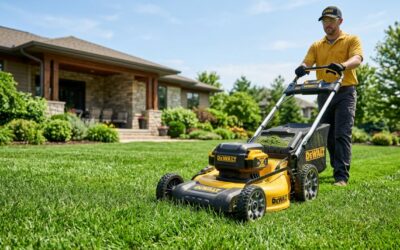
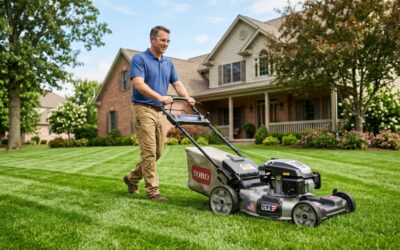
    Self-propelled mowers: 2–4 mph — most have adjustable drive speeds

    Residential lawn tractors: 4–7 mph top speed, though 3–5 mph is the practical mowing pace

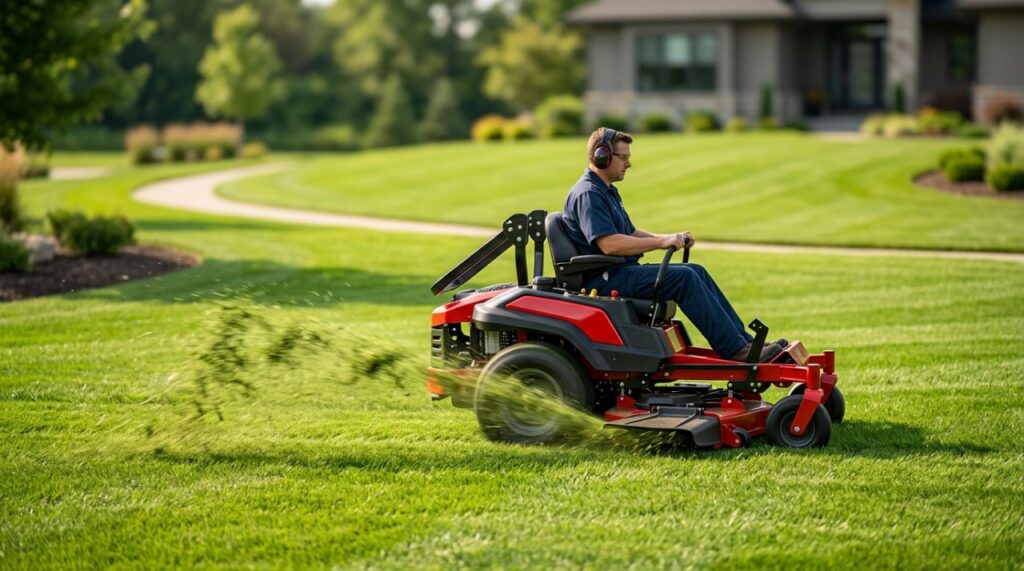
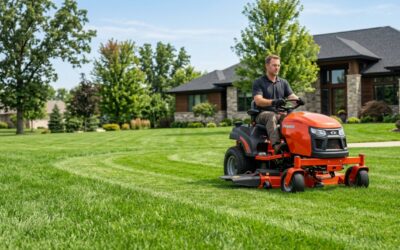
    Residential zero-turns: 5–10 mph

    Commercial zero-turns: 8–12 mph in transport, with productive mowing speeds of 6–10 mph

💡 Pro Tip: Manufacturers advertise top transport speed, not mowing speed. A “9 mph” zero-turn is only hitting that figure driving between jobs with the deck disengaged.

Step 2: Measure Your Actual Ground Speed

Mark a straight 100-foot course on flat ground. Engage the blade at your normal mowing height, run the throttle at full operating RPM, and time how long it takes to cover the distance. Divide 100 by the seconds measured, multiply by 0.68, and you have your speed in mph. Example: 20 seconds = 3.4 mph.

⚠️ Warning: Never perform speed tests on slopes, near drop-offs, or with children or pets in the area. Riding mowers — especially zero-turns — can tip or slide suddenly at higher speeds, and most residential machines are not stable above 5 mph on any incline.

Step 3: Match Speed to Grass Conditions

Your blade tip travels at 180–200 mph regardless of ground speed. When you drive too fast, the blade can’t recut clippings finely enough, leaving windrows and ragged tips. Use this rule of thumb:

    Thin, dry grass: full speed is fine on riding mowers

    Normal weekly growth: 60–75% of top speed

    Thick, wet, or overgrown grass: 50% of top speed or slower

💡 Pro Tip: Follow the one-third rule regardless of speed — never remove more than one-third of the grass blade in a single pass. If hitting that height requires crawling along, mow more often instead of faster.

Step 4: Adjust and Optimize Your Drive System

On self-propelled mowers, adjust the drive cable tension if the machine lags below its rated speed — a stretched cable is the most common culprit I see in the shop. On hydrostatic riding mowers, sluggish top speed often points to a worn drive belt or low hydro fluid. If your machine has slowed noticeably over time, our guide on what causes vapor lock in lawn mowers covers fuel-delivery issues that also rob engine power and ground speed.

Common Mistakes & Troubleshooting

    Mowing at top speed “to save time.” Speeding through thick grass leaves stragglers, doubles your trimming work, and stresses the engine. Slow down 20% and you’ll typically finish faster overall.

    Mower feels slow but runs fine. Check the drive belt for glazing and wear first, then the transmission idler pulley. On self-propelled units, a stretched control cable is the #1 cause I see — a 10-minute adjustment usually restores full speed.

    Scalping on turns at higher speeds. Fast zero-turn pivot maneuvers lift the inside wheel and dig the deck edge. Slow to 3–4 mph for turns, especially on uneven ground.

    Believing advertised top speed equals mowing speed. Marketing specs are transport speeds with no load. Always compare real-world cutting pace, not the brochure number.

    Riding too fast on slopes. Above ~5 mph on any incline, residential riding mowers lose traction and stability. Mow up and down gentle slopes slowly, and never exceed 15 degrees.

Frequently Asked Questions

How fast does a typical push mower go?

A manual push mower goes as fast as you walk — usually 2–3 mph. Self-propelled models are geared for roughly 2–4 mph, with variable-speed drives letting you fine-tune to your stride and grass conditions.

How fast is a riding lawn mower?

Most residential riding mowers and lawn tractors top out between 4–7 mph, but their productive mowing speed is closer to 3–5 mph. Zero-turn mowers are faster, with residential models reaching 5–10 mph and commercial units approaching 12 mph in transport.

Can I make my lawn mower faster?

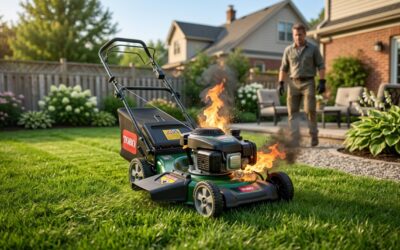
Restoring lost speed is legitimate maintenance — replace a worn drive belt, adjust a stretched self-propel cable, or service the hydrostatic transmission. But governor-removal and pulley-swap “speed mods” are dangerous: they overload the engine, deck spindles, and brakes, void your warranty, and make the machine unstable. Residential frames and brakes are simply not engineered for higher speeds.

Does mowing faster give a worse cut?

Yes, past a certain point. The blade needs enough time per foot of travel to recut clippings and shear grass cleanly. Exceed your mower’s capacity and you’ll see ragged, brown-tipped grass, missed stragglers, and clumped clippings — all of which invite disease.

What speed do commercial mowers cut at?

Commercial crews typically mow at 6–10 mph with high-horsepower zero-turns running wider decks. The combination of 25+ HP engines, fabricated decks, and 12 mph transport capability lets a two-person crew finish 4–5 acres per hour.

Is a faster mower actually more efficient?

Only up to the point where cut quality holds. A zero-turn at 7 mph in good conditions covers ground nearly twice as fast as a lawn tractor at 4 mph — but push it to 10 mph in thick grass and you’ll make a second pass, burning more fuel and time than the slow first pass would have.