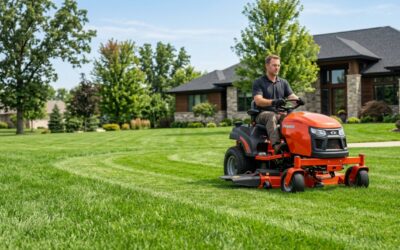

Quick Answer / TL;DR: There is no single official annual death count for lawn mower accidents in the U.S., but safety and medical data consistently indicate that mowers contribute to roughly 70–100 deaths and over 80,000 emergency-treated injuries each year. Most fatalities involve riding mower rollovers, blade contact, or struck-by incidents — and nearly all are preventable with proper safety practice.
Curious how far mowing technology has come? See our guide on how people cut grass before lawn mowers.
Understanding the Numbers: Why the Count Varies
Before we get to prevention, it helps to understand why you’ll see different figures quoted. The U.S. Consumer Product Safety Commission (CPSC), Emergency Department surveillance data (NEISS), and organizations like the American Academy of Pediatrics each track mower incidents differently — some count only direct fatalities, others include indirect deaths such as carbon monoxide poisoning or run-over incidents involving children.
- Riding mowers account for the majority of fatal incidents, primarily through rollovers on slopes.
- Push mower blade contact causes tens of thousands of the annual injuries, including severe hand and foot trauma.
- Children under 19 suffer an estimated 9,000+ mower-related injuries yearly, with amputations among the most common serious outcomes.
- Projectile injuries — debris thrown by blades at over 100 mph — cause a meaningful share of bystander injuries and deaths.
Short on time? Our Ego Power+ Z6 rear bumper overview covers the main accessories at a glance.
What You Need
Safety Equipment (Treat This as Mandatory)
- Safety glasses or a face shield — projectiles are the #1 preventable injury cause
- Closed-toe, non-slip work boots — never sandals or sneakers
- Hearing protection — mowers run at 85–95 dB, enough for permanent hearing damage over time
- Fitted clothing — no loose strings, drawstrings, or jewelry near the deck
- Sturdy gloves for handling blades and performing maintenance
Before You Mow — Preparation Checklist
- Walk the entire lawn and remove sticks, stones, toys, and wire
- Check that all mower guards, deflectors, and kill switches are functional
- Confirm children and pets are indoors and supervised away from the mowing area
- Know your terrain — mark slopes, holes, and wet spots before starting
- For gas mowers: refuel only when the engine is cold
Step-by-Step Guide: Mowing Safely to Avoid Becoming a Statistic
Step 1: Clear and Inspect the Work Area
Walk your lawn at mowing height pace. Pick up every object the blades could catch and throw. A single stone launched at 100+ mph can kill a bystander 50 feet away.
💡 Pro Tip: Do your debris walk the evening before, when low sunlight casts shadows that make sticks and stones easier to spot.
Step 2: Match the Mower to the Terrain
Never ride a mower on slopes steeper than 15 degrees (roughly a 27% grade) — this is the leading scenario in fatal rollover deaths. On steep ground, use a push mower across the slope, never up and down. Riding mowers should be driven up and down slopes, never across.
⚠️ Warning: Wet grass dramatically increases rollover and slip risk. Wait until the lawn is dry — no mowing task is worth your life.
Step 3: Establish a Hard “No Riders, No Kids” Rule
Never carry passengers on a riding mower, and never allow a child in your lap while operating. Run-over backover incidents involving young children are among the most heartbreaking categories of mower fatalities — the operator simply cannot see a small child behind the machine.
💡 Pro Tip: Designate a responsible adult to actively supervise children indoors or in a fenced area for the entire mowing session, not just at the start.
Step 4: Operate With Blade Discipline
- Never place hands or feet near the deck while the engine runs
- Disengage the blade and shut off the engine before unclogging, adjusting, or crossing gravel paths
- Push mowers: keep all four wheels on the ground; never pull a running mower toward you or mow in reverse unless absolutely necessary
- Always disconnect the spark plug wire before any blade work
Step 5: Handle Fuel and Fumes Correctly
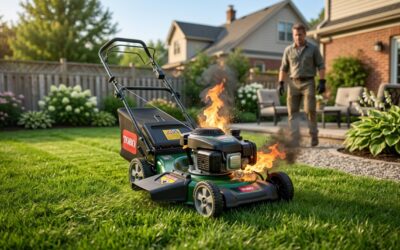
A smaller but real fatality category involves carbon monoxide poisoning and fuel fires. Never run a mower in a closed garage or shed, never smoke while refueling, and never add fuel to a hot engine. Store fuel in approved containers away from living spaces.
⚠️ Warning: Running a mower in an attached garage can push lethal CO levels into your home through shared walls and doorways within minutes.
Step 6: Maintain the Machine Like Your Safety Depends on It (It Does)
Check blades for cracks and sharpness, verify the dead-man switch kills the engine instantly, and inspect tires and brakes on riding units each season. A failed kill switch or worn brake turns a minor mistake into a fatality.
Common Mistakes & Troubleshooting
1. Letting kids “help” on riding mowers. This is the single most common factor in child run-over deaths. Children under 12 should never operate any mower, and under 16 should not use ride-on machines — guidance backed by the American Academy of Pediatrics.
2. Clearing a clog with the engine running. Many hand amputations happen in the two seconds it takes for a blade to spin up after a stick jams the deck. Shut off the engine, wait for the blade to fully stop, and pull the spark plug wire first.
3. Mowing slopes that exceed the machine’s rating. If your mower begins to slide or the front wheels lift, you’re past the limit. Stop the blades, back down slowly, and find another approach — or use a trimmer on that section.
4. Removing or bypassing safety deflectors. Grass catchers, rear guards, and discharge chutes feel inconvenient until a projectile injury happens. Replace damaged guards immediately — never operate with them removed.
5. Refueling a hot engine. Vapor ignition from a hot muffler can cause flash fires and severe burns. Cool-down time of 15+ minutes is the safe standard.
When to Repair vs. Replace
If your mower’s kill switch, blade brake, or rollover protection is compromised and parts are unavailable or costly, replacement is the safer investment. Modern machines include significantly improved safety interlocks and rollover protection compared to units even a decade old.
Frequently Asked Questions
How many people die from lawn mowers a year in the U.S.?
There’s no single official annual figure, but CPSC and medical literature data generally point to dozens of deaths per year (commonly cited around 70–100 when including run-overs, rollovers, and projectile incidents) alongside roughly 80,000+ emergency-department-treated injuries. Numbers vary by source and year because reporting methodologies differ.
What type of mower causes the most deaths?
Riding mowers are responsible for the majority of fatalities, mainly through rollovers on slopes and run-over/backover incidents. Push mowers cause far more total injuries (primarily to hands and feet) but fewer deaths.
Are children at special risk from lawn mowers?
Yes. An estimated 9,000+ children are injured by mowers annually in the U.S., and children account for a disproportionate share of amputations and run-over fatalities. The AAP recommends children under 12 never operate mowers and under 16 never operate riding mowers, and that children stay indoors during mowing.
What’s the single most important safety habit?
Separating people from the machine. That means clearing the area of bystanders before starting, never carrying passengers, checking behind before reversing, and shutting the engine off completely before touching the deck or blade.
Are robotic mowers safer than traditional mowers?
Generally, yes for operators — there’s no human walking behind spinning blades or riding a rollover-prone machine. However, small children and pets should still be kept away from the work area, and boundary wiring must be maintained so the unit stays in its designated zone.
Where can I find official mower safety statistics?
Primary sources include the CPSC’s NEISS database, peer-reviewed studies in journals like the American Journal of Emergency Medicine, and safety guidance from the American Academy of Pediatrics and OSHA for commercial operators. Figures should always be attributed to the specific source and reporting year.
Browse all of our lawn and garden how-to guides.