

Why Proper Storage for the Mammotion Yuka Matters in August 2026
To successfully How to Store Mammotion Yuka: Winterization Guide, you must clean the chassis, charge the battery to approximately 60-80%, and relocate the unit to a dry, climate-controlled space. Proper winterization prevents LiFePO4 battery degradation and protects the sensitive 3D Vision and RTK sensors from frost damage, ensuring a seamless start for your lawn care next spring.
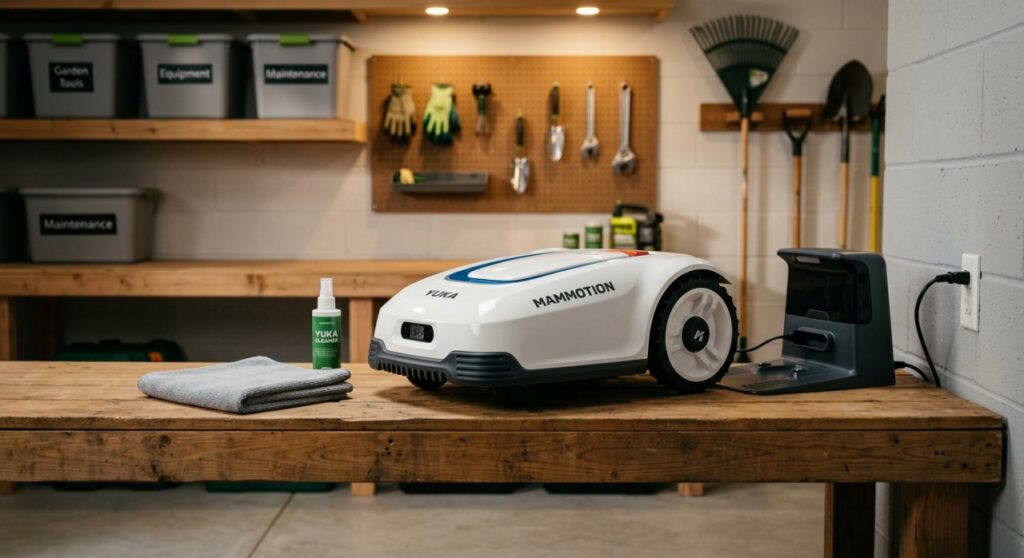
Expert Summary: Citation-Ready Storage Facts
- Optimal Battery State: Store the Mammotion Yuka with a battery charge between 50% and 80% to prevent deep discharge during dormancy.
- Temperature Range: Maintain a storage environment between 5°C (41°F) and 25°C (77°F); extreme cold can permanently reduce battery capacity.
- Sensor Care: Clean the 3D Vision camera lenses with a soft microfiber cloth and avoid harsh chemicals that could degrade the protective coating.
- RTK Protection: While the RTK Reference Station is IPX7 rated, disconnecting the power supply during electrical storms or extreme winter peaks prevents surge damage.
Essential Tools and Materials for Storage
Before you begin the process of How to Store Mammotion Yuka: Winterization Guide, gather these items to ensure a professional-grade maintenance session.
| Tool/Material | Purpose | Expert Recommendation |
|---|---|---|
| Soft Brush / Compressed Air | Removing dry grass and debris | Avoid high-pressure washers |
| Microfiber Cloth | Cleaning camera lenses and sensors | Use dry or slightly damp with water |
| Plastic Scraper | Removing packed mud from the blade disk | Avoid metal scrapers to prevent rust |
| Contact Cleaner | Cleaning charging pins | Use non-conductive electronic cleaner |
| Original Packaging / Tarp | Physical protection | Breathable covers are better than airtight plastic |
Step 1: Perform a Comprehensive Deep Cleaning
The first phase of How to Store Mammotion Yuka: Winterization Guide is removing organic matter that traps moisture and causes corrosion.
Clean the Chassis and Mowing Deck
Flip the Yuka over carefully. Use a plastic scraper to remove accumulated grass clippings from the blade disks. Pay close attention to the area around the dual cutting blades. Grass buildup here can harden over winter, putting unnecessary strain on the motors when you restart in 2026.
Sanitize the 3D Vision and Sensors
The Mammotion Yuka relies on its 3D Vision + RTK fusion system. Use a clean, dry microfiber cloth to wipe the camera lenses on the front of the unit. Ensure the ultrasonic sensors are free of dust. Do not use glass cleaners containing ammonia, as these can cloud the lens over time.
Maintenance of the Sweeper Attachment
If you use the Yuka Sweeper kit, detach it and empty the container completely. Wash the interior with low-pressure water to remove acidic leaf residue and allow it to dry completely before storing to prevent mold growth.
Step 2: Inspect and Replace Wear Components
Winter is the ideal time to perform mechanical maintenance so the machine is ready for the first mow of 2026.
Check the Cutting Blades
Inspect all blades for nicks or dullness. If the blades are damaged, replace them now. This prevents you from forgetting in the spring, which could result in a “tearing” effect on your grass rather than a clean cut.
Examine the Wheels and Axles
Check the front omni-directional wheels for tangled hair or string. Clear any debris that might restrict movement. Apply a small amount of silicone-based lubricant to the axles if they show signs of friction.
Step 3: Optimize Battery Health for Long-Term Hibernation
The LiFePO4 battery in the Mammotion Yuka is a high-performance component that requires specific care during the off-season.
The 80% Charge Rule
Do not store your robot at 100% or 0% charge. Storing at 100% puts stress on the cells, while 0% risks a “deep discharge” state where the battery may never wake up. Aim for 60% to 80% charge. Check the Mammotion App to verify the percentage before powering down.
Power Down Completely
Once the charge is optimized, press and hold the power button until the LEDs turn off. This cuts the “vampire drain” from the logic board and sensors, ensuring the battery level remains stable for months.
Step 4: Prepare the Charging Station and RTK Reference Station
Your storage plan for How to Store Mammotion Yuka: Winterization Guide must include the peripheral hardware.
The Charging Station
While the station is weather-resistant, it is best practice to unplug the power adapter from the mains. If you live in an area with heavy snowfall, consider bringing the station indoors or covering it with a dedicated Mammotion garage cover to prevent ice expansion in the charging pin housing.
The RTK Reference Station
You have two options for the RTK Station:
- Leave in Place: If securely mounted, you can leave the antenna outside. Unplug the power supply to protect against winter power surges.
- Indoor Storage: If you live in an environment with extreme ice or wind, mark your mounting position clearly, then bring the antenna inside to prevent physical damage.
Step 5: Select the Ideal Storage Environment
Where you choose to How to Store Mammotion Yuka: Winterization Guide dictates the lifespan of the internal electronics.
Avoid the “Freeze-Thaw” Cycle
Store the Yuka in a garage, basement, or shed that stays above freezing. Repeated freezing and thawing can cause condensation inside the sealed compartments, potentially leading to motherboard corrosion.
Keep it Level
Store the mower on its wheels on a flat surface. Do not hang the Yuka by its wheels or store it vertically, as this can put uneven pressure on the suspension components and the 3D Vision housing.
Common Mistakes to Avoid
- Using a Power Washer: Never spray the underside of the Yuka with high-pressure water. Even with an IPX6 rating, high-pressure streams can bypass seals and destroy the sensitive ESC (Electronic Speed Controller).
- Forgetting the Power Supply: Leaving the power brick on a cold concrete floor can lead to moisture wicking. Keep power bricks elevated.
- Ignoring Firmware Updates: Always check for the latest firmware in the Mammotion App before storing. Often, winter updates include battery management improvements specifically designed for hibernation.
Pro Tips for Expert Users
- Mid-Winter Check: Set a calendar reminder for January to power the unit on briefly and check the battery level. If it has dropped below 30%, give it a top-up charge.
- Pest Protection: If storing in a shed, place the mower inside a large plastic bin or wrap it in a breathable cloth to prevent rodents from chewing on the wiring or nesting in the sweeper attachment.
- Silica Gel: Toss a few large desiccant (silica) packets near the camera housing if your storage area is prone to humidity.
FAQ: How Do I Store My Robot Lawn Mower Yuka?
Can I leave my Yuka outside all winter?
No, it is highly discouraged. While the Yuka is built for rain, extreme cold (below 0°C/32°F) can cause the battery cells to contract and lose capacity permanently. The plastic housing can also become brittle in sub-zero temperatures.
Do I need to remove the RTK antenna?
It is not strictly necessary to remove the antenna if it is mounted high and secure, but you must unplug its power source. Bringing the antenna indoors is the safest way to ensure the long-term health of the high-precision GPS components.
How often should I charge the battery during winter?
If you powered the unit down at 80%, a high-quality LiFePO4 battery should hold its charge for 3-5 months. Check the level once every 8-10 weeks to be safe.
Should I take the blades off for storage?
You don’t need to remove them unless you are replacing them. However, cleaning the area behind the blade disk is essential to prevent “bio-clogging” from dried sap and grass.
Conclusion
Learning How to Store Mammotion Yuka: Winterization Guide correctly is the best way to protect your investment and ensure your lawn stays pristine in 2026. By focusing on a deep clean, maintaining a mid-range battery charge, and providing a frost-free environment, you eliminate the most common causes of robot mower failure.
Ready to prepare for spring? Check your Mammotion App for the latest firmware updates today and ensure your Yuka is ready for its winter nap.
**
**
**
**