
Why Are Lawn Mowers Red? The Real History Behind the Color
Most lawn mowers aren’t actually red by default — but the ones that are redowe their color to brand identity, manufacturing tradition, and marketing strategy. Understanding why helps you make smarter buying decisions and spot quality signals at a glance.
Expert Summary
- Red is not a safety or industry standard for lawn mowers — it is primarily a branding choice tied to specific manufacturers.
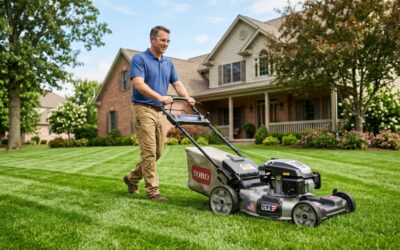
- Toro, one of the most recognized lawn mower brands, popularized red as a signature color and has used it consistently since the early 20th century.
- Color in outdoor power equipment signals brand loyalty and product line identity, similar to how John Deere owns green and Husqvarna owns orange.
- Red paint on mowers historically served a practical corosion-resistance purpose, as iron oxide (rust-colored red) was a common base coat in early metal painting.
- For freelancers and solopreneurs buying a mower for a lawn care side hustle, color is a proxy for brand recognition — which affects resale value and parts availability.
Step1: Understand the Origin of Red Lawn Mowers
The short answer: Red became associated with lawn mowers largely through Toro’s branding dominance starting in the 1920s, not because of any industry-wide color code.
###1.1 Trace the History of Toro’s Red
Toro was founded in 1914 in Minneapolis, Minnesota. By the 1920s, the company was manufacturing golf course maintenance equipment and adopted bold red finish to stand out on the course.
That red became a trademark. Golfers, groundskeepers, and eventually homeowners began associating red with Toro reliability.
Over decades, this created a feedback loop: red mowers looked professional, professionals bought red mowers, and the color itself became a signal of quality.
2 Recognize the Iron Oxide Connection
Early20th-century metal equipment was often primed with red iron oxide paint — a cheap, widely available rust inhibitor.
This gave farm equipment, industrial machinery, and lawn tools a reddish base coat. Many manufacturers simply left the final color close to that primer shade.
Red wasn’t chosen for aesthetics first — it was the path of least resistance in early industrial manufacturing.
3 Note How Other Brands Chose Different Colors
| Brand | Primary Color | Why |
|---|---|---|
| Toro | Red | Legacy brand identity since 1920s |
| John Dere | Green + Yellow | Agricultural heritage, patented color scheme |
| Husqvarna | Orange | Swedish design language, high visibility |
| Honda | Red | Matches Honda’s global brand color system |
| Craftsman | Red + Black | Retail shelf differentiation at Sears |
| Ariens | Red | Midwest manufacturing tradition |
| Snapper | Red | Vintage American brand identity |
The pattern is clear: red is overepresented in American lawn equipment brands because of early manufacturing norms and Toro’s outsized cultural influence.
Step 2: Learn How Brand Color Affects Your Buying Decision
Why this matters to you: If you’re a freelancer or solopreneur running a lawn care business, the color of your mower is directly tied to parts availability, resale value, and customer perception.
1 Map Color to Parts Ecosystems
Red mowers from Toro, Honda, and Ariens have massive parts networks in the US.
If you’re working solo without a mechanic on call, you need a mower with parts available at your local dealer or shipped overnight from Amazon. Red brands generally deliver on that.
Pro Tip: Before buying any mower, search the model number on ereplacementparts.com. If the parts diagram is complete and in-stock items are available, you’re safe. If half the parts show “discontinued,” walk away regardless of color.
2 Understand Resale Value by Brand
A used Toro TimeMaster (red) holds its value better than a comparable no-name mower in any color.
Brand recognition — built over a century of consistent red branding — creates a secondary market premium. When you eventually upgrade, that matters.
For solopreneurs watching cash flow, a $600 red Toro that resells for $300 in two years costs less than a $400 off-brand mower worth $50 at yard sale time.
3 Consider Customer Perception for Lawn Care Businesses
Clients notice professional equipment. A well-maintained red Toro or Honda on a trailer signals that you take your work seriously.
This is a soft ROI that’s hard to quantify but very real. Color = brand trust, and brand trust = easier client referals.
Step 3: Distinguish Red Mowers by Category
Not all red mowers are the same. Red appears across push mowers, self-propelled mowers, zero-turns, and robotic mowers — each with different ROI implications for independent workers.
1 Walk-Behind Push Mowers (Red)
| Model | Brand | Price (approx.) | Best For |
|---|---|---|---|
| Toro Recycler22″ | Toro | ~$380 | Small residential lots |
| Honda HRN216VKA | Honda | ~$450 | Reliability-focused buyers |
| Ariens Classic21″ | Ariens | ~$330 | Budget-conscious starters |
These are the entry point for lawn care side hustlers. Low overhead, easy to transport in a truck bed.
2 Self-Propelled Mowers (Red)
Self-propelled red mowers from Toro and Honda dominate the mid-range market ($400–$600).
For solopreneurs doing4–8 lawns per day, self-propelled saves energy and speeds up jobs — directly increasing hourly earnings.
The Toro TimeMaster 30″ is a standout: its wider deck cuts time per lawn by roughly 25–30% vs. a standard 21″ mower, meaning you can take on more clients without adding equipment.
3 Zero-Turn Mowers (Red)
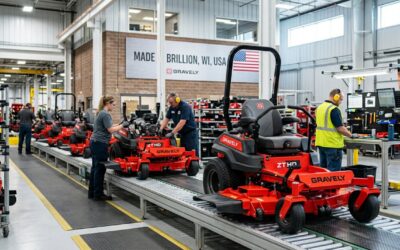
Ariens and Gravely (sister brands, both red) make zero-turn mowers for larger properties.
If you’re servicing commercial properties or large residential lots (half-acre+), a red zero-turn from Ariens pays for itself within one season of added client capacity.
These are higher capital investments ($3,000–$8,000) that require a trailer, but the ROI math works for full-time lawn care operators.
Step 4: Evaluate Red Mowers on the Criteria That Actually Matter
For freelancers spending their own money, ROI is the only metric that counts. Here’s how to evaluate a red mower like a business tool, not a hobby purchase.
1 Calculate Your Per-Job Earnings Increase
Use this simple formula:
Monthly ROI = (Jobs per week × Rate per job × 4) − Monthly equipment costExample:
- You charge $50per lawn
- A faster Toro self-propelled lets you do 1extra lawn per day
- That’s 5 extra lawns per week × $50 = $250/week = $1,000/month
- A $500Toro paid off in 2 weeks at that rate
This is how independent workers should evaluate every tool purchase — not by list price, but by time-to-payoff.
2 Check Setup Speed and Solo Operability
Red mowers from Honda and Toro are designed for out-of-box usability. Assembly takes 15–30 minutes from the box.
There’s no IT support when you’re solo. You need a mower that starts reliably, has an intuitive blade engagement system, and doesn’t require a manual every time something feels off.
Honda’s GCV series engines (found on red Honda mowers) are famous in the independent contractor world for starting on the first or second pull, season after season.
3 Assess Maintenance You Can Handle Alone
| Maintenance Task | DIY Difficulty | Tools Needed |
|---|---|---|
| Air filter replacement | Very Easy | None |
| Blade sharpening | Easy | File or bench grinder |
| Oil change | Easy | Drain pan, funel |
| Spark plug swap | Easy | Spark plug wrench |
| Carburetor cleaning | Moderate | Spray cleaner, screwdrivers |
| Drive belt replacement | Moderate | Wrench set |
Top-tier red mowers (Toro, Honda) are designed so that most common maintenance tasks require no special tools and can be completed in under 30 minutes.
For solo operators, that’s not a nice-to-have — it’s essential. Downtime is lost revenue.
Step 5: Compare Red Mowers to Other Color Options
Bottom line: Color is branding, but brand still matters. Here’s an honest side-by-side of red vs. competing color families.
1 Red vs. Green (John Deere)
John Deere is the gold standard for longevity and dealer network. However, John Deere residential mowers are often priced 20–30% higher than comparable Toro models.
For a solopreneur starting out, that price premium is hard to justify. Toro red gives you 90% of the reliability at better entry price.
2 Red vs. Orange (Husqvarna)
Husqvarna orange mowers are popular in Europe and increasingly in the US. Their robotic mower line(Automower) is orange and market-leading.
For traditional push/self-propelled work, Husqvarna and Toro are roughly comparable. Husqvarna has a slight edge in robotic and battery-powered innovation; Toro has the edge in gas engine reliability and US parts availability.
3 Red vs. Yellow/Black (Dewalt, Ego)
EGO (yellow/black) and Greenworks are leading the battery-powered revolution. These aren’t traditional “red mower” brands, but they’re increasingly relevant for solopreneurs who want zero fuel costs and quieter operation in residential neighborhoods.
The trade-off: battery mowers have higher upfront cost and limited runtime per charge for large-lot work. For small urban lawns, they’re excellent ROI. For half-acre+ properties, gas red mowers still win on cost per hour.
Step 6: Make the Final Purchase Decision
Use this checklist before you buy any red mower (or any mower, for that matter).
Pre-Purchase Checklist
- [ ] Define your lot size — under 1/4 acre (push), 1/4–1/2 acre (self-propelled), over 1/2 acre (zero-turn or riding)
- [ ] Set your budget including first year of maintenance (~$50–$100 for oil, blades, filters)
- [ ] Verify parts availability for the specific model number before buying
- [ ] Check local dealer proximity — for warranty service and emergency parts
- [ ] Calculate your ROI timeline using the formula in Step 4.1
- [ ] Read50+ reviews on Home Depot, Amazon, and Toro.com — look for 2–3-year owner reviews, not first-week impressions
- [ ] Confirm the engine brand — Honda GCV, Kawasaki, or Briggs & Stratton Commercial are preferred for solo operators
Red Mowers Worth Buying in 2026
| Model | Color | Price | Best Use Case | ROI Grade |
|---|---|---|---|---|
| Toro TimeMaster 30″ | Red | ~$700 | High-volume lawn care | A+ |
| Honda HRN216VKA | Red | ~$450 | Reliability-first buyers | A |
| Toro Recycler 22″ | Red | ~$380 | Starter side hustle | A− |
| Ariens Classic 21″ | Red | ~$330 | Budget-conscious entry | B+ |
| Gravely ZT HD 48″ | Red | ~$4,500 | Commercial operators | A (at scale) |
Pro Tips from Lawn Care Professionals
Tip 1: Buy last year’s model in red.
Toro and Honda release updated models annually, but the prior year’s model drops15–20% in price and runs the same engine. Search “[model name] previous year” at big box stores in late fall.
Tip 2: The color of the oil matters more than the color of the mower.
Change your oil every 50hours of operation, not just once per season. Solo operators running 4–6 lawns/day can hit 50hours in 3–4 weeks during peak season.
Tip 3: A sharp blade is worth more than a new mower.
A dull blade tears grass instead of cutting it, causing browning that clients notice and complain about. Sharpen blades every 20–25 hours. A bench grinder costs $40and pays for itself the first time you avoid a client callback.
Tip 4: Red visibility matters on a trailer.
Bright red equipment is easier to spot if items shift during transport. It’s also easier for clients to identify your equipment from the street — subtle but real brand-building for solo operators.
Tip 5: Register your warranty immediately.
Toro and Honda both offer extended warranty protection when you register within 30 days of purchase. For a solo operator with no backup equipment, a warranty claim can save you from a week of lost revenue.
Common Mistakes to Avoid
Mistake 1: Buying based on color alone.
Red means Toro, Honda, or Ariens — but not every red mower is from a quality brand. Verify the brand and engine specs, not just the paint job.
Mistake 2: Skipping the engine brand check.
A red mower with a Briggs & Stratton 550 Series engine is not the same as one with a Honda GCV160. Engine quality determines longevity more than anything else.
Mistake 3: Underestimating deck size impact.
A 21″ deck vs. a 30″ deck can mean the difference between 6and 8 lawns per day. That’s a significant income difference on annual basis.
Mistake 4: Ignoring the self-propel drive type.
Front-wheel drive is fine for flat lawns. If you’re doing hilly properties, rear-wheel drive self-propelled mowers (like the Toro Recycler with Personal Pace) give you much better traction and control.
Mistake 5: Buying retail when dealer pricing is available.
Local Toro and Honda dealers often match or beat big box pricing and include free first-service. For a tool you depend on for income, that relationship is worth a slightly longer drive.
Frequently Asked Questions
Q: Why are so many lawn mowers red?
Red is the dominant color in American lawn mower branding because of Toro’s century-long use of red as its signature color, combined with the historical use of red iron oxide primer in early metal manufacturing. Honda also uses red globally as part of its brand identity, reinforcing the color’s prevalence.
Q: Is red a safety color for lawn mowers?
No. Unlike construction equipment where yellow/orange signals caution, there is no industry safety standard requiring lawn mowers to be red. Red is purely a branding and manufacturing tradition.
Q: Does the color of a lawn mower affect its quality?
Color itself does not affect quality, but color reliably signals brand identity. Since Toro, Honda, and Ariens — all predominantly red — are among the most reliable mower manufacturers, red has become associated with quality through brand association, not any technical property of the paint.
Q: Which red lawn mower brand is most reliable for solo operators?
Honda leads in engine reliability and first-pull starts. Toro leads in deck design, self-propel systems, and US parts availability. For a solo operator who needs both reliability and repairability, Toro with a Honda engine (available on some models) is the best of both worlds.
Q: Are red lawn mowers more expensive than other colors?
Not inherently. Red mowers span the full price range from $300(Ariens Classic) to $8,000+ (Gravely commercial zero-turns). Price is driven by features, engine quality, and deck size — not color.
Conclusion
Why are lawn mowers red? The answer comes down to three forces: Toro’s century of brand-building, iron oxide’s role in early industrial paint, and Honda’s global red identity. Color became a proxy for brand trust, and brand trust became a purchasing shortcut for millions of buyers.
For freelancers, remote workers, and solopreneurs running lawn care as a side hustle or primary income, the color is the starting signal — not the finish line. The real evaluation is ROI, reliability, and solo operability.
A red Toro TimeMaster or Honda HRN pays for itself in weeks, handles without a support team, and holds resale value when you’re ready to upgrade. That’s the standard every tool purchase should meet when you’re spending your own money to earn more of it.