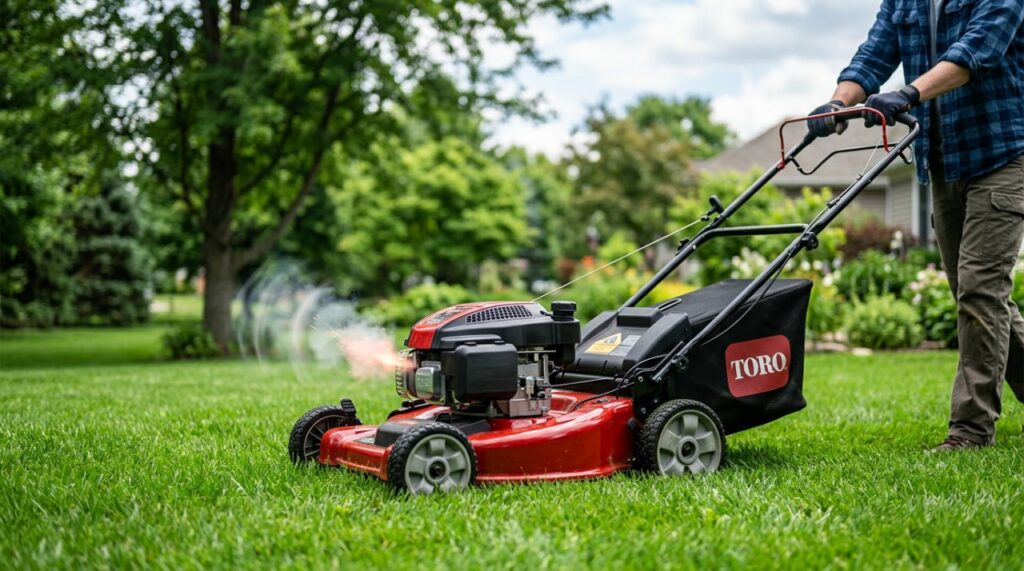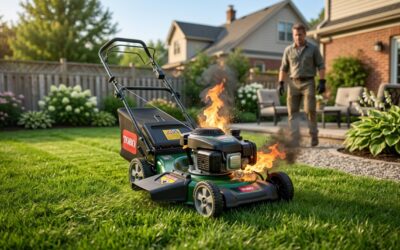

Quick Answer / TL;DR: A lawn mower backfires when unburned fuel ignites outside the combustion chamber—usually in the exhaust or intake. The most common causes are shutting down at high throttle, stale fuel, a lean air-to-fuel mixture, a dirty carburetor, a failing spark plug, or ignition timing issues. One pop at shutdown is often harmless; repeated backfiring needs diagnosis.

Technician diagnosing why a lawn mower backfires

Expert Summary: “A backfire is a sharp pop or bang caused by fuel burning at the wrong time or in the wrong part of the engine. A single pop during shutdown is usually just deceleration noise—not a serious fault. But backfiring during mowing almost always points to contaminated fuel, a dirty carburetor, a worn spark plug, or ignition timing trouble.”

What You Need

Tools

  • Spark plug wrench
  • Socket set and screwdrivers
  • Clean rags and shop towels
  • Fuel siphon pump or approved fuel drain container
  • Work gloves and safety glasses

Materials

  • Fresh fuel (87 octane or higher, less than 30 days old)
  • Fuel stabilizer
  • Replacement spark plug (correct part for your engine model)
  • Carburetor cleaner spray
  • Air filter (if the existing one is dirty or damaged)

Preparation: Work in a well-ventilated area away from open flames. Let the engine cool completely before touching the muffler or exhaust. Disconnect the spark plug wire before any hands-on inspection to prevent accidental starting.

Step-by-Step Guide

Step 1: Identify When the Lawn Mower Backfires

The timing of the noise is your best first clue. Note whether the mower backfires during startup, acceleration, normal operation, or shutdown before replacing any parts.

  • Backfire only at shutdown: Usually caused by shutting the engine off at high throttle. Fuel continues entering a hot muffler and ignites. Often harmless.
  • Backfire during operation: Points to stale fuel, a dirty carburetor, a lean mixture, or ignition problems.
  • Backfire with smoke: Suggests burning oil or a restricted air filter—different root cause than pure ignition backfire.

💡 Pro Tip: Keep a note on your phone logging when the backfire happens, engine temperature, and throttle position. This “symptom pattern” cuts diagnosis time in half.

Step 2: Check and Replace Stale Fuel

Fuel older than 30 days breaks down and leaves varnish deposits that disrupt combustion. Siphon old fuel from the tank, dispose of it properly at a hazardous waste facility, and refill with fresh gasoline. Add fuel stabilizer if the mower will sit for more than a few weeks.

⚠️ Warning: Never drain fuel while the engine is hot. Gasoline vapors ignite easily—keep all ignition sources away from your work area.

Step 3: Inspect the Air Filter and Air-Fuel Mixture

A clogged air filter starves the engine of air, creating a rich mixture that can burn late and pop in the exhaust. Remove the filter cover and inspect. Replace paper filters or wash foam filters with warm soapy water, dry them fully, and lightly oil them before reinstalling.

💡 Pro Tip: Hold the filter up to a light source. If you can’t see light through it, replace it—a $10 filter can stop a backfire instantly.

Step 4: Clean the Carburetor

Varnish deposits from old fuel clog the carburetor’s tiny jets, causing erratic fuel delivery and lean running—a leading cause of backfiring under load. Remove the carburetor bowl and spray carb cleaner through the jets, or soak stubborn carburetors in cleaning solution. Reassemble with a new bowl gasket.

Step 5: Test and Replace the Spark Plug

A worn, fouled, or incorrectly gapped plug causes weak or mistimed sparks that leave fuel unburned. Remove the plug, check the electrode for fouling or damage, verify the gap against your engine’s spec (typically 0.020–0.030 in.), and replace it if there’s any doubt. Plugs are inexpensive—when in doubt, swap it.

Step 6: Fix Your Shutdown Procedure

If the backfire only happens at shutdown, run the engine at low idle for 10–15 seconds before turning it off. This burns off residual fuel in the muffler and eliminates most shutdown pops. On engines with a fuel shutoff valve, close the valve and let the engine run the carburetor dry before stopping it.

💡 Pro Tip: This one habit—idling down before shutdown—solves the majority of “my mower bangs when I turn it off” complaints without any parts or tools.

Step 7: Stop and Inspect If Problems Persist

⚠️ Warning: Stop using the mower immediately if backfiring is accompanied by fuel leaks, heavy smoke, overheating, severe vibration, or sudden power loss. These symptoms can indicate internal engine damage (sheared flywheel key, worn valve seats, damaged muffler) that requires professional service. Continued operation risks fire or engine destruction.

New to lawn mower maintenance? Start with our EGO Power+ Z6 guide, or browse our full how-to library for more small-engine fixes.

Common Mistakes & Troubleshooting

  • Throwing parts at the problem without diagnosing: Replacing the spark plug when the real issue is stale fuel wastes money. Always match the fix to when the backfire occurs (Step 1) before buying anything.
  • Ignoring fuel age: Many backfire complaints trace straight back to gas left in the tank over winter. Fuel stabilizer and end-of-season draining prevent this entirely.
  • Confusing backfire with smoke: Smoke means burning oil, excess fuel, or restricted airflow—not the same problem as a backfire. Treating smoke with ignition fixes won’t work.
  • Shutting down at full throttle: This is the number one cause of harmless shutdown pops. Idle down for 10–15 seconds first.
  • Continuing to run a backfiring mower: Persistent backfires can overheat and destroy the muffler or ignite leaking fuel. If basic fixes don’t resolve it, stop mowing and inspect for internal damage.

Frequently Asked Questions

Why does my lawn mower backfire when I turn it off?

This is the most common backfire scenario. When you shut off a hot engine at high throttle, fuel and air continue flowing into a very hot muffler, where they ignite and produce a pop. Run the engine at low idle for 10–15 seconds before shutting it off to burn off residual fuel—it usually eliminates the noise completely.

Is a lawn mower backfire dangerous?

An occasional shutdown pop is annoying but not dangerous. However, backfiring combined with fuel leaks, heavy smoke, overheating, or power loss is a genuine fire and engine-damage risk. Stop using the mower if you notice these combined symptoms.

Can bad gas cause a lawn mower to backfire?

Yes—stale fuel is one of the most frequent causes. Fuel degrades after about 30 days, leaving deposits that clog the carburetor and disrupt the air-to-fuel ratio. Draining the tank and refilling with fresh gas, plus a carb cleaning if needed, often resolves backfiring during operation.

Why does my mower backfire and shoot flames from the exhaust?

Visible flames mean a significant amount of unburned fuel is igniting in the exhaust system—typically from a very rich mixture, severe carburetor problems, or ignition timing that’s badly off. Stop the mower, check for fuel leaks, and address the mixture or ignition issue before running it again.

How do I stop my mower from backfiring on startup?

Startup backfires usually mean fuel is pooling or the mixture is off before the engine reaches operating speed. Prime gently (don’t over-prime), use fresh fuel, and verify the choke opens fully once the engine warms. A fouled spark plug can also cause weak startup combustion—replace it if it’s more than a season old.

Will a dirty air filter cause backfiring?

It can. A clogged filter restricts airflow, making the mixture too rich for proper combustion. The engine runs rough, may bog under load, and can pop in the exhaust. Inspect the filter as part of any backfire diagnosis—it’s the cheapest and fastest fix on this list.