

Maintaining a large, pristine lawn has traditionally required hours of grueling weekend labor or expensive professional landscaping services. However, with the rapid evolution of smart home and garden technology, robotic lawnmowers have transitioned from luxury novelties to highly efficient household essentials. If you manage a substantial garden and want to reclaim your weekends, you have likely crossed paths with the WORX Landroid series.
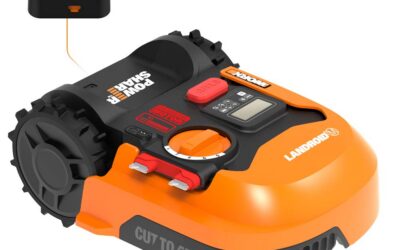
In this comprehensive review, we take a deep dive into the WORX Landroid L WR155E Robotic Lawnmower. Built specifically for expansive properties up to 2000 m², this bright orange automated mower promises a manicured, “Wembley-style” finish with minimal human intervention. Priced at 1,316, the WR155E positions itself as a premium, feature-rich solution designed to tackle complex terrains, tight corners, and steep inclines. But does it truly deliver on its promise of effortless lawn maintenance, or does it require too much babysitting? Let’s find out in our detailed analysis for August 2026.
—
Product Overview
The WORX Landroid L WR155E is the flagship model in WORX’s robotic mower lineup, engineered specifically to handle large residential gardens up to 2000 m². Powered by a high-capacity 20V lithium-ion battery, which is fully compatible with the WORX PowerShare ecosystem, this WORX Landroid L WR155E Review: Best Robotic Mower for Large Lawns is built for endurance and efficiency. It boasts a continuous runtime of approximately 120 minutes per charge, allowing it to cover massive zones systematically before autonomously returning to its charging dock.
At the heart of the WR155E’s design is its patented AIA (Artificial Intelligence Algorithm) navigation technology. Unlike traditional robotic mowers that bounce randomly off boundaries, the Landroid calculates the most efficient path, allowing it to navigate narrow passages, tight corners, and complex garden layouts with ease. It is also designed to handle challenging terrains, conquering slopes and gradients of up to 35% (approx. 20 degrees) without losing traction or tipping over.
One of its standout physical features is the “Cut-to-Edge” design. The cutting disc is offset to the side of the chassis, allowing the blades to get incredibly close to walls, fences, and flowerbed borders. This minimizes—and in some cases, completely eliminates—the need for manual string trimming after the mower has finished its cycle.
Key Specifications:
- Coverage Area: Up to 2000 m²
- Battery: 20V Max / 5.0 Ah Li-Ion (PowerShare compatible)
- Mowing Time: Approx. 120 minutes per charge
- Charging Time: Approx. 90 minutes
- Cutting Width: 220 mm
- Cutting Height: Adjustable from 30 mm to 60 mm
- Maximum Slope: Up to 35% (20°)
- Connectivity: Wi-Fi and App Control
- Noise Level: Ultra-quiet (approx. 63 dB)
—
Pros: The Advantages of the WORX Landroid WR155E
After evaluating its performance, feature set, and long-term reliability, several key advantages stand out that make the WR155E a formidable contender in the high-end WORX Landroid L WR155E Review: Best Robotic Mower for Large Lawns market.
1. Exceptional “Cut-to-Edge” Functionality
Standard robotic mowers often leave a wide, unsightly strip of uncut grass along fences, walls, and garden borders because their blades are positioned dead-center. The WORX WR155E solves this pain point beautifully with its offset cutting deck. By positioning the blades as close to the outer edge of the chassis as safety standards allow, it cuts grass right up to the boundary wire, saving you hours of tedious manual edging work.
2. PowerShare Battery Ecosystem Integration
The Landroid WR155E is powered by a standard WORX 20V PowerShare battery. This is a massive advantage if you already own other WORX cordless tools, such as drill drivers, leaf blowers, or hedge trimmers. You can easily swap the battery between devices. Furthermore, if the battery eventually degrades after years of heavy use, replacing it is as simple as buying a standard power tool battery, rather than paying premium prices for a proprietary, hard-to-install robotic battery pack.
3. Intelligent AIA Navigation and Narrow Passage Handling
Many robotic mowers get trapped in narrow corridors or spend excessive time bouncing aimlessly in tight corners. The Landroid’s AIA technology gives it cognitive navigation capabilities. It maps out the most efficient routes, easily maneuvers through tight passages that would stump other mowers, and ensures even coverage across the entire 2000 m² zone without leaving patchy spots.
4. Impressive Slope and Terrain Management
Large gardens are rarely perfectly flat. The WR155E is equipped with powerful brushless motors and high-traction tread wheels that allow it to scale steep slopes of up to 35% effortlessly. Its intelligent tilt and lift sensors automatically adjust its path and speed to maintain stability, ensuring a consistent cut even on rolling hills and uneven terrain.
5. Smart App Control and Auto-Scheduling
The Landroid app is highly intuitive and feature-rich. Once connected to your home Wi-Fi, the app allows you to program complex mowing schedules, monitor the mower’s real-time status, and track its location. Even better, the app features an “Auto-Schedule” function that calculates the optimal mowing frequency based on your local weather conditions, grass species, soil type, and lawn size.
6. Whisper-Quiet Operation
Mowing the lawn with a traditional petrol or electric mower is a noisy affair that must be scheduled around your neighbors’ peace and quiet. Emitting only around 63 decibels, the WR155E is incredibly quiet. You can easily run it overnight or early in the morning without disturbing anyone, allowing you to wake up to a freshly cut lawn every single day.
—
Cons: Areas for Improvement
While the WORX WR155E is an outstanding piece of machinery, no product is perfect. To ensure a balanced review, we have highlighted a few areas where users might face challenges.
1. Time-Consuming Initial Setup
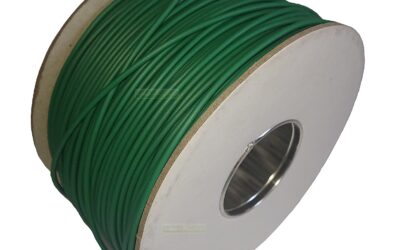
Like almost all boundary-wire-based robotic mowers, the initial installation process requires a significant investment of time and patience. Laying down 250 meters of boundary wire, securing it with 340 pegs, and mapping out obstacles like trees, ponds, and flowerbeds can take several hours (or even a full weekend for complex gardens). If the wire is not pegged down tightly, the mower’s wheels can occasionally catch and sever it, requiring troubleshooting and splicing.
2. Sensitivity to Wet Clay and Deep Mud
While the Landroid handles dry slopes up to 35% with ease, its performance can degrade on wet, muddy clay soils. The wheels can occasionally lose traction and spin in place, digging small ruts into the turf. While it has a built-in rain sensor that tells it to return to its dock when it rains, damp morning dew on soft soil can still occasionally cause traction issues.
3. High Upfront Cost and Optional Add-ons
At 1,316, the WR155E is a serious financial investment. Furthermore, while the base model is incredibly capable, some of its most desirable features—such as GPS anti-theft tracking (“Find My Landroid”), ultrasonic obstacle avoidance (“ACS”), and off-limits digital barriers—are sold separately as modular add-ons. Fully equipping the mower with these modules can quickly drive up the total cost.
—
Customer Reviews Analysis
With an overall rating of 4 out of 5 stars across 395 reviews, the WORX Landroid L WR155E has been thoroughly tested by real-world homeowners. Analyzing the feedback reveals a clear picture of what customers love and what occasionally frustrates them.
What Customers Praise:
- Consistent Lawn Quality: Many reviewers note that their lawns have never looked healthier. Because the mower cuts a tiny amount of grass daily, the micro-clippings act as a natural fertilizer (mulch), resulting in a lush, thick, weed-free lawn.
- Reliability and Battery Life: Users consistently praise the 120-minute battery life, stating that the mower easily covers its designated areas and rarely runs out of juice before finding its way back to the dock.
- The Cut-to-Edge Feature: This is a massive hit among buyers. Reviewers frequently mention that they rarely have to use their line trimmers anymore, saving them significant time and physical effort.
Common Customer Complaints:
- Boundary Wire Breaks: The most common frustration stems from the boundary wire. Several users reported that the mower occasionally sliced its own wire during the first few runs before the wire had fully settled into the soil. (Tip: Burying the wire slightly or ensuring it is pinned completely flat prevents this).
- Wi-Fi Range Issues: A few customers with massive properties noted that if their Wi-Fi signal didn’t reach the far corners of their garden, the app would temporarily lose connection with the mower. While the mower continues to run its pre-programmed schedule offline, real-time tracking is lost until it returns closer to the router.
—
Frequently Asked Questions (FAQs)
Q1: Does the WORX Landroid WR155E collect the cut grass?
No, the WR155E is a mulching mower. It cuts a tiny fraction of a millimeter off the grass blades on a daily basis. These micro-clippings are so small that they fall directly into the soil, decomposing rapidly to return vital nutrients and moisture to your lawn. This eliminates the need to bag, carry, and dispose of heavy grass clippings.
Q2: What happens if it rains while the mower is active?
The Landroid is equipped with an intelligent rain sensor. If it detects rain, it will automatically pause its mowing cycle, safely return to its charging station, and wait for the weather to clear. Once the sensor dries out, you can program a delay time (e.g., 1 or 2 hours) to allow the grass to dry slightly before it resumes cutting, protecting your lawn from muddy tire tracks.
Q3: How secure is the Landroid from theft?
The WR155E has several built-in security features. It requires a unique PIN code to operate; if someone picks it up, an alarm will sound, and it cannot be used without entering the PIN. Additionally, if it is removed from its designated geo-fenced boundary, it will lock down. For absolute peace of mind, you can purchase the optional “Find My Landroid” GPS module, which tracks the mower’s exact coordinates in real-time via cellular data.
Q4: How often do the cutting blades need to be replaced?
The Landroid uses three small, razor-like blades attached to a spinning disc. These blades are dual-sided, meaning they rotate in both directions to wear down evenly. Depending on the size of your lawn and the presence of debris (like twigs or stones), a set of blades typically lasts between 2 to 4 months. The box conveniently includes 9 replacement blades and screws to keep you going for a long time.
—
Who Should Buy This Product?
The WORX Landroid L WR155E is an ideal investment for:
- Homeowners with Large Properties: If you have a garden spanning between 1000 m² and 2000 m², this machine has the battery capacity and software intelligence to handle it effortlessly.
- Busy Professionals and Retirees: Anyone looking to reclaim their weekends and eliminate the physical strain of pushing a heavy lawnmower around a massive yard.
- WORX Tool Owners: If you already utilize the WORX 20V PowerShare tool lineup, the battery compatibility adds incredible value and convenience.
- Perfectionists: Those who want a consistently manicured lawn with perfectly clean edges, thanks to the Cut-to-Edge technology.
Who might want to look elsewhere? If you have a very small, simple garden (under 500 m²), this model is overkill; you would be better off saving money with the smaller Landroid S or M models. Additionally, if your garden is highly fragmented with multiple disconnected lawns separated by gravel paths or steep steps, a robotic mower may require too much manual carrying to be practical.
—
Final Verdict
The WORX Landroid L WR155E Robotic Lawnmower represents the pinnacle of modern, automated lawn care. For 1,316, it is undoubtedly a premium investment, but it is one that pays dividends in reclaimed time, reduced physical labor, and a stunningly beautiful lawn.
While the initial boundary wire installation requires some patience, and wet clay can occasionally pose a traction challenge, the overall performance of this WORX Landroid L WR155E Review: Best Robotic Mower for Large Lawns is stellar. Its Cut-to-Edge design minimizes post-mowing trim work, the PowerShare battery compatibility offers unmatched convenience, and the smart app integration makes scheduling a breeze.
If you are ready to hand over your lawn care chores to a highly capable, whisper-quiet, and intelligent robotic assistant, the WORX WR155E is easily one of the best large-capacity mowers on the market in 2026. It earns a highly recommended 4.5 out of 5 stars for its innovation, build quality, and sheer convenience.