
—
Direct Answer: Are Kevlar Belts Better for Lawn Mowers?
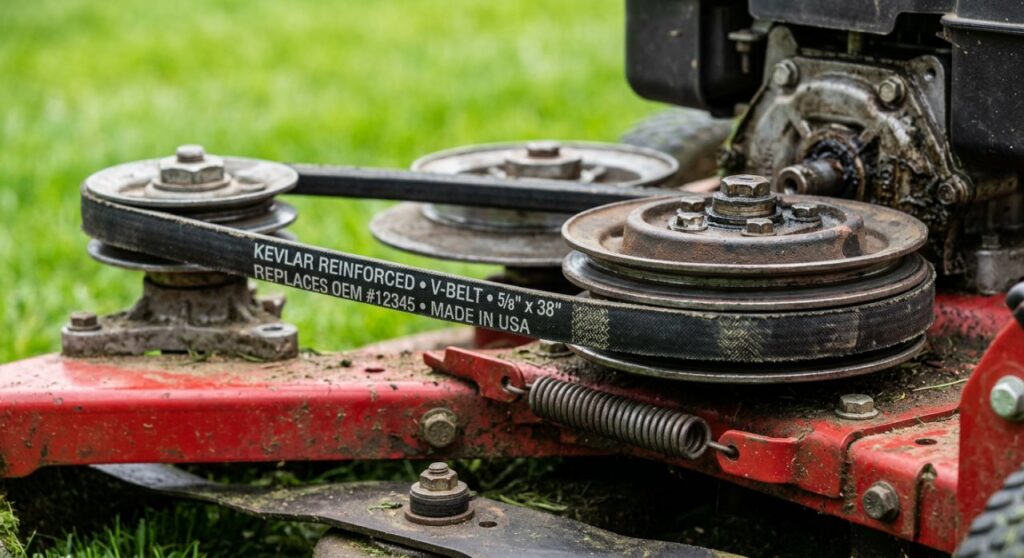
Yes, Kevlar-reinforced belts are generally better than standard rubber belts for demanding lawn mowing conditions, offering significantly longer life and better resistance to heat and debris. However, they are not always necessary for every user or mower type. The best choice depends on your mowing frequency, terrain, and budget.
Expert Summary: Key Takeaways on Kevlar Mower Belts
- Kevlar belts last 2-3 times longer than standard rubber belts in high-stress applications, reducing replacement frequency.
- The true annual cost of ownership is often lower with Kevlar, despite a higher upfront price, due to fewer replacements.
- They are essential for commercial mowers, hilly terrain, and tall, thick grass where slippage and heat are common.
- First-time buyers with a small, flat lawn may not need the upgrade; a quality OEM rubber belt is sufficient.
- For owners facing frequent belt failures, a Kevlar belt is the most cost-effective and reliable upgrade.
Step 1: Assess Your Mowing Needs and Current Belt Performance
Identify if your current belt is failing prematurely and why. This determines if a Kevlar upgrade is the correct solution.
Sub-step 1.1: Diagnose Your Current Belt’s Lifespan
- Standard rubber belts typically last 1-2 seasons with regular homeowner use.
- Frequent failures (less than 1 season) indicate excessive stress from heat, debris, or misalignment.
Sub-step 1.2: Evaluate Your Mowing Conditions
- Commercial use or mowing over 1 acre weekly puts high demand on the belt.
- Hilly, uneven terrain or thick, wet grass creates slippage and generates heat, which degrades rubber quickly.
- Presence of abrasive debris like sand or gravel accelerates wear.
Step 2: Understand the Core Difference: Kevlar vs. Standard Rubber Belts
Kevlar belts integrate synthetic aramid fibers into the rubber compound, dramatically improving tensile strength and heat resistance. This fundamental difference drives all performance benefits.
| Feature | Standard Rubber Belt | Kevlar-Reinforced Belt |
|---|---|---|
| Primary Material | Rubber with fabric cords | Rubber with Kevlar aramid fiber cords |
| Heat Resistance | Moderate; degrades above 150°F | Excellent; stable up to 300°F+ |
| Tensile Strength | Good for light loads | Superior; resists stretching under heavy load |
| Abrasion Resistance | Fair | High; better resists cuts and fraying |
| Typical Lifespan | 1-2 seasons (homeowner) | 3-5+ seasons (homeowner); 1-2 seasons (commercial) |
| Cost | Lower upfront cost ($15-$30) | Higher upfront cost ($30-$60+) |
Step 3: Analyze the True Annual Cost of Ownership
Calculate the long-term value by comparing replacement frequency and belt cost over multiple years. The cheaper belt is not always the most economical choice.
Sub-step 3.1: Model a 3-Year Cost Scenario
- Scenario A (Standard Belt): Replace twice per year. Cost: $25/belt x 6 belts = $150 over 3 years.
- Scenario B (Kevlar Belt): Replace once every 2.5 years. Cost: $50/belt x 1.2 belts = ~$60 over 3 years.
- Result: The Kevlar belt saves $90 and 4 replacement jobs over three years in this high-demand scenario.
Sub-step 3.2: Factor in Non-Monetary Costs
- Downtime: Each belt change costs you 1-2 hours of mowing time.
- Frustration & Risk: A snapped belt mid-mow can damage pulleys or idlers, leading to $100+ in additional repairs.
Step 4: Check Manufacturer Support and Warranty History
Verify if your mower’s manufacturer recommends or supports Kevlar aftermarket belts. Some warranties may be affected by non-OEM parts.
- OEM (Original Equipment Manufacturer) Belts: Guaranteed fit and function, but are often standard rubber. Check your owner’s manual for part numbers.
- Reputable Aftermarket Brands: Companies like Gates, Stens, and Oregon produce high-quality Kevlar belts that meet or exceed OEM specs.
- Warranty Consideration: Using an aftermarket belt typically does not void your mower’s warranty, unless the belt causes damage to another component. Always consult your manual.
Step 5: Make the Decision: Upgrade Path for Buyers and Owners
The final decision hinges on whether you are buying new or replacing a failed part.
For First-Time Buyers: Is This the Best Choice at This Price Point?
Answer: For a new mower under $500, the included OEM belt is adequate. Do not pay a premium for a “Kevlar belt” feature alone. Your priority should be the mower’s engine, deck size, and build quality. You can always upgrade the belt later if needed.
For Current Owners Approaching Failure: What is the Best Replacement?
Answer: If your original rubber belt failed in less than one full season, immediately upgrade to a Kevlar-reinforced belt from a reputable brand like Gates or Stens. This is the best replacement to solve chronic failure and reduce long-term cost.
Pro Tips and Common Mistakes to Avoid
Pro Tips
- Always replace the belt as a set with any worn idler pulleys or tensioners. A new belt on old, worn pulleys will fail prematurely.
- Clean the pulley grooves thoroughly with a wire brush before installing a new belt to ensure proper seating.
- Check belt tension after the first hour of use on a new installation, as new belts can stretch slightly initially.
Common Mistakes
- Mistake: Choosing the cheapest generic belt without Kevlar reinforcement for a high-demand mower.
- Consequence: Premature failure, repeated replacements, and potential damage to other components.
- Mistake: Ignoring pulley alignment and condition during a belt change.
- Consequence: The new belt will wear unevenly and fail much faster than expected.
Frequently Asked Questions (FAQ)
Q1: How do I know if my lawn mower belt is Kevlar?
A: Check the belt’s packaging or the old belt itself. Kevlar belts are often thicker, have a distinct woven texture, and may be marked with “Aramid” or “Kevlar.” The part number on the belt can also be cross-referenced online.
Q2: Can I use a Kevlar belt on any lawn mower?
A: Yes, as long as you match the correct belt size (length, width, and profile like 4L or 5L). Kevlar is a material upgrade; the belt’s dimensions must be identical to your OEM specification.
Q3: Are Kevlar belts worth the extra cost for a small suburban lawn?
A: Probably not. For a small, flat lawn mowed weekly, a quality standard rubber belt is sufficient and more cost-effective. The upgrade’s benefits are most pronounced under heavy load.
Q4: What is the most common reason a new belt breaks quickly?
A: Improper tension or pulley misalignment. A belt that is too tight or too loose, or that runs over a misaligned or seized pulley, will experience excessive stress and snap.
Q5: Should I buy an OEM or aftermarket Kevlar belt?
A: For guaranteed fit, buy OEM. For better performance and value, buy from a reputable aftermarket manufacturer like Gates, which specializes in power transmission belts and often provides superior Kevlar compounds.
Conclusion: Make an Informed Belt Decision
Kevlar belts are superior for durability and long-term value in high-stress mowing scenarios, but they are not a universal requirement. First-time buyers should focus on mower fundamentals, while current owners suffering from frequent belt failures should view a Kevlar upgrade as a smart, cost-saving investment.
Take action now: Assess your mowing conditions and belt history. If you’re replacing a belt, choose a Kevlar-reinforced option from a trusted brand to get back to mowing with confidence and less downtime.