
Can a Lawn Mower Cut Weeds Effectively?
Yes, most lawn mowers can cut common lawn weeds if the growth is not too tall, thick, woody, or wet. Correct mowing suppresses many annual weeds and prevents seed formation, but it rarely kills established perennial weeds because their roots and underground stems remain alive.
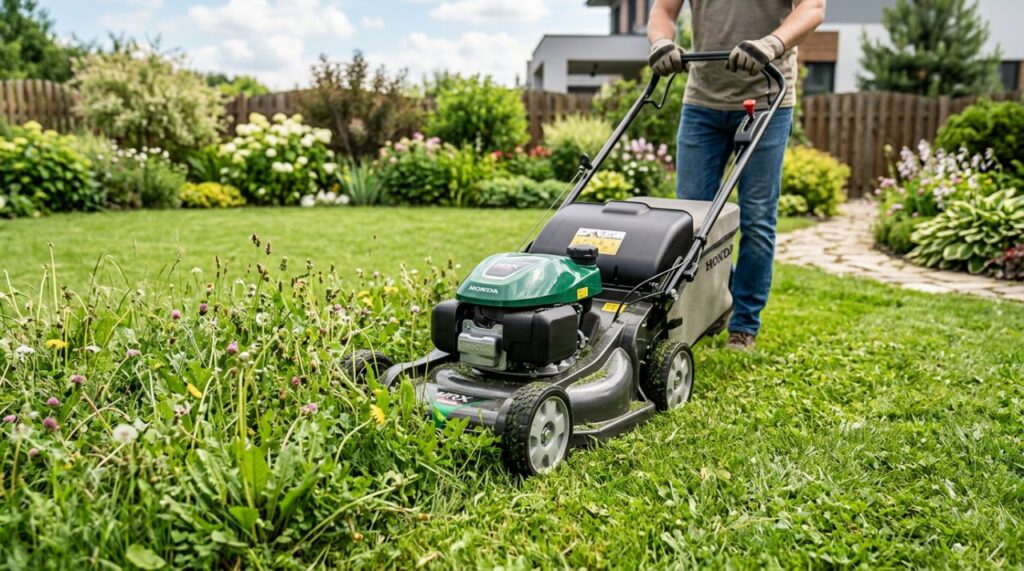
Expert Summary>
– A lawn mower can control young, soft-stemmed weeds, but it may not handle mature weeds with thick or woody stalks. – Mowing before weeds flower and set seed reduces future weed pressure, although it does not remove existing seeds from the soil. – Dirty mower decks, wheels, blades, and collection bags can transfer weed seeds between lawns. – Cutting no more than one-third of the vegetation height at once reduces mower strain and protects desirable grass. – Persistent perennial weeds usually require root removal or targeted treatment because mowing removes only their visible growth.
Step 1: Identify the Weeds Before Mowing
Identify whether the weeds are soft, mature, seed-bearing, or woody before starting the mower. Weed type determines whether mowing will provide useful control or simply scatter seeds and leave the roots untouched.
Recognize weeds a mower can usually cut
Standard rotary lawn mowers can normally cut low-growing, non-woody weeds found within turf. Common examples include:
- White clover
- Chickweed
- Henbit
- Crabgrass
- Annual bluegrass
- Young dandelion leaves and flower stems
- Plantain leaves
- Young broadleaf weeds
- Small patches of soft annual weeds
These plants may be cut cleanly when their stems are tender and their height remains within the mower’s working range.
Mowing can weaken annual weeds when repeated cutting prevents them from producing enough leaf area or forming seeds. However, low-growing weeds may adapt by flowering below the normal cutting height.
Recognize weeds that need another tool
A residential mower is not designed to clear dense brush, vines, saplings, or mature weeds with fibrous stalks. Avoid forcing the mower through:
- Mature thistles
- Woody shrubs
- Bramble canes
- Thick vines
- Tree seedlings
- Dense nettles
- Mature burdock
- Tall, dry seed stalks
- Unknown plants that may be toxic or irritating
Use a string trimmer, brush cutter, pruning tool, or manual weed puller to reduce these plants first. A brush cutter is generally better than a lawn mower for vegetation with thick or tangled stems.
Check for hazardous plants
Do not mow plants you cannot safely identify. Mowing can aerosolize sap, plant fragments, pollen, and oils.
Avoid mowing suspected poison ivy, poison oak, poison sumac, or plants treated recently with pesticides. Contact with chopped material may irritate the skin, eyes, or lungs.
Step 2: Inspect the Area for Hidden Hazards
Walk the entire mowing area and remove objects hidden beneath the weeds. Tall vegetation can conceal debris that may damage the mower or become a dangerous projectile.
Look carefully for:
- Stones and gravel
- Wire, rope, and garden netting
- Fallen branches
- Metal scraps
- Glass
- Toys
- Hose fittings
- Animal waste
- Irrigation heads
- Uneven ground, holes, and exposed roots
A rotary blade can eject hard objects at high speed. Keep people and pets away from the mowing zone, especially near the discharge side of the machine.
Mark obstacles that cannot be removed
Use visible markers around stumps, pipes, sprinkler heads, steep drops, and other fixed hazards. Never rely on memory when weeds obscure the ground.
If the vegetation is too dense to inspect safely, cut a narrow access path with hand tools or a string trimmer before using the mower.
Tools and Materials Needed
The safest setup combines a suitable mower with protective equipment and tools for reducing vegetation before mowing.
| Tool or material | Main purpose | When it is needed |
|---|---|---|
| Rotary lawn mower | Cuts grass and soft weeds | Maintained lawns and moderate weed growth |
| String trimmer | Reduces weeds around edges and obstacles | Tall but relatively soft vegetation |
| Brush cutter | Cuts dense, fibrous, or thick-stemmed growth | Overgrown lots and vegetation unsuitable for a mower |
| Hand pruners or loppers | Removes woody stems and vines | Shrubs, brambles, and saplings |
| Weed puller or garden fork | Removes crowns and roots | Taproot and perennial weeds |
| Rake | Collects loose stalks and seed heads | After cutting overgrown areas |
| Collection bags or tarp | Contains seed-bearing material | When weeds are flowering or producing seeds |
| Safety glasses | Protects eyes from fragments | Every mowing session |
| Hearing protection | Reduces noise exposure | Gas mowers and other loud equipment |
| Sturdy footwear | Protects feet and improves traction | Every mowing session |
| Heavy gloves | Protects hands during inspection and cleanup | Handling unknown or irritating weeds |
| Deck scraper or stiff brush | Removes plant residue | Cleaning the mower after use |
Step 3: Choose the Right Mower and Cutting Method
Match the machine to the vegetation rather than forcing a lawn mower to perform brush-clearing work. The right tool produces a cleaner cut, lowers injury risk, and reduces wear on the engine, blade, belt, and deck.
Compare common weed-cutting options
| Cutting option | Best use | Main advantage | Main limitation |
|---|---|---|---|
| Rotary mower | Grass mixed with young weeds | Fast coverage on level ground | Struggles with thick, tangled, or woody growth |
| Reel mower | Short, maintained turf | Clean scissor-like cut | Poor performance on tall or coarse weeds |
| String trimmer | Edges and isolated tall weeds | Reaches irregular spaces | Can scalp turf and scatter seeds |
| Brush cutter | Dense or thick-stemmed vegetation | More cutting power than a mower | Requires careful handling and protective gear |
| Flail mower | Large, rough, overgrown areas | Handles heavier vegetation and contains debris better | Usually excessive for a residential lawn |
| Manual removal | Individual perennial weeds | Can remove roots and prevent regrowth | Slow for large infestations |
A rotary mower is the most practical option for weeds growing among normal lawn grass. A reel mower works best only when the vegetation is short, upright, and regularly maintained.
Use collection mode when seeds are present
A mower with a properly fitted bag can capture some seed heads and cut material. It cannot guarantee complete seed collection because airflow and blade impact may release seeds before they enter the bag.
Bagging is most useful when:
- Seed heads are visible
- The infestation is localized
- The clippings will not be composted
- You need to move through uninfested areas afterward
Side-discharge mowing is faster, but it spreads cut material across a wider area. Avoid it when mature weed seeds are present.
Step 4: Prepare the Lawn Mower
Inspect the mower before cutting weeds because dull blades and clogged decks tear plants, strain the machine, and produce uneven results. Preparation is especially important when vegetation is taller or denser than ordinary turfgrass.
Sharpen or replace a dull blade
A sharp mower blade cuts soft stems cleanly. A dull blade repeatedly strikes and tears vegetation, increasing engine load and leaving shredded plant tissue.
Common signs of a dull blade include:
- Ragged grass tips
- Uncut weed stalks
- Repeated mowing needed over the same area
- Excessive vibration
- Uneven cutting
- Longer mowing time
Disconnect the spark plug wire on a petrol mower or remove the battery from a cordless mower before inspecting the blade. Follow the manufacturer’s instructions for blade removal, sharpening, balance, and installation.
Set the deck to its highest practical position
Start high when cutting overgrown grass or weeds. A high setting reduces the volume entering the deck and lowers the risk of stalling.
Do not remove more than about one-third of the vegetation height in a single pass when maintaining turf. Severely overgrown areas may require several passes on different days.
Check guards and discharge components
Confirm that the discharge chute, flap, collection bag, and safety guards are securely installed. Never tie open a safety flap or remove a guard to improve discharge.
Check the deck for old grass, string, vines, and compacted debris. Tangled plant material can obstruct airflow and interfere with blade movement.
Step 5: Reduce Tall Weeds Before Mowing
**