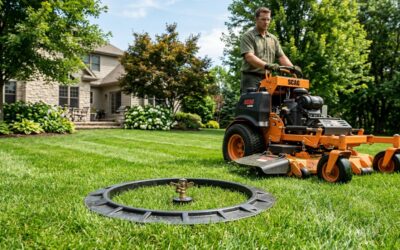

Can Lawn Mowers Damage Hearing? The Complete Protection Guide
Yes, lawn mowers can permanently damage your hearing. Most gas-powered mowers produce 85–95 decibels (dB) of noise — loud enough to cause irreversible hearing loss after just 2 hours of exposure. Understanding the risk and acting before symptoms appear is the only way to protect your long-term hearing health.
🧠 Expert Summary
- Gas lawn mowers average 85–95 dB — above the 85 dB threshold where NIOSH (National Institute for Occupational Safety and Health) confirms hearing damage begins.
- Noise-induced hearing loss (NIHL) is permanent — damaged hair cells in the cochlea do not regenerate.
- Safe exposure at85 dB is limited to 8 hours; at 91 dB it drops to just 2 hours; at 97 dB, only 30 minutes.
- Electric and battery mowers typically run at 75–82 dB — significantly safer for unprotected ears.
- Wearing NRR-rated hearing protection reduces effective exposure by15–33 dB, making even loud mowers manageable.
Step1: Understand How Lawn Mowers Damage Hearing
Lawn mowers damage hearing through prolonged exposure to high-decibel sound waves that destroy sensory hair cells in the inner ear.
The inner ear contains thousands of microscopic hair cells that convert sound vibrations into nerve signals. Intense or repeated loud noise physically bends and breaks these cells.
Once destroyed, they never grow back — which is why noise-induced hearing loss is one of the most preventable yet most common forms of permanent hearing impairment worldwide.
How the Decibel Scale Works Against You
The decibel scale is logarithmic, not linear. Every 3 dB increase doubles the sound energy your ears absorb.
| Sound Source | Approximate dB Level | Safe Exposure Time (NIOSH) |
|---|---|---|
| Normal conversation | 60 dB | Unlimited |
| Electric push mower | 75–82 dB | Unlimited |
| Gas push mower | 85–92 dB | 2–8 hours |
| Ride-on/tractor mower | 90–96 dB | 30 min–2 hours |
| Commercial zero-turn mower | 95–102 dB | Under 30 minutes |
| Chainsaw (for comparison) | 110+ dB | Under 2 minutes |
Key insight: A ride-on mower at 96 dB gives you roughly 45 minutes of safe unprotected exposure. Most lawn care sessions run 1–3 hours.
Step 2: Identify Your Specific Risk Level
Your personal risk depends on the type of mower you use, how long each session runs, and whether you mow weekly or daily.
Not all mowing situations carry the same danger. A homeowner mowing for 45 minutes with an electric mower faces a very different risk profile than a landscaping professional running a zero-turn commercial mower for 6 hours a day.
Assess Your Mowing Profile
Ask yourself these four questions:
- What type of mower do you use? Gas, battery, electric corded, or ride-on?
- How long is each session? Under 30 minutes, 1–2 hours, or 3+ hours?
- How often do you mow? Weekly, twice weekly, or daily (professional use)?
- Do you operate other loud tools the same day? Leaf blowers, edgers, and trimmers compound the total noise dose.
Risk Level Quick-Reference
| Profile | Risk Level | Action Required |
|---|---|---|
| Electric mower, under 1 hour/week | Low | Optional protection |
| Gas push mower, 1–2 hours/week | Moderate | Hearing protection strongly recommended |
| Ride-on mower, 1–2 hours/week | High | Hearing protection required |
| Professional landscaper, 4–8 hours/day | Severe | Maximum-rated protection + audiologist monitoring |
Step 3: Recognize the Early Warning Signs of Hearing Damage
The earliest signs of noise-induced hearing loss are often subtle — and easy to dismiss until the damage becomes significant.
This is what makes lawn mower hearing damage so insidious. There is no pain signal. Many people notice nothing wrong for years.
Warning Signs to Watch For
- Tinnitus — ringing, buzzing, or hissing in the ears after mowing (even temporarily)
- Muffled hearing immediately after mowing that takes 10–30 minutes to clear (called a temporary threshold shift)
- Difficulty understanding speech in noisy environments like restaurants
- Neding to increase TV or phone volume more than before
- Others commenting that you speak too loudly
Critical warning: Temporary ringing after mowing is not harmless. It signals that hair cells were stressed. Repeated stress leads to permanent damage. Take it seriously the first time it happens.
Step 4: Choose the Right Hearing Protection
Select hearing protection with a Noise Reduction Rating (NRR) of at least 25 for gas mowers and 30+ for ride-on or commercial equipment.
The NRR number on hearing protection packaging tells you the maximum decibel reduction in a perfect lab fit. In real-world use, effective reduction is roughly half the NRR value — a practical rule used by OSHA.
Hearing Protection Comparison Table
| Type | NRR Range | Best For | Trade-offs |
|---|---|---|---|
| Foam earplugs (disposable) | 29–33 NRR | Budget users, occasional mowing | Requires correct insertion technique |
| Reusable silicone earplugs | 24–27 NRR | Regular homeowners | Less effective than foam if fitted poorly |
| Earmuff defenders | 22–31 NRR | Ride-on mowers, ease of use | Hot in summer, can slip on ride-ons |
| Electronic earmuffs | 22–30 NRR | Professional users, situational awareness | Higher cost ($50–$200+) |
| Earplugs + earmuffs combined | Effective ~36–40 NRR | Commercial/professional landscapers | Bulky, warm |
Pro Tip — Foam Earplug Insertion Technique
Foam earplugs only work if inserted correctly. Most people under-insert them, cutting their effectiveness by 50% or more.
How to insert foam earplugs properly:
- Roll the earplug into a tight, crease-free cylinder.
- Reach your opposite hand over your head and pull your ear up and back to open the canal.
- Insert the rolled plug deep into the ear canal.
- Hold for 20–30 seconds while it expands to fill the canal.
- The plug should sit deep, not protruding noticeably from the ear.
Step 5: Apply Safe Mowing Practices Beyond Ear Protection
Hearing protection is essential, but combining it with smart operational habits reduces your total noise dose even further.
Small behavioral changes compound into significant long-term hearing protection — especially for regular mowers.
Practical Safe Mowing Habits
- Service your mower regularly. A well-maintained engine runs quieter. Worn blades, loose parts, and dirty air filters all increase operating noise.
- Mow during cooler parts of the day. Heat fatigue makes people more likely to skip or remove protection.
- Take breaks every 30–45 minutes. Your ears need recovery time between high-noise exposures.
- Keep distance from the loudest components. On ride-on mowers, ensure the engine cover is properly fitted and not vibrating loose.
- Avoid stacking loud tasks. If you mow for 2 hours, don’t follow it with a leaf blower session — your ears have already absorbed significant noise energy.
Consider Upgrading Your Equipment
If you mow frequently, the mower itself is the most effective long-term noise reduction tool.
| Mower Type | Average dB | Annual Noise Dose (2 hrs/week, 30 weeks) |
|---|---|---|
| Gas push mower (older) | 92 dB | High — protection always required |
| Modern gas push mower | 87–89 dB | Moderate — protection recommended |
| Battery-powered push mower | 75–82 dB | Low — protection optional for short sessions |
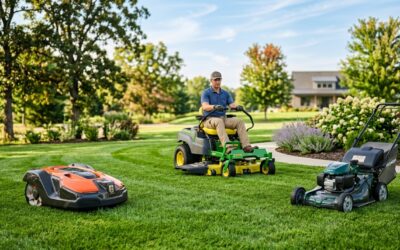
| Robot lawn mower | 58–70 dB | Minimal — no protection needed |
Bottom line: Switching from a gas mower to a quality battery mower is the single biggest noise reduction upgrade available to homeowners — before you even put on hearing protection.
Step 6: Protect Children and Bystanders
Children’s ears are more vulnerable to noise damage than adults’ — keep bystanders at least 50 feet away from operating mowers.
Kids are frequently present in yards during mowing. Their auditory systems are still developing, and they are less likely to recognize or report hearing discomfort.
Rules for Bystander Safety
- Never allow children under 6 to be in the yard while mowing.
- Children watching from a distance should wear hearing protection if within 50 feet of a gas mower.
- Do not allow children to ride on mowing equipment — this is both a hearing safety and serious injury risk.
- Pets should also be kept indoors; their hearing range is more sensitive than humans.
Step 7: Get a Baseline Hearing Test and Monitor Annually
A baseline audiogram (hearing test) before symptoms appear gives you a clear comparison point to detect early hearing loss.
Most people only get a hearing test after they notice a problem — by which point measurable loss has already occurred. Getting tested proactively is the most underused hearing protection strategy available.
How to Set Up Hearing Monitoring
- Schedule a baseline audiogram with an audiologist or ENT specialist if you mow regularly or operate loud equipment.
- Repeat annually if you are a professional landscaper or use loud gas equipment more than 2 hours per week.
- Note any post-mowing tinnitus in a simple log — date, duration of mowing, equipment used, and how long tinnitus lasted.
- Share your occupational noise history with your audiologist so they can contextualize results accurately.
Professional tip: Many audiologists offer free or low-cost screenings. Community health fairs and some pharmacies also provide basic hearing checks. There is no medical excuse to skip this step.
Common Mistakes to Avoid
These are the most frequent errors that lead to preventable hearing damage from lawn mowing:
- ❌ Wearing earplugs loosely — under-insertion is the number one reason foam plugs fail to protect.
- ❌ Relying on music to “mask” mower noise — playing audio through earbuds while mowing adds more sound energy on top of the mower noise, worsening the exposure.
- ❌ Assuming electric mowers are completely safe — battery mowers at 82 dB are much safer than gas, but still warrant protection during long sessions.
- ❌ Skipping protection for “just a quick mow” — a 20-minute session at 95 dB still accumulates measurable cochlear stress, especially over weeks and months.
- ❌ Ignoring temporary ringing — treating post-mow tinnitus as normal or harmless accelerates long-term damage.
- ❌ Using single-use earplugs more than once — reused foam plugs lose their expansion properties and their hygiene integrity.
Pro Tips from Hearing Health Experts
- Double up for commercial equipment. Audiologists consistently recommend combining foam earplugs with earmuffs when operating mowers above 95 dB for extended periods.
- Store protection where you store your mower. Convenience drives compliance. If hearing protection is hanging next to the mower key, you are far more likely to use it.
- Electronic earmuffs are worth the investment for regular mowers. They suppress impulse noise and mower noise while still allowing normal conversation — so you don’t need to remove them to talk.
- Check the NRR label, not the price. A $5 pair of foam earplugs with NRR 33 outperforms a $30 pair of stylish earmuffs with NRR 22 in raw protection.
- Hydration matters. Some research suggests that dehydration may increase susceptibility to noise-induced hearing damage. Drink water before and during long outdoor sessions.
FAQ: Can Lawn Mowers Damage Hearing?
Q: At what decibel level does a lawn mower cause hearing damage?
Hearing damage begins at sustained exposure above 85 dB. Most gas lawn mowers operate at 87–95 dB, which is above this threshold. Ride-on and commercial mowers frequently exceed 95 dB.
Q: Can a single mowing session permanently damage your hearing?
A single extremely loud exposure (above ~120 dB) can cause instant permanent damage, but lawn mowers rarely reach that level. However, repeated sessions without protection — even at 90 dB — accumulate cumulative damage over months and years that becomes permanent.
Q: Are battery-powered lawn mowers safe for hearing?
Battery mowers (75–82 dB) are significantly safer than gas models. For sessions under 1 hour, an otherwise healthy adult faces minimal risk. For sessions over 2 hours or for children nearby, light hearing protection is still advisable.
Q: Do noise-canceling headphones work for lawn mower hearing protection?
Consumer noise-canceling headphones (ANC) are not rated or designed for occupational noise protection. They reduce background hum but do not reliably attenuate the broadband noise of a lawn mower engine. Use NRR-rated hearing protection instead — not ANC earbuds or headphones.
Q: How do I know if my hearing has already been damaged by lawn mower noise?
Common signs include persistent or recurring tinnitus, difficulty understanding speech in noisy settings, or neding higher volume on devices. The only reliable confirmation is an audiogram from a licensed audiologist. Schedule one if you have mowed regularly without protection for years.
Conclusion
Lawn mowers absolutely can — and do — damage hearing, particularly gas-powered and ride-on models that consistently operate above the 85 dB safety threshold. The damage is cumulative, silent, and permanent.
The good news: it is almost entirely preventable with the right habits.
Your action checklist:
- Know your mower’s dB output and your weekly exposure time.
- Wear NRR-rated hearing protection on every session with a gas or ride-on mower.
- Learn to insert foam earplugs correctly — fit is everything.
- Consider upgrading to a battery mower if you mow frequently.
- Book a baseline audiogram and repeat it annually.
Your hearing is one of the few things you cannot get back once it is gone. A $10 pair of foam earplugs — used correctly, every time — is the most cost-effective investment in your long-term quality of life you can make this 2026.