
Not Every Lawn Mower Has a Choke — Here’s What You Actually Need to Know
No, not all lawn mowers have a choke. Whether your mower has a choke depends entirely on its engine type. Gas-powered mowers with carbureted engines almost always have one. Electric, battery, and robotic mowers have no choke at all. Knowing which category your mower falls into determines how you start it correctly — and prevents costly engine damage.
Expert Summary
- Gas-powered mowers with carbureted engines require a choke for cold starts; without it, the engine runs too lean and won’t fire.
- Electric and battery-powered mowers have no choke because they use motors, not combustion engines.
- Modern EFI (electronic fuel injection) gas mowers do not have a manual choke — the system adjusts fuel mixture automatically.
- A primer bulb is not the same as a choke, but it serves a similar purpose on smaller engines — many users confuse the two.
- Misusing the choke (leaving it closed after the engine warms up) is one of the most common causes of flooding and fouled spark plugs.
Step 1: Identify Your Mower’s Engine Type
Start here — your engine type determines everything else about how you start your mower.
Before you touch a choke lever, primer bulb, or ignition key, you need to know what kind of engine you’re working with. There are three main categories.
Gas-Powered (Carbureted Engine)
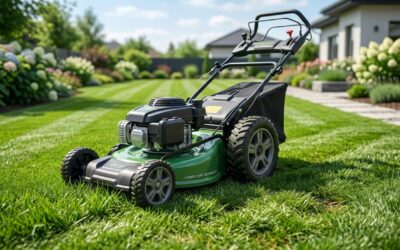
This is the most common type for residential push mowers and riding mowers. Brands like Honda, Briggs & Stratton, Kawasaki, and Kohler dominate this space.
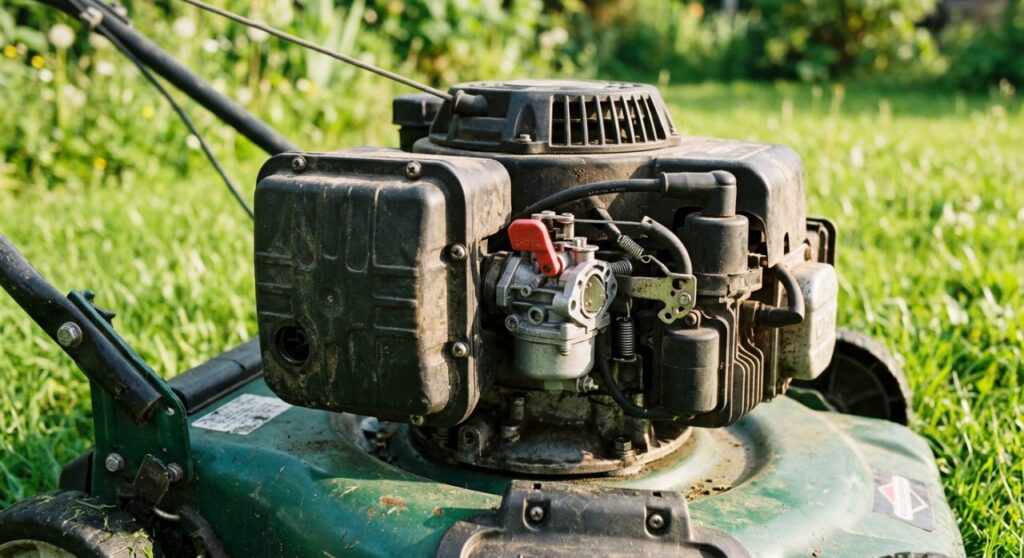
Carbureted engines mix air and fuel mechanically. On a cold engine, the fuel doesn’t vaporize as well, so the mixture runs too lean. The choke restricts incoming air to richen the mixture temporarily — making cold starts possible.
Most of these engines have a choke. It may be a lever, a knob, or an automatic system, but it’s there.
Gas-Powered (EFI — Electronic Fuel Injection)
Higher-end mowers from brands like Husqvarna, Toro, and Cub Cadet now offer EFI engines. These systems use sensors to calculate the exact fuel-to-air ratio at any temperature.
EFI mowers do not have a manual choke. The computer handles enrichment automatically. You just turn the key.
Electric and Battery-Powered Mowers
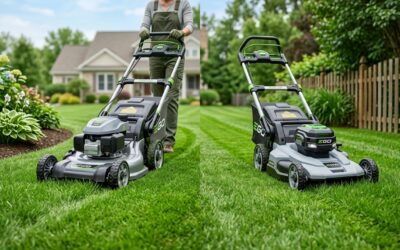
Mowers from EGO, Greenworks, Ryobi, Milwaukee, and Makita run on electric motors. Electric motors have no combustion cycle, no carburetor, and no fuel mixture to manage.
These mowers have no choke — period. There’s nothing to adjust. Push the button and go.
Step 2: Locate the Choke Control on Your Gas Mower
If you have a carbureted gas mower, find the choke before your first start — the location varies by model and manufacturer.
Push Mowers
On most residential push mowers, the choke is integrated into the throttle control on the handle. Look for a lever or slide with labels like:
- CHOKE / RUN / FAST / SLOW
- FULL CHOKE / HALF CHOKE / OFF
- A turtle/rabbit icon with a separate choke slider
Some Honda models (like the GCV160 and GCV200) use an automatic choke — there’s a bimetallic strip that opens and closes based on engine temperature. You won’t see a manual choke lever at all on these.
Riding Mowers and Zero-Turns
The choke is usually a dedicated lever on the dash panel, often labeled clearly. On older Briggs & Stratton Intek engines, the choke is on the engine itself near the air filter housing.
Walk-Behind Mowers with Primer Bulbs
Many smaller engines — especially on Poulan, Murray, and Craftsman entry-level models — use a primer bulb instead of a choke lever. This rubber button injects a small shot of fuel directly into the carburetor.
This is technically not a choke, but it accomplishes the same goal: making the fuel-air mixture rich enough for a cold start.
Step 3: Understand When to Use the Choke
Use the choke only on cold starts — a cold engine is one that hasn’t run in the last 20-30 minutes.
This is where most users make mistakes. The choke has two scenarios:
| Engine Condition | Choke Position | Notes |
|---|---|---|
| Cold (not run recently) | CLOSED / FULL CHOKE | Restricts air, richens the mixture |
| Warm (ran within 20-30 min) | OPEN / OFF / RUN | No enrichment needed |
| Flooded (too much fuel) | OPEN / OFF | Pull cord with throttle at full to clear |
| Normal running | OPEN / RUN | Engine will stall or run rough if left closed |
Leaving the choke closed after the engine starts is the single most common cause of fouled spark plugs, black smoke, and engine flooding in residential mowers.
Step 4: Perform a Cold Start with the Choke
Follow these steps in order — skipping any one of them is usually why a mower won’t start.
a. Check the Fuel and Oil Level
Always verify oil and fuel before starting, especially at the beginning of the season. Running a mower low on oil triggers the low-oil shutoff sensor on most modern engines — the mower simply won’t start, and many users mistake this for a choke problem.
b. Set the Throttle to FAST or HIGH
Move the throttle lever to its highest position. This ensures adequate airflow once the engine fires.
c. Move the Choke to CLOSED (Full Choke)
Push or slide the choke lever to the CLOSED or FULL CHOKE position. On mowers with automatic chokes, skip this — the system handles it.
d. Engage the Bail (Safety Handle)
Squeeze and hold the operator presence control bar on the handle. Most mowers won’t engage the ignition circuit without this held down.
e. Pull the Starter Cord Firmly
Pull the cord with a quick, strong, full-arm motion — not a half-hearted tug. You’re looking for the engine to fire or at least catch briefly.
- On the first pull, it may just cough.
- On the second or third pull, it should fire.
- If it fires and dies, the choke may still be needed — try again.
f. Move the Choke to Half or Open Once the Engine Catches
As soon as the engine runs (even roughly), move the choke to half-choke or RUN. Let it idle for 15-30 seconds before moving to full run position.
On very cold days (below 40°F / 4°C), you may need to hold at half-choke for a full minute before opening completely.
g. Let the Engine Warm Up
Give the engine 1-2 minutes at idle or light load before mowing. This circulates oil, stabilizes fuel delivery, and prevents excessive wear on cold metal components.
Step 5: Perform a Warm Start (No Choke Needed)
A warm engine starts differently — using the choke on a warm start is a guaranteed way to flood it.
If your mower stalled mid-mow or you’re restarting after a short break:
- Leave the choke in the OPEN / RUN / OFF position.
- Set throttle to FAST.
- Hold the bail handle.
- Pull the cord normally.
A healthy, warm engine should start on the first or second pull with no choke at all. If it doesn’t, the engine may have a different issue — carburetor buildup, old fuel, or a weak spark.
Step 6: Start an Electric or Battery Mower (No Choke Involved)
Electric mowers are simpler — there’s no warm-up cycle, no choke, and no flooding risk.
- Charge the battery fully before the first use of the season. Most EGO and Greenworks 56V batteries take 30-60 minutes with a rapid charger.
- Insert the battery securely until it clicks.
- Engage the safety key or lever (varies by model — check your manual).
- Squeeze the bail or press the start button — the motor engages immediately.
No waiting, no choke, no flooding. This is one of the main practical advantages of battery mowers for occasional users.
Why Don’t Lawn Mowers Have a Choke in Some Cases?
Why don’t lawn mowers have a choke? Because not all engines need one.
There are three specific reasons a mower might be choke-free:
1. Electric Motor Technology
Electric motors convert electrical energy directly to mechanical energy. There’s no combustion, no air-fuel ratio, and nothing to adjust. The concept of a choke simply doesn’t apply.
2. Electronic Fuel Injection (EFI)
EFI systems on premium gas mowers use an oxygen sensor, a throttle position sensor, and an ECU to calculate and deliver the precise fuel mixture in real time. At cold temperatures, the ECU automatically enriches the mixture — doing exactly what a choke does, but without any input from the operator.
3. Automatic Choke Mechanisms
Some carbureted engines — notably Honda’s GCV series — use a mechanical automatic choke. A bimetallic strip bends with heat, opening the choke as the engine warms. From the operator’s perspective, there’s no choke to manage. But internally, the system still exists.
Tools and Equipment Reference Table
| Mower Type | Has Manual Choke? | Starting Method | Notes |
|---|---|---|---|
| Gas push mower (carbureted) | Yes | Choke + pull cord | Most common residential type |
| Gas riding mower (carbureted) | Yes | Choke lever + key/cord | Lever usually on dash |
| Gas mower (Honda GCV auto choke) | No manual lever | Pull cord only | Auto choke built into carb |
| Gas mower (EFI) | No | Key start | Self-managing fuel system |
| Battery-powered mower | No | Button/bail start | No combustion engine |
| Corded electric mower | No | Power switch | Plugs into outlet |
| Robotic mower | No | App/schedule | Fully autonomous, electric |
Pro Tips From the Field
Tip 1: Primer bulbs wear out faster than chokes.
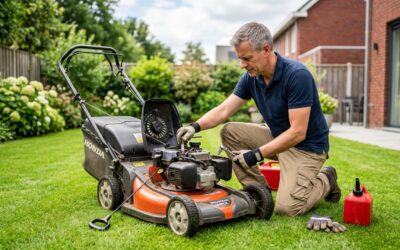
If your mower uses a primer bulb, inspect it at the start of every season. A cracked or hardened primer bulb injects air instead of fuel — you’ll get no cold-start enrichment and the mower won’t fire. Replacements cost under $5 and take 10 minutes to swap.
Tip 2: Stale fuel causes more “choke problems” than the choke itself.
Gasoline degrades in as little as 30 days without a fuel stabilizer like STA-BIL. Stale fuel gums up the carburetor needle and seat, restricting fuel flow. Symptoms look exactly like a choke issue — rough idle, hard starting, stalling. Always drain or stabilize fuel before storing for more than 30 days.
Tip 3: If the engine starts then immediately dies, the choke is probably the culprit — but not how you think.
On auto-choke models, a stuck or dirty choke plate causes this exact symptom. Remove the air filter, locate the choke plate in the carburetor throat, and spray it with carburetor cleaner. A stuck-closed choke starves the engine of air; a stuck-open choke makes cold starting nearly impossible.
Tip 4: The altitude affects your choke use.
At elevations above 5,000 feet (1,524 meters), the air is thinner. The fuel mixture is naturally richer at altitude, so you may need less choke — or none at all — for cold starts. Some carburetors have an altitude adjustment jet for this reason.
Tip 5: Document your mower’s starting procedure.
Write a laminated card with the exact steps for your specific mower and attach it near the handle. This is especially useful if multiple family members use the equipment — misuse of the choke by one person can cost you a carburetor rebuild.
Common Mistakes to Avoid
Mistake 1: Leaving the choke on after the engine warms up.
This is the #1 choke-related mistake. Running with the choke closed floods the cylinders with raw fuel, fouls the spark plug, and can wash the oil film off cylinder walls. Always move to RUN within 30-60 seconds of startup.
Mistake 2: Using the choke on a warm restart.
If your mower stalls during mowing and you reach for the choke out of habit, you’ll flood it immediately. A warm engine needs no enrichment — just open throttle and a firm pull.
Mistake 3: Assuming the choke is broken when the mower won’t start.
Before blaming the choke, check: fuel level, oil level (low-oil shutoff), spark plug condition, air filter (clogged filters cause exact same symptoms as choke failure), and fuel freshness. Choke mechanisms rarely fail outright — they stick or gum up.
Mistake 4: Thinking a primer bulb replaces a choke entirely.
Primer bulbs and chokes serve different carburetors. A primer bulb squirts raw fuel into the intake; a choke restricts air. Some carburetors use one, some the other, and some use both. Using a primer bulb on a carburetor designed for a choke (or vice versa) won’t work and can flood the engine.
Mistake 5: Ignoring the choke on battery mowers.
Some users search for a choke on their new battery mower because that’s what they’re used to. There isn’t one, and looking for it wastes time. If a battery mower won’t start, the issue is almost always the battery charge level, the safety interlock, or a tripped thermal cutoff — not fuel delivery.
FAQ: Do All Lawn Mowers Have a Choke?
Q: Do all lawn mowers have a choke?
No. Only gas-powered mowers with carbureted engines have a choke. Electric, battery, robotic mowers, and gas mowers with EFI systems do not have a choke.
Q: Why don’t lawn mowers have a choke in newer models?
Newer gas mowers increasingly use EFI (electronic fuel injection), which automatically adjusts the fuel-air mixture at any temperature. Battery and electric models have no combustion engine at all, so a choke would serve no purpose.
Q: What happens if I start my mower without using the choke?
On a cold carbureted engine, skipping the choke means the fuel-air mixture is too lean to ignite reliably. The engine may crank but not fire, or it may start briefly then stall. In cold weather (below 50°F / 10°C), starting without choke is nearly impossible.
Q: How do I know if my lawn mower has an automatic choke?
Check your owner’s manual or look up your engine model number (stamped on the engine block). Honda GCV160, GCV170, and GCV200 engines, for example, all have automatic chokes — there’s no manual lever on the handle. If you see no choke control on the handle or dash, your mower likely has an auto choke or EFI.
Q: Can I run my lawn mower without a choke if it’s broken?
A broken choke (stuck open) means you can still start a warm engine but will struggle with cold starts. A choke stuck closed means the engine runs rich at all times — rough, smoky, and fuel-inefficient. Either way, repair or replace the carburetor rather than ignoring it. A new carburetor for a Briggs & Stratton 550E or Honda GCV160 costs $20-$50 and installs in under an hour.
Conclusion
Not all lawn mowers have a choke — and that’s by design, not defect.
Gas mowers with carbureted engines rely on a choke for reliable cold starts, while EFI gas mowers, battery mowers, electric mowers, and robotic models have no need for one. The key takeaway: identify your engine type first, then use (or skip) the choke accordingly.
For most homeowners with a standard gas push mower, mastering the choke is a 60-second skill that prevents months of starting frustration. For anyone considering a new purchase, a battery mower eliminates the choke question entirely — no flooding, no warm-up time, no seasonal fuel management.
Two actionable paths forward:
For first-time buyers in 2026: A battery-powered mower from EGO or Greenworks removes the choke variable entirely and performs comparably to gas models for lots under half an acre. If you need more runtime or cut heavy grass regularly, a gas mower with a Honda GCV auto-choke engine is the lowest-maintenance carbureted option on the market.
For current owners approaching failure: If your carburetor and choke system are degrading after 18+ months of use, weigh the cost of a carb rebuild ($40-$80 in parts) against a battery mower upgrade. At the 5-7 year mark, most gas mower carburetors need at minimum a cleaning kit and needle replacement. If the deck, blade, or engine shows broader wear, a full switch to battery power is the more cost-effective long-term move.