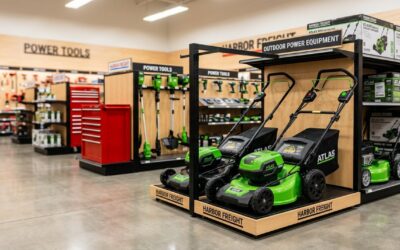

Do Lawn Mowers Have Titles? The Direct Answer
Most lawn mowers do not have vehicle titles. Standard push mowers, self-propelled mowers, riding mowers, and zero-turn mowers are generally treated as equipment rather than road vehicles. Ownership is usually established with a bill of sale, purchase receipt, serial number, warranty record, or financing documents.
Expert Summary>
– Most lawn mowers do not receive a state-issued title because they are not designed or registered for public-road use. – A manufacturer’s certificate or statement of origin may accompany some new riding mowers, but it is not necessarily a legal title. – Buyers should verify the serial number, seller’s identity, lien status, and proof of purchase before buying a used mower. – A detailed bill of sale is usually the most practical ownership document for a private mower sale. – Rules can differ for commercial equipment, modified machines, imported mowers, and vehicles registered for limited road use.
Step 1: Identify What Type of Lawn Mower You Own
Classify the machine before looking for a title. The answer to How to do lawn mowers have titles: A Step-by-Step Guide depends partly on whether the equipment is a basic residential mower, a commercial machine, or a vehicle that may qualify for road registration.
Most machines sold strictly for lawn care are not titled. However, unusual equipment classifications and local registration rules can create exceptions.
Push and Self-Propelled Lawn Mowers
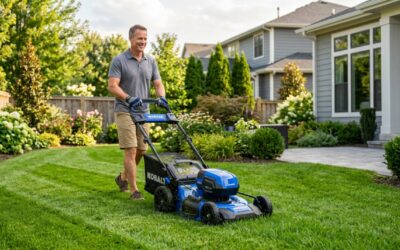
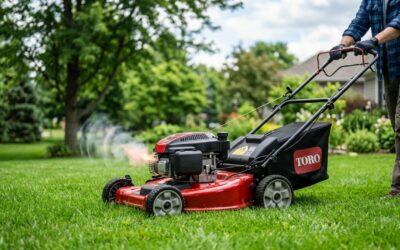
Push mowers and walk-behind self-propelled mowers almost never have titles. They are consumer or commercial equipment, not motor vehicles.
Proof of ownership normally includes:
- The original retail receipt
- A dealer invoice
- A warranty registration
- A product serial number
- A private-party bill of sale
- Credit card or financing records
Even expensive commercial walk-behind mowers are typically documented as equipment.
Riding Lawn Mowers and Lawn Tractors
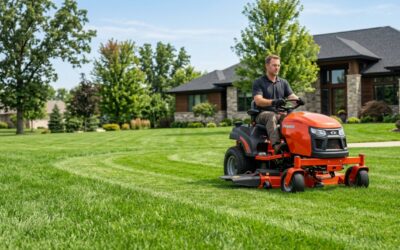
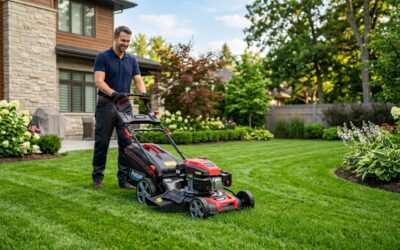
Riding lawn mowers and lawn tractors usually do not have state-issued titles. Although they have engines, wheels, and operator seats, they are generally designed for private property rather than public roads.
A new riding mower may come with several documents, including:
- An owner’s manual
- A warranty certificate
- A dealer invoice
- A delivery record
- A serial-number label
- A manufacturer’s statement of origin
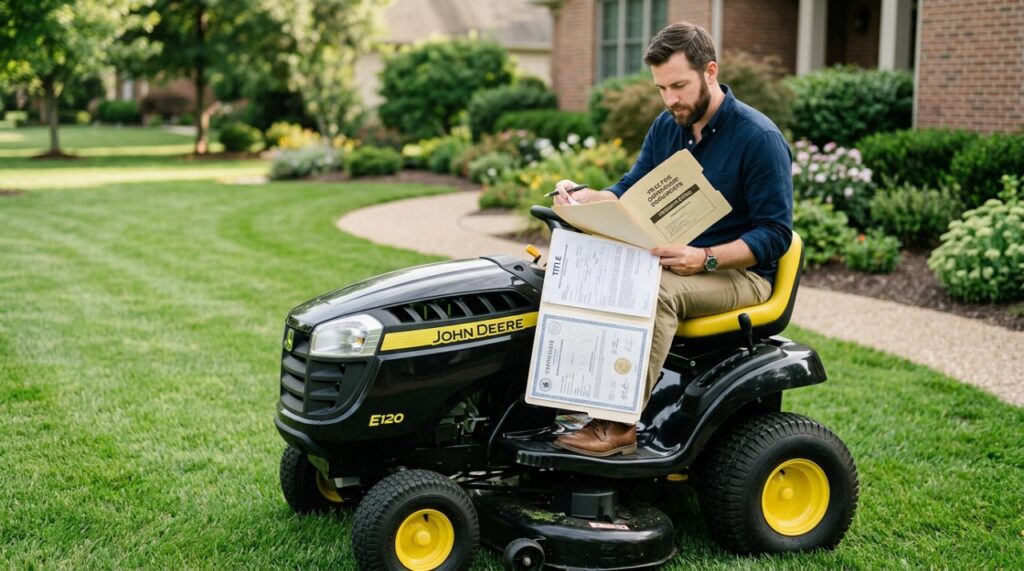
A manufacturer’s statement of origin, often abbreviated as MSO, does not automatically mean the mower is titled. It identifies the machine’s origin and may support registration if a jurisdiction permits it.
Zero-Turn Lawn Mowers
Zero-turn mowers generally do not come with titles, including commercial models costing thousands of dollars. Their value does not determine whether a title is required.
Commercial zero-turn mowers may instead be tracked through:
- Business asset records
- Equipment finance agreements
- Dealer sales contracts
- Insurance schedules
- Fleet-management systems
- Engine and frame serial numbers
Because high-value zero-turn mowers are frequent theft targets, serial-number verification is especially important.
Robotic and Electric Lawn Mowers
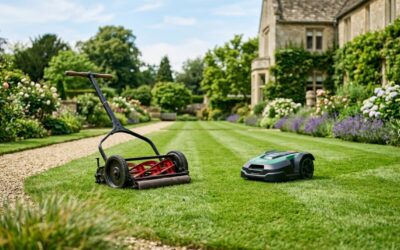
Robotic and battery-powered lawn mowers are not normally titled. Ownership is established through the receipt, product registration, account information, and serial number.
For app-connected robotic mowers, keep access to the associated account. A machine locked to someone else’s account may be difficult or impossible to activate.
Tractor-Mower and Utility-Vehicle Hybrids
A multifunction machine may be subject to different rules if it is classified as a tractor, utility vehicle, or off-highway vehicle. Examine the manufacturer’s classification rather than relying only on the seller’s description.
A compact utility tractor used with a mower attachment is not the same legal product as a riding lawn mower. Depending on the location and machine type, additional ownership or registration records may exist.
Step 2: Understand the Difference Between a Title and Proof of Ownership
Separate a legal title from ordinary purchase documents. A title is a government-issued record of ownership, while a receipt or bill of sale is evidence that a transaction occurred.
This distinction explains why the answer to do lawn mowers come with titles is usually no, even though every legitimate new mower should come with purchase documentation.
| Document | Who Issues It? | What It Proves | Common for Lawn Mowers? |
|---|---|---|---|
| Vehicle title | State or government agency | Legal ownership of a titled vehicle | Usually no |
| Registration | State or local agency | Permission or record to operate equipment | Rare |
| Manufacturer’s statement of origin | Manufacturer | Product origin and initial transfer | Sometimes |
| Dealer invoice | Authorized dealer | Purchase details and buyer information | Yes |
| Retail receipt | Store or seller | Payment and transaction details | Yes |
| Bill of sale | Buyer and seller | Transfer between private parties | Recommended |
| Warranty registration | Manufacturer or dealer | Warranty eligibility and product details | Common |
| Finance agreement | Lender or finance company | Loan terms and security interest | Common for financed equipment |
A title usually follows a formal government process. A bill of sale is a private transaction record, although local law may specify what it must contain.
Step 3: Check the Manufacturer’s Documents
Review every document supplied when the mower was purchased. The paperwork may answer whether the machine was sold with an MSO, financing agreement, warranty certificate, or other ownership record.
Do not assume a missing title makes the mower illegal. For ordinary lawn equipment, no title may ever have existed.
Tools and Records Needed
| Tool or Record | Purpose | Where to Find It |
|---|---|---|
| Owner’s manual | Identifies model and product classification | Paper copy or manufacturer website |
| Purchase receipt | Shows the date, seller, and amount paid | Email, store account, or personal records |
| Serial number | Identifies the individual machine | Frame, deck, seat area, or product label |
| Model number | Confirms specifications and parts compatibility | Product label or manual |
| Dealer invoice | Documents the original buyer and financing | Dealer or lender |
| MSO or certificate of origin | Records the manufacturer and initial transfer | Original paperwork or dealer |
| Bill of sale | Documents a private ownership transfer | Seller or buyer records |
| Photo or phone camera | Captures identification labels | Serial-number plate |
Locate the Serial and Model Numbers
Find and photograph the mower’s identification labels before contacting a dealer or agency. Manufacturers place labels in different locations, so consult the owner’s manual for the exact position.
Common locations include:
- Under the operator’s seat
- On the rear frame
- Near the engine compartment
- On the mower deck
- Beneath the hood
- Near a rear wheel
- On the battery compartment
- On the handle assembly of a walk-behind mower
The engine may have a separate serial number. Record both the machine serial number and the engine number when available.
Contact the Selling Dealer
Ask the original dealer what documents were issued with the specific model. Provide the model number, serial number, approximate sale date, and original owner’s information if known.
A dealer may be able to reproduce an invoice or confirm whether an MSO existed. Privacy rules may prevent the dealer from releasing another customer’s personal information.
Ask the Manufacturer
Contact the manufacturer when the dealer cannot verify the machine. The manufacturer may confirm the model year, production details, warranty history, or whether a certificate of origin was normally supplied.
The manufacturer usually cannot create a state title for equipment that was never titled. It may also decline to replace an MSO without evidence of legitimate ownership.
Step 4: Check State and Local Requirements
Consult the relevant motor vehicle or equipment authority if the mower will leave private property. Most lawn mowers need no title, but registration and road-use rules vary by state, county, municipality,