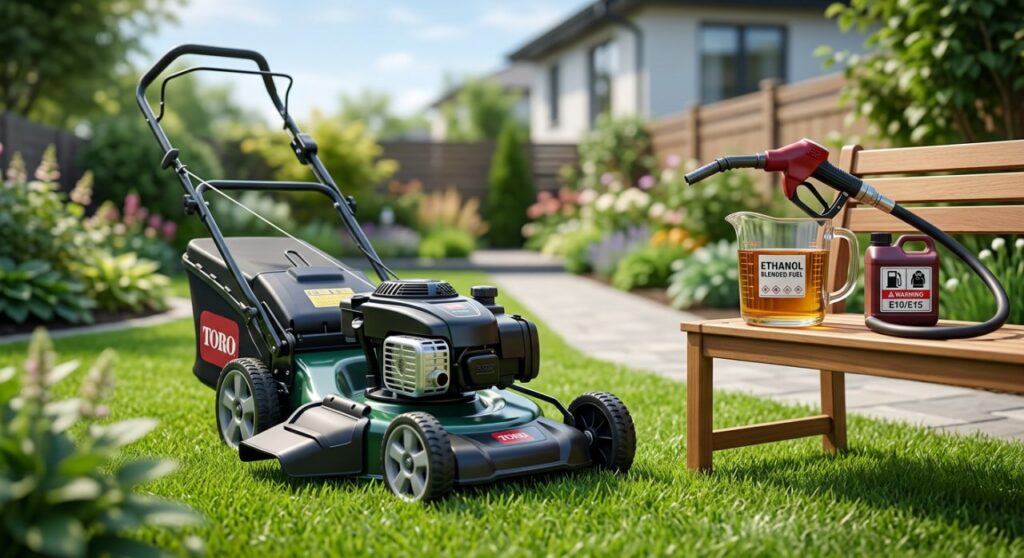

Quick Answer / TL;DR: Ethanol isn’t automatically bad for lawn mowers — E10 (10% ethanol or less) is safe for nearly all gas engines. The real danger is E15 and higher, plus ethanol’s habit of absorbing water and leaving gum deposits. Use fresh fuel, add stabilizer, and run the carburetor dry before storage.

How to is ethanol bad for lawn mowers: A Step-by-Step Guide

What You Need

Tools

  • Clean, approved fuel container (never store gas in glass or milk jugs)
  • Funnel with a fine mesh filter
  • Flashlight for inspecting the fuel tank and carburetor
  • Rags and nitrile gloves
  • Spark plug wrench (for storage prep)

Materials

  • Fresh, non-ethanol fuel (REC-90) if available in your area, or E10-rated gasoline
  • Fuel stabilizer (ethanol-specific formulas work best)
  • Carburetor/fuel system cleaner for gummed systems
  • Inline fuel filter if your model supports one

Before You Start

  • Check your owner’s manual — most small-engine manufacturers explicitly approve E10 and prohibit E15 and E85.
  • Read the ethanol percentage printed at the gas pump before you fill your can.
  • Work outdoors or in a well-ventilated garage; gasoline vapors are flammable and hazardous.

“Most of the carburetor repairs we see could have been avoided with one habit: buy fuel in small quantities, no more than you’ll use in 30 days,” says our lead small-engine technician with 15+ years servicing residential mowers.

Step-by-Step Guide

Step 1: Verify What Your Engine Can Handle

Locate your mower’s model number and check the manual or the manufacturer’s website. Virtually every major brand (Honda, Briggs & Stratton, Toro, Kawasaki) approves E10 but explicitly warns against E15 and E85. Using fuel above the approved ethanol percentage can void your warranty and damage fuel lines, seals, and the carburetor.

💡 Pro Tip: Gas station pumps must disclose the ethanol blend on the label. If the pump doesn’t clearly say E10 or lower, assume it’s not safe for small engines.

Step 2: Buy Fuel Fresh and Small

Ethanol is hygroscopic — it pulls water vapor from the air. Once enough water accumulates, phase separation occurs: ethanol and water drop out of the gasoline and settle at the bottom of the tank, where your fuel line picks it up. Buy only enough fuel for 30 days of mowing and keep the container tightly sealed and nearly full to limit air space.

Step 3: Add Fuel Stabilizer at the Pump

Pour stabilizer into your fuel can before you add gasoline so it mixes thoroughly. A quality ethanol-safe stabilizer slows oxidation and gum formation, extending usable fuel life from roughly 30 days to several months.

Step 4: Inspect the Fuel System Monthly

With the engine cool, remove the fuel cap and look inside the tank with a flashlight. Check for:

  • Cloudy, dark, or varnish-smelling fuel
  • A visible separation line or water layer at the bottom
  • Sticky, gel-like residue around the fuel cap or pickup

⚠️ Warning: Never drain fuel from a hot engine or near open flames, pilot lights, or water heaters. Let the mower cool at least 30 minutes.

Step 5: Treat (or Replace) Degraded Fuel

If fuel looks or smells bad, drain the tank and carburetor bowl completely. Dispose of old gas at a hazardous-waste collection site — never on the ground or in drains. Refill with fresh fuel plus stabilizer. If the engine still runs rough, rough idle, surging, or hard starting indicates gummed jets; run a fuel-system cleaner through a tank, or disassemble and clean the carburetor.

💡 Pro Tip: Surging (revving up and down) is the classic symptom of ethanol-gum partially blocking the carburetor’s main jet. Catching it early means you can often fix it with cleaner instead of a rebuild.

Step 6: Prepare for Storage the Right Way

For storage over 30 days, you have two proven options:

  • Full-tank method: Fill the tank almost full with stabilized fuel and run the engine for 5 minutes so stabilized fuel reaches the carburetor.
  • Dry method: Run the engine until it stalls from fuel starvation, draining both the tank and carburetor bowl.

The dry method is best for ethanol blends, because it leaves nothing for the fuel to gum or the ethanol to draw moisture into.

Common Mistakes & Troubleshooting

Mistake 1: Using E15 Because It’s Cheaper

E15 (sometimes sold as “Unleaded 88”) is legal for modern cars but not approved for small engines. Higher ethanol concentrations crack fuel lines, dissolve rubber seals, and lean out the fuel mixture, causing overheating and valve damage. Fix: Stick to E10 or purchase ethanol-free REC-90, common at marinas and farm-supply stations.

Mistake 2: Leaving Old Fuel in the Tank Over Winter

Fuel older than 60 days without stabilizer typically won’t support reliable combustion and leaves varnish throughout the carburetor. Fix: If the mower won’t start in spring, drain everything, clean the carburetor bowl and jet, and refill fresh. Prevention: always stabilize or drain before storage.

Mistake 3: Topping Off Old Fuel With New

Adding fresh gas to degraded fuel doesn’t restore it — water and gum carry over into the mixture. Fix: Drain the tank completely before refilling. If water phase separation has occurred, flush the tank with a small amount of fresh fuel and drain again.

Mistake 4: Storing the Fuel Can in a Hot, Humid Shed

Temperature swings cause condensation inside the can, feeding the ethanol’s water absorption. Fix: Store fuel in a cool, shaded spot in a sealed, nearly full container rated for gasoline.

Troubleshooting Quick Reference

  • Won’t start after storage: Stale fuel — drain, add fresh, and spray starter fluid into the air intake to test.
  • Surging or hunting at idle: Gummed main jet — run carb cleaner or rebuild the carburetor.
  • White/gray smoke: Water-contaminated fuel — drain tank and carburetor bowl, refill fresh.
  • Cracked fuel lines or leaks: Ethanol concentration too high — replace lines with ethanol-rated hose and switch fuel.

💡 Expert Tip: Keep a dedicated “mower-only” fuel can. Sharing a can with your car means higher-octane or E15 fuel inevitably finds its way into the mower.

Frequently Asked Questions

What percentage of ethanol is bad for lawn mowers?

Anything above 10%. E10 is approved by virtually all mower manufacturers, but E15 and E85 exceed what small-engine fuel systems are built for. Always check your manual — some older engines, 2-strokes, and high-performance engines specify ethanol-free fuel only.

Should I use ethanol-free gas in my lawn mower?

Yes, if it’s reasonably available. Ethanol-free (REC-90) fuel eliminates phase separation and gumming risks entirely and stays fresh longer. It costs more per gallon, but for a mower that burns only a few gallons per season, the difference is minor compared to a carburetor rebuild.

How long can ethanol-blended gas sit in a lawn mower?

Untreated E10 begins degrading in about 30 days and is generally unreliable after 60–90 days. With a quality stabilizer mixed in, it can remain usable for up to 12 months. Never leave untreated fuel in the tank through an entire off-season.

Can I fix a mower damaged by ethanol myself?

Often, yes. Most ethanol damage is carburetor gum and clogged jets, which a competent DIYer can clean or rebuild with a $20–$50 kit. Fuel line and primer bulb replacements are also simple. Seized engines or internal corrosion from long-term water exposure usually require professional service.

Does ethanol cause more damage in 2-cycle mowers than 4-cycle?

Both are affected, but 2-cycle engines are arguably more vulnerable because oil and gasoline must stay properly blended — water contamination breaks that mixture down, starving the engine of lubrication. For 2-cycle equipment, ethanol-free fuel mixed with quality oil is the safest choice.

Is premium gasoline with ethanol better for mowers?

No. Octane rating addresses knocking, not ethanol content, and premium fuel often carries the same 10% blend. Your mower is designed to run fine on regular octane — what matters is the ethanol percentage and freshness, not the octane number.