
Quick Answer: Fall lawn care is critical for cool-season grasses, focusing on aeration, overseeding, and fertilization between September and November. For warm-season lawns, wrap up tasks by late summer. The essential sequence is: remove leaves, mow until growth stops, test soil, dethatch if needed, aerate, overseed, control weeds, fertilize, adjust watering, and winterize irrigation systems.
As a master turfgrass agronomist with over two decades of field experience, I can tell you that fall is the make-or-break season for your lawn. The work you do from September through November directly determines whether your turf emerges thick, green, and resilient in spring\u2014or struggles with bare patches, disease, and weak root systems.
This guide goes beyond generic checklists. I’ll give you the precise soil temperatures, blade heights, and timing windows that separate a mediocre lawn from a championship-caliber one. Whether you’re managing cool-season grasses like Kentucky bluegrass and tall fescue or warm-season varieties like Bermudagrass and Zoysiagrass, these protocols are backed by university extension research and real-world results.
Understanding Your Grass Type: The Foundation of Fall Lawn Care

Before touching a single tool, identify your grass type. This determines every timing decision that follows.
| Grass Type | Category | Primary Fall Tasks | Critical Timing Window |
|---|---|---|---|
| Kentucky Bluegrass | Cool-season | Aerate, overseed, fertilize | Sept 1 \u2013 Nov 15 |
| Tall Fescue | Cool-season | Aerate, overseed, fertilize | Sept 1 \u2013 Oct 31 |
| Perennial Ryegrass | Cool-season | Aerate, overseed, fertilize | Sept 1 \u2013 Oct 15 |
| Bermudagrass | Warm-season | Last mowing, pre-winter prep | Complete by Sept 15 |
| Zoysiagrass | Warm-season | Last mowing, pre-winter prep | Complete by Sept 30 |
The 10-Step Fall Lawn Care Protocol
Step 1: Remove Leaves Immediately
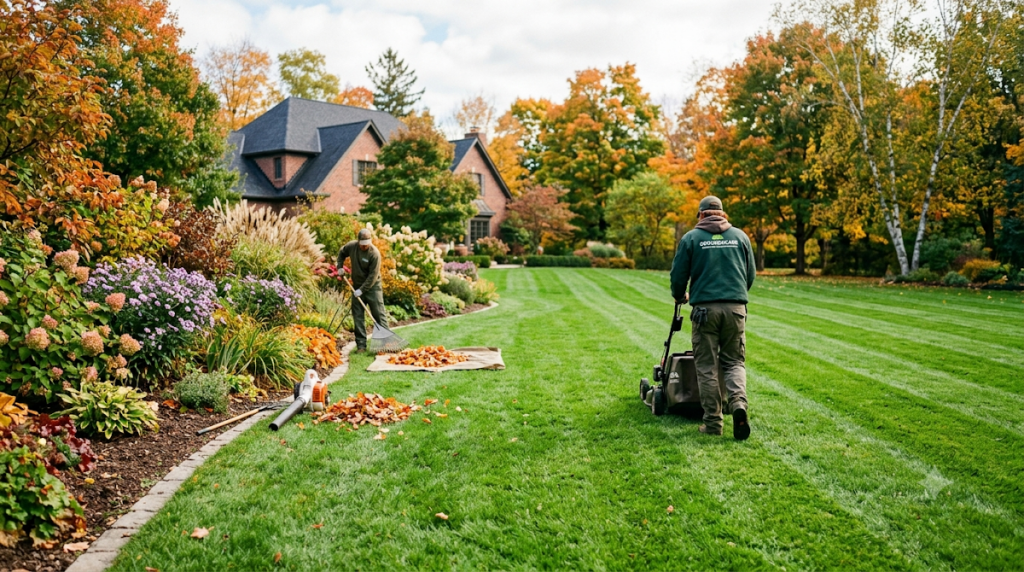
Leaf accumulation is the single most destructive fall lawn problem. A layer just two inches thick blocks 90% of sunlight and traps moisture against the crown, creating ideal conditions for snow mold, dollar spot, and fungal diseases.
Best practice: Mulch-mow leaves when they first fall. Set your mower to 3 inches and make multiple passes. The mulched leaf particles decompose within 2-3 weeks, returning nutrients to the soil. For heavy accumulations, use a bagging mower or rake within 48 hours of significant leaf drop.
Step 2: Mow Until Grass Stops Growing
Don’t put the mower away in September. Continue mowing until your grass reaches dormancy\u2014typically when soil temperatures drop below 50\u00b0F consistently.
Final mowing heights by grass type:
| Grass Type | Summer Height | Final Fall Cut | Why It Matters |
|---|---|---|---|
| Kentucky Bluegrass | 3-3.5 inches | 2.5 inches | Reduces snow mold risk |
| Tall Fescue | 3.5-4 inches | 3 inches | Balances disease prevention with root energy |
| Bermudagrass | 1.5-2 inches | 1.5 inches | Prevents winter scalping damage |
| Zoysiagrass | 2-2.5 inches | 2 inches | Maintains crown health through dormancy |
Critical rule: Never remove more than one-third of the blade height in a single mowing. If your grass is 4 inches tall, cut to 2.75 inches maximum.
Step 3: Test Your Soil
Soil testing is non-negotiable before any fall fertilization. Apply lime or fertilizer without knowing your pH and nutrient levels, and you risk wasting money or damaging your lawn.
Procedure: Collect 10-12 soil samples from different areas of your lawn, 4 inches deep. Mix them in a clean bucket, then submit 2 cups to your local cooperative extension office. Results typically take 2-3 weeks.
Target ranges for most lawn grasses: pH 6.0-7.0, phosphorus 30-50 ppm, potassium 150-250 ppm. If pH is below 6.0, apply pelletized lime at 50 lbs per 1,000 sq ft. If above 7.5, apply sulfur at 10 lbs per 1,000 sq ft.
Step 4: Dethatch If Needed
Thatch is the layer of dead organic material between the soil surface and green grass blades. A thin layer (less than 0.5 inches) is beneficial. Excessive thatch (over 0.75 inches) harbors pests and blocks water and nutrient absorption.
Test method: Cut a triangular wedge 3 inches deep with a knife. If the brown layer exceeds 0.75 inches, dethatch. For cool-season grasses, dethatch in early fall (September) when growth is active. For warm-season grasses, dethatch in late spring, not fall.
Step 5: Core Aerate
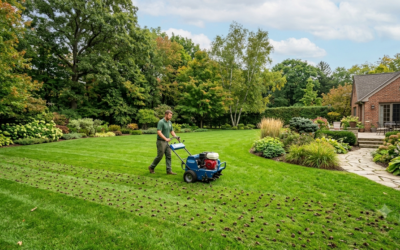
Core aeration is the most impactful fall lawn care practice for cool-season grasses. It relieves compaction, improves oxygen exchange, and creates channels for water and nutrients to reach the root zone.
Timing: Aerate when soil temperature is between 55-65\u00b0F\u2014typically mid-September through mid-October in most northern regions. Use a core aerator that removes plugs 2.5-3 inches deep, spaced 2-3 inches apart.
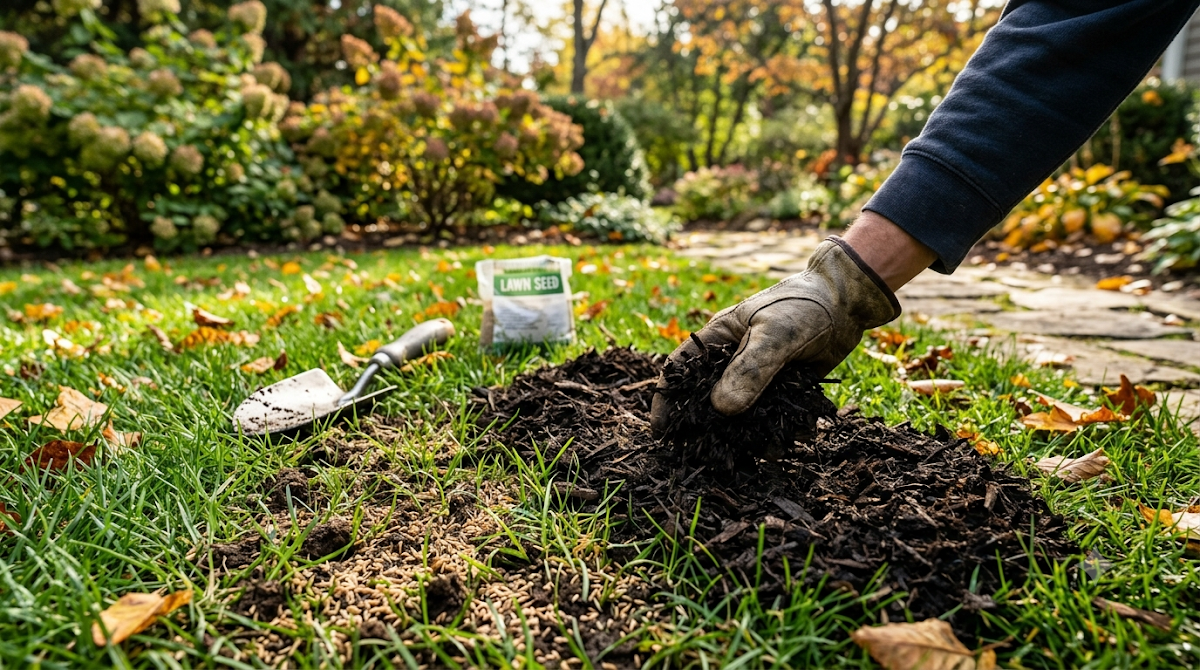
Pro tip: Leave the soil plugs on the surface. They break down within 1-2 weeks and return organic matter to the soil. Water lightly after aerating to speed decomposition.
Step 6: Overseed
Overseeding fills in thin areas and introduces improved grass varieties. Timing is critical\u2014seed must germinate before the first hard freeze.
Seeding rates:
| Grass Type | New Lawn Rate | Overseeding Rate | Germination Time |
|---|---|---|---|
| Kentucky Bluegrass | 2-3 lbs/1,000 sq ft | 1-1.5 lbs/1,000 sq ft | 14-21 days |
| Tall Fescue | 6-8 lbs/1,000 sq ft | 3-4 lbs/1,000 sq ft | 7-14 days |
| Perennial Ryegrass | 5-6 lbs/1,000 sq ft | 2-3 lbs/1,000 sq ft | 5-10 days |
Essential rule: Do not apply pre-emergent herbicide when overseeding. Pre-emergents create a chemical barrier that blocks all seed germination, including grass seed. If you need weed control and overseeding, use post-emergent products only, or split your approach: overseed in early fall, apply pre-emergent in early spring.
Step 7: Control Weeds
Fall is the best time to control perennial weeds because they’re actively moving nutrients to their roots. Herbicides applied now are translocated throughout the plant, providing more effective kill than spring applications.
Timing: Apply broadleaf herbicides (2,4-D, dicamba, triclopyr) when daytime temperatures are 60-80\u00b0F and nighttime temperatures stay above 40\u00b0F. Wait at least 2-4 weeks after overseeding before applying herbicides to new seedlings.
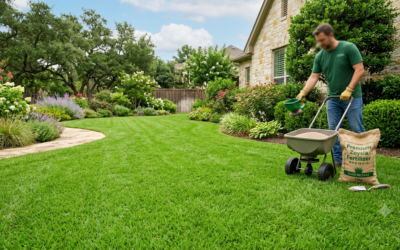
Step 8: Apply Fall Fertilizer
Fall fertilization is the most important feeding of the year for cool-season grasses. It promotes root growth, stores energy reserves for winter survival, and fuels early spring green-up.
Application schedule:
| Application | Timing | Nitrogen Rate | Purpose |
|---|---|---|---|
| First Fall Feeding | Early-mid September | 1 lb N/1,000 sq ft | Supports active fall growth |
| Final “Winterizer” | Late October-early November | 1-1.5 lbs N/1,000 sq ft | Stores energy for spring |
For newly sodded or renovated lawns: Use a lighter approach\u20140.5 lb N/1,000 sq ft applied 3-4 times through fall rather than two heavy applications. Young root systems can’t handle high salt indices from concentrated fertilizer.
For warm-season grasses: Stop fertilizing by early September. Late nitrogen applications stimulate tender growth that’s vulnerable to winter kill.
Step 9: Adjust Watering
As temperatures drop and rainfall typically increases, reduce irrigation frequency. Overwatering in fall promotes fungal diseases and delays dormancy preparation.
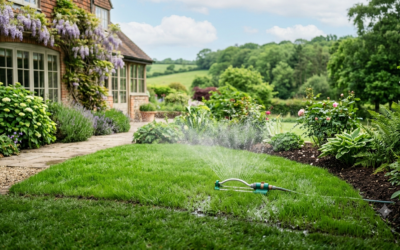
Guidelines: Provide 1 inch of water per week (including rainfall) until the first hard freeze. After that, water only during extended dry periods (no rain for 3+ weeks) when soil is dry 4 inches deep. Newly seeded areas need light, frequent watering\u20140.25 inches daily until germination, then transition to deeper, less frequent sessions.
Step 10: Winterize Irrigation Systems
Freezing water expands and can crack pipes, valves, and sprinkler heads, causing hundreds or thousands of dollars in damage.
Procedure: Shut off the water supply to the irrigation system. Open all drain valves. Use an air compressor (50-80 PSI) to blow out each zone separately. Close valves after draining. Insulate above-ground components with foam covers. Complete this process before the first hard freeze (typically when nighttime temperatures drop below 28\u00b0F consistently).
Expert Troubleshooting: Common Fall Lawn Care Mistakes
If You Mowed Too Early or Too Short
If you scalped your lawn in early fall, don’t panic. Apply a light application of starter fertilizer (10-20-10) at 0.5 lb N/1,000 sq ft to stimulate recovery. Keep mowing at the proper height to encourage tillering\u2014the grass will fill in over 3-4 weeks.
If Wet Weather Delays Aeration or Overseeding
If soil is too wet to aerate (clumps stick together when squeezed), wait. Aerating compacted, wet soil causes more damage than waiting. Push overseeding as late as possible, but ensure at least 4-6 weeks before the average first hard freeze. In a pinch, use quick-germinating perennial ryegrass (5-7 days) instead of Kentucky bluegrass (14-21 days).
If You Applied Pre-Emergent Before Overseeding
This is a common mistake with serious consequences. Pre-emergent herbicides create a barrier that prevents all seed germination. Unfortunately, there’s no remedy\u2014you must wait until spring to overseed. Document this area for spring renovation and focus fall efforts on other lawn sections.
Fall Lawn Care Frequently Asked Questions
When is the absolute last day I can overseed my lawn in fall?
The cutoff depends on your location and grass type. You need 4-6 weeks of growing conditions (soil temps above 50\u00b0F) before the first hard freeze. For most northern regions, this means September 15-October 15 for Kentucky bluegrass, or October 1-October 31 for tall fescue. Check your local cooperative extension for your area’s average first freeze date.
Can I apply fertilizer and seed at the same time?
Yes, but use a starter fertilizer specifically formulated for new lawns (10-20-10 or similar high-phosphorus blend). Avoid “weed and feed” products that combine fertilizer with pre-emergent herbicide\u2014the herbicide will prevent seed germination. Apply starter fertilizer immediately after overseeding, then follow up with a regular fall fertilizer 4-6 weeks later.
Should I continue mowing after the first frost?
A light frost doesn’t end the growing season. Wait 2-3 days after frost for grass to resume growth, then mow if it’s still actively growing. Once nighttime temperatures consistently stay below 40\u00b0F and growth has visibly slowed, you can stop mowing. Always mow with sharp blades\u2014dull blades tear grass tips, creating entry points for disease during dormancy. For related insights, see our detailed guide on How Long Does Grass Seed Take to Grow? (3-30 Days).
Is October too late to fertilize my lawn?
For cool