

Quick Answer: Yes, grass seed expires. Unopened and properly stored grass seed remains viable for 2\u20135 years, but germination rates decline annually. You can verify viability using a germination test: place 10 seeds on a wet paper towel in a bag for 7\u201310 days. If fewer than 8 sprout, the seed is likely too old to produce a dense lawn.
Have you found a forgotten bag of grass seed in the back of your garage? Before you scatter it across your lawn and hope for the best, you need to know the truth: does grass seed expire? The short answer is yes. While seeds don’t have a “sell-by” date like milk, they lose viability over time, turning your potential lush lawn into a patchy disappointment.
As a master turfgrass agronomist, I’ve seen homeowners waste entire weekends prepping soil only to see zero growth because they used five-year-old seed. In this definitive guide, we will answer will grass seed go bad, explain how long grass seed is good for, and show you exactly how to tell if grass seed is still good using professional-grade tests.
Does Grass Seed Go Bad? The Shelf Life Guide
Grass seed is a living embryo. Even in a dormant state, it is consuming small amounts of stored energy (lipids and carbohydrates) through a process called respiration. Over time, the embryo’s energy reserves deplete, or the cellular structures degrade, leading to a loss of viability.
How long will grass seed last in a bag? This depends heavily on the species and storage conditions. Generally, you can expect the following shelf lives:
| Grass Type | Viability Period (Proper Storage) | Viability Period (Poor Storage) | Notes |
|---|---|---|---|
| Cool-Season Grasses (Fescue, Ryegrass, Bluegrass) | 3\u20135 Years | 6\u201312 Months | Tall Fescue holds viability longer than Bluegrass. |
| Warm-Season Grasses (Bermuda, Zoysia, St. Augustine) | 2\u20133 Years | 3\u20136 Months | Bermuda seed loses vigor quickly in high heat/humidity. |
| Annual Ryegrass | 1\u20132 Years | 3\u20136 Months | Designed for quick establishment, not longevity. |
4 Signs Your Grass Seed Is Still Good (and 2 Signs It’s Dead)
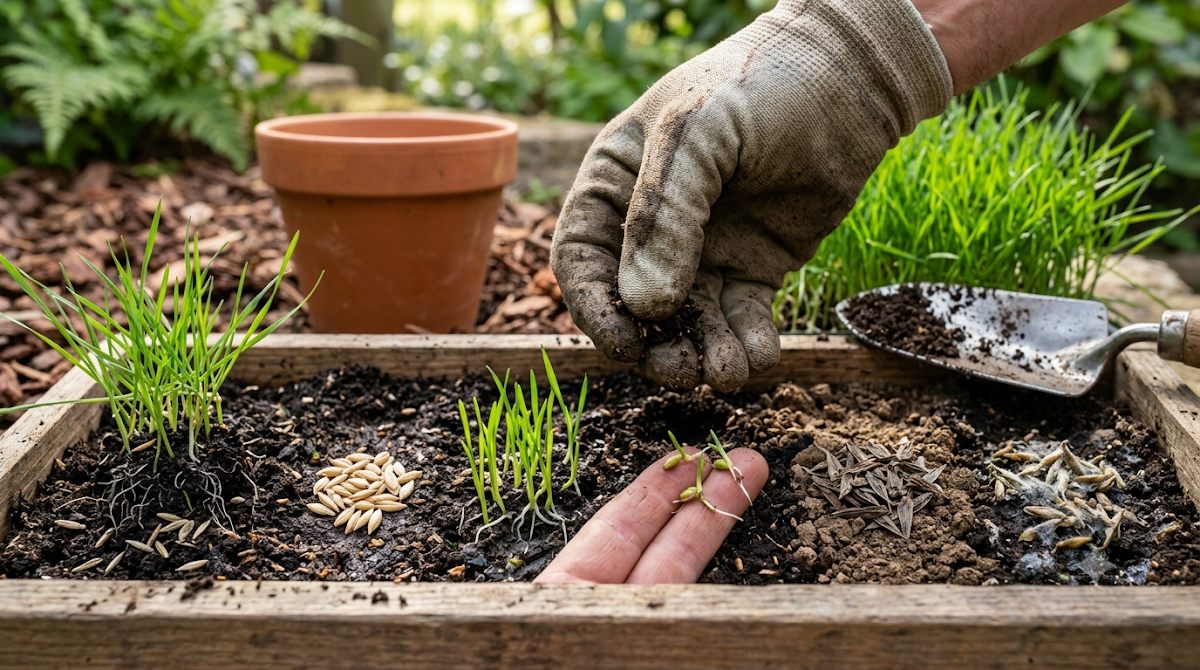
Before you run a water test, perform a sensory inspection. If you notice any “Dead” indicators below, save yourself the labor and purchase fresh seed.
1. Visual Inspection: Uniform Color
Good: The seeds should look uniform and have a healthy sheen. Fescue and Ryegrass typically look like dried straw or light tan. Bluegrass may have a slightly darker, greenish-brown hue.
Bad: Look for discoloration. If seeds are turning dark brown, black, or appear “dusty” with mold, they have likely succumbed to fungal pathogens or moisture damage.
2. Olfactory Test: The Fresh Smell
Good: Healthy seed smells like earth, hay, or a neutral grain. It should have no distinct offensive odor.
Bad: If the bag smells musty, sour, or like rotting vegetation, moisture has breached the packaging. This “sour” smell indicates active decay and zero germination potential.
3. Tactile Check: Firmness and Integrity
Good: Pick up a handful. The seeds should feel solid, hard, and resilient when squeezed.
Bad: If the seeds crumble easily under finger pressure or feel brittle and hollow, the internal embryo has likely died and disintegrated.
4. The Weight Test
Good: Compare the current weight of the bag to the net weight printed on the label. If the bag feels significantly lighter (e.g., a 10lb bag feels like 8lbs), the contents have dried out excessively, which kills the seed.
Bad: Conversely, if the bag is heavier than labeled due to water absorption, the seeds will rot.
How to Test If Grass Seed Is Still Good: The Float vs. Germination Test
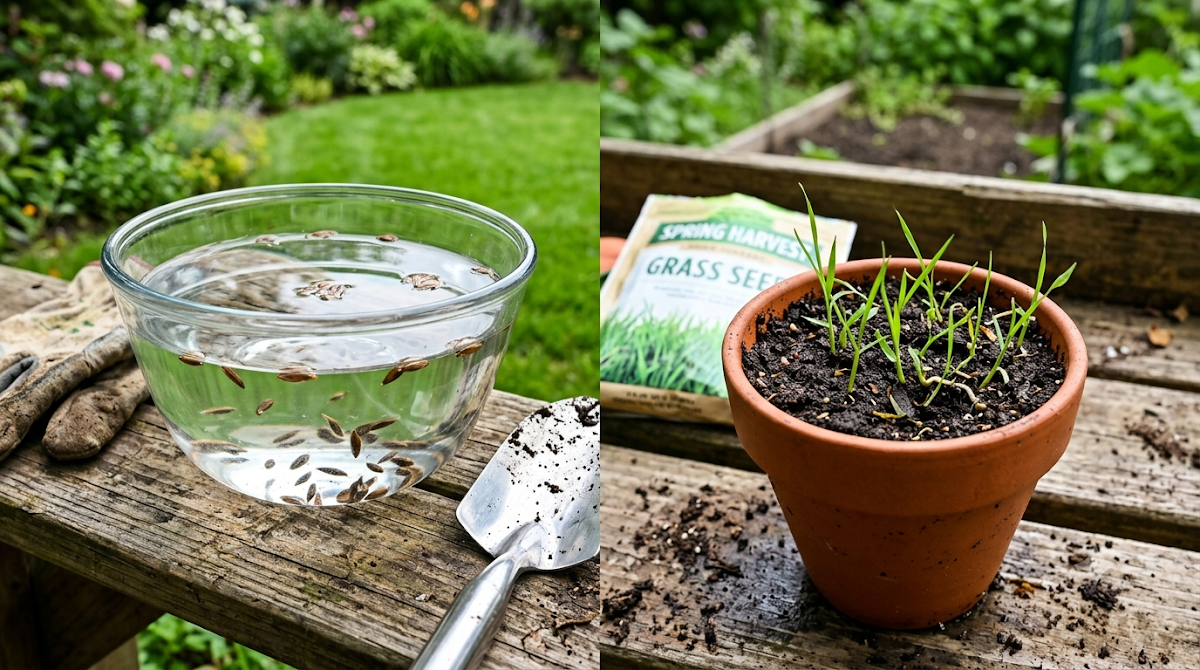
If the visual inspection passes but you are still unsure, you need scientific verification. Here are the two standard methods.
The Float Test (Quick Screening)
This is a rapid way to check for density, though not a perfect measure of life.
Procedure: Fill a jar with room-temperature water. Place 50 seeds into the jar. Stir gently and let them sit for 15 minutes.
Result:
- Sink: Healthy, dense seeds absorb water and sink to the bottom. These are likely viable.
- Float: Seeds that remain floating are often hollow, chaff, or dead. While some grass seeds (like certain tall fescues) naturally have awns that trap air, a high float rate (>20%) is a red flag.
The Germination Test (The Gold Standard)
If you have the time, this is the only way to know for sure do grass seeds go bad in your specific bag.
Procedure:
- Moisten a folded paper towel or coffee filter with water.
- Place exactly 10 seeds on the towel, spacing them out.
- Fold the towel over the seeds and place it inside a Ziploc bag (leave the bag slightly open for air).
- Keep the bag in a warm area (65\u00b0F\u201375\u00b0F) away from direct sunlight.
- Check daily to ensure the towel stays moist.
- After 7 to 10 days, count the seeds that have sprouted.
Calculation: Multiply the number of sprouted seeds by 10 to get your germination percentage.
Verdict:
- 80\u2013100% Germination: Excellent. Use at standard seeding rates.
- 50\u201370% Germination: Fair. You will need to overseed at a higher rate to achieve density.
- Below 50%: Poor. Do not use. The cost of extra seed and fertilizer to make up for poor germination is not worth the effort.
What If You Mowed Too Early or Planted Old Seed?
Sometimes, you don’t realize the seed was bad until weeks later when your lawn looks sparse. If you have already planted questionable seed and mowed, do not panic, but do not mow again until the new grass reaches 3 to 4 inches.
If the germination rate was low (e.g., you planted old seed), the soil is now occupied by established weeds. You will likely need to apply a pre-emergent (after the new grass matures) or hand-weed before overseeding with fresh seed in the fall. Wet weather delays are common; if rain prevents you from planting within 2 days of the soil preparation, cover the seed with a thin layer of straw mulch to protect it from wind and birds.
FAQ About Grass Seed Storage and Viability
1. How long does a bag of grass seed last if unopened?
If stored in a cool, dry place (below 70\u00b0F and low humidity), an unopened bag of cool-season grass seed can last 3 to 5 years. Warm-season seeds typically last 2 to 3 years. Once opened, the clock speeds up significantly due to oxygen exposure.
2. Can I use grass seed that is 5 years old?
It is possible, but unlikely to be successful without a germination test. Even if the seeds are alive, the germination rate will be very low (likely under 40%). You would have to use three times the recommended amount of seed to get a decent lawn, which is usually more expensive than buying a new bag.
3. Does freezing temperatures kill grass seed?
Actually, cool-season grass seeds (Fescue, Bluegrass) can tolerate freezing temperatures quite well. This is why “dormant seeding” in late winter is a valid technique. However, you must keep the seed dry. Moisture that freezes inside the seed husk can rupture the cell walls and kill the embryo.
4. What is the best way to store leftover grass seed?
Transfer the seed into an airtight, waterproof container (like a 5-gallon bucket with a gamma seal lid). Place the container in a climate-controlled area, such as a closet inside your home, rather than a damp garage or shed. For maximum longevity, you can even freeze the sealed container (ensure the seed is completely dry first).
Disclaimer: This guide is for informational purposes. Always read and follow the label instructions on your specific grass seed product. Consult a certified turf professional for large-scale agricultural projects. For related insights, see our detailed guide on Wood Mulch vs Rubber.