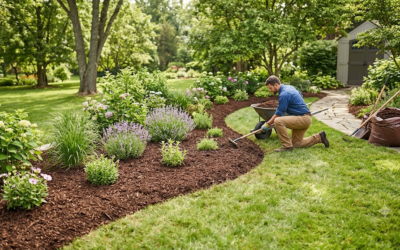

Quick Answer: The choice between wood mulch and rubber mulch depends on your specific needs. Choose wood mulch for gardens and flower beds because it decomposes into nutrient-rich organic matter, feeding your soil and plants at a cost of $20–$40 per cubic yard. Select rubber mulch for high-traffic areas like playgrounds or decorative pathways where durability and safety are priorities, costing $70–$110 per cubic yard.
When selecting a ground cover for your landscape, the decision often comes down to wood mulch vs rubber. While organic wood chips have been the traditional choice for decades, modern rubber landscaping mulch offers unique durability and safety features, particularly for playgrounds. However, each material has significant trade-offs regarding cost, environmental impact, soil health, and heat retention.
As a turfgrass agronomist, I evaluate mulch based on its impact on the underlying ecosystem. Wood mulch feeds the soil biome, while rubber mulch acts as a synthetic barrier. Below, we break down the technical differences, safety profiles, and long-term costs of rubber mulch vs wood mulch to help you decide which is best for your property.
Rubber Mulch vs Wood Mulch: Technical Comparison
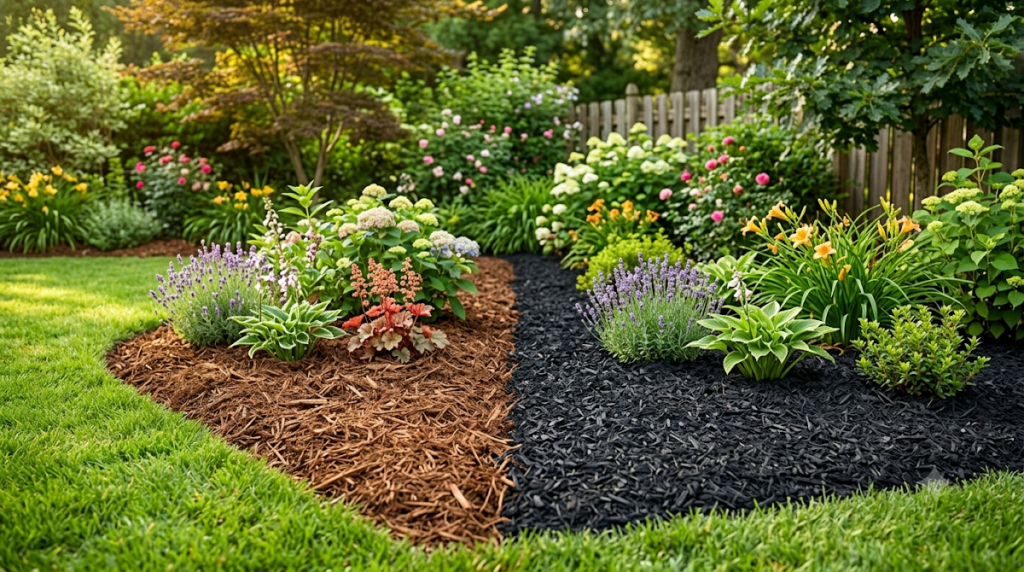
To understand which material fits your project, you must look beyond aesthetics. The physical properties of rubberized mulch for playgrounds differ fundamentally from organic wood mulch for gardening. The following table compares the two based on critical performance metrics, including heat retention, decomposition rates, and soil impact.
| Feature | Wood Mulch (Organic) | Rubber Mulch (Synthetic) |
|---|---|---|
| Primary Material | Shredded bark, wood chips, pine straw | Recycled tires, rubber nuggets |
| Lifespan | 1–3 years (requires annual top-up) | 10–20+ years (virtually permanent) |
| Soil Health | Decomposes into organic matter, adding nutrients and improving soil structure. | Does not decompose; can leach zinc and other chemicals into the soil. |
| Heat Retention | Moderate; insulates soil against heat. | High; can reach 150°F+ in direct sun, potentially burning plant roots. |
| Weed Suppression | Effective if applied 2–3 inches deep. | Excellent; creates a dense, inorganic barrier. |
| Pest Resistance | May harbor termites or carpenter ants if too close to wood structures. | Does not attract wood-boring insects; offers no food source. |
| Safety (Impact) | Moderate cushioning; can harbor splinters. | High cushioning; ideal for playground fall zones (ASTM F1292 compliant). |
Why Choose Rubber Mulch? (The Pros)
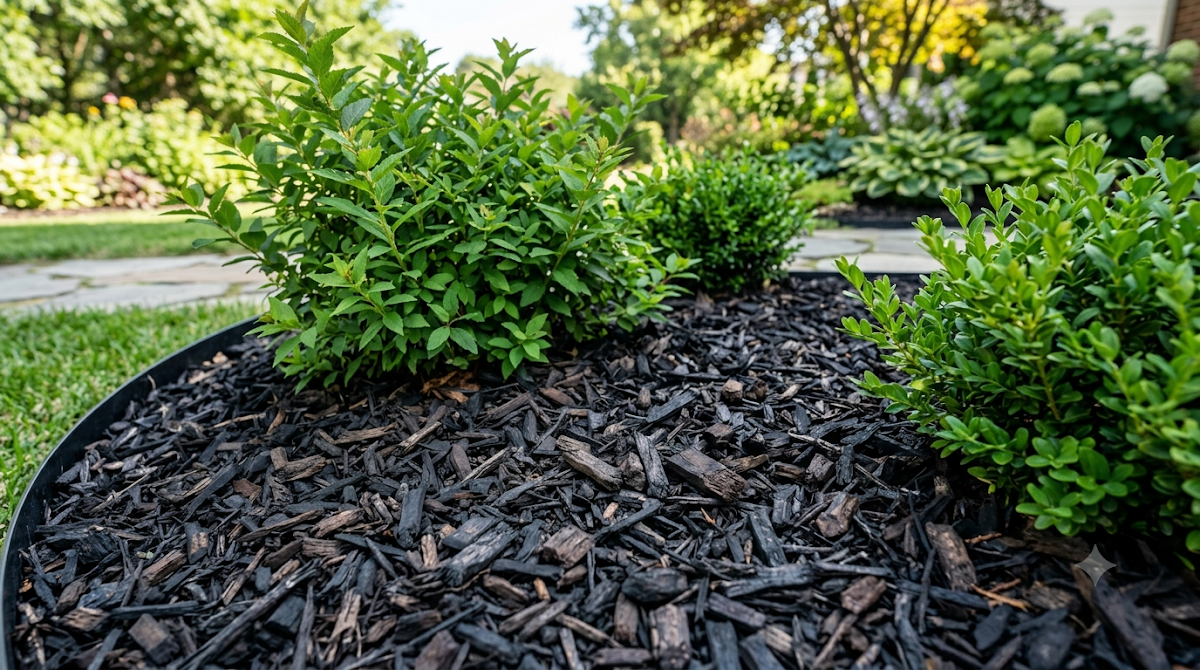
Rubber landscaping mulch is an engineered solution designed for longevity and safety. Its primary advantages lie in its resistance to organic decay and its ability to withstand environmental stress.
Unmatched Durability and Permanence
The most significant advantage of rubber mulch vs wood mulch is longevity. While wood mulch breaks down within 12 to 24 months, rubber mulch is virtually permanent. This eliminates the labor and expense of annual re-mulching. For homeowners with large properties or difficult-to-access areas, the “install and forget” nature of rubberized mulch is a major selling point.
Superior Safety for Playgrounds
Rubberized mulch for playgrounds is widely considered the gold standard for DIY play areas. Because rubber is resilient and bounces back upon impact, it provides excellent shock absorption. High-quality rubber mulch is often tested against ASTM F1292 standards for impact attenuation, reducing the severity of injuries from falls compared to wood chips, which can compact and become hard over time.
Maintenance and Wind Resistance
Rubber nuggets are heavier and interlock better than wood chips. This makes rubber mulch highly resistant to wind displacement and wash-out during heavy rains. It does not float away like lighter wood mulch, making it an excellent choice for sloped landscaping or areas prone to erosion.
Why Choose Wood Mulch? (The Benefits of Organic)
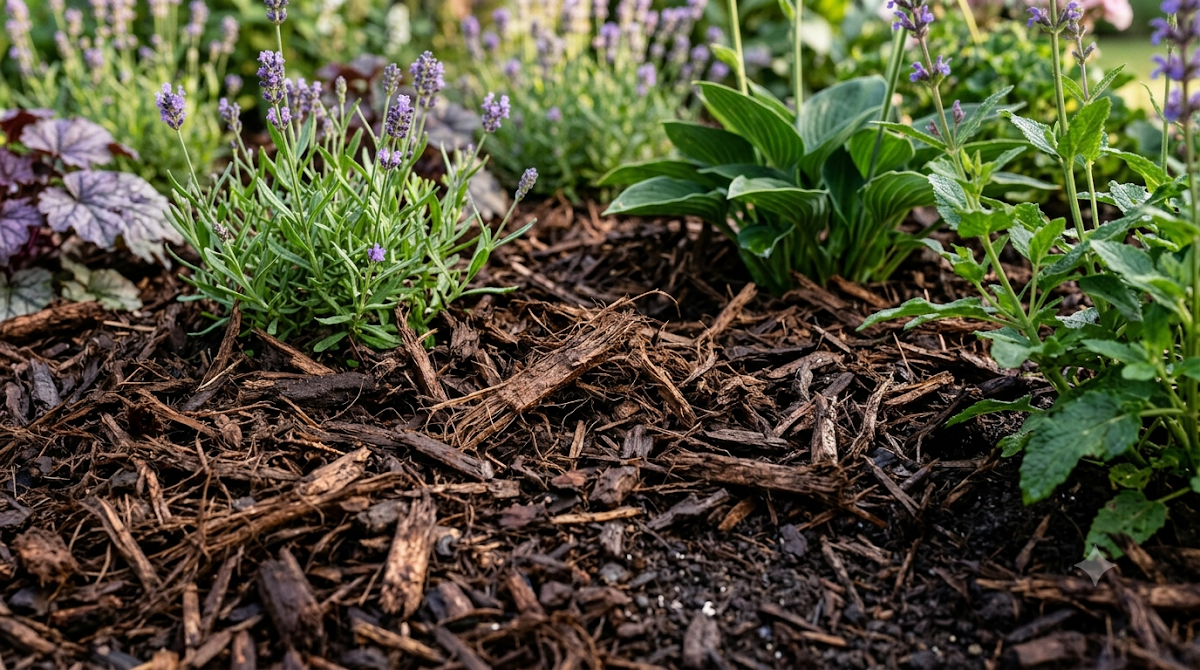
While rubber mulch wins on durability, wood mulch is the superior choice for horticulture. Its ability to decompose is not a flaw; it is its primary function. Using wood mulch turns your landscaping into a slow-release fertilizer system.
Soil Enrichment and Moisture Retention
Wood mulch feeds the soil food web. As it breaks down, it increases soil organic matter, which improves water-holding capacity and supports beneficial microbes and earthworms. If you are mulching vegetable gardens, flower beds, or around the base of trees, wood mulch is infinitely safer and more beneficial.
Cost-Effectiveness
There is a stark difference in rubber mulch vs wood mulch cost. Bulk hardwood mulch typically costs between $20 and $40 per cubic yard, while rubber mulch can cost $70 to $110 per cubic yard. Even accounting for the lifespan difference, wood mulch is often more affordable for large-scale landscaping projects where the aesthetic of organic decomposition is desired.
Critical Concerns: Safety and Heat Retention
Before installing rubber mulch, you must address two major concerns: extreme heat retention and potential toxicity. This is where the “rubber landscaping mulch pros cons” debate gets heated.
The “Black Heat” Issue
Rubber absorbs and retains heat much more aggressively than wood. In peak summer, rubber mulch surface temperatures can exceed 150°F (65°C). This is dangerous for two reasons: it can cause contact burns on children’s skin and it can “cook” the root systems of shallow plants. If using rubber mulch in garden beds, consider using a lighter color rubber or mixing it with wood mulch to mitigate heat transfer.
Is Rubber Mulch Safe for Gardens? (Toxicity)
The question “is rubber mulch safe for gardens” is complex. While the EPA states that recycled tire rubber is generally safe for limited residential use, studies show that rubber mulch can leach zinc and other heavy metals into the soil, especially in acidic soil conditions. For this reason, I generally advise against using rubber mulch in vegetable gardens or near edible plants. Use it strictly for ornamental landscaping or play areas.
Decision Guide: Which Mulch Should You Use?
To make the right choice, categorize your landscaping project by its primary function. Use the following logic to determine the best material for your needs:
| If your project is… | Best Choice | Why? |
|---|---|---|
| A children’s play set | Rubber Mulch | Shock absorption and no splinters. |
| A vegetable or herb garden | Wood Mulch | Nutrient decomposition; no chemical leaching. |
| A decorative flower bed | Wood Mulch (Preferred) or Rubber | Wood feeds soil; rubber is okay if not near plant roots. |
| A high-wind slope | Rubber Mulch | Heavy weight prevents erosion and displacement. |
| A pathway near a house | Wood Mulch | Lower fire risk (rubber is highly flammable). |
Installation Tips and Expert Troubleshooting
Proper installation is key to maximizing the lifespan of either material. Regardless of the mulch you choose, ensure the ground is level and free of existing weeds before application.
Depth and Application
Wood Mulch: Apply a layer 2 to 3 inches deep. Do not exceed 4 inches, as this can suffocate plant roots and prevent water from reaching the soil. Keep mulch 2 inches away from the trunks of trees to prevent rot.
Rubber Mulch: Apply a layer 3 to 4 inches deep. Because rubber does not compact like wood, you need slightly more volume to achieve the same visual coverage and weed suppression benefits.
Troubleshooting Common Issues
Issue: “My rubber mulch is blowing away.”
Even though rubber is heavy, small pieces can migrate. Install a durable plastic or metal edging around the perimeter of the bed to contain the nuggets.
Issue: “My plants are dying in rubber mulch.”
This is likely due to heat retention. Check the root zone temperature. If it’s too hot, remove the rubber mulch from around the base of the plant and replace it with wood chips or pine straw, keeping the rubber mulch only in the outer perimeter of the bed.
Issue: “Fungus on my wood mulch.”
Wood mulch is organic, so mushrooms or slime mold may appear. This is a sign of healthy decomposition. It is not harmful to plants. If you dislike the aesthetic, simply rake the mulch to break up the fungal mat or remove the mushrooms manually.
Frequently Asked Questions (FAQs)
How long does rubber mulch last compared to wood mulch?
Rubber mulch typically lasts 10 to 20 years or more, essentially indefinitely in most residential applications. Wood mulch breaks down into soil over 1 to 3 years and requires annual replenishment to maintain a depth of 2–3 inches.
Does rubber mulch attract termites?
No. Rubber mulch does not provide a food source for termites or other wood-boring insects. However, it can still provide a moist environment that termites might use for travel. If you have a significant termite risk, maintain a clear 6-inch barrier of rock or gravel between the mulch and your home’s foundation.
Can I mix rubber mulch with wood mulch?
While possible, it is not recommended. The two materials decompose at vastly different rates. As the wood mulch breaks down, the rubber nuggets will settle to the bottom, creating an uneven surface. It is best to keep the materials in separate zones of the landscape.
Is rubber mulch flammable?
Yes. Rubber mulch is flammable and can burn intensely if ignited by a discarded cigarette, firework, or barbecue spark. Do not use rubber mulch near fire pits, grills, or areas where smoking is permitted.
Ultimately, the choice between wood mulch and rubber mulch comes down to a trade-off between organic soil health and synthetic durability. Use wood mulch where you want to feed the earth, and use rubber mulch where you need a tough, safe, and permanent surface. For related insights, see our detailed guide on Does Grass Seed Expire? Shelf Life & Germination Test.