
Quick Answer: Cool-season grass seed germinates best when soil temperatures are between 50\u00b0F and 65\u00b0F. For optimal results, plant in early fall or early spring, prepare a seedbed with a soil pH of 6.0-7.0, and keep the top inch of soil consistently moist for 14-21 days until germination is complete.
Choosing the right grass seed is the single most important decision you will make for your lawn. As a turfgrass agronomist, I have seen countless homeowners struggle with patchy, brown lawns simply because they planted the wrong species for their climate or failed to time their seeding correctly. Cool-season grasses\u2014including Kentucky bluegrass, tall fescue, fine fescues, and perennial ryegrass\u2014are the backbone of lawns in the northern United States and the transition zone. They thrive in regions where temperatures stay cool for most of the year, greening up in early spring, going dormant during the peak heat of summer, and flourishing again in the crisp air of autumn.
Understanding Cool-Season Grass Characteristics
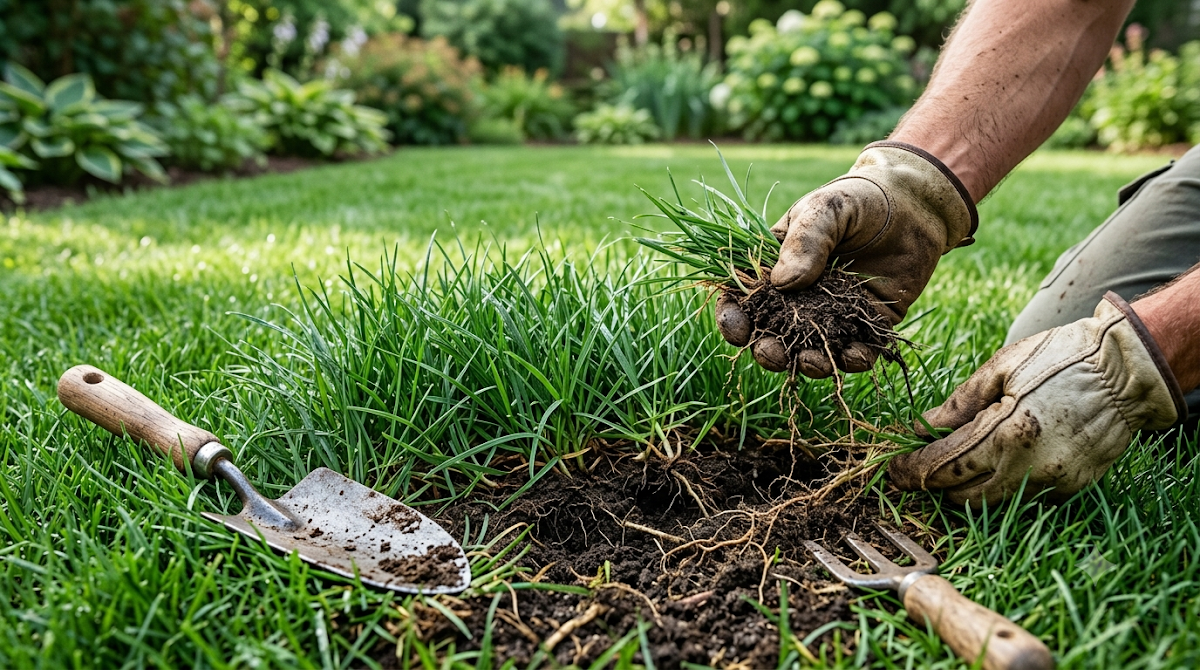
Cool-season grasses are defined by their optimal growth temperature range of 60\u00b0F to 75\u00b0F. They possess a fibrous root system that draws nutrients and water from the upper soil profile. Unlike warm-season grasses that spread aggressively via stolons and rhizomes, many cool-season varieties (with the notable exception of Kentucky bluegrass) are bunch-type grasses, meaning they grow in discrete clumps and do not self-repair bare spots as effectively.
Understanding the specific traits of each grass type is critical for selecting the right seed for your site conditions. Tall fescue, for example, has a deep root system that makes it exceptionally drought-tolerant, while fine fescues are prized for their ability to thrive in deep shade where other grasses fail.
Cool-Season Grass Seed Comparison Chart
| Grass Type | Optimal Soil Temp | Germination Time | Mowing Height | Shade Tolerance | Drought Tolerance |
|---|---|---|---|---|---|
| Kentucky Bluegrass | 55\u00b0F – 65\u00b0F | 14 – 28 Days | 2.5 – 3.5 inches | Low | Low |
| Tall Fescue | 50\u00b0F – 65\u00b0F | 7 – 14 Days | 3 – 4 inches | Moderate | High |
| Fine Fescues | 50\u00b0F – 65\u00b0F | 10 – 21 Days | 2 – 3 inches | High | Moderate |
| Perennial Ryegrass | 50\u00b0F – 65\u00b0F | 5 – 10 Days | 2 – 3 inches | Low | Low |
Step-by-Step Guide to Planting Cool-Season Grass Seed
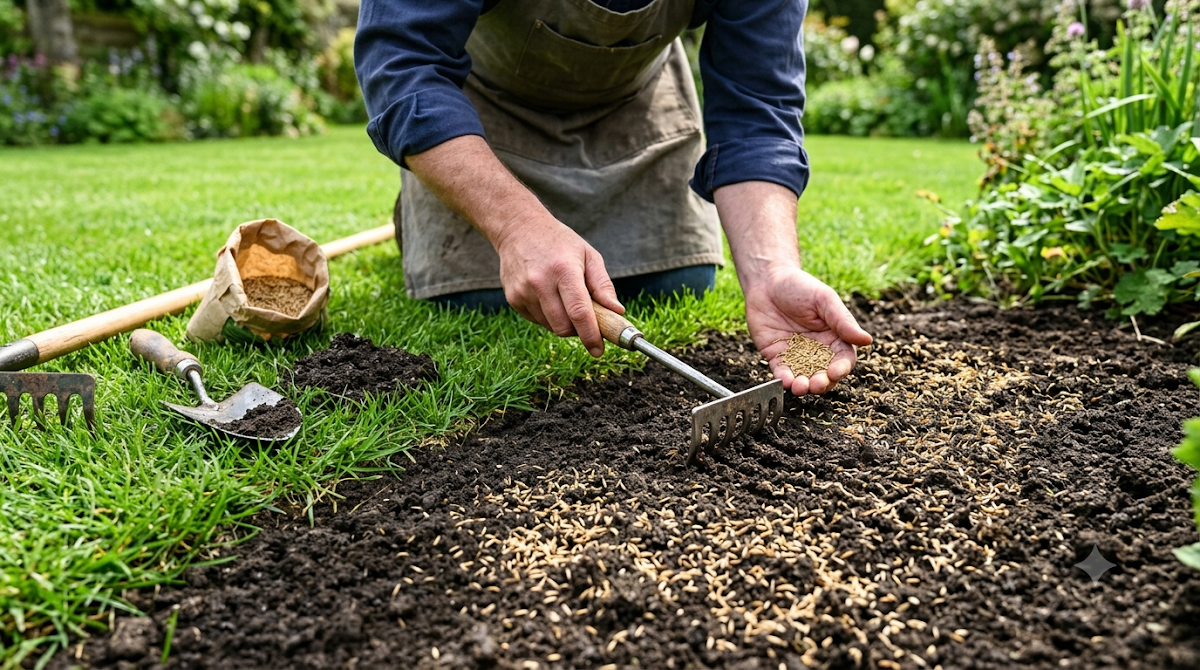
Success with cool-season grass seed relies on precise timing and meticulous site preparation. Follow this agronomic protocol to ensure maximum germination rates and long-term turf density.
Step 1: Soil Testing and Amendment
Before purchasing a single bag of seed, you must know your soil’s pH and nutrient profile. Cool-season grasses prefer a soil pH between 6.0 and 7.0. Use a home testing kit for a quick reading, but for a comprehensive analysis, send a sample to your local university extension laboratory. If your pH is below 6.0, apply pelletized lime at a rate of 50 lbs per 1,000 sq. ft. to raise it. If the pH is above 7.5, elemental sulfur may be required.
Step 2: Seedbed Preparation
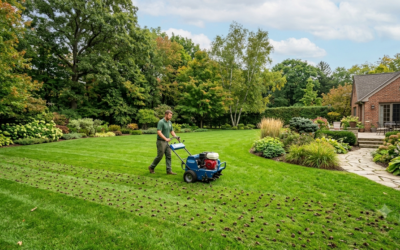
Remove all existing vegetation using a non-selective herbicide or a sod cutter. Once the area is clear, core aerate the soil to a depth of 3-4 inches. This relieves compaction and creates pockets for seed-to-soil contact. Follow aeration with a light topdressing of 1/4 inch of high-quality compost. Rake the surface to ensure it is level and free of large debris.
Step 3: Seeding and Coverage
Use a broadcast spreader for uniform coverage. The seeding rate depends on the species: Kentucky bluegrass requires 2-3 lbs per 1,000 sq. ft., while tall fescue requires 6-8 lbs per 1,000 sq. ft. After spreading the seed, use a lawn roller to press the seed into the soil, ensuring at least 50% seed-to-soil contact. Apply a thin layer of straw mulch (one bale per 1,000 sq. ft.) to retain moisture and protect the seed from birds.
Step 4: Post-Planting Irrigation
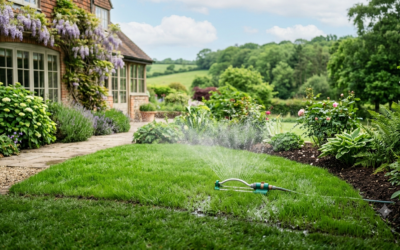
Germination requires consistent moisture. Water lightly 2-3 times daily for the first 10-14 days, keeping the top inch of soil moist but not saturated. Once the seedlings emerge and reach 2 inches in height, transition to deeper, less frequent watering (1 inch of water per week) to encourage deep root growth.
Expert Troubleshooting: Common Seeding Failures
Even with careful planning, issues can arise. Here is how to diagnose and correct common problems.
Scenario: Mowed Too Early
If you mow new grass before it reaches 3 inches, you risk uprooting the delicate seedlings and scalping the crown of the plant. If this happens, stop mowing immediately. Allow the turf to recover for at least two weeks. Apply a light application of a starter fertilizer (10-20-10) to stimulate root and blade recovery.
Scenario: Wet Weather Delays
Prolonged rain can delay germination and promote fungal diseases like Pythium blight. If the soil remains saturated for more than 48 hours, the seed may rot. To mitigate this, ensure your soil has adequate drainage before planting. If disease is suspected, apply a fungicide labeled for turf seedlings and reduce irrigation frequency until the soil surface dries between waterings.
Frequently Asked Questions
Can I plant cool-season grass seed in the summer?
It is strongly discouraged. Summer heat (above 85\u00b0F) causes high soil temperatures that can kill germinating seeds or force them into early dormancy. The extreme heat also increases water demand to unsustainable levels. Stick to early fall (August-September) or early spring (March-April) for the best results.
How long does it take for cool-season grass to establish?
While you will see germination in as little as 5 days (perennial ryegrass) to 28 days (Kentucky bluegrass), full establishment takes time. The turf is considered “established” when it can be mowed three times without damage, which typically takes 6 to 8 weeks. Full maturity and density may take an entire growing season.
What is the difference between cool-season and warm-season grass?
Cool-season grasses (like fescue and bluegrass) grow best in temperatures between 60\u00b0F and 75\u00b0F and are adapted to northern climates. Warm-season grasses (like Bermuda and Zoysia) thrive in temperatures between 80\u00b0F and 95\u00b0F and are adapted to southern climates. Cool-season grasses stay green longer into the fall and green up earlier in the spring, while warm-season grasses go dormant and turn brown in the winter.
Should I use a starter fertilizer when seeding?
Yes. A starter fertilizer contains a higher phosphorus content (the middle number in the N-P-K ratio), which is essential for root development in young seedlings. Apply a starter fertilizer at the time of seeding or immediately after covering the seed with mulch. Avoid high-nitrogen fertilizers until the grass has been mowed at least twice. For related insights, see our detailed guide on Kill Spurge Weed.