
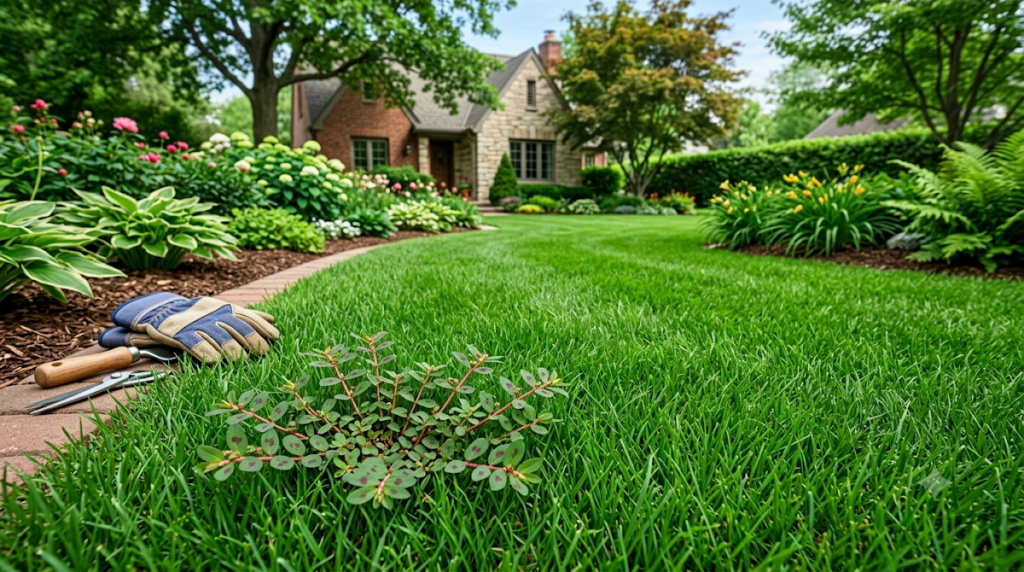
Quick Answer: To kill spurge weed effectively, hand-pull plants when soil is moist (65-75\u00b0F) wearing protective gloves, or apply a post-emergent herbicide containing triclopyr or 2,4-D when temperatures are below 85\u00b0F. Prevent regrowth by applying a pre-emergent in late winter and maintaining dense, healthy turf at 3-4 inches height.
Spurge is one of the most aggressive summer annual weeds in American lawns, capable of spreading from a single plant to dinner plate-sized colonies in just 2-3 weeks. Whether you’re dealing with prostrate spurge (Euphorbia humistrata) or spotted spurge (Euphorbia maculata), this comprehensive guide provides the exact protocols, product recommendations, and prevention strategies to eliminate spurge permanently from your lawn.
Understanding Spurge Identification
Before selecting a control method, accurate identification prevents wasted effort on the wrong weed. Spurge exhibits distinctive characteristics that separate it from look-alikes like purslane or chickweed:
| Characteristic | Spurge | Purslane (Look-Alike) |
|---|---|---|
| Sap Color | White, milky latex | Clear, watery |
| Leaf Shape | Small, oval, opposite | Thick, paddle-shaped |
| Stem | Thin, pink-red, hairy | Thick, smooth, succulent |
| Growth Pattern | Flat, radiating from center | Upright, branching |
| Skin Irritation | Yes – causes dermatitis | No |
Critical Warning: Spurge sap contains diterpene esters that cause contact dermatitis in sensitive individuals. Always wear nitrile gloves and long sleeves when handling plants.
Step 1: Assess Infestation Severity
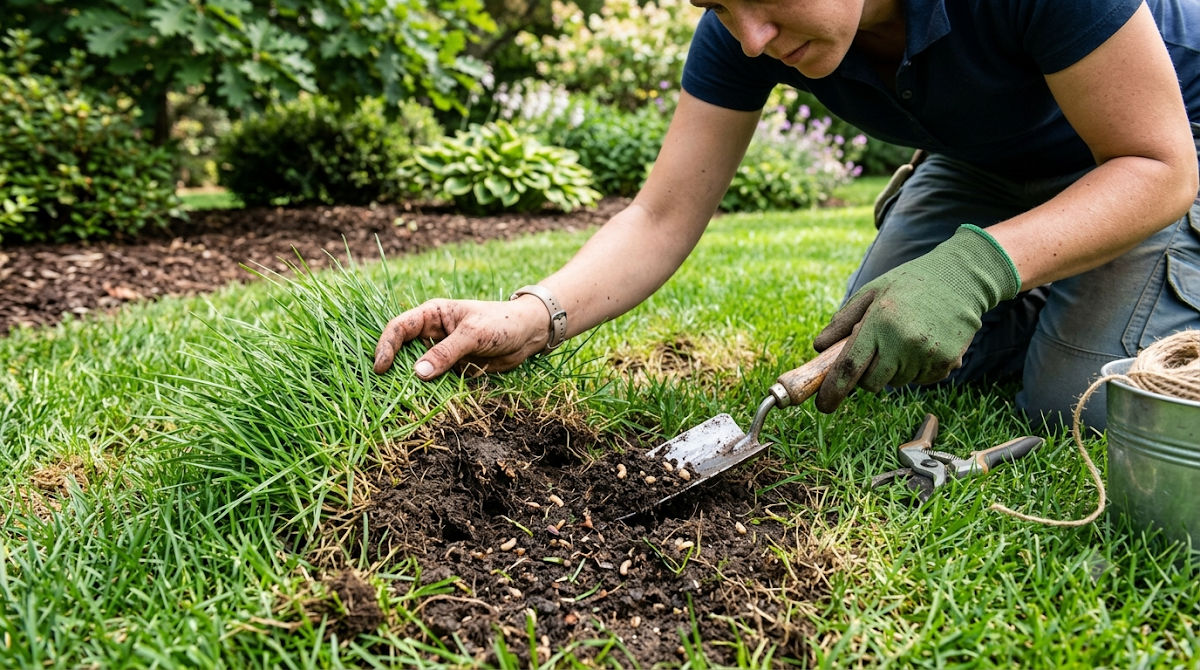
Evaluate your spurge problem before choosing a control method:
- Light Infestation (1-5 plants): Hand-pulling is most effective and cost-efficient
- Moderate Infestation (6-20 patches): Combination approach – pull large plants, spot-treat smaller colonies
- Heavy Infestation (20+ patches or >30% lawn coverage): Professional herbicide application or complete lawn renovation
Step 2: Hand-Pulling Technique (For Light-Moderate Infestations)

Hand-pulling remains the most effective removal method when executed correctly, achieving 95-100% root removal success rates.
Optimal Conditions for Hand-Pulling
- Soil Moisture: Pull after rainfall or irrigation when soil is damp but not waterlogged
- Temperature Range: 65-75\u00b0F soil temperature (measured 2 inches deep)
- Time of Day: Early morning when plants are turgid and roots release easily
- Plant Stage: Before flowering (before small white/pink flowers appear at leaf axils)
Hand-Pulling Procedure
Follow this precise sequence for maximum root extraction:
1. Preparation: Water the lawn 24 hours before pulling. Apply nitrile gloves and long sleeves.
2. Grip Technique: Pinch the plant at the soil line between thumb and forefinger, not at the stem tips.
3. Extraction: Pull upward with steady pressure while rocking slightly side-to-side. The entire taproot should release (typically 3-5 inches long).
4. Verification: Inspect removed plant for complete root system. If root fragments remain in soil, they will regenerate within 7-10 days.
5. Disposal: Place pulled plants in sealed bags. Do not compost – spurge seeds remain viable for 8+ years in soil.
Step 3: Chemical Control Options
For moderate to heavy infestations or when hand-pulling is impractical, post-emergent herbicides provide systematic elimination.
Herbicide Selection Guide
| Product Type | Active Ingredient | Application Rate | Reentry Interval |
|---|---|---|---|
| Selective (Lawn-Safe) | Triclopyr + 2,4-D + Dicamba | 2-3 oz per 1,000 sq ft | 24 hours |
| Contact Herbicide | Diquat dibromide | 6-10 oz per 1,000 sq ft | 24 hours |
| Non-Selective | Glyphosate (36%) | 2-3 oz per gallon | 4-6 hours (dry) |
Application Protocol
Timing: Apply when temperatures are 65-85\u00b0F. Avoid application when temperatures exceed 85\u00b0F to prevent turf damage and herbicide volatilization.
Surfactant Addition: Add non-ionic surfactant at 0.25-0.5% v/v to improve leaf absorption. Spurge’s waxy cuticle requires surfactant for effective penetration.
Water Volume: Apply in 20-40 gallons of water per 1,000 square feet for thorough coverage.
Reapplication: Expect 70-85% control on first application. Reapply in 14-21 days to target emerging seedlings from the soil seed bank.
Step 4: Pre-Emergent Prevention Strategy
Preventing spurge germination is more effective than post-emergent control. Spurge seeds germinate when soil temperatures reach 60\u00b0F at 2-inch depth, typically late February in Zone 7-9 and March-April in northern regions.
Pre-Emergent Application Schedule
| Application Window | Product | Rate | Duration of Control |
|---|---|---|---|
| Late Winter (Feb-March) | Prodiamine (Barricade) | 3.9 oz per 1,000 sq ft | 90-120 days |
| Early Spring | Dithiopyr (Dimension) | 1.5-2.1 oz per 1,000 sq ft | 80-100 days |
| Mid-Summer (reapplication) | Prodiamine | 2.6 oz per 1,000 sq ft | 60-90 days |
Application Rule: Pre-emergents must be activated by 0.5 inches of rainfall or irrigation within 7 days of application to form an effective barrier in the top 1-2 inches of soil.
Long-Term Prevention: Cultural Practices
Spurge thrives in thin, stressed turf. Implement these cultural modifications to create conditions hostile to spurge establishment:
Mowing Height: Maintain turf at 3-4 inches. Taller grass shades soil surface, reducing germination by 60-70% by blocking light required for seed activation.
Fertilization: Apply 1-1.5 lbs nitrogen per 1,000 sq ft monthly during active growth. Dense, vigorous turf outcompetes spurge for light, water, and nutrients.
Irrigation Management: Water deeply (1 inch) weekly rather than frequent shallow irrigation. Spurge roots thrive in the top 1-2 inches; deep watering favors turf grasses.
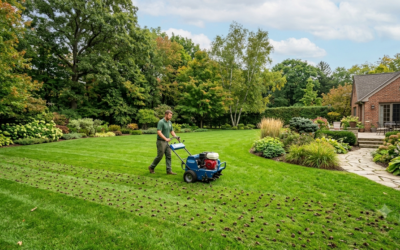
Soil Compaction: Core aerate annually in fall. Compacted soil favors spurge over desired turf grasses.
Troubleshooting Common Issues
Problem: Spurge regenerates 7-10 days after hand-pulling
Solution: Root fragments were left in soil. Re-pull affected areas, ensuring complete taproot extraction. Apply post-emergent herbicide to regrowth.
Problem: Herbicide applications show minimal results
Solution: Verify soil temperature is 65-85\u00b0F during application. Add non-ionic surfactant to improve waxy leaf penetration. Reapply in 14-21 days.
Problem: Heavy rainfall within 48 hours of pre-emergent application
Solution: If >2 inches of rain occurred, reapply pre-emergent. Excessive water leaches herbicide below effective soil depth.
Problem: Spurge returns after successful season-long control
Solution: Soil seed bank contains 8-10 years of viable seeds. Continue annual pre-emergent applications and maintain optimal cultural practices for 3-5 years to exhaust seed reserves.
Frequently Asked Questions
How long does it take for spurge herbicide to work?
Visible wilting occurs within 24-48 hours with contact herbicides. Selective systemic herbicides (triclopyr, 2,4-D) show visible yellowing in 3-5 days, with complete plant death in 7-14 days. Temperature significantly affects speed – warmer conditions (75-85\u00b0F) accelerate herbicide uptake and translocation.
Can vinegar kill spurge permanently?
Horticultural vinegar (20-30% acetic acid) causes foliar burn but does not kill established taproots. It provides 30-50% control on single applications. For effective natural control, apply repeated applications every 7-10 days as new growth emerges, combined with manual root removal. Household vinegar (5% acetic acid) is ineffective on mature spurge.
Is spurge dangerous to pets or children?
Spurge sap causes skin irritation (dermatitis) in humans and animals. If ingested, it causes oral irritation and gastrointestinal distress. While not typically life-threatening, contact veterinary or medical attention if significant exposure occurs. Symptoms resolve within 24-48 hours without treatment. Remove pets from treated areas until herbicide has completely dried (4-6 hours).
When is the best time of year to treat spurge?
Pre-emergent: Late February to early March in Zones 7-9; March-April in northern regions, when soil temperatures approach 60\u00b0F.
Post-emergent: May through September when plants are actively growing and temperatures are 65-85\u00b0F. Avoid summer applications when temperatures exceed 85\u00b0F to prevent turf damage.
Hand-pulling: Any time plants are present and soil is moist, prioritizing early summer before seed production begins.
By implementing this systematic identification, treatment, and prevention protocol, you’ll achieve permanent spurge control within 2-3 growing seasons while building a dense, weed-resistant lawn that naturally suppresses future infestations. For related insights, see our detailed guide on The Ultimate Guide to Cool-Season Grass Seed.