
- Cool temperatures (below 50\u00b0F): Herbicide will be largely ineffective but won’t harm dormant grass. Plan a second application when conditions improve.
- Applied to dry lawn: Water immediately with 0.5 inches to help adhesion. May need reapplication in 2 weeks.
- Rain within 4 hours of application: Product washed away\u2014reapply at half-rate once lawn dries and conditions are optimal.
- Visible grass yellowing: Apply iron sulfate (chelated iron) to green up turf without additional nitrogen stress.
Why You Should Never Apply Weed and Feed in Summer
Summer applications (July-August in most regions) create a perfect storm of problems:
- Heat stress + herbicide = severe burn: Grass already operating at maximum stress cannot recover from chemical damage
- Low efficacy: Most weeds enter semi-dormancy, reducing herbicide absorption by 60-80%
- Water restrictions: Summer water limits prevent proper activation and post-application irrigation
- Root damage: Nitrogen-heavy formulations during heat stress promotes top growth at the expense of root development
Expert Troubleshooting: Common Weed and Feed Problems
| Problem | Likely Cause | Solution |
|---|---|---|
| White/gray leaf tips | Herbicide burn from over-application | Water deeply (1 inch) to leach excess; apply iron supplement |
| Weeds not dying | Applied too early or too cold | Wait 2-3 weeks, reapply when temps are 60-75\u00b0F |
| Green grass, no weed kill | Spreader calibration error | Spot-treat missed areas with liquid concentrate |
| Grass thinning 2 weeks later | Root stress from summer application | Apply root stimulator; reduce mowing height temporarily |
| Weeds returning in 6 weeks | Pre-emergent component wore off | Plan fall application; consider spot-treating with post-emergent |
Frequently Asked Questions
Q: Can I apply weed and feed if it’s going to rain tomorrow?
A: Light rain (under 0.25 inches) within 24 hours can actually help activate the product. However, heavy rain or forecasted downpours within 4-6 hours will wash the herbicide off weed leaves before absorption. Wait until you have a clear 24-48 hour window.
Q: How long after weed and feed can I let my kids and pets on the lawn?
A: Most granular weed and feed products require 24 hours before foot traffic. If you’ve applied a liquid product, wait until completely dry (typically 4-8 hours). Always check the specific product label\u2014some systemic herbicides require 48-72 hours.
Q: Should I mow before or after applying weed and feed?
A: Both. Mow 1-2 days before to reduce grass height and expose weeds. Then mow again immediately after application\u2014this bends weed leaves, increasing herbicide contact with the foliage. Avoid mowing for 3-5 days post-application to allow full absorption.
Q: Can I apply weed and feed to a newly seeded lawn?
A: No. Wait until you’ve mowed the new grass 3-4 times (typically 8-12 weeks after germination). Newly established turf lacks the root mass to recover from herbicide stress. Focus on mechanical weed removal (hand-pulling) during establishment.
When to Hire a Professional
Consider professional treatment if: your lawn exceeds 5,000 square feet and you lack broadcast spreader equipment, you’re dealing with herbicide-resistant weed populations, or you’ve experienced phytotoxicity damage from DIY applications. Licensed applicators have access to professional-grade products with higher active ingredient concentrations and can calibrate equipment to your specific lawn conditions. For related insights, see our detailed guide on Watering New Grass Seed.
- Water early morning (6-8 AM) or wait for natural dew formation\u2014lawn should be uniformly damp
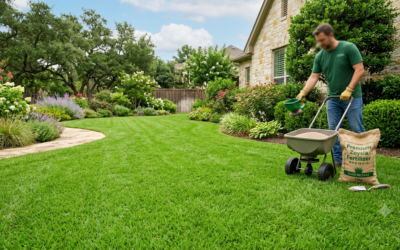
- Calibrate spreader according to product label rates\u2014typically 2.5-3 lbs per 1,000 sq ft
- Apply in two passes: Half-rate in north-south direction, half-rate in east-west direction for even coverage
- Avoid overlaps: Mark edges with flags to prevent double-application on borders
- Keep off lawn for 24 hours to allow herbicide absorption
- Water in lightly (0.125 inches) only if product label requires activation
What Happens If You Apply Weed and Feed Too Early?
If you’ve already applied weed and feed before optimal conditions, here’s your damage control plan:
- Cool temperatures (below 50\u00b0F): Herbicide will be largely ineffective but won’t harm dormant grass. Plan a second application when conditions improve.
- Applied to dry lawn: Water immediately with 0.5 inches to help adhesion. May need reapplication in 2 weeks.
- Rain within 4 hours of application: Product washed away\u2014reapply at half-rate once lawn dries and conditions are optimal.
- Visible grass yellowing: Apply iron sulfate (chelated iron) to green up turf without additional nitrogen stress.
Why You Should Never Apply Weed and Feed in Summer
Summer applications (July-August in most regions) create a perfect storm of problems:
- Heat stress + herbicide = severe burn: Grass already operating at maximum stress cannot recover from chemical damage
- Low efficacy: Most weeds enter semi-dormancy, reducing herbicide absorption by 60-80%
- Water restrictions: Summer water limits prevent proper activation and post-application irrigation
- Root damage: Nitrogen-heavy formulations during heat stress promotes top growth at the expense of root development
Expert Troubleshooting: Common Weed and Feed Problems
| Problem | Likely Cause | Solution |
|---|---|---|
| White/gray leaf tips | Herbicide burn from over-application | Water deeply (1 inch) to leach excess; apply iron supplement |
| Weeds not dying | Applied too early or too cold | Wait 2-3 weeks, reapply when temps are 60-75\u00b0F |
| Green grass, no weed kill | Spreader calibration error | Spot-treat missed areas with liquid concentrate |
| Grass thinning 2 weeks later | Root stress from summer application | Apply root stimulator; reduce mowing height temporarily |
| Weeds returning in 6 weeks | Pre-emergent component wore off | Plan fall application; consider spot-treating with post-emergent |
Frequently Asked Questions
Q: Can I apply weed and feed if it’s going to rain tomorrow?
A: Light rain (under 0.25 inches) within 24 hours can actually help activate the product. However, heavy rain or forecasted downpours within 4-6 hours will wash the herbicide off weed leaves before absorption. Wait until you have a clear 24-48 hour window.
Q: How long after weed and feed can I let my kids and pets on the lawn?
A: Most granular weed and feed products require 24 hours before foot traffic. If you’ve applied a liquid product, wait until completely dry (typically 4-8 hours). Always check the specific product label\u2014some systemic herbicides require 48-72 hours.
Q: Should I mow before or after applying weed and feed?
A: Both. Mow 1-2 days before to reduce grass height and expose weeds. Then mow again immediately after application\u2014this bends weed leaves, increasing herbicide contact with the foliage. Avoid mowing for 3-5 days post-application to allow full absorption.
Q: Can I apply weed and feed to a newly seeded lawn?
A: No. Wait until you’ve mowed the new grass 3-4 times (typically 8-12 weeks after germination). Newly established turf lacks the root mass to recover from herbicide stress. Focus on mechanical weed removal (hand-pulling) during establishment.
When to Hire a Professional
Consider professional treatment if: your lawn exceeds 5,000 square feet and you lack broadcast spreader equipment, you’re dealing with herbicide-resistant weed populations, or you’ve experienced phytotoxicity damage from DIY applications. Licensed applicators have access to professional-grade products with higher active ingredient concentrations and can calibrate equipment to your specific lawn conditions. For related insights, see our detailed guide on Watering New Grass Seed.
- Check forecast: No rain expected for 24-48 hours post-application
- Confirm soil temperature at 55\u00b0F minimum (use a probe thermometer)
- Mow lawn 1-2 days before application at 2.5-3 inch height
- Mow again at same height immediately after application to maximize weed leaf contact
- Water lawn lightly (0.25 inches) to activate pre-emergent components if present
Application Day Protocol
- Water early morning (6-8 AM) or wait for natural dew formation\u2014lawn should be uniformly damp
- Calibrate spreader according to product label rates\u2014typically 2.5-3 lbs per 1,000 sq ft
- Apply in two passes: Half-rate in north-south direction, half-rate in east-west direction for even coverage
- Avoid overlaps: Mark edges with flags to prevent double-application on borders
- Keep off lawn for 24 hours to allow herbicide absorption
- Water in lightly (0.125 inches) only if product label requires activation
What Happens If You Apply Weed and Feed Too Early?
If you’ve already applied weed and feed before optimal conditions, here’s your damage control plan:
- Cool temperatures (below 50\u00b0F): Herbicide will be largely ineffective but won’t harm dormant grass. Plan a second application when conditions improve.
- Applied to dry lawn: Water immediately with 0.5 inches to help adhesion. May need reapplication in 2 weeks.
- Rain within 4 hours of application: Product washed away\u2014reapply at half-rate once lawn dries and conditions are optimal.
- Visible grass yellowing: Apply iron sulfate (chelated iron) to green up turf without additional nitrogen stress.
Why You Should Never Apply Weed and Feed in Summer
Summer applications (July-August in most regions) create a perfect storm of problems:
- Heat stress + herbicide = severe burn: Grass already operating at maximum stress cannot recover from chemical damage
- Low efficacy: Most weeds enter semi-dormancy, reducing herbicide absorption by 60-80%
- Water restrictions: Summer water limits prevent proper activation and post-application irrigation
- Root damage: Nitrogen-heavy formulations during heat stress promotes top growth at the expense of root development
Expert Troubleshooting: Common Weed and Feed Problems
| Problem | Likely Cause | Solution |
|---|---|---|
| White/gray leaf tips | Herbicide burn from over-application | Water deeply (1 inch) to leach excess; apply iron supplement |
| Weeds not dying | Applied too early or too cold | Wait 2-3 weeks, reapply when temps are 60-75\u00b0F |
| Green grass, no weed kill | Spreader calibration error | Spot-treat missed areas with liquid concentrate |
| Grass thinning 2 weeks later | Root stress from summer application | Apply root stimulator; reduce mowing height temporarily |
| Weeds returning in 6 weeks | Pre-emergent component wore off | Plan fall application; consider spot-treating with post-emergent |
Frequently Asked Questions
Q: Can I apply weed and feed if it’s going to rain tomorrow?
A: Light rain (under 0.25 inches) within 24 hours can actually help activate the product. However, heavy rain or forecasted downpours within 4-6 hours will wash the herbicide off weed leaves before absorption. Wait until you have a clear 24-48 hour window.
Q: How long after weed and feed can I let my kids and pets on the lawn?
A: Most granular weed and feed products require 24 hours before foot traffic. If you’ve applied a liquid product, wait until completely dry (typically 4-8 hours). Always check the specific product label\u2014some systemic herbicides require 48-72 hours.
Q: Should I mow before or after applying weed and feed?
A: Both. Mow 1-2 days before to reduce grass height and expose weeds. Then mow again immediately after application\u2014this bends weed leaves, increasing herbicide contact with the foliage. Avoid mowing for 3-5 days post-application to allow full absorption.
Q: Can I apply weed and feed to a newly seeded lawn?
A: No. Wait until you’ve mowed the new grass 3-4 times (typically 8-12 weeks after germination). Newly established turf lacks the root mass to recover from herbicide stress. Focus on mechanical weed removal (hand-pulling) during establishment.
When to Hire a Professional
Consider professional treatment if: your lawn exceeds 5,000 square feet and you lack broadcast spreader equipment, you’re dealing with herbicide-resistant weed populations, or you’ve experienced phytotoxicity damage from DIY applications. Licensed applicators have access to professional-grade products with higher active ingredient concentrations and can calibrate equipment to your specific lawn conditions. For related insights, see our detailed guide on Watering New Grass Seed.
- Heavy weed infestation: Two applications per year (spring + fall), 4-6 months apart
- Moderate weed pressure: One targeted application per season (fall preferred for perennial control)
- Minimal weeds: Spot-treat with liquid herbicide rather than blanket application
- Maximum frequency: Never exceed two applications per year\u2014over-application damages soil microbiome and can lead to herbicide-resistant weeds
Step-by-Step Application Protocol
Follow this exact procedure for professional-grade results:
Pre-Application Checklist
- Check forecast: No rain expected for 24-48 hours post-application
- Confirm soil temperature at 55\u00b0F minimum (use a probe thermometer)
- Mow lawn 1-2 days before application at 2.5-3 inch height
- Mow again at same height immediately after application to maximize weed leaf contact
- Water lawn lightly (0.25 inches) to activate pre-emergent components if present
Application Day Protocol
- Water early morning (6-8 AM) or wait for natural dew formation\u2014lawn should be uniformly damp
- Calibrate spreader according to product label rates\u2014typically 2.5-3 lbs per 1,000 sq ft
- Apply in two passes: Half-rate in north-south direction, half-rate in east-west direction for even coverage
- Avoid overlaps: Mark edges with flags to prevent double-application on borders
- Keep off lawn for 24 hours to allow herbicide absorption
- Water in lightly (0.125 inches) only if product label requires activation
What Happens If You Apply Weed and Feed Too Early?
If you’ve already applied weed and feed before optimal conditions, here’s your damage control plan:
- Cool temperatures (below 50\u00b0F): Herbicide will be largely ineffective but won’t harm dormant grass. Plan a second application when conditions improve.
- Applied to dry lawn: Water immediately with 0.5 inches to help adhesion. May need reapplication in 2 weeks.
- Rain within 4 hours of application: Product washed away\u2014reapply at half-rate once lawn dries and conditions are optimal.
- Visible grass yellowing: Apply iron sulfate (chelated iron) to green up turf without additional nitrogen stress.
Why You Should Never Apply Weed and Feed in Summer
Summer applications (July-August in most regions) create a perfect storm of problems:
- Heat stress + herbicide = severe burn: Grass already operating at maximum stress cannot recover from chemical damage
- Low efficacy: Most weeds enter semi-dormancy, reducing herbicide absorption by 60-80%
- Water restrictions: Summer water limits prevent proper activation and post-application irrigation
- Root damage: Nitrogen-heavy formulations during heat stress promotes top growth at the expense of root development
Expert Troubleshooting: Common Weed and Feed Problems
| Problem | Likely Cause | Solution |
|---|---|---|
| White/gray leaf tips | Herbicide burn from over-application | Water deeply (1 inch) to leach excess; apply iron supplement |
| Weeds not dying | Applied too early or too cold | Wait 2-3 weeks, reapply when temps are 60-75\u00b0F |
| Green grass, no weed kill | Spreader calibration error | Spot-treat missed areas with liquid concentrate |
| Grass thinning 2 weeks later | Root stress from summer application | Apply root stimulator; reduce mowing height temporarily |
| Weeds returning in 6 weeks | Pre-emergent component wore off | Plan fall application; consider spot-treating with post-emergent |
Frequently Asked Questions
Q: Can I apply weed and feed if it’s going to rain tomorrow?
A: Light rain (under 0.25 inches) within 24 hours can actually help activate the product. However, heavy rain or forecasted downpours within 4-6 hours will wash the herbicide off weed leaves before absorption. Wait until you have a clear 24-48 hour window.
Q: How long after weed and feed can I let my kids and pets on the lawn?
A: Most granular weed and feed products require 24 hours before foot traffic. If you’ve applied a liquid product, wait until completely dry (typically 4-8 hours). Always check the specific product label\u2014some systemic herbicides require 48-72 hours.
Q: Should I mow before or after applying weed and feed?
A: Both. Mow 1-2 days before to reduce grass height and expose weeds. Then mow again immediately after application\u2014this bends weed leaves, increasing herbicide contact with the foliage. Avoid mowing for 3-5 days post-application to allow full absorption.
Q: Can I apply weed and feed to a newly seeded lawn?
A: No. Wait until you’ve mowed the new grass 3-4 times (typically 8-12 weeks after germination). Newly established turf lacks the root mass to recover from herbicide stress. Focus on mechanical weed removal (hand-pulling) during establishment.
When to Hire a Professional
Consider professional treatment if: your lawn exceeds 5,000 square feet and you lack broadcast spreader equipment, you’re dealing with herbicide-resistant weed populations, or you’ve experienced phytotoxicity damage from DIY applications. Licensed applicators have access to professional-grade products with higher active ingredient concentrations and can calibrate equipment to your specific lawn conditions. For related insights, see our detailed guide on Watering New Grass Seed.
- Final application window before first hard frost
- Use post-emergent-only products (pre-emergents are ineffective this late)
- Apply at least 2 weeks before expected first freeze
Should You Apply Weed and Feed on Wet or Dry Lawn?
Always apply to a wet or damp lawn\u2014never bone-dry. Here’s the science: Post-emergent herbicides need to adhere to leaf blades for 4-6 hours to penetrate effectively. A wet surface helps granular products stick to weed foliage rather than falling to the soil where they become inert fertilizer.
| Application Condition | Effectiveness | Recommendation |
|---|---|---|
| Wet lawn (morning dew or light irrigation) | 95-100% adhesion | IDEAL |
| Slightly damp lawn | 80-90% adhesion | Good\u2014apply early morning |
| Dry lawn | 30-50% adhesion | Avoid\u2014poor herbicide uptake |
| Saturated / standing water | 0-20% adhesion | Avoid\u2014risk of runoff and waste |
How Often to Apply Weed and Feed
How often to apply weed and feed depends on your lawn’s specific weed pressure and grass type:
- Heavy weed infestation: Two applications per year (spring + fall), 4-6 months apart
- Moderate weed pressure: One targeted application per season (fall preferred for perennial control)
- Minimal weeds: Spot-treat with liquid herbicide rather than blanket application
- Maximum frequency: Never exceed two applications per year\u2014over-application damages soil microbiome and can lead to herbicide-resistant weeds
Step-by-Step Application Protocol
Follow this exact procedure for professional-grade results:
Pre-Application Checklist
- Check forecast: No rain expected for 24-48 hours post-application
- Confirm soil temperature at 55\u00b0F minimum (use a probe thermometer)
- Mow lawn 1-2 days before application at 2.5-3 inch height
- Mow again at same height immediately after application to maximize weed leaf contact
- Water lawn lightly (0.25 inches) to activate pre-emergent components if present
Application Day Protocol
- Water early morning (6-8 AM) or wait for natural dew formation\u2014lawn should be uniformly damp
- Calibrate spreader according to product label rates\u2014typically 2.5-3 lbs per 1,000 sq ft
- Apply in two passes: Half-rate in north-south direction, half-rate in east-west direction for even coverage
- Avoid overlaps: Mark edges with flags to prevent double-application on borders
- Keep off lawn for 24 hours to allow herbicide absorption
- Water in lightly (0.125 inches) only if product label requires activation
What Happens If You Apply Weed and Feed Too Early?
If you’ve already applied weed and feed before optimal conditions, here’s your damage control plan:
- Cool temperatures (below 50\u00b0F): Herbicide will be largely ineffective but won’t harm dormant grass. Plan a second application when conditions improve.
- Applied to dry lawn: Water immediately with 0.5 inches to help adhesion. May need reapplication in 2 weeks.
- Rain within 4 hours of application: Product washed away\u2014reapply at half-rate once lawn dries and conditions are optimal.
- Visible grass yellowing: Apply iron sulfate (chelated iron) to green up turf without additional nitrogen stress.
Why You Should Never Apply Weed and Feed in Summer
Summer applications (July-August in most regions) create a perfect storm of problems:
- Heat stress + herbicide = severe burn: Grass already operating at maximum stress cannot recover from chemical damage
- Low efficacy: Most weeds enter semi-dormancy, reducing herbicide absorption by 60-80%
- Water restrictions: Summer water limits prevent proper activation and post-application irrigation
- Root damage: Nitrogen-heavy formulations during heat stress promotes top growth at the expense of root development
Expert Troubleshooting: Common Weed and Feed Problems
| Problem | Likely Cause | Solution |
|---|---|---|
| White/gray leaf tips | Herbicide burn from over-application | Water deeply (1 inch) to leach excess; apply iron supplement |
| Weeds not dying | Applied too early or too cold | Wait 2-3 weeks, reapply when temps are 60-75\u00b0F |
| Green grass, no weed kill | Spreader calibration error | Spot-treat missed areas with liquid concentrate |
| Grass thinning 2 weeks later | Root stress from summer application | Apply root stimulator; reduce mowing height temporarily |
| Weeds returning in 6 weeks | Pre-emergent component wore off | Plan fall application; consider spot-treating with post-emergent |
Frequently Asked Questions
Q: Can I apply weed and feed if it’s going to rain tomorrow?
A: Light rain (under 0.25 inches) within 24 hours can actually help activate the product. However, heavy rain or forecasted downpours within 4-6 hours will wash the herbicide off weed leaves before absorption. Wait until you have a clear 24-48 hour window.
Q: How long after weed and feed can I let my kids and pets on the lawn?
A: Most granular weed and feed products require 24 hours before foot traffic. If you’ve applied a liquid product, wait until completely dry (typically 4-8 hours). Always check the specific product label\u2014some systemic herbicides require 48-72 hours.
Q: Should I mow before or after applying weed and feed?
A: Both. Mow 1-2 days before to reduce grass height and expose weeds. Then mow again immediately after application\u2014this bends weed leaves, increasing herbicide contact with the foliage. Avoid mowing for 3-5 days post-application to allow full absorption.
Q: Can I apply weed and feed to a newly seeded lawn?
A: No. Wait until you’ve mowed the new grass 3-4 times (typically 8-12 weeks after germination). Newly established turf lacks the root mass to recover from herbicide stress. Focus on mechanical weed removal (hand-pulling) during establishment.
When to Hire a Professional
Consider professional treatment if: your lawn exceeds 5,000 square feet and you lack broadcast spreader equipment, you’re dealing with herbicide-resistant weed populations, or you’ve experienced phytotoxicity damage from DIY applications. Licensed applicators have access to professional-grade products with higher active ingredient concentrations and can calibrate equipment to your specific lawn conditions. For related insights, see our detailed guide on Watering New Grass Seed.
- Ideal for cool-season grasses entering their second growth flush
- Target summer annuals before they set seed
- Apply when daytime temps are 60-75\u00b0F
Late Fall (October-November)
- Final application window before first hard frost
- Use post-emergent-only products (pre-emergents are ineffective this late)
- Apply at least 2 weeks before expected first freeze
Should You Apply Weed and Feed on Wet or Dry Lawn?
Always apply to a wet or damp lawn\u2014never bone-dry. Here’s the science: Post-emergent herbicides need to adhere to leaf blades for 4-6 hours to penetrate effectively. A wet surface helps granular products stick to weed foliage rather than falling to the soil where they become inert fertilizer.
| Application Condition | Effectiveness | Recommendation |
|---|---|---|
| Wet lawn (morning dew or light irrigation) | 95-100% adhesion | IDEAL |
| Slightly damp lawn | 80-90% adhesion | Good\u2014apply early morning |
| Dry lawn | 30-50% adhesion | Avoid\u2014poor herbicide uptake |
| Saturated / standing water | 0-20% adhesion | Avoid\u2014risk of runoff and waste |
How Often to Apply Weed and Feed
How often to apply weed and feed depends on your lawn’s specific weed pressure and grass type:
- Heavy weed infestation: Two applications per year (spring + fall), 4-6 months apart
- Moderate weed pressure: One targeted application per season (fall preferred for perennial control)
- Minimal weeds: Spot-treat with liquid herbicide rather than blanket application
- Maximum frequency: Never exceed two applications per year\u2014over-application damages soil microbiome and can lead to herbicide-resistant weeds
Step-by-Step Application Protocol
Follow this exact procedure for professional-grade results:
Pre-Application Checklist
- Check forecast: No rain expected for 24-48 hours post-application
- Confirm soil temperature at 55\u00b0F minimum (use a probe thermometer)
- Mow lawn 1-2 days before application at 2.5-3 inch height
- Mow again at same height immediately after application to maximize weed leaf contact
- Water lawn lightly (0.25 inches) to activate pre-emergent components if present
Application Day Protocol
- Water early morning (6-8 AM) or wait for natural dew formation\u2014lawn should be uniformly damp
- Calibrate spreader according to product label rates\u2014typically 2.5-3 lbs per 1,000 sq ft
- Apply in two passes: Half-rate in north-south direction, half-rate in east-west direction for even coverage
- Avoid overlaps: Mark edges with flags to prevent double-application on borders
- Keep off lawn for 24 hours to allow herbicide absorption
- Water in lightly (0.125 inches) only if product label requires activation
What Happens If You Apply Weed and Feed Too Early?
If you’ve already applied weed and feed before optimal conditions, here’s your damage control plan:
- Cool temperatures (below 50\u00b0F): Herbicide will be largely ineffective but won’t harm dormant grass. Plan a second application when conditions improve.
- Applied to dry lawn: Water immediately with 0.5 inches to help adhesion. May need reapplication in 2 weeks.
- Rain within 4 hours of application: Product washed away\u2014reapply at half-rate once lawn dries and conditions are optimal.
- Visible grass yellowing: Apply iron sulfate (chelated iron) to green up turf without additional nitrogen stress.
Why You Should Never Apply Weed and Feed in Summer
Summer applications (July-August in most regions) create a perfect storm of problems:
- Heat stress + herbicide = severe burn: Grass already operating at maximum stress cannot recover from chemical damage
- Low efficacy: Most weeds enter semi-dormancy, reducing herbicide absorption by 60-80%
- Water restrictions: Summer water limits prevent proper activation and post-application irrigation
- Root damage: Nitrogen-heavy formulations during heat stress promotes top growth at the expense of root development
Expert Troubleshooting: Common Weed and Feed Problems
| Problem | Likely Cause | Solution |
|---|---|---|
| White/gray leaf tips | Herbicide burn from over-application | Water deeply (1 inch) to leach excess; apply iron supplement |
| Weeds not dying | Applied too early or too cold | Wait 2-3 weeks, reapply when temps are 60-75\u00b0F |
| Green grass, no weed kill | Spreader calibration error | Spot-treat missed areas with liquid concentrate |
| Grass thinning 2 weeks later | Root stress from summer application | Apply root stimulator; reduce mowing height temporarily |
| Weeds returning in 6 weeks | Pre-emergent component wore off | Plan fall application; consider spot-treating with post-emergent |
Frequently Asked Questions
Q: Can I apply weed and feed if it’s going to rain tomorrow?
A: Light rain (under 0.25 inches) within 24 hours can actually help activate the product. However, heavy rain or forecasted downpours within 4-6 hours will wash the herbicide off weed leaves before absorption. Wait until you have a clear 24-48 hour window.
Q: How long after weed and feed can I let my kids and pets on the lawn?
A: Most granular weed and feed products require 24 hours before foot traffic. If you’ve applied a liquid product, wait until completely dry (typically 4-8 hours). Always check the specific product label\u2014some systemic herbicides require 48-72 hours.
Q: Should I mow before or after applying weed and feed?
A: Both. Mow 1-2 days before to reduce grass height and expose weeds. Then mow again immediately after application\u2014this bends weed leaves, increasing herbicide contact with the foliage. Avoid mowing for 3-5 days post-application to allow full absorption.
Q: Can I apply weed and feed to a newly seeded lawn?
A: No. Wait until you’ve mowed the new grass 3-4 times (typically 8-12 weeks after germination). Newly established turf lacks the root mass to recover from herbicide stress. Focus on mechanical weed removal (hand-pulling) during establishment.
When to Hire a Professional
Consider professional treatment if: your lawn exceeds 5,000 square feet and you lack broadcast spreader equipment, you’re dealing with herbicide-resistant weed populations, or you’ve experienced phytotoxicity damage from DIY applications. Licensed applicators have access to professional-grade products with higher active ingredient concentrations and can calibrate equipment to your specific lawn conditions. For related insights, see our detailed guide on Watering New Grass Seed.
- Switch to post-emergent-only formulas (pre-emergent window has closed)
- Target actively growing broadleaf weeds: dandelion, clover, chickweed
- Avoid application if temperatures will exceed 85\u00b0F within 48 hours
Fall Application: When to Put Down Weed and Feed for Perennial Weeds
Fall applications are arguably more effective than spring for long-term weed control. Here’s why: As perennials like dandelion prepare for winter dormancy, they transport nutrients\u2014and herbicides\u2014deep into their root systems. This creates a more complete kill that reduces spring reappearance by up to 70%.
Early Fall (September-October)
- Ideal for cool-season grasses entering their second growth flush
- Target summer annuals before they set seed
- Apply when daytime temps are 60-75\u00b0F
Late Fall (October-November)
- Final application window before first hard frost
- Use post-emergent-only products (pre-emergents are ineffective this late)
- Apply at least 2 weeks before expected first freeze
Should You Apply Weed and Feed on Wet or Dry Lawn?
Always apply to a wet or damp lawn\u2014never bone-dry. Here’s the science: Post-emergent herbicides need to adhere to leaf blades for 4-6 hours to penetrate effectively. A wet surface helps granular products stick to weed foliage rather than falling to the soil where they become inert fertilizer.
| Application Condition | Effectiveness | Recommendation |
|---|---|---|
| Wet lawn (morning dew or light irrigation) | 95-100% adhesion | IDEAL |
| Slightly damp lawn | 80-90% adhesion | Good\u2014apply early morning |
| Dry lawn | 30-50% adhesion | Avoid\u2014poor herbicide uptake |
| Saturated / standing water | 0-20% adhesion | Avoid\u2014risk of runoff and waste |
How Often to Apply Weed and Feed
How often to apply weed and feed depends on your lawn’s specific weed pressure and grass type:
- Heavy weed infestation: Two applications per year (spring + fall), 4-6 months apart
- Moderate weed pressure: One targeted application per season (fall preferred for perennial control)
- Minimal weeds: Spot-treat with liquid herbicide rather than blanket application
- Maximum frequency: Never exceed two applications per year\u2014over-application damages soil microbiome and can lead to herbicide-resistant weeds
Step-by-Step Application Protocol
Follow this exact procedure for professional-grade results:
Pre-Application Checklist
- Check forecast: No rain expected for 24-48 hours post-application
- Confirm soil temperature at 55\u00b0F minimum (use a probe thermometer)
- Mow lawn 1-2 days before application at 2.5-3 inch height
- Mow again at same height immediately after application to maximize weed leaf contact
- Water lawn lightly (0.25 inches) to activate pre-emergent components if present
Application Day Protocol
- Water early morning (6-8 AM) or wait for natural dew formation\u2014lawn should be uniformly damp
- Calibrate spreader according to product label rates\u2014typically 2.5-3 lbs per 1,000 sq ft
- Apply in two passes: Half-rate in north-south direction, half-rate in east-west direction for even coverage
- Avoid overlaps: Mark edges with flags to prevent double-application on borders
- Keep off lawn for 24 hours to allow herbicide absorption
- Water in lightly (0.125 inches) only if product label requires activation
What Happens If You Apply Weed and Feed Too Early?
If you’ve already applied weed and feed before optimal conditions, here’s your damage control plan:
- Cool temperatures (below 50\u00b0F): Herbicide will be largely ineffective but won’t harm dormant grass. Plan a second application when conditions improve.
- Applied to dry lawn: Water immediately with 0.5 inches to help adhesion. May need reapplication in 2 weeks.
- Rain within 4 hours of application: Product washed away\u2014reapply at half-rate once lawn dries and conditions are optimal.
- Visible grass yellowing: Apply iron sulfate (chelated iron) to green up turf without additional nitrogen stress.
Why You Should Never Apply Weed and Feed in Summer
Summer applications (July-August in most regions) create a perfect storm of problems:
- Heat stress + herbicide = severe burn: Grass already operating at maximum stress cannot recover from chemical damage
- Low efficacy: Most weeds enter semi-dormancy, reducing herbicide absorption by 60-80%
- Water restrictions: Summer water limits prevent proper activation and post-application irrigation
- Root damage: Nitrogen-heavy formulations during heat stress promotes top growth at the expense of root development
Expert Troubleshooting: Common Weed and Feed Problems
| Problem | Likely Cause | Solution |
|---|---|---|
| White/gray leaf tips | Herbicide burn from over-application | Water deeply (1 inch) to leach excess; apply iron supplement |
| Weeds not dying | Applied too early or too cold | Wait 2-3 weeks, reapply when temps are 60-75\u00b0F |
| Green grass, no weed kill | Spreader calibration error | Spot-treat missed areas with liquid concentrate |
| Grass thinning 2 weeks later | Root stress from summer application | Apply root stimulator; reduce mowing height temporarily |
| Weeds returning in 6 weeks | Pre-emergent component wore off | Plan fall application; consider spot-treating with post-emergent |
Frequently Asked Questions
Q: Can I apply weed and feed if it’s going to rain tomorrow?
A: Light rain (under 0.25 inches) within 24 hours can actually help activate the product. However, heavy rain or forecasted downpours within 4-6 hours will wash the herbicide off weed leaves before absorption. Wait until you have a clear 24-48 hour window.
Q: How long after weed and feed can I let my kids and pets on the lawn?
A: Most granular weed and feed products require 24 hours before foot traffic. If you’ve applied a liquid product, wait until completely dry (typically 4-8 hours). Always check the specific product label\u2014some systemic herbicides require 48-72 hours.
Q: Should I mow before or after applying weed and feed?
A: Both. Mow 1-2 days before to reduce grass height and expose weeds. Then mow again immediately after application\u2014this bends weed leaves, increasing herbicide contact with the foliage. Avoid mowing for 3-5 days post-application to allow full absorption.
Q: Can I apply weed and feed to a newly seeded lawn?
A: No. Wait until you’ve mowed the new grass 3-4 times (typically 8-12 weeks after germination). Newly established turf lacks the root mass to recover from herbicide stress. Focus on mechanical weed removal (hand-pulling) during establishment.
When to Hire a Professional
Consider professional treatment if: your lawn exceeds 5,000 square feet and you lack broadcast spreader equipment, you’re dealing with herbicide-resistant weed populations, or you’ve experienced phytotoxicity damage from DIY applications. Licensed applicators have access to professional-grade products with higher active ingredient concentrations and can calibrate equipment to your specific lawn conditions. For related insights, see our detailed guide on Watering New Grass Seed.
- Apply pre-emergent herbicide combinations before soil reaches 55\u00b0F to prevent crabgrass germination
- Mow lawn to 2.5-3 inches before application
- Choose a product with both pre- and post-emergent herbicides for comprehensive control
Late Spring (May-June)
- Switch to post-emergent-only formulas (pre-emergent window has closed)
- Target actively growing broadleaf weeds: dandelion, clover, chickweed
- Avoid application if temperatures will exceed 85\u00b0F within 48 hours
Fall Application: When to Put Down Weed and Feed for Perennial Weeds
Fall applications are arguably more effective than spring for long-term weed control. Here’s why: As perennials like dandelion prepare for winter dormancy, they transport nutrients\u2014and herbicides\u2014deep into their root systems. This creates a more complete kill that reduces spring reappearance by up to 70%.
Early Fall (September-October)
- Ideal for cool-season grasses entering their second growth flush
- Target summer annuals before they set seed
- Apply when daytime temps are 60-75\u00b0F
Late Fall (October-November)
- Final application window before first hard frost
- Use post-emergent-only products (pre-emergents are ineffective this late)
- Apply at least 2 weeks before expected first freeze
Should You Apply Weed and Feed on Wet or Dry Lawn?
Always apply to a wet or damp lawn\u2014never bone-dry. Here’s the science: Post-emergent herbicides need to adhere to leaf blades for 4-6 hours to penetrate effectively. A wet surface helps granular products stick to weed foliage rather than falling to the soil where they become inert fertilizer.
| Application Condition | Effectiveness | Recommendation |
|---|---|---|
| Wet lawn (morning dew or light irrigation) | 95-100% adhesion | IDEAL |
| Slightly damp lawn | 80-90% adhesion | Good\u2014apply early morning |
| Dry lawn | 30-50% adhesion | Avoid\u2014poor herbicide uptake |
| Saturated / standing water | 0-20% adhesion | Avoid\u2014risk of runoff and waste |
How Often to Apply Weed and Feed
How often to apply weed and feed depends on your lawn’s specific weed pressure and grass type:
- Heavy weed infestation: Two applications per year (spring + fall), 4-6 months apart
- Moderate weed pressure: One targeted application per season (fall preferred for perennial control)
- Minimal weeds: Spot-treat with liquid herbicide rather than blanket application
- Maximum frequency: Never exceed two applications per year\u2014over-application damages soil microbiome and can lead to herbicide-resistant weeds
Step-by-Step Application Protocol
Follow this exact procedure for professional-grade results:
Pre-Application Checklist
- Check forecast: No rain expected for 24-48 hours post-application
- Confirm soil temperature at 55\u00b0F minimum (use a probe thermometer)
- Mow lawn 1-2 days before application at 2.5-3 inch height
- Mow again at same height immediately after application to maximize weed leaf contact
- Water lawn lightly (0.25 inches) to activate pre-emergent components if present
Application Day Protocol
- Water early morning (6-8 AM) or wait for natural dew formation\u2014lawn should be uniformly damp
- Calibrate spreader according to product label rates\u2014typically 2.5-3 lbs per 1,000 sq ft
- Apply in two passes: Half-rate in north-south direction, half-rate in east-west direction for even coverage
- Avoid overlaps: Mark edges with flags to prevent double-application on borders
- Keep off lawn for 24 hours to allow herbicide absorption
- Water in lightly (0.125 inches) only if product label requires activation
What Happens If You Apply Weed and Feed Too Early?
If you’ve already applied weed and feed before optimal conditions, here’s your damage control plan:
- Cool temperatures (below 50\u00b0F): Herbicide will be largely ineffective but won’t harm dormant grass. Plan a second application when conditions improve.
- Applied to dry lawn: Water immediately with 0.5 inches to help adhesion. May need reapplication in 2 weeks.
- Rain within 4 hours of application: Product washed away\u2014reapply at half-rate once lawn dries and conditions are optimal.
- Visible grass yellowing: Apply iron sulfate (chelated iron) to green up turf without additional nitrogen stress.
Why You Should Never Apply Weed and Feed in Summer
Summer applications (July-August in most regions) create a perfect storm of problems:
- Heat stress + herbicide = severe burn: Grass already operating at maximum stress cannot recover from chemical damage
- Low efficacy: Most weeds enter semi-dormancy, reducing herbicide absorption by 60-80%
- Water restrictions: Summer water limits prevent proper activation and post-application irrigation
- Root damage: Nitrogen-heavy formulations during heat stress promotes top growth at the expense of root development
Expert Troubleshooting: Common Weed and Feed Problems
| Problem | Likely Cause | Solution |
|---|---|---|
| White/gray leaf tips | Herbicide burn from over-application | Water deeply (1 inch) to leach excess; apply iron supplement |
| Weeds not dying | Applied too early or too cold | Wait 2-3 weeks, reapply when temps are 60-75\u00b0F |
| Green grass, no weed kill | Spreader calibration error | Spot-treat missed areas with liquid concentrate |
| Grass thinning 2 weeks later | Root stress from summer application | Apply root stimulator; reduce mowing height temporarily |
| Weeds returning in 6 weeks | Pre-emergent component wore off | Plan fall application; consider spot-treating with post-emergent |
Frequently Asked Questions
Q: Can I apply weed and feed if it’s going to rain tomorrow?
A: Light rain (under 0.25 inches) within 24 hours can actually help activate the product. However, heavy rain or forecasted downpours within 4-6 hours will wash the herbicide off weed leaves before absorption. Wait until you have a clear 24-48 hour window.
Q: How long after weed and feed can I let my kids and pets on the lawn?
A: Most granular weed and feed products require 24 hours before foot traffic. If you’ve applied a liquid product, wait until completely dry (typically 4-8 hours). Always check the specific product label\u2014some systemic herbicides require 48-72 hours.
Q: Should I mow before or after applying weed and feed?
A: Both. Mow 1-2 days before to reduce grass height and expose weeds. Then mow again immediately after application\u2014this bends weed leaves, increasing herbicide contact with the foliage. Avoid mowing for 3-5 days post-application to allow full absorption.
Q: Can I apply weed and feed to a newly seeded lawn?
A: No. Wait until you’ve mowed the new grass 3-4 times (typically 8-12 weeks after germination). Newly established turf lacks the root mass to recover from herbicide stress. Focus on mechanical weed removal (hand-pulling) during establishment.
When to Hire a Professional
Consider professional treatment if: your lawn exceeds 5,000 square feet and you lack broadcast spreader equipment, you’re dealing with herbicide-resistant weed populations, or you’ve experienced phytotoxicity damage from DIY applications. Licensed applicators have access to professional-grade products with higher active ingredient concentrations and can calibrate equipment to your specific lawn conditions. For related insights, see our detailed guide on Watering New Grass Seed.
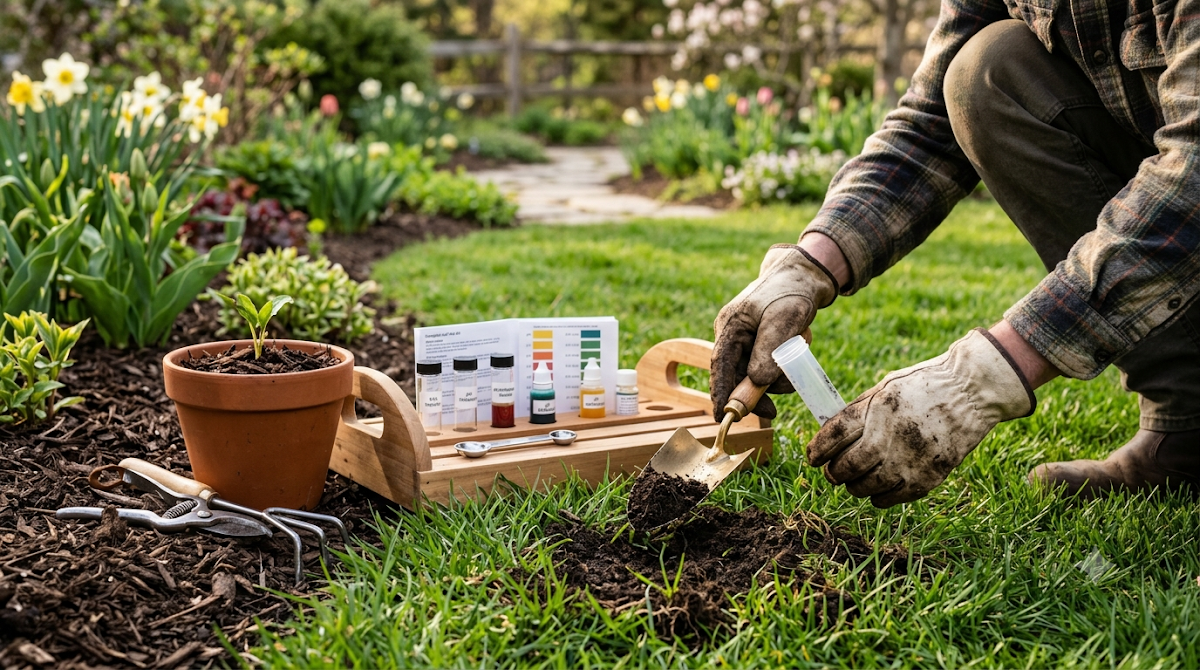
- Daytime air temperatures: Consistently between 60\u00b0F and 90\u00b0F for 3-5 consecutive days
- Soil temperature: 55\u00b0F at a 4-inch depth (measure with a soil thermometer)
- Nighttime temperatures: Not dropping below 45\u00b0F
Apply below these thresholds, and weeds won’t translocate the herbicide to their roots. Apply above 90\u00b0F, and you risk phytotoxicity\u2014chemical burn\u2014on your turfgrass. The sweet spot where weeds are most vulnerable? A steady 65-75\u00b0F with active growth.
When to Apply Weed and Feed by Season and Region
The best time to apply weed and feed depends on your climate zone and grass type. Here’s a comprehensive breakdown:
| Region / Zone | Cool-Season Grasses (Fescue, Ryegrass, Bluegrass) |
Warm-Season Grasses (Bermuda, St. Augustine, Zoysia) |
|---|---|---|
| Northern US (Zones 3-5) |
Mid-April to Mid-May (spring) September to Mid-October (fall) |
N/A\u2014typically not grown |
| Transition Zone (Zones 6-7) |
Late March to Mid-April (spring) Mid-September to Late October (fall) |
Late April to Late May (spring) Early September (fall) |
| Southern US (Zones 8-10) |
February to March (spring) October to November (fall) |
Late April to June (spring) Early to Mid-September (fall) |
| Tropical / Coastal (Zone 11+) |
January to February (spring) November to December (fall) |
Year-round, but avoid peak summer heat |
Pro tip: For weed and feed for early spring, wait until you’ve mowed your lawn 2-3 times at normal height. This ensures the grass is actively growing and can recover from any minor herbicide stress. If dandelions and clover are already visible, you’re in the ideal window for post-emergent herbicide efficacy.
Spring Application: The Complete Weed and Feed Instructions
Spring is the prime season for weed and feed in spring because it targets winter annuals (like henbit and chickweed) and early-season perennials (like dandelion and plantain). Follow this exact protocol:
Early Spring (March-April in most zones)
- Apply pre-emergent herbicide combinations before soil reaches 55\u00b0F to prevent crabgrass germination
- Mow lawn to 2.5-3 inches before application
- Choose a product with both pre- and post-emergent herbicides for comprehensive control
Late Spring (May-June)
- Switch to post-emergent-only formulas (pre-emergent window has closed)
- Target actively growing broadleaf weeds: dandelion, clover, chickweed
- Avoid application if temperatures will exceed 85\u00b0F within 48 hours
Fall Application: When to Put Down Weed and Feed for Perennial Weeds
Fall applications are arguably more effective than spring for long-term weed control. Here’s why: As perennials like dandelion prepare for winter dormancy, they transport nutrients\u2014and herbicides\u2014deep into their root systems. This creates a more complete kill that reduces spring reappearance by up to 70%.
Early Fall (September-October)
- Ideal for cool-season grasses entering their second growth flush
- Target summer annuals before they set seed
- Apply when daytime temps are 60-75\u00b0F
Late Fall (October-November)
- Final application window before first hard frost
- Use post-emergent-only products (pre-emergents are ineffective this late)
- Apply at least 2 weeks before expected first freeze
Should You Apply Weed and Feed on Wet or Dry Lawn?
Always apply to a wet or damp lawn\u2014never bone-dry. Here’s the science: Post-emergent herbicides need to adhere to leaf blades for 4-6 hours to penetrate effectively. A wet surface helps granular products stick to weed foliage rather than falling to the soil where they become inert fertilizer.
| Application Condition | Effectiveness | Recommendation |
|---|---|---|
| Wet lawn (morning dew or light irrigation) | 95-100% adhesion | IDEAL |
| Slightly damp lawn | 80-90% adhesion | Good\u2014apply early morning |
| Dry lawn | 30-50% adhesion | Avoid\u2014poor herbicide uptake |
| Saturated / standing water | 0-20% adhesion | Avoid\u2014risk of runoff and waste |
How Often to Apply Weed and Feed
How often to apply weed and feed depends on your lawn’s specific weed pressure and grass type:
- Heavy weed infestation: Two applications per year (spring + fall), 4-6 months apart
- Moderate weed pressure: One targeted application per season (fall preferred for perennial control)
- Minimal weeds: Spot-treat with liquid herbicide rather than blanket application
- Maximum frequency: Never exceed two applications per year\u2014over-application damages soil microbiome and can lead to herbicide-resistant weeds
Step-by-Step Application Protocol
Follow this exact procedure for professional-grade results:
Pre-Application Checklist
- Check forecast: No rain expected for 24-48 hours post-application
- Confirm soil temperature at 55\u00b0F minimum (use a probe thermometer)
- Mow lawn 1-2 days before application at 2.5-3 inch height
- Mow again at same height immediately after application to maximize weed leaf contact
- Water lawn lightly (0.25 inches) to activate pre-emergent components if present
Application Day Protocol
- Water early morning (6-8 AM) or wait for natural dew formation\u2014lawn should be uniformly damp
- Calibrate spreader according to product label rates\u2014typically 2.5-3 lbs per 1,000 sq ft
- Apply in two passes: Half-rate in north-south direction, half-rate in east-west direction for even coverage
- Avoid overlaps: Mark edges with flags to prevent double-application on borders
- Keep off lawn for 24 hours to allow herbicide absorption
- Water in lightly (0.125 inches) only if product label requires activation
What Happens If You Apply Weed and Feed Too Early?
If you’ve already applied weed and feed before optimal conditions, here’s your damage control plan:
- Cool temperatures (below 50\u00b0F): Herbicide will be largely ineffective but won’t harm dormant grass. Plan a second application when conditions improve.
- Applied to dry lawn: Water immediately with 0.5 inches to help adhesion. May need reapplication in 2 weeks.
- Rain within 4 hours of application: Product washed away\u2014reapply at half-rate once lawn dries and conditions are optimal.
- Visible grass yellowing: Apply iron sulfate (chelated iron) to green up turf without additional nitrogen stress.
Why You Should Never Apply Weed and Feed in Summer
Summer applications (July-August in most regions) create a perfect storm of problems:
- Heat stress + herbicide = severe burn: Grass already operating at maximum stress cannot recover from chemical damage
- Low efficacy: Most weeds enter semi-dormancy, reducing herbicide absorption by 60-80%
- Water restrictions: Summer water limits prevent proper activation and post-application irrigation
- Root damage: Nitrogen-heavy formulations during heat stress promotes top growth at the expense of root development
Expert Troubleshooting: Common Weed and Feed Problems
| Problem | Likely Cause | Solution |
|---|---|---|
| White/gray leaf tips | Herbicide burn from over-application | Water deeply (1 inch) to leach excess; apply iron supplement |
| Weeds not dying | Applied too early or too cold | Wait 2-3 weeks, reapply when temps are 60-75\u00b0F |
| Green grass, no weed kill | Spreader calibration error | Spot-treat missed areas with liquid concentrate |
| Grass thinning 2 weeks later | Root stress from summer application | Apply root stimulator; reduce mowing height temporarily |
| Weeds returning in 6 weeks | Pre-emergent component wore off | Plan fall application; consider spot-treating with post-emergent |
Frequently Asked Questions
Q: Can I apply weed and feed if it’s going to rain tomorrow?
A: Light rain (under 0.25 inches) within 24 hours can actually help activate the product. However, heavy rain or forecasted downpours within 4-6 hours will wash the herbicide off weed leaves before absorption. Wait until you have a clear 24-48 hour window.
Q: How long after weed and feed can I let my kids and pets on the lawn?
A: Most granular weed and feed products require 24 hours before foot traffic. If you’ve applied a liquid product, wait until completely dry (typically 4-8 hours). Always check the specific product label\u2014some systemic herbicides require 48-72 hours.
Q: Should I mow before or after applying weed and feed?
A: Both. Mow 1-2 days before to reduce grass height and expose weeds. Then mow again immediately after application\u2014this bends weed leaves, increasing herbicide contact with the foliage. Avoid mowing for 3-5 days post-application to allow full absorption.
Q: Can I apply weed and feed to a newly seeded lawn?
A: No. Wait until you’ve mowed the new grass 3-4 times (typically 8-12 weeks after germination). Newly established turf lacks the root mass to recover from herbicide stress. Focus on mechanical weed removal (hand-pulling) during establishment.
When to Hire a Professional
Consider professional treatment if: your lawn exceeds 5,000 square feet and you lack broadcast spreader equipment, you’re dealing with herbicide-resistant weed populations, or you’ve experienced phytotoxicity damage from DIY applications. Licensed applicators have access to professional-grade products with higher active ingredient concentrations and can calibrate equipment to your specific lawn conditions. For related insights, see our detailed guide on Watering New Grass Seed.
Quick Answer: Apply weed and feed when daytime soil temperatures consistently reach 55-65\u00b0F and weeds are actively growing, typically in mid-spring (April-May) or early fall (September-October). Always apply to a wet lawn in the morning when dew is present or after light irrigation, using a spreader for even coverage.
Timing is everything when it comes to weed and feed applications. Apply it too early, and dormant weeds won’t absorb the herbicide. Too late, and you risk burning stressed summer grass or missing your window entirely. This guide eliminates the guesswork with precise temperature thresholds, grass-type-specific schedules, and a step-by-step application protocol that delivers a weed-free, golf-course-worthy lawn.
The Critical Temperature Window: When Weed and Feed Actually Works

Forget the calendar date\u2014weed and feed temperature is the single most important factor for success. Most post-emergent herbicides (the “weed” component targeting existing weeds) require active plant metabolism to work. This only happens when:
- Daytime air temperatures: Consistently between 60\u00b0F and 90\u00b0F for 3-5 consecutive days
- Soil temperature: 55\u00b0F at a 4-inch depth (measure with a soil thermometer)
- Nighttime temperatures: Not dropping below 45\u00b0F
Apply below these thresholds, and weeds won’t translocate the herbicide to their roots. Apply above 90\u00b0F, and you risk phytotoxicity\u2014chemical burn\u2014on your turfgrass. The sweet spot where weeds are most vulnerable? A steady 65-75\u00b0F with active growth.
When to Apply Weed and Feed by Season and Region
The best time to apply weed and feed depends on your climate zone and grass type. Here’s a comprehensive breakdown:
| Region / Zone | Cool-Season Grasses (Fescue, Ryegrass, Bluegrass) |
Warm-Season Grasses (Bermuda, St. Augustine, Zoysia) |
|---|---|---|
| Northern US (Zones 3-5) |
Mid-April to Mid-May (spring) September to Mid-October (fall) |
N/A\u2014typically not grown |
| Transition Zone (Zones 6-7) |
Late March to Mid-April (spring) Mid-September to Late October (fall) |
Late April to Late May (spring) Early September (fall) |
| Southern US (Zones 8-10) |
February to March (spring) October to November (fall) |
Late April to June (spring) Early to Mid-September (fall) |
| Tropical / Coastal (Zone 11+) |
January to February (spring) November to December (fall) |
Year-round, but avoid peak summer heat |
Pro tip: For weed and feed for early spring, wait until you’ve mowed your lawn 2-3 times at normal height. This ensures the grass is actively growing and can recover from any minor herbicide stress. If dandelions and clover are already visible, you’re in the ideal window for post-emergent herbicide efficacy.
Spring Application: The Complete Weed and Feed Instructions
Spring is the prime season for weed and feed in spring because it targets winter annuals (like henbit and chickweed) and early-season perennials (like dandelion and plantain). Follow this exact protocol:
Early Spring (March-April in most zones)
- Apply pre-emergent herbicide combinations before soil reaches 55\u00b0F to prevent crabgrass germination
- Mow lawn to 2.5-3 inches before application
- Choose a product with both pre- and post-emergent herbicides for comprehensive control
Late Spring (May-June)
- Switch to post-emergent-only formulas (pre-emergent window has closed)
- Target actively growing broadleaf weeds: dandelion, clover, chickweed
- Avoid application if temperatures will exceed 85\u00b0F within 48 hours
Fall Application: When to Put Down Weed and Feed for Perennial Weeds
Fall applications are arguably more effective than spring for long-term weed control. Here’s why: As perennials like dandelion prepare for winter dormancy, they transport nutrients\u2014and herbicides\u2014deep into their root systems. This creates a more complete kill that reduces spring reappearance by up to 70%.
Early Fall (September-October)
- Ideal for cool-season grasses entering their second growth flush
- Target summer annuals before they set seed
- Apply when daytime temps are 60-75\u00b0F
Late Fall (October-November)
- Final application window before first hard frost
- Use post-emergent-only products (pre-emergents are ineffective this late)
- Apply at least 2 weeks before expected first freeze
Should You Apply Weed and Feed on Wet or Dry Lawn?
Always apply to a wet or damp lawn\u2014never bone-dry. Here’s the science: Post-emergent herbicides need to adhere to leaf blades for 4-6 hours to penetrate effectively. A wet surface helps granular products stick to weed foliage rather than falling to the soil where they become inert fertilizer.
| Application Condition | Effectiveness | Recommendation |
|---|---|---|
| Wet lawn (morning dew or light irrigation) | 95-100% adhesion | IDEAL |
| Slightly damp lawn | 80-90% adhesion | Good\u2014apply early morning |
| Dry lawn | 30-50% adhesion | Avoid\u2014poor herbicide uptake |
| Saturated / standing water | 0-20% adhesion | Avoid\u2014risk of runoff and waste |
How Often to Apply Weed and Feed
How often to apply weed and feed depends on your lawn’s specific weed pressure and grass type:
- Heavy weed infestation: Two applications per year (spring + fall), 4-6 months apart
- Moderate weed pressure: One targeted application per season (fall preferred for perennial control)
- Minimal weeds: Spot-treat with liquid herbicide rather than blanket application
- Maximum frequency: Never exceed two applications per year\u2014over-application damages soil microbiome and can lead to herbicide-resistant weeds
Step-by-Step Application Protocol
Follow this exact procedure for professional-grade results:
Pre-Application Checklist
- Check forecast: No rain expected for 24-48 hours post-application
- Confirm soil temperature at 55\u00b0F minimum (use a probe thermometer)
- Mow lawn 1-2 days before application at 2.5-3 inch height
- Mow again at same height immediately after application to maximize weed leaf contact
- Water lawn lightly (0.25 inches) to activate pre-emergent components if present
Application Day Protocol
- Water early morning (6-8 AM) or wait for natural dew formation\u2014lawn should be uniformly damp
- Calibrate spreader according to product label rates\u2014typically 2.5-3 lbs per 1,000 sq ft
- Apply in two passes: Half-rate in north-south direction, half-rate in east-west direction for even coverage
- Avoid overlaps: Mark edges with flags to prevent double-application on borders
- Keep off lawn for 24 hours to allow herbicide absorption
- Water in lightly (0.125 inches) only if product label requires activation
What Happens If You Apply Weed and Feed Too Early?
If you’ve already applied weed and feed before optimal conditions, here’s your damage control plan:
- Cool temperatures (below 50\u00b0F): Herbicide will be largely ineffective but won’t harm dormant grass. Plan a second application when conditions improve.
- Applied to dry lawn: Water immediately with 0.5 inches to help adhesion. May need reapplication in 2 weeks.
- Rain within 4 hours of application: Product washed away\u2014reapply at half-rate once lawn dries and conditions are optimal.
- Visible grass yellowing: Apply iron sulfate (chelated iron) to green up turf without additional nitrogen stress.
Why You Should Never Apply Weed and Feed in Summer
Summer applications (July-August in most regions) create a perfect storm of problems:
- Heat stress + herbicide = severe burn: Grass already operating at maximum stress cannot recover from chemical damage
- Low efficacy: Most weeds enter semi-dormancy, reducing herbicide absorption by 60-80%
- Water restrictions: Summer water limits prevent proper activation and post-application irrigation
- Root damage: Nitrogen-heavy formulations during heat stress promotes top growth at the expense of root development
Expert Troubleshooting: Common Weed and Feed Problems
| Problem | Likely Cause | Solution |
|---|---|---|
| White/gray leaf tips | Herbicide burn from over-application | Water deeply (1 inch) to leach excess; apply iron supplement |
| Weeds not dying | Applied too early or too cold | Wait 2-3 weeks, reapply when temps are 60-75\u00b0F |
| Green grass, no weed kill | Spreader calibration error | Spot-treat missed areas with liquid concentrate |
| Grass thinning 2 weeks later | Root stress from summer application | Apply root stimulator; reduce mowing height temporarily |
| Weeds returning in 6 weeks | Pre-emergent component wore off | Plan fall application; consider spot-treating with post-emergent |
Frequently Asked Questions
Q: Can I apply weed and feed if it’s going to rain tomorrow?
A: Light rain (under 0.25 inches) within 24 hours can actually help activate the product. However, heavy rain or forecasted downpours within 4-6 hours will wash the herbicide off weed leaves before absorption. Wait until you have a clear 24-48 hour window.
Q: How long after weed and feed can I let my kids and pets on the lawn?
A: Most granular weed and feed products require 24 hours before foot traffic. If you’ve applied a liquid product, wait until completely dry (typically 4-8 hours). Always check the specific product label\u2014some systemic herbicides require 48-72 hours.
Q: Should I mow before or after applying weed and feed?
A: Both. Mow 1-2 days before to reduce grass height and expose weeds. Then mow again immediately after application\u2014this bends weed leaves, increasing herbicide contact with the foliage. Avoid mowing for 3-5 days post-application to allow full absorption.
Q: Can I apply weed and feed to a newly seeded lawn?
A: No. Wait until you’ve mowed the new grass 3-4 times (typically 8-12 weeks after germination). Newly established turf lacks the root mass to recover from herbicide stress. Focus on mechanical weed removal (hand-pulling) during establishment.
When to Hire a Professional
Consider professional treatment if: your lawn exceeds 5,000 square feet and you lack broadcast spreader equipment, you’re dealing with herbicide-resistant weed populations, or you’ve experienced phytotoxicity damage from DIY applications. Licensed applicators have access to professional-grade products with higher active ingredient concentrations and can calibrate equipment to your specific lawn conditions. For related insights, see our detailed guide on Watering New Grass Seed.