
Quick Answer: The best weed killer for flower beds is a selective post-emergent herbicide (like fluazifop or sethoxydim) that targets grassy weeds without harming broadleaf flowers. For broadleaf weeds, hand-pulling with a dandelion weeder or applying a shielded non-selective spray (glyphosate) works best. Always apply when soil temperature is 55\u201375\u00b0F and avoid spraying on windy days above 8 mph.
Why Flower Beds Need a Different Weed Killer Than Lawns
Your lawn can handle broad-spectrum herbicides because the grass is the desired plant. Flower beds are different: you have dozens of desirable species, each with different tolerances. Spray the wrong chemical and you’ll kill your prized peonies along with the weeds. This guide walks you through every method\u2014from zero-chemical hand-pulling to precision herbicide application\u2014so you can choose the right tool for your specific weed problem.
Step 1: Identify the Weed Type (Grassy vs. Broadleaf)

Before choosing a weed killer, determine what you’re fighting. This single decision determines your entire strategy:
| Weed Type | Visual Clues | Best Control Method | Herbicide Class |
|---|---|---|---|
| Grassy weeds (crabgrass, foxtail, quackgrass) | Narrow blades, hollow stems, parallel veins | Selective post-emergent (fluazifop, sethoxydim) | ACCase inhibitors (safe on broadleaf flowers) |
| Broadleaf weeds (dandelion, clover, chickweed) | Wide leaves, branching veins, showy flowers | Hand-pulling or shielded glyphosate spot treatment | Non-selective (glyphosate) applied with care |
| Vining weeds (bindweed, morning glory) | Twining stems, arrow-shaped leaves | Systemic herbicide painted on leaves | Glyphosate gel or brush application |
| Woody weeds (brambles, saplings) | Hard stems, bark, persistent roots | Cut-stump treatment or repeated foliar spray | Triclopyr or glyphosate concentrate |
Pro tip: Use a free plant identification app (like iNaturalist or PlantNet) to confirm the weed species before treating. Misidentification is the #1 cause of herbicide failure.
Step 2: Choose Your Weapon\u2014Organic vs. Chemical
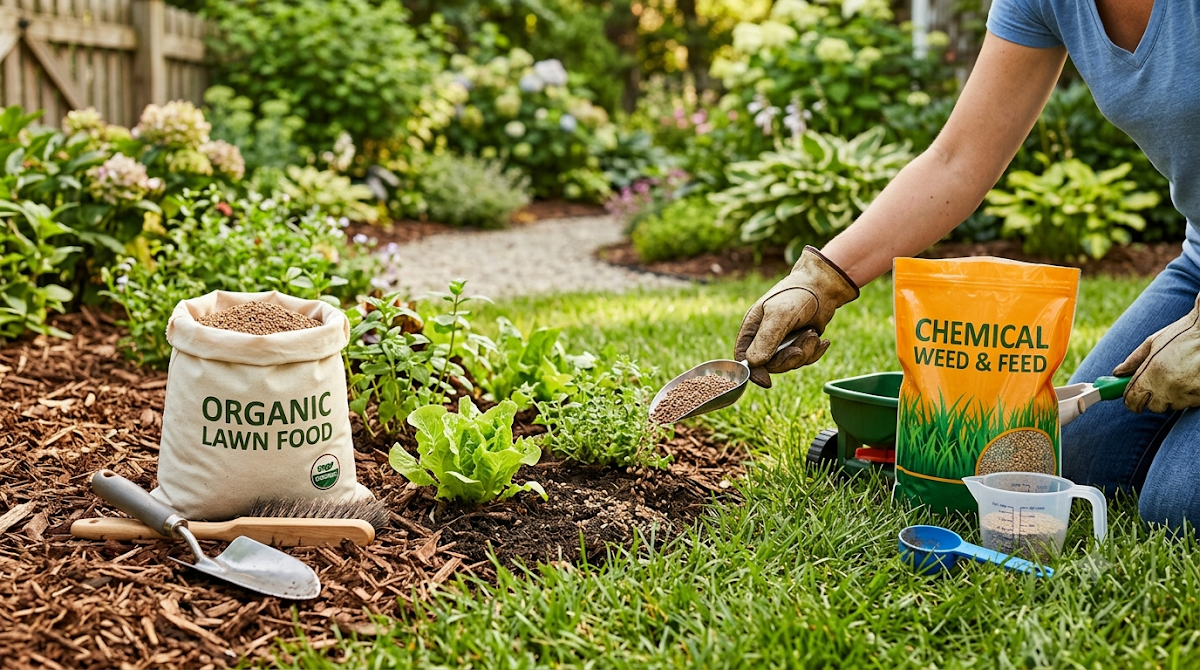
Organic Weed Killers: When They Work (and When They Don’t)
Vinegar (acetic acid): The University of Georgia’s Gabrielle LaTora confirms vinegar gives “the best shot” among organic options. Use 20% horticultural vinegar (not the 5% culinary kind) for adult weeds. It’s a contact herbicide\u2014it burns foliage on contact but does not kill roots. Expect regrowth in 2\u20134 weeks. Best for: young seedlings, cracks in pavement, and spot-treating annual weeds.
Boiling water: Free and effective for weeds in paved areas, but dangerous in flower beds\u2014it kills everything it touches, including desirable roots within 2\u20133 inches. Use only for weeds growing through mulch or gravel where no flowers are nearby.
Salt treatments: Effective but permanently sterilizes soil. Salt persists for years and will prevent any future plantings. Avoid in flower beds entirely\u2014reserve for driveways and patios.
Essential oils (clove, citrus, cinnamon): These burn foliage quickly but degrade fast in sunlight. They work best on young weeds under 2 inches tall in warm, dry conditions. Reapply every 5\u20137 days until the weed exhausts its root reserves.
Chemical Herbicides: Precision Tools for Stubborn Weeds
Selective post-emergents (fluazifop, sethoxydim): These are the safest chemical option for flower beds. They target grassy weeds only, leaving broadleaf flowers completely unharmed. Apply when weeds are actively growing (soil temp 60\u201375\u00b0F) and wait 7\u201310 days before seeing visible yellowing. Safe around virtually all ornamental flowers, shrubs, and trees.
Non-selective herbicides (glyphosate): Kills everything it touches. Use only with a shielded sprayer or paint it on leaves with a brush. For flower beds, the gel formulation is ideal\u2014you can apply it directly to weed leaves without drift. Glyphosate is systemic, meaning it travels to the roots and kills the entire plant in 7\u201314 days. It binds tightly to soil and becomes inert on contact, so it won’t harm nearby flowers through root uptake.
Step 3: Apply the Weed Killer Correctly
Follow this exact procedure for maximum effectiveness and minimum collateral damage:
- Check the weather: Apply when temperatures are 55\u201375\u00b0F, wind is under 8 mph, and no rain is forecast for 24 hours (6 hours for glyphosate).
- Water the bed 24 hours before: Well-hydrated weeds absorb herbicides more efficiently. Do not water on application day.
- Protect desirable plants: Place a cardboard shield or plastic bucket over nearby flowers. For sprays, use a shielded nozzle or cut the bottom off a plastic bottle and tape it over the spray tip.
- Apply to dry foliage: Morning dew dilutes the chemical. Wait until leaves are completely dry, typically after 10 AM.
- Spray to wet, not soak: Cover the leaf surface until it’s uniformly damp but not dripping. Over-spraying wastes product and increases runoff risk.
- Wait before watering: Allow 24\u201348 hours for systemic herbicides to translocate to roots. Watering too soon washes the chemical off before absorption.
- Monitor and reapply: Check the bed at 7 days. If weeds show green regrowth, reapply. Most stubborn perennials need 2\u20133 applications spaced 10\u201314 days apart.
Step 4: Manual Removal\u2014The Underrated Gold Standard
For small infestations, hand-pulling is superior to any herbicide because it’s 100% precise and removes the root system. The key is timing and technique:
- Pull after rain: Moist soil releases roots 3\u00d7 easier than dry soil. Water the bed the night before if no rain is coming.
- Use the right tool: A dandelion weeder (forked tip) extracts taproots intact. A horihori knife cuts through tough soil and severs roots below the crown.
- Get the entire root: If you break the root, many weeds (dandelion, bindweed, thistle) will regrow from fragments. Aim for 100% root extraction.
- Dispose properly: Never compost weeds with seed heads or viable roots\u2014your compost pile becomes a weed nursery. Bag and discard.
Expert Troubleshooting: When Things Go Wrong
You sprayed too early and the weeds bounced back
If you applied herbicide when soil temperature was below 50\u00b0F, the weeds were dormant and didn’t absorb the chemical. Wait for consistent soil temps above 55\u00b0F (check with a soil thermometer at 2-inch depth) and reapply. Don’t double the dose\u2014that stresses the plant into dormancy and reduces uptake.
Rain washed away your application
If rain falls within 6 hours of a glyphosate application or 24 hours of a selective herbicide, the chemical likely washed off. Wait 48 hours for foliage to dry completely, then reapply at the same rate. Do not increase concentration\u2014that risks damage to nearby flowers.
Weeds are resistant to your herbicide
Some weeds (especially marestail and pigweed) have developed resistance to glyphosate. Switch to a different mode of action: use a selective post-emergent with a different chemical family, or combine mechanical removal with a pre-emergent barrier (corn gluten meal or prodiamine) to prevent germination.
Your flowers are wilting after application
This usually means spray drift reached your ornamentals. Immediately rinse affected plants with clean water to dilute the chemical. Most contact damage appears within 24 hours; systemic damage takes 3\u20135 days. If flowers survive 2 weeks, they’ll likely recover. For future applications, use a shielded sprayer or switch to gel/paint-on application.
Prevention: The Best Weed Killer Is the One You Never Need
Stop weeds before they germinate with these proven strategies:
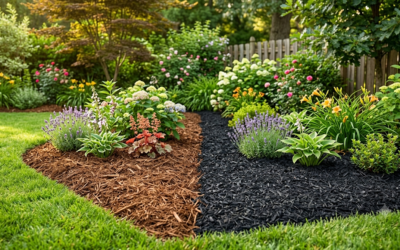
- Mulch 2\u20133 inches deep: Organic mulch (wood chips, bark) blocks light and prevents germination. Replenish annually as it decomposes.
- Install landscape fabric: Under mulch, woven fabric blocks weeds while allowing water and air through. Cut X-shaped slits for planting.
- Apply pre-emergent in spring: When soil temperature hits 55\u00b0F (typically when forsythia blooms), apply prodiamine or corn gluten meal. This creates a chemical barrier that kills germinating seeds.
- Dense planting: Ground covers and closely-spaced perennials shade the soil, leaving no room for weed seeds to establish.
- Edge your beds: A clean 4-inch edge prevents grass and weeds from creeping in from the lawn.
Frequently Asked Questions
Will vinegar kill weeds permanently?
No. Vinegar is a contact herbicide that burns foliage but does not translocate to roots. Annual weeds die quickly, but perennial weeds with established root systems (dandelions, bindweed, thistle) will regrow within 2\u20134 weeks. For permanent control of perennials, use a systemic herbicide (glyphosate) or dig out the entire root system. Horticultural vinegar (20% acetic acid) is more effective than culinary vinegar (5%) but still requires repeat applications.
What kills weeds but not flowers?
For grassy weeds, use a selective post-emergent herbicide containing fluazifop or sethoxydim\u2014these target grass only and are safe on virtually all broadleaf flowers. For broadleaf weeds, there is no selective chemical that spares all flowers. Your safest options are: (1) hand-pulling, (2) painting glyphosate gel directly on weed leaves, or (3) using a shielded sprayer with glyphosate. Always test on a small area first and wait 7 days to check for damage.
When is the best time to apply weed killer to flower beds?
Apply when weeds are actively growing: soil temperature between 55\u201375\u00b0F and air temperature below 85\u00b0F. This typically means early morning (before 10 AM) or late afternoon (after 4 PM) during spring and fall. Avoid application during summer heat waves\u2014herbicide volatility increases above 85\u00b0F, risking drift damage to flowers. Also avoid application within 48 hours of expected rain.
How long after spraying weed killer can I plant flowers?
For glyphosate: wait 3\u20137 days before planting\u2014the chemical binds to soil particles and becomes inactive on contact. For selective post-emergents (fluazifop, sethoxydim): wait 24\u201348 hours. For pre-emergents (prodiamine): wait 8\u201312 weeks\u2014these create a soil barrier that also prevents desirable seeds from germinating. Always read the product label for specific plant-back intervals, as they vary by formulation.
Final Verdict: The Best Weed Killer for Flower Beds
For most home gardeners, the winning combination is:
- Prevention first: 2\u20133 inches of mulch plus a spring pre-emergent application.
- Hand-pulling for small infestations and broadleaf weeds.
- Selective post-emergent (fluazifop) for grassy weed outbreaks.
- Shielded glyphosate spot treatment for stubborn perennial broadleaf weeds.
Match the method to the weed, apply at the right temperature, and protect your flowers with shields. Your flower beds will stay beautiful all season\u2014without the guesswork. For related insights, see our detailed guide on Gas vs Electric Lawn Mowers.