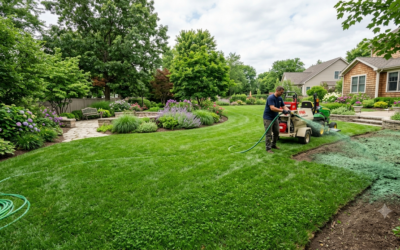

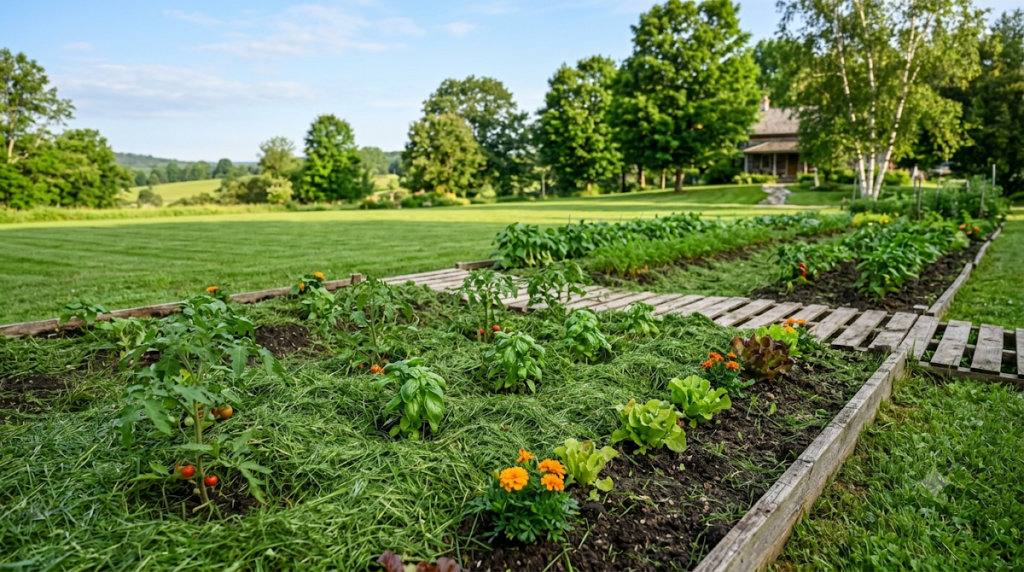
Quick Answer: Yes, grass clippings make an excellent, free mulch. Return clippings to your lawn only when grass is dry and mowed at 3 inches or taller. Never apply clippings deeper than 1 inch in garden beds, and avoid clippings from lawns treated with herbicides within 2\u20134 weeks. Do this and clippings add up to 4% nitrogen back to your soil for free.
Why Grass Clippings Are the Smartest Free Mulch You’ll Ever Use
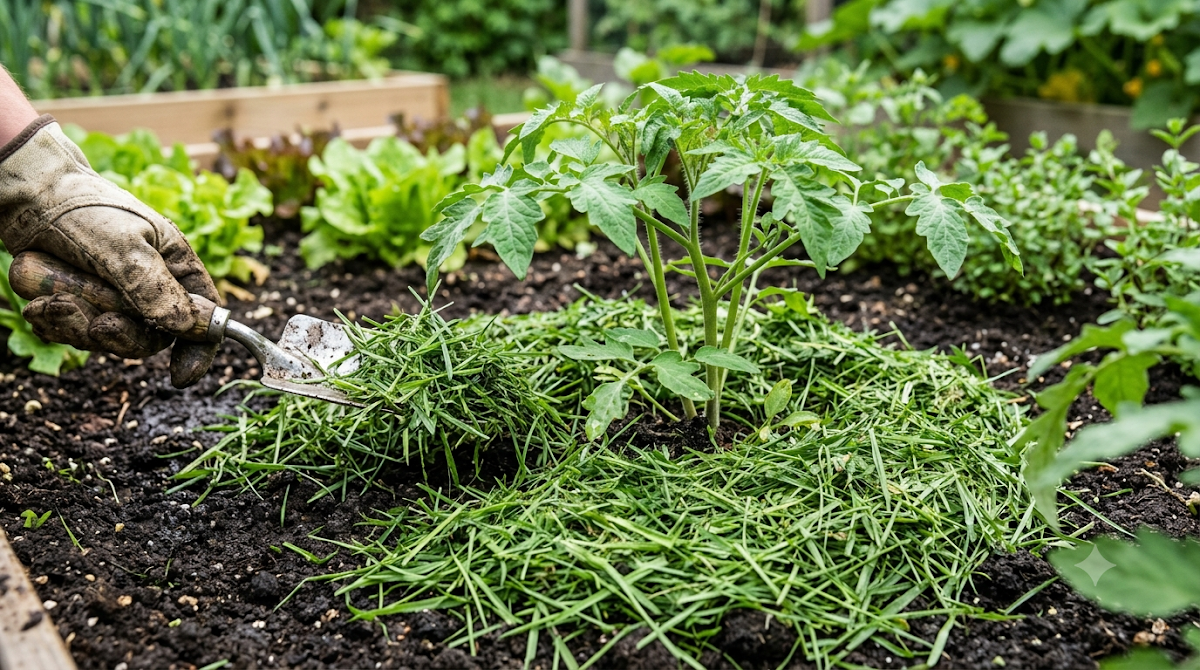
Most homeowners bag their clippings and send them to the landfill without a second thought. That single habit wastes one of the most nutrient-dense, freely available soil amendments you own. According to Oregon State University research, returning clippings with a mulching mower can cut your fertilizer application rate by nearly half\u2014and on clay soils, growers have produced quality turf for 12 years without adding any fertilizer at all.
Grass clippings contain roughly 4% nitrogen, 2% potassium, and 1% phosphorus\u2014a nearly perfect slow-release lawn food. But the benefits go far beyond nutrition. Here’s the complete, technical breakdown of what clippings do for your soil, and exactly how to use them without the matting, smell, or weeds that scare people off.
1. Natural Slow-Release Fertilizer (The 4-2-1 Profile)
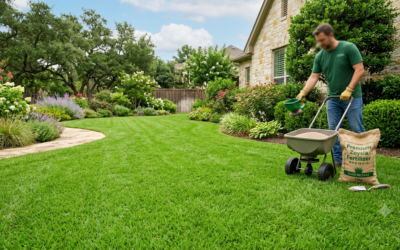
Unlike synthetic fertilizers that hit the soil fast and fade quickly, grass clippings break down slowly, releasing nutrients as microbes decompose the blades. Because the nitrogen is locked in organic matter, it doesn’t leach into groundwater the way urea-based fertilizers do. This makes clippings the closest thing to a self-fertilizing lawn.
The catch: this only works if you mow frequently and never remove more than one-third of the blade height. If you let the grass get too tall and chop off half the blade, the clippings are too long to fall into the canopy, and they clump on the surface. These clumps smother the turf, block light, and create the classic “thatched” look.
2. Moisture Retention & Soil Temperature Regulation
A thin layer of clippings acts as a living mulch blanket. In summer, that blanket shades the soil, lowering surface temperature by as much as 10\u201315\u00b0F during peak heat. That temperature drop reduces evaporation and keeps your lawn green with less irrigation.
In winter, the same layer acts as a mild insulator, reducing frost heave and protecting shallow roots from freeze-thaw cycles. The key is depth: \u00bd to 1 inch of loose clippings retains moisture effectively; anything deeper risks an anaerobic, matted layer that sheds water instead of absorbing it.
3. Weed Suppression in Garden Beds
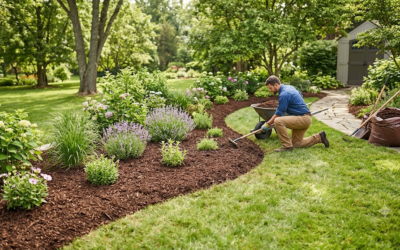
In flower beds and vegetable gardens, a 1-inch layer of dry clippings blocks light from reaching weed seeds, preventing germination. This works best when paired with a 2\u20133 inch base layer of wood chips or straw, with the nitrogen-rich clippings on top.
Critical warning: Only use clippings from a lawn that has not been treated with post-emergent herbicide in the last 2\u20134 weeks. Herbicide residue can persist on clippings and damage or kill your garden plants. If you’re unsure, bag, compost, and wait\u2014hot composting (140\u2013160\u00b0F) breaks down most herbicide residues within 30 days.
Grass Clippings at a Glance
| Factor | Dry Clippings (Good) | Wet/Matte Clippings (Bad) |
|---|---|---|
| Nitrogen content | ~4% | Same, but released anaerobically |
| Application depth | \u00bd\u20131 inch in beds | 2+ inches (creates mat) |
| Moisture | Moisture-retentive | Water-repellent, sheds rain |
| Odor | Earthy, mild | Sour, ammonia-like |
| Weed suppression | Excellent in beds | Poor\u2014mats trap moisture for weeds |
| Soil impact | Aerates, feeds microbes | Compacts, suffocates roots |
| Quick rule | Spread thinly, let dry | If it clumps, spread it or bag it |
Today’s Top Grass-Clipping Specials & Deals
Ready to put your clippings to work? Check out today’s best prices on mulching blades, compost bins, and lawn care gear:
Affiliate Disclosure: As an Amazon Associate, we may earn a commission from qualifying purchases at no extra cost to you.
4. Carbon Footprint & Landfill Reduction
Bagged grass clippings account for an estimated 30\u201340% of municipal solid waste during peak growing season. In anaerobic landfill conditions, clippings decompose slowly and release methane\u2014a greenhouse gas roughly 25 times more potent than CO\u2082. Returning clippings to your lawn keeps them out of the waste stream and returns carbon to the soil where it belongs.
5. Reduced Lawn Care Costs
Clippings replace fertilizer, reduce irrigation needs, and cut bagging time. A typical 5,000 sq ft lawn produces roughly 200\u2013250 pounds of clippings per growing season. At commercial fertilizer rates, that’s a savings of $75\u2013$150 per year in nitrogen alone. Add the time savings from skipping bagging, and mulching pays for itself in weeks.
6. The Right Way to Use Grass Clippings as Mulch (Step-by-Step)
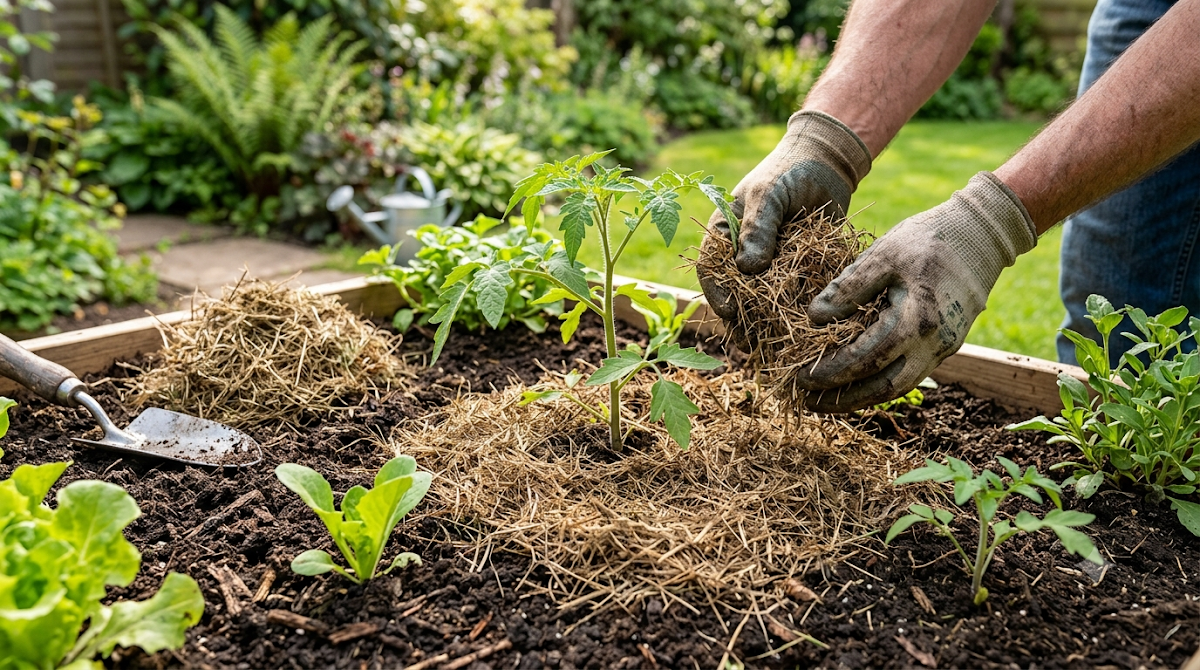
Step 1: Prepare the Mower
Install a dedicated mulching blade and ensure it’s sharp. A dull blade tears grass instead of cutting it, leaving ragged tips that brown and invite disease. Touch the edge\u2014if it doesn’t feel sharp, sharpen or replace it. Set deck height to 3\u20133.5 inches for cool-season grasses, 2.5\u20133 inches for warm-season varieties.
Step 2: Mow Dry, Mow Often
Only mow when grass is dry\u2014early morning dew or recently rained-on grass clumps and mats immediately. Mow once a week during peak growth, never removing more than one-third of blade height. If grass has gotten away from you, mow twice: once on a high setting, then again at your normal height 2\u20133 days later.
Step 3: Apply in Garden Beds (If Not Mulching the Lawn)
Spread clippings in a thin, even layer over garden beds\u2014no more than 1 inch loose. Let them dry for a day before checking; if any patch smells sour or feels slimy, spread it thinner. Mix dry clippings with shredded leaves or straw at a 1:2 ratio if you need a deeper layer.
Step 4: Monitor & Reapply
Check beds weekly. Clippings decompose quickly\u2014often within 2\u20134 weeks in warm weather. Reapply as the layer thins. On the lawn itself, mulching is continuous; just keep mowing on schedule. If you see clumps, spread them with a rake immediately.
The Step-by-Step Clipping Routine (Visual Guide)
Follow this 4-step flow every mowing session for a healthier lawn and garden:
| Step | Action | Key Metric |
|---|---|---|
| 1. Preparation | Sharpen mulching blade, set deck height | 3\u20133.5″ cool-season; 2.5\u20133″ warm-season |
| 2. Mow Dry & Often | Mow weekly, remove \u2264\u2153 blade | Only when grass is dry |
| 3. Apply to Beds | Spread thin layer, let dry | \u22641 inch loose, mix 1:2 with leaves |
| 4. Monitor & Repeat | Check weekly, reapply as layer thins | Reapply every 2\u20134 weeks warm season |
7. Exactly When You Should Bag Instead
Mulching isn’t always the right call. Bag your clippings when any of these are true:
- Disease is present on the lawn (brown patch, dollar spot, rust). Remove infected clippings to prevent spread.
- Grass is overly long and you’re cutting off more than one-third of the blade. The coarse clippings won’t break down fast enough.
- You used a quick-release synthetic nitrogen fertilizer recently; the high-N clippings can burn garden plants.
- Clippings are excessively wet after heavy rain; they’ll clump and smother the turf.
8. Expert Troubleshooting: Fixing Mowing Mistakes
You mowed too early and left clumps
Act within 24 hours. Rake or blow the clumps apart so sunlight and air reach the soil. If clumps persist beyond 48 hours,lift them by hand\u2014matted, wet clippings create anaerobic pockets that breed disease.
Rain delays your mowing schedule
If rain pushes your window past the one-third rule, raise the deck to its highest setting, mow to remove the top growth, then wait 3 days and mow again at your normal height. Never attempt to scalp an overgrown lawn in one pass.
Clippings smell sour or ammonia-like in your pile
That smell indicates anaerobic decomposition. Spread the pile thin over the lawn or garden immediately and turn it if in a compost bin. Add dry, carbon-rich material (shredded leaves, straw) at a 2:1 ratio to balance the nitrogen and eliminate odor.
FAQ: Grass Clippings as Mulch
Q: Can I use grass clippings as mulch around vegetable plants?
Yes, with two conditions. First, the clippings must come from an untreated lawn\u2014no herbicides or pesticides in the last 2\u20134 weeks. Second, apply them dry and no deeper than 1 inch. Mix with straw or shredded leaves to avoid matting. Vegetables benefit significantly from the nitrogen boost, but wet, thick clippings invite slugs and fungal rot.
Q: How long does it take for grass clippings to decompose?
Under warm, moist conditions (70\u201385\u00b0F), clippings break down in 2 to 4 weeks in garden beds. On a regularly mowed lawn with a mulching mower, decomposition is continuous\u2014clippings recycle into soil within days to a couple weeks. Cool weather, drought, or piles deeper than 1 inch slow this process significantly.
Q: Do grass clippings cause thatch buildup?
No\u2014this is the most common myth. Thatch is caused by overly thick, woody stems and roots, not grass blades. Clippings are more than 80% water and decompose quickly. Research from the University of Connecticut found no correlation between returning clippings and thatch accumulation. If you have thatch, focus on aeration and core removal, not bagging.
Q: Can the nitrogen in clippings burn my plants?
Fresh clippings are mild\u2014roughly 4% nitrogen\u2014and release it slowly, so they do not “burn” the way synthetic fertilizer does. However, ammonium poisoning can occur if you pile wet clippings deep (>2 inches). The anaerobic breakdown produces ammonia gas, which is what causes the sour smell. Always apply thin layers and let them dry to avoid this.
Final Verdict: Bag Less, Grow More
Grass clippings are not lawn waste\u2014they’re a complete, free soil amendment. Return them to your lawn to cut fertilizer costs nearly in half, use them in garden beds to suppress weeds and retain moisture, and keep hundreds of pounds of organic matter out of the landfill each year. Follow the one-third rule, mow dry, and keep layers thin. Your turf, your garden, and your wallet will all thank you. For related insights, see our detailed guide on What Is a Grub? Identify, Treat & Prevent Lawn Damage.