
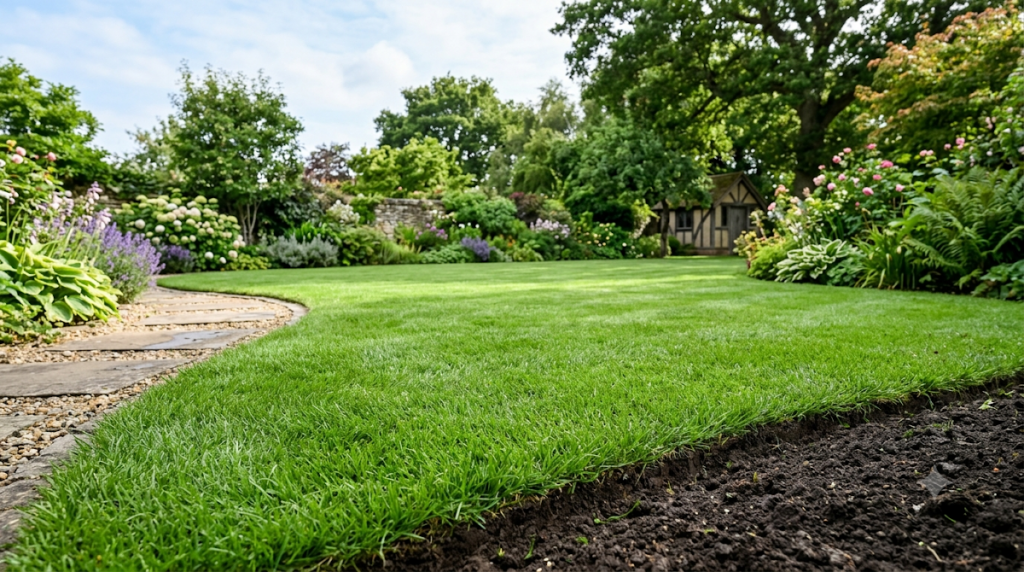
Quick Answer: The best soil for green grass is friable loam, a balanced mix of sand, silt, and clay with 3\u20135% organic matter. It drains well while retaining moisture and nutrients. To improve your lawn, test your soil pH (aim for 6.0\u20137.0), then amend with compost to reach a loamy texture that supports deep root growth and vibrant color.
Every lush, emerald lawn starts beneath the surface. While homeowners obsess over grass seed varieties and fertilizer schedules, the true foundation of a green lawn is the soil itself. Understanding what makes soil ideal\u2014and how to transform what you have into that perfect growing medium\u2014is the single most impactful investment you can make in your lawn\u2019s long-term health.
Why Soil Is the Hidden Engine of a Green Lawn

Soil is far more than dirt. It is a living ecosystem composed of weathered rock minerals, organic matter, water, air, and billions of microorganisms. Every blade of grass depends on soil for three critical functions: anchorage, water supply, and nutrient delivery. When soil structure is poor, even the best grass varieties struggle\u2014roots compact, water either pools or runs off, and nutrients never reach the root zone.
The difference between a mediocre lawn and a showpiece often comes down to understanding your soil type and knowing exactly how to amend it. Let\u2019s break down the science.
The Three Soil Textures: Sand, Silt, and Clay
Every soil on Earth is a combination of three mineral particle types, classified by size:
Sand (0.05\u20132.0 mm): The largest particles. Sandy soils drain quickly, warm up fast in spring, but lose nutrients and moisture rapidly. Grass roots in pure sand often drought-stress by mid-summer.
Silt (0.002\u20130.05 mm): Medium-sized particles with a smooth, flour-like feel. Silt soils hold more moisture than sand but can compact easily under foot traffic, reducing air space for roots.
Clay (<0.002 mm): The finest particles, Plate-shaped and tightly packed. Clay holds nutrients exceptionally well but drains poorly, becomes waterlogged in wet weather, and bakes hard in drought. Working clay when wet causes severe compaction.
Quick Diagnostic: Identify Your Soil Texture at Home
Before you amend anything, you need to know what you\u2019re working with. Here are four reliable methods, ranked by accuracy:
The Jar Test (Most Accurate Home Method): Fill a quart jar one-third with soil from 4\u20136 inches below the surface. Add water to fill, seal, and shake vigorously for 60 seconds. Let it settle for 48 hours. Sand settles first (bottom), then silt (middle), then clay (top layer). Measure each layer as a percentage of total soil height. Ideal lawn soil: roughly 40% sand, 40% silt, 20% clay.
The Ribbon Test: Take a moist handful of soil and press it between your thumb and forefinger, forming a ribbon. Sandy soil won\u2019t form a ribbon. Silt forms a short ribbon (under 1 inch) that breaks easily. Clay forms a ribbon longer than 2 inches without breaking.
The Squeeze Test: Grab a handful of moist soil and squeeze. Sandy soil falls apart immediately. Loam holds its shape briefly then crumbles when poked. Clay holds a firm, shiny ball that doesn\u2019t crumble easily.
Professional Lab Test: Send samples to your local cooperative extension or a soil laboratory ($15\u2013$30). You\u2019ll receive exact percentages of sand, silt, and clay, plus pH, organic matter content, and nutrient levels. This is the gold standard for serious lawn improvement.
The Ideal Lawn Soil: Friable Loam Explained
The best soil for green grass is friable loam\u2014a balanced mixture of sand, silt, and clay with sufficient organic matter to hold it all together in loose, crumbly aggregates. Here\u2019s what makes it perfect:
| Property | Ideal Range for Lawn Soil | Why It Matters |
|---|---|---|
| Texture | 40% sand, 40% silt, 20% clay | Balances drainage with nutrient retention |
| Organic Matter | 3\u20135% by weight | Feeds soil microbes, improves structure, holds moisture |
| pH | 6.0\u20137.0 | Optimal nutrient availability for cool-season and warm-season grasses |
| Bulk Density | 1.0\u20131.4 g/cm\u00b3 | Indicates adequate pore space for root growth and air exchange |
| Water Infiltration | 0.5\u20131.0 inches/hour | Prevents runoff and waterlogging while ensuring deep watering |
| CEC (Cation Exchange Capacity) | 10\u201325 meq/100g | Measures soil’s ability to hold and release nutrients to grass roots |
Friable means the soil crumbles easily in your hand without forming hard clumps. When you walk across friable loam, your footprints sink slightly and leave impressions\u2014but the soil doesn\u2019t cake or crack. This structure allows grass roots to penetrate deeply, access water and nutrients throughout the root zone, and breathe between watering cycles.
How to Test and Amend Your Lawn Soil: Step-by-Step
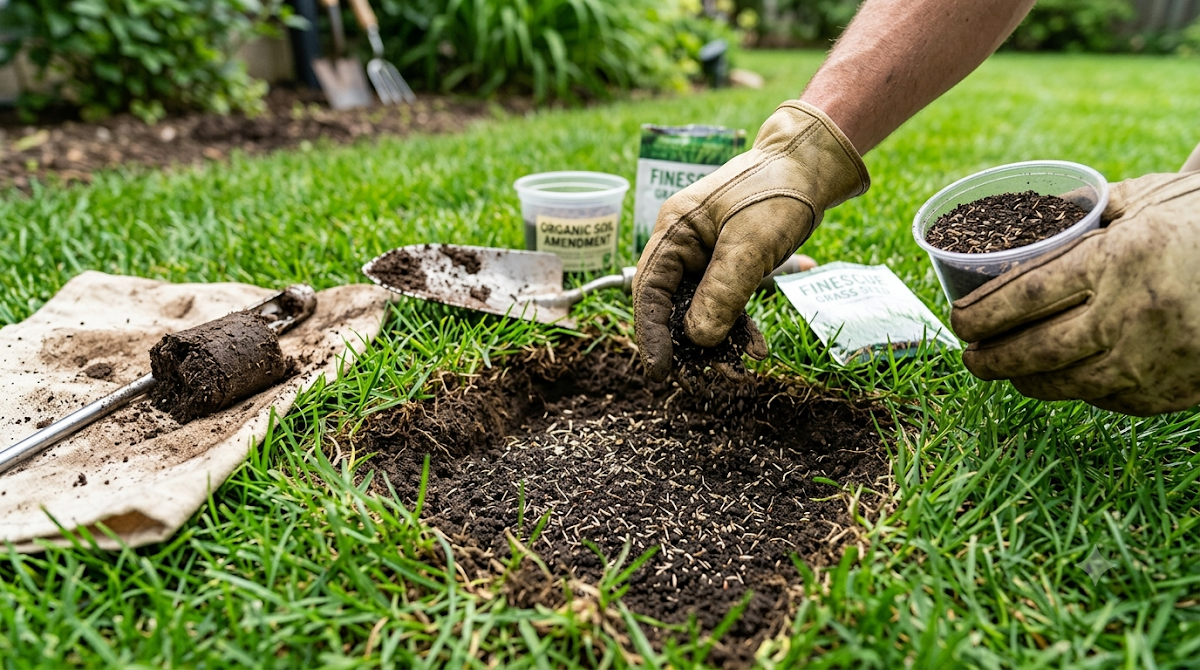
Step 1: Test Your Soil (Week 1)
Collect 10\u201312 soil cores from across your lawn at a depth of 4\u20136 inches. Mix them in a clean bucket. Send the composite sample to your local extension lab or use a quality home testing kit. Record your pH, organic matter percentage, texture class, and any nutrient deficiencies.
Step 2: Correct pH If Needed (Week 2\u20133)
If your pH is below 6.0, apply pelletized lime at 50 lbs per 1,000 sq ft for sandy soils, or 75 lbs per 1,000 sq ft for clay soils. If pH is above 7.5, apply elemental sulfur at 5\u201310 lbs per 1,000 sq ft. Allow 2\u20133 months for full pH adjustment before overseeding or spring fertilization. Time applications so rain will incorporate the amendments\u2014apply when rain is expected within 48 hours.
Step 3: Add Organic Matter (Fall is Best)
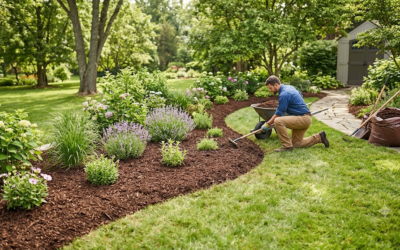
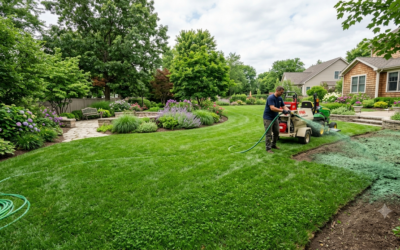
Topdress your lawn with \u00bc to \u00bd inch of screened, finished compost spread evenly across the surface. Use a drag mat or the back of a rake to work it into the grass canopy without smothering existing turf. Repeat annually for 3 consecutive years to build organic matter from below 2% to the ideal 3\u20135% range. For severely degraded soils, consider a one-time application of 1 inch, followed by core aeration to incorporate it.
Step 4: Core Aerate Compacted Areas (Annually)
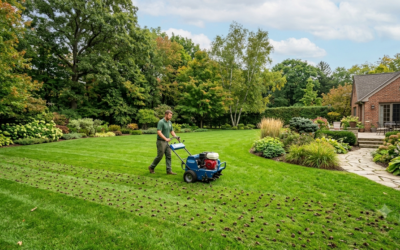
For clay-heavy or compacted soils, core aerate in early fall when soil temperatures are between 55\u201365\u00b0F. Remove 2\u20133 inch plugs on 3-inch centers. Leave plugs on the surface to break down naturally. Follow immediately with topdressing so compost fills the aeration channels, directly improving soil structure in the root zone. Do not aerate when soil is waterlogged\u2014wait until you can form a soil ball that crumbles when pressed.
Common Soil Problems and Their Solutions
| Soil Problem | Symptoms in Your Lawn | Fix |
|---|---|---|
| Heavy Clay | Standing water after rain, hardpan in summer, shallow roots | Aerate + topdress with compost annually; add gypsum (40 lbs/1,000 sq ft) to improve clay flocculation |
| Sandy Soil | Rapid browning in heat, frequent watering needed, yellow patches | Topdress with compost (\u00bd inch), use slow-release fertilizer, add humic acid to increase CEC |
| Compacted Soil | Thin grass, moss invasion, water runoff, difficult to push a screwdriver into ground | Core aerate 1\u20132x yearly, restrict foot traffic on wet soil, add organic matter |
| Wrong pH | Nutrient lockout despite fertilizing, clover invasion, pale grass | Test pH, apply lime (low pH) or sulfur (high pH), retest in 3 months |
| Low Organic Matter | Poor water retention, thatch buildup, weak root system | Annual compost topdressing, mulch mow to return clippings, avoid excess nitrogen that inhibits decomposition |
What to Do If You Mowed Too Early or Damaged Soil
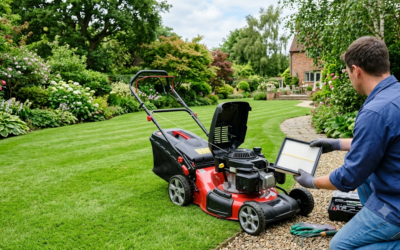
Mowing on wet, saturated soil is one of the most common causes of soil compaction. The mower’s weight compresses soil pores, especially on clay soils, creating a dense layer that restricts root growth and water infiltration for months.
Immediate remediation: Core aerate the affected area as soon as the soil dries enough to support the aerator without leaving ruts (test by walking\u2014you should not leave footprints deeper than \u00bd inch). Apply \u00bc inch of compost to fill the aeration holes. Avoid driving equipment across the same area again until soil recovers. Recovery typically takes one full growing season with proper aeration and organic matter addition.
Wet weather delays: If extended rain prevents aeration or topdressing, monitor soil moisture daily. The ideal window is when soil feels moist but crumbles when squeezed\u2014if it forms a sticky ball, wait 2\u20133 more days. In northern climates, prioritize fall aeration before the ground freezes. In southern climates, target late spring after the last frost but before summer heat stress begins.
Expert Tips for Long-Term Soil Health
Mulch mow always. Returning grass clippings to the lawn recycles up to 25% of your lawn’s annual nitrogen needs and adds organic matter directly to the soil surface. Clippings decompose within 1\u20132 weeks and do not contribute to thatch when soil biology is healthy.
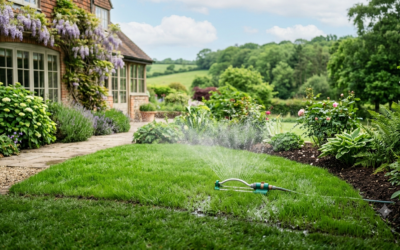
Water deeply and infrequently. Apply 1\u20131.5 inches of water per week in 1\u20132 sessions rather than daily light sprinkling. Deep watering encourages roots to grow 6\u20138 inches into the soil profile, accessing a larger volume of nutrients and moisture. Use a tuna can on the lawn to measure actual application depth.
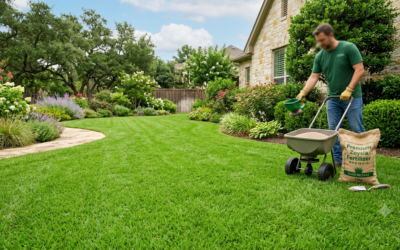
Avoid over-fertilizing. Excess nitrogen promotes rapid blade growth at the expense of root development and feeds lawn diseases. Soil tests guide precise application rates\u2014typically 2\u20134 lbs of nitrogen per 1,000 sq ft annually for most cool-season grasses.
Encourage soil biology. Healthy soil contains billions of bacteria, fungi, and protozoa that break down organic matter and make nutrients available to grass roots. Minimize harsh chemical use, avoid tilling when possible, and maintain consistent organic matter inputs to sustain this underground workforce.
Frequently Asked Questions
How often should I test my lawn soil?
Test every 2\u20133 years for established lawns, or annually if you are actively amending and improving your soil. Spring or fall are ideal testing times\u2014avoid testing immediately after fertilizing, as results will reflect recent applications rather than baseline conditions.
Can I mix topsoil into my existing lawn without killing the grass?
Yes, but depth matters. You can add up to \u00bd inch of quality screened topsoil or compost as a topdressing without harming existing turf. Adding more than \u00bd inch at once can smother grass blades and block sunlight. For deeper additions (1\u20132 inches), plan to overseed immediately after so new grass establishes through the added soil layer.
Is clay soil always bad for lawns?
No. Clay actually holds more nutrients and water than sandy soil, which is beneficial during drought. The problem arises when clay is compacted or waterlogged. With proper drainage, regular aeration, and annual organic matter additions, clay soils can support excellent lawns. Many championship sports fields are built on engineered clay bases with carefully managed drainage systems.
What is the fastest way to improve poor lawn soil?
The single fastest improvement is core aeration combined with compost topdressing. Aeration physically breaks compaction immediately, while compost begins feeding soil biology and improving structure. You\u2019ll notice visible improvement in turf density within 4\u20136 weeks, with continued gains over the following season. For\u6025 immediate visual results, pair with proper fertilization based on soil test recommendations. For related insights, see our detailed guide on Pre-Emergent Granular Weed Killer.