
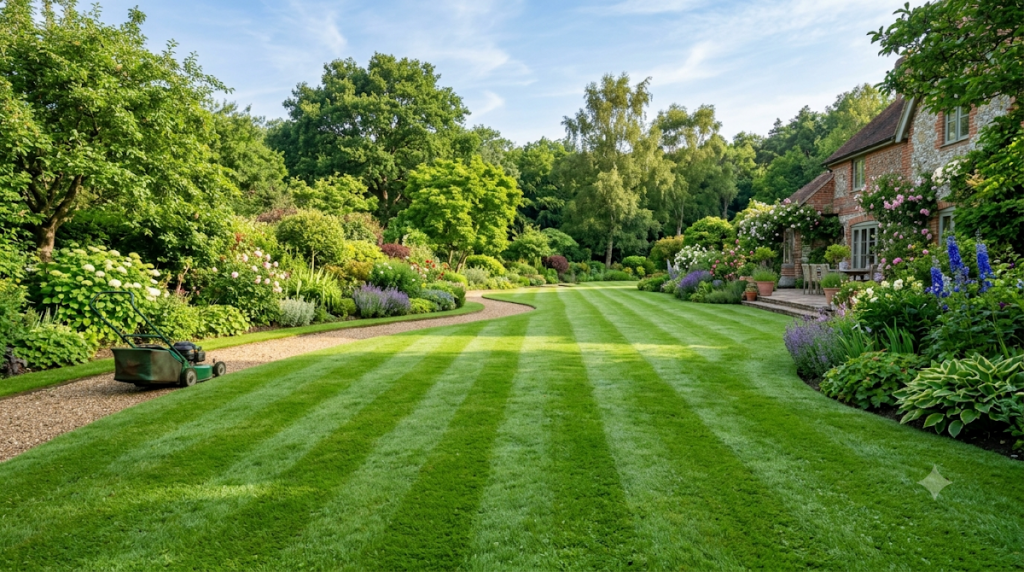
Quick Answer: The best time to cut grass is mid-morning, between 8 a.m. and 10 a.m., once dew has evaporated but before the heat spikes. This lets grass blades dry, minimizes stress, and gives turf 8\u201310 hours to recover before nightfall. Alternatively, mow between 4 p.m. and 6 p.m. when temperatures drop but sunlight remains.
Why Mowing Time Matters for Turf Health
Cutting grass at the right time isn’t about convenience\u2014it’s about turf physiology. When you mow, you slice open leaf tissue, creating open wounds. If the grass is wet, those wounds stay open longer, inviting fungal diseases like Rhizoctonia blight and Pythium. If the grass is stressed from heat, it cannot produce the carbohydrates needed to regrow. Timing your mow to match the grass’s natural recovery cycle reduces disease pressure, limits water loss, and produces a thicker, healthier lawn.
Professional turf managers follow a simple rule: mow when the grass is dry, cool, and has daylight ahead. Mid-morning satisfies all three conditions in most climates.
The Optimal Time Window: 8 a.m. to 10 a.m.
Between 8 a.m. and 10 a.m., three factors align:
- Dew has evaporated: Early morning moisture has burned off, so blades are dry. Dry grass cuts cleanly instead of tearing or clumping under the mower deck.
- Soil temperatures are moderate: Soil warmth is typically 60\u201375\u00b0F (15\u201324\u00b0C), well within the active root-growth zone of cool-season and warm-season grasses.
- Full recovery window: With 8\u201310 hours of daylight ahead, grass photosynthesizes and seals cut wounds before nightfall, significantly reducing fungal infection risk.
The Second-Best Window: 4 p.m. to 6 p.m.
Not a morning person? Late afternoon works nearly as well. Temperatures drop from peak daytime highs, reducing water evaporation from cut blades. Grass has 2\u20134 hours of light to begin recovery. Avoid mowing after 6 p.m., however\u2014cut grass needs at least a few hours of sun to heal before cooler night temperatures slow metabolism.
Diagnostic Table: Best vs. Worst Mowing Windows
| Time Window | Turf Condition | Risk Level | Best For |
|---|---|---|---|
| 6\u20138 a.m. | Dew-covered, wet blades | High fungal risk | Avoid entirely |
| 8\u201310 a.m. | Dry, moderate temperature | Lowest | Optimal window |
| 10 a.m.\u2013Noon | Drying, warming | Moderate | Acceptable, less ideal |
| Noon\u20133 p.m. | Hottest, stressed | High heat stress | Avoid in summer |
| 4\u20136 p.m. | Cooling, dry | Low | Second-best window |
| After 6 p.m. | Cool, limited recovery light | Moderate stress | Emergency only |
The Worst Times to Mow and Why
Three windows create measurable turf damage:
Early Morning (6\u20138 a.m.): Wet-Blade Damage
Cutting dew-laden grass causes the mower blade to tear rather than slice. Torn blades create jagged edges that lose moisture twice as fast as clean cuts. Worse, water droplets splash fungal spores onto fresh wound sites. If you mow wet grass once, you’ll notice clumping under the deck and uneven cuts. Do it weekly, and fungal rings may appear within a month.
Midday (Noon\u20133 p.m.): Heat Stress
High temperatures force grass into a conservation mode, closing stomata and slowing photosynthesis. Cutting during this window removes leaf area that the plant needs to cool itself. Grass can lose up to 30% more water through fresh cuts during peak heat, leading to brown tips and weakened root systems.
Evening (After 6 p.m.): Disease Pressure
Cut wounds that don’t seal before nightfall stay moist overnight\u2014prime conditions for fungal infection. Grass cut after 6 p.m. also has less time to produce recovery carbohydrates. Over several weeks, evening-only mowing creates thinner, more disease-prone turf.
Seasonal Adjustments to Mowing Time
Spring (March\u2013May)
Mow mid-morning (8\u201310 a.m.) once soil temperatures reach 50\u00b0F (10\u00b0C). This signals active growth. Dew evaporates faster in spring, so you can often start as early as 7:30 a.m. in drier climates.
Summer (June\u2013August)
Never mow between noon and 3 p.m. Heat stress peaks. Shift to early morning (7\u20139 a.m.) or late afternoon (4\u20136 p.m.). During drought, raise your mower deck by one setting and mow less frequently\u2014cutting too short during heat waves scalps the lawn.
Fall (September\u2013November)
Mid-morning (8\u201310 a.m.) works well as temperatures cool. In northern climates, mow warm-season blends slightly later in the morning (10\u201311 a.m.) to allow dew to burn off in shorter daylight. Extend the recovery window by finishing before 4 p.m.
Winter (December\u2013February)
Cool-season grasses may need occasional cuts on mild days. Mow between 10 a.m. and 2 p.m. on days above 40\u00b0F (4\u00b0C), when frost has fully melted. Never mow frosted grass\u2014brittle blades shatter, damaging crowns.
Step-by-Step: The Perfect Mowing Procedure
Step 1: Inspect and Prepare (5 minutes)
Walk your lawn and remove sticks, rocks, and toys. Check for animal droppings and debris that could damage the blade or scatter hazards. Confirm the soil feels firm, not soggy.
Step 2: Set Blade Height and Sharpness
Adjust the deck height to cut no more than one-third of the blade length. For most lawns, set the blade to 2.5\u20133.5 inches (6\u20139 cm). Check the blade: if it’s dull, sharpen it. A sharp blade produces a clean slice; a dull blade tears grass, creating brown tips that invite disease.
Step 3: Mow in a Pattern
Start along the edges, then mow in straight lines across the center. Overlap each pass by 2\u20133 inches to avoid stripes of uncut grass. Alternate your direction each mow (east-west, then north-south) to prevent rut formation and encourage vertical growth.
Step 4: Post-Mow Checks
After finishing, inspect for clumps. If clumping occurs, you mowed when grass was too wet. Check blade height\u2014grass should be uniform, not scalped at corners. Leave clippings on the lawn; they return up to 25% of nitrogen to the soil.
Expert Troubleshooting
You Mowed Too Early (Wet Grass)
If you accidentally mowed dew-covered grass, act quickly: rake up clumps to prevent smothering, then water lightly in the afternoon. Monitor for fungal rings over the next week. If brown patches appear, apply a preventive fungicide at the label rate.
Wet Week Ahead
If rain is forecast for 3+ consecutive daysabbiamo, raise the mower deck by one setting and cut slightly higher than normal. This creates more leaf area for drying. If the grass grows past 4 inches, mow with a sharp blade even if slightly damp\u2014wet cutting causes less stress than waiting until growth becomes unmanageable.
Heat Wave Mowing
In extreme heat (air temps above 90\u00b0F), skip mowing entirely if possible. If needed, mow only in early morning and set the blade to its highest setting. Water deeply the evening before to hydrate the soil and reduce stress.
Frequently Asked Questions
1. Can I mow grass when it’s wet from morning dew?
No. Wet grass tears instead of cutting cleanly, creating jagged edges that lose moisture rapidly and invite fungal disease. Wait until dew dries\u2014typically by 8 a.m. in most climates, though humid regions may require waiting until 9\u201310 a.m.
2. How long should I wait after rain to mow?
Wait 2\u20134 hours after rain stops, depending on sun intensity and soil drainage. Check conditions: walk across the lawn. If your shoes leave water trails or the grass squishes underfoot, wait longer. Dry, sandy soil dries in 2 hours; clay-heavy soil may need 6+ hours.
3. Is it better to mow in the morning or evening?
Morning (8\u201310 a.m.) is superior. Grass is dry and cool, and the full day of sunlight allows complete wound healing. Evening (4\u20136 p.m.) is acceptable but carries slightly higher disease risk since nightfall arrives within hours of cutting.
4. How often should I mow, and does timing change?
Mow weekly during active growth seasons (spring and fall for cool-season grass, summer for warm-season grass). During peak growth, you may need to mow every 5\u20137 days. In drought or heat, reduce to every 10\u201314 days. Always maintain the timing windows above regardless of frequency.
Bottom Line
Mowing between 8 a.m. and 10 a.m. produces the healthiest lawn. The combination of dry blades, moderate temperatures, and extended daylight gives your grass the best chance to recover quickly, resist disease, and develop deep roots. If mornings aren’t possible, the 4\u20136 p.m. window is a solid backup. Avoid wet early-morning cuts, midday heat, and evening mowing whenever possible. With a sharp blade, correct height, and the right timing, you’ll see noticeably thicker, greener turf within two to three mowing cycles. For related insights, see our detailed guide on Pre-Emergent Weed Preventer.