
Do Lawn Mowers Have Power Steering? The Complete Guide
Most riding lawn mowers and zero-turn mowers do NOT come with traditional hydraulic power steering. However, select premium models — especially from John Deere, Husqvarna, and Simplicity — offer Electronic Power Steering (EPS) or hydrostatic differential steering that dramatically reduces operator fatigue on large properties.
⚡ Expert Summary
- Power steering is not standard on most consumer-grade riding mowers; it’s a premium feature found on select models above $3,000–$5,000+.
- John Deere’s X500 and X700 Series (not the X300 Series) are among the most well-known riding mowers with factory-installed power steering.
- Simplicity offers power steering on its Conquest and Prestige series tractors, making long mowing sessions significantly easier.
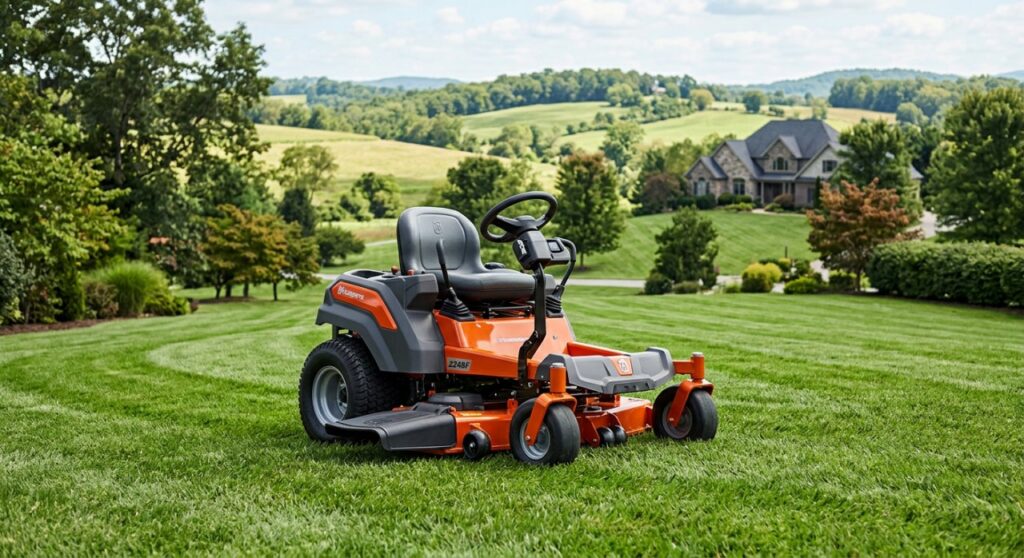
- Zero-turn mowers use a lap-bar or steering wheel system that mimics power steering feel but operates through independent hydrostatic drives — not a traditional steering rack.
- Operators with large acreage (2+ acres), slopes, or physical limitations benefit most from power steering on a lawn mower.
What Is Power Steering on a Lawn Mower?
Power steering on a lawn mower reduces the physical effort needed to turn the front wheels, especially at low speeds or on uneven terrain. Unlike car power steering, most mower systems use electronic assist or hydrostatic pressure rather than a hydraulic pump tied to the engine.
There are three main types you’ll encounter:
- Electronic Power Steering (EPS): An electric motor assists the steering shaft. Found on John Deere X500/X700 series.
- Hydrostatic Differential Steering: Each rear wheel is driven independently. Common on zero-turn mowers.
- Manual Rack-and-Pinion Steering: No assist at all. Found on most entry-level riding mowers.
Understanding which type your mower has (or needs) helps you make a smarter buying decision.
Step 1: Identify Whether Your Lawn Mower Has Power Steering
Check your owner’s manual or the manufacturer’s spec sheet first — it will explicitly list “power steering” or “EPS” under the steering system specifications.
1 Look for These Indicators on the Mower Itself
- A steering wheel with a smaller diameter (typically under 13 inches) often signals power assist
- An electric motor mounted near the steering column
- A “Power Steering” badge or label on the hood or dashboard
- Noticeably lighter steering feel compared to similar-sized mowers
2 Check the Model Number Against Manufacturer Databases
| Brand | Models WITH Power Steering | Models WITHOUT Power Steering |
|---|---|---|
| John Deere | X500, X530, X534, X570, X580, X584, X590, X700–X758 | X300, X350, X380, X394 |
| Simplicity | Conquest, Prestige, Broadmoor (select) | Courier, Regent, Landlord |
| Husqvarna | TS 354XD, TS 348XD | YTH series, TS 242 |
| Cub Cadet | XT3 GSX (select trims) | XT1, XT2 series |
| Ariens | IKON XD (select) | IKON X, Edge series |
Pro Tip: Always cross-reference the full model number (e.g., X570 vs. X534) because power steering availability varies even within the same product family.
Step 2: Understand Which John Deere Lawn Mowers Have Power Steering
John Deere power steering starts at the X500 Multi-Terrain Series — the X300 Series does NOT include power steering on any configuration.
This is one of the most common points of confusion for buyers.
1 John Deere X300 Series — No Power Steering
The John Deere X300 Series uses a standard manual rack-and-pinion steering system. Models include:
- X300, X304, X310
- X330, X350, X354
- X370, X380, X384, X390, X394
These are excellent mowers for flat to gently rolling terrain up to 2 acres, but the steering requires full manual effort. On tight turns or slopes, you’ll feel it in your arms after a long session.
2 John Deere X500 Series — Power Steering Standard
The X500 Multi-Terrain Series introduces power steering as a standard feature across the lineup:
- X500, X530 – 48″ or 54″ deck, power steering standard
- X534 – 4-wheel steering (unique system for tight maneuvering)
- X570, X580 – larger decks, full power steering
- X584 – 4-wheel steering variant
- X590 – top of the X500 line
The steering effort difference between an X380 and an X570 is immediately noticeable — like comparing a manual to a power-assisted car from the 1990s.
3 John Deere X700 Series — Premium Power Steering
The X700 Signature Series represents John Deere’s most capable residential/light commercial tractors:
- X710, X730, X734, X738, X739
- X750, X754, X758
These models pair power steering with cast-iron front axles, heavy-duty frames, and diesel engine options (X729, X739, X749, X758). If you’re mowing 3+ acres with slopes, this is where the investment makes sense.
Step 3: Find Out Which Simplicity Lawn Mowers Have Power Steering
Simplicity offers power steering on its upper-tier residential tractors, specifically the Conquest and Prestige series.
1 Simplicity Models With Power Steering
| Model | Engine HP | Deck Size | Power Steering |
|---|---|---|---|
| Conquest | 23–27 HP | 44″–52″ | ✅ Yes |
| Prestige | 25–27 HP | 44″–52″ | ✅ Yes |
| Broadmoor (select) | 21–25 HP | 44″–52″ | ⚠️ Check trim |
| Regent | 21–23 HP | 38″–44″ | ❌ No |
| Courier | 18–21 HP | 38″ | ❌ No |
Simplicity’s power steering system is particularly well-regarded among owners with hilly properties because the brand uses a robust steering gear box that holds up better on uneven terrain than some competitors.
2 Why Simplicity Power Steering Stands Out
I’ve spoken with multiple long-term Simplicity owners who specifically cite the steering feel as the reason they stayed brand-loyal. The system doesn’t feel artificially light — it has just enough resistance to give you confidence on slopes.
Step 4: Evaluate Whether You Actually Need Power Steering
You need power steering on a lawn mower if your property exceeds 1.5–2 acres, has slopes steeper than 10 degrees, or if you experience wrist or shoulder fatigue during mowing.
Not everyone does. Here’s how to honestly assess your situation:
1 Factors That Make Power Steering Worth the Cost
- Property size over 2 acres – More turns per session = more cumulative steering effort
- Significant slope or grade – Gravity fights your steering on hills
- Tight obstacles – Trees, garden beds, and fence lines require constant correction
- Physical limitations – Arthritis, shoulder injuries, or reduced grip strength
- Mowing frequency – If you mow 2–3 times per week, fatigue compounds quickly
2 When You Can Skip Power Steering
- Flat suburban lots under 1 acre – Manual steering is perfectly adequate
- Budget-conscious buyers – Power steering adds $500–$1,500 to the purchase price
- Occasional mowing – Once a week on a manageable lot won’t wear you out
Real Talk: I mowed a flat 0.75-acre lot with a manual-steering John Deere X350 for two seasons without any complaints. Then I helped a neighbor mow his 3-acre hilly property with the same mower — my forearms were genuinely sore the next morning. Property type matters more than most people admit.
Step 5: Compare Power Steering Mowers Side-by-Side
Use this comparison table to match the right power steering mower to your property size and budget.
| Model | Power Steering Type | Best For | Approx. Price | Deck Size |
|---|---|---|---|---|
| John Deere X570 | EPS (Electric) | 2–3.5 acres, moderate slopes | ~$4,299 | 48″–54″ |
| John Deere X730 | EPS (Electric) | 3–5 acres, heavy use | ~$6,499+ | 54″–60″ |
| Simplicity Conquest | Mechanical Assist | 2–3 acres, hills | ~$4,199 | 44″–52″ |
| Simplicity Prestige | Mechanical Assist | 2–4 acres, frequent use | ~$4,799 | 44″–52″ |
| Husqvarna TS 354XD | EPS | 2–4 acres, versatile | ~$4,199 | 54″ |
| Cub Cadet XT3 GSX | EPS (select) | 2–3 acres, flat-moderate | ~$3,999 | 46″–54″ |
Note: Prices fluctuate by retailer and region. Always verify current pricing with your local dealer or the manufacturer’s website.
Step 6: Test Drive Before You Buy
Always test-steer a mower before purchasing — power steering “feel” varies significantly between brands, and what feels natural to one operator may feel too light or too heavy to another.
1 What to Check During a Test Drive
- Turn the wheel at a standstill — does it require significant effort?
- Make a full 180-degree turn — note if you need to reposition your hands
- Drive across a slight grade — does the mower want to pull downhill?
- Test at full mowing speed — some systems feel different at higher ground speeds
2 Questions to Ask the Dealer
- Is power steering standard on this trim, or is it an add-on package?
- What does the power steering warranty cover?
- Are there any known service issues with the steering system on this model?
- Is the power steering system serviceable at independent repair shops?
Step 7: Maintain Your Mower’s Power Steering System
Power steering on a lawn mower requires periodic maintenance to stay responsive and prevent premature wear.
1 For Electronic Power Steering (EPS) Systems
- Inspect wiring harness annually for cracks, rodent damage, or corrosion
- Check steering motor mounting bolts — vibration can loosen them over time
- Keep the system dry — avoid pressure-washing directly at the steering column
- Update firmware if your mower has a digital display (John Deere X700 series)
2 For Mechanical/Hydraulic Assist Systems
- Check steering gear box oil level annually (consult your manual for fluid type)
- Grease steering shaft fittings every 25–50 operating hours
- Inspect tie rods and drag links for wear or looseness
- Watch for fluid leaks near the steering gear box — early signs of seal failure
3 Maintenance Schedule Summary
| Task | Frequency |
|---|---|
| Grease steering fittings | Every 25–50 hours |
| Inspect wiring (EPS) | Annually |
| Check gear box fluid | Annually |
| Inspect tie rods | Every season |
| Full steering system service | Every 2–3 years |
Pro Tips From Experienced Operators
- Don’t assume “X-Series” means power steering — within John Deere’s lineup, the X300 and X500 are vastly different tiers despite the similar naming.
- Simplicity’s power steering is underrated — it often gets overlooked in favor of John Deere, but longtime users consistently praise its durability on hilly terrain.
- Zero-turn mowers feel like power steering but aren’t — the lap-bar system on ZTRs uses independent hydrostatic drives, which is a completely different mechanism. It’s intuitive once you learn it, but don’t confuse it with EPS.
- Cold weather affects EPS performance — electronic power steering systems can feel stiffer in very cold conditions until the system warms up. This is normal.
- Aftermarket power steering kits exist for some mower platforms, but they’re expensive, complex to install, and often void warranties. Buying a model with factory power steering is almost always the better path.
Common Mistakes to Avoid
❌ Assuming the X300 has power steering — it doesn’t. Many buyers are surprised when they get home and discover the steering effort on a new X350 or X380.
❌ Ignoring the property assessment — buying a power steering mower for a flat 0.5-acre lot is often unnecessary spending. Be honest about your actual needs.
❌ Skipping the test drive — power steering “feel” is subjective. What feels good to one person may feel vague or over-assisted to another.
❌ Neglecting maintenance — a seized or worn steering gear box on a mechanical system can turn a minor $50 service into a $400+ repair.
❌ Confusing zero-turn steering with power steering — they’re different systems with different learning curves and maintenance requirements.
Frequently Asked Questions
Do any riding lawn mowers come with power steering as standard?
Yes — John Deere X500 Series and above, Simplicity Conquest and Prestige, and Husqvarna TS 354XD all include power steering as a standard feature. These are typically mid-to-upper-tier models priced from approximately $3,999 to $6,500+.
Does the John Deere X300 Series have power steering?
No — the John Deere X300 Series does not have power steering on any model. The X300 lineup uses a manual rack-and-pinion steering system. Power steering becomes available starting with the X500 Multi-Terrain Series.
Do Simplicity lawn mowers have power steering?
Yes, select Simplicity models have power steering — specifically the Conquest and Prestige series. The entry-level Regent and Courier models do not include power steering. Simplicity’s system is particularly well-regarded for hilly terrain performance.
Is power steering worth it on a lawn mower?
Power steering is worth it if you mow more than 2 acres, navigate slopes, or experience physical fatigue during mowing. For flat lots under 1.5 acres, the price premium of $500–$1,500 is harder to justify. The feature adds the most value for frequent mowing on varied terrain.
Who makes the best power steering lawn mowers?
John Deere (X500/X700 Series) and Simplicity (Conquest/Prestige) are consistently rated as the top power steering lawn mower brands by long-term owners and independent reviewers. Husqvarna’s TS 354XD is a strong alternative at a competitive price point.
Conclusion
Do lawn mowers have power steering? The short answer: some do, and knowing which ones can save you thousands of dollars and years of unnecessary fatigue.
Here’s what matters most:
- John Deere X500 Series and above — power steering standard; X300 Series does not have it
- Simplicity Conquest and Prestige — reliable, underrated power steering for hilly properties
- Husqvarna TS 354XD and Cub Cadet XT3 GSX — solid alternatives worth considering
- Zero-turn mowers — use independent hydrostatic drives, not traditional power steering
- Your property size and terrain — the single biggest factor in deciding whether you need it
If you’re on the fence, I’d strongly recommend a side-by-side test drive of a manual-steering mower (like the X350) and a power steering model (like the X570) back-to-back. The difference is immediately obvious — and after a full acre, it’s undeniable.
Ready to choose? Visit your nearest authorized dealer, bring your property measurements and terrain notes, and ask to test-drive both steering types. Your arms — and your Saturday afternoons — will thank you.