
How Much Do Lawn Mowers Depreciate? A Complete Guide
Lawn mowers depreciate 15–25% per year on average, with most losing 50–70% of their original value within 3–5 years. Understanding depreciation helps you make smarter buying decisions — whether you’re selling a used mower, calculating true ownership costs, or deciding between cheap and durable models.
🧾 Expert Summary
- Gas-powered riding mowers depreciate fastest in years 1–2, losing up to 30% of value immediately after purchase.
- Commercial-grade zero-turn mowers retain value better than residential models due to higher build quality and repairability.
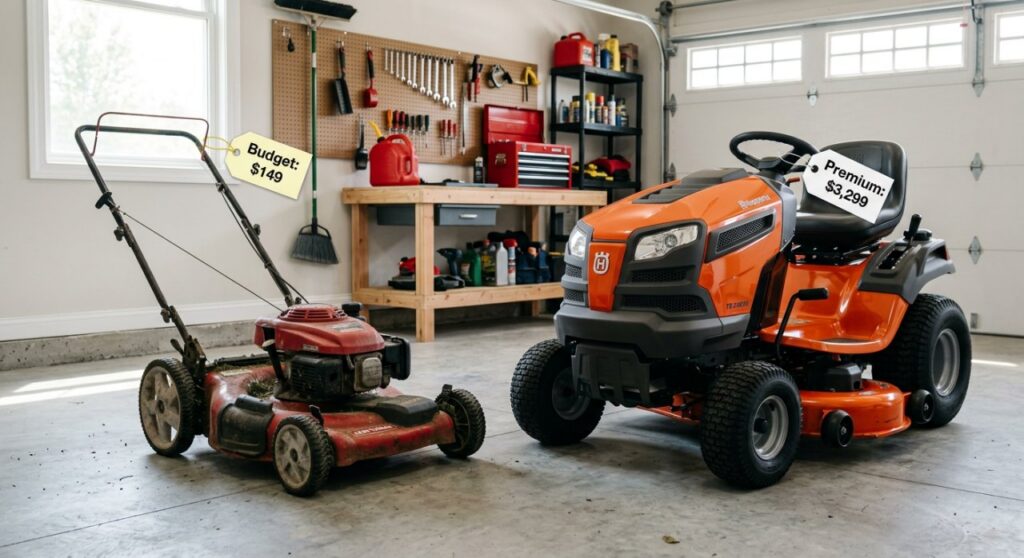
- A $300 budget push mower that fails in 18 months costs more per year than a $700 durable model lasting 6+ years.
- Maintenance records, brand reputation, and storage conditions are the three biggest factors affecting resale value.
- Buying a 2–3 year old used mower from a reputable brand often delivers the best cost-per-year value.
Step 1: Understand What Lawn Mower Depreciation Actually Means
Depreciation is the loss of monetary value over time — and for lawn mowers, it happens fast.
Unlike cars, lawn mowers have no standardized depreciation schedule. Value drops depend on brand, type, usage intensity, and maintenance history.
Knowing this number helps you calculate true 5-year ownership cost, not just sticker price.
Step 1.1: Learn the Average Depreciation Rates by Mower Type
| Mower Type | Average Annual Depreciation | Value After 5 Years |
|---|---|---|
| Budget Push Mower ($150–$350) | 30–40% | Near $0 (often unusable) |
| Mid-Range Push Mower ($350–$700) | 20–25% | 15–25% of original value |
| Riding Mower ($1,500–$3,500) | 15–20% | 30–40% of original value |
| Zero-Turn Mower ($3,000–$7,000) | 12–18% | 35–45% of original value |
| Commercial/Pro Mower ($7,000+) | 10–15% | 40–55% of original value |
Key insight: Cheaper mowers depreciate faster in percentage and absolute terms — they often have no resale value at all after 2–3 years.
Step 1.2: Recognize the “First-Year Drop” Rule
New lawn mowers lose 20–30% of value the moment they leave the store — similar to new cars.
This is why buying a lightly used, 1-year-old mower from a reputable brand is often the smartest financial move.
A $2,500 riding mower may be worth only $1,750–$2,000 after just 12 months of light use.
Step 2: Calculate the True 5-Year Cost of Ownership
Don’t just compare purchase prices — compare total cost over the product’s lifespan.
This is where cheap mowers lose the financial argument entirely.
Step 2.1: Run the Numbers on a Cheap vs. Durable Mower
Here’s a real-world comparison of a $299 budget mower vs. a $649 durable mower:
| Cost Factor | Budget Mower ($299) | Durable Mower ($649) |
|---|---|---|
| Purchase Price | $299 | $649 |
| Expected Lifespan | 18 months | 6+ years |
| Replacements Over 5 Years | 3× ($897 total) | 1× ($649 total) |
| Maintenance Costs (5 yr) | ~$60 (minimal, then disposal) | ~$150 (oil, blades, filter) |
| Repairs (5 yr) | ~$80 (then junked) | ~$100 |
| Resale Value at Year 5 | $0 | ~$150 |
| True 5-Year Cost | $1,057 | $749 |
Bottom line: The durable $649 mower saves you $308 over 5 years — and that’s before accounting for the time wasted shopping, assembling, and disposing of failed cheap mowers.
Step 2.2: Factor In Hidden Costs Cheap Mowers Don’t Show You
Budget mowers hide costs that don’t appear on the price tag:
- Disposal fees: Many municipalities charge $20–$50 to haul away broken power equipment.
- Time cost: Assembling a new mower takes 1–3 hours each replacement cycle.
- Fuel inefficiency: Worn-out engines use 15–25% more fuel than a well-maintained mower.
- Warranty gaps: Budget mowers often carry 90-day warranties vs. 2–3 years on quality brands.
Step 3: Identify the Factors That Affect Lawn Mower Depreciation
Six key variables determine how fast your specific mower loses value.
Understanding these lets you protect resale value and make smarter purchase decisions.
Step 3.1: Brand Reputation
Premium brands depreciate slower because buyers trust their reliability.
Brands like Honda, Husqvarna, Toro, and John Deere consistently hold 30–50% more resale value than no-name or discount store brands at the 3-year mark.
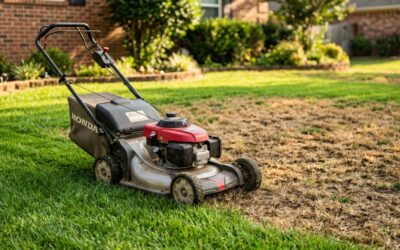
A used Honda HRX217 (originally ~$800) often sells for $350–$450 used — nearly 50% retention after 3 years.
Step 3.2: Engine Type and Condition
Gas engines with documented oil changes retain value significantly better than neglected ones.
An engine with clean air filters, fresh oil, and sharp blades can add $75–$200 to resale value on a mid-range mower.
Battery-electric mowers depreciate differently — battery degradation is the key concern, with packs losing 20–30% capacity after 500+ charge cycles.
Step 3.3: Storage and Maintenance History
| Condition Factor | Impact on Resale Value |
|---|---|
| Stored indoors (garage/shed) | +10–15% vs. outdoor storage |
| Maintenance records available | +5–10% buyer confidence premium |
| Original manual included | +$20–$50 on private sales |
| Rust or corrosion present | −20–40% immediate discount |
| Cracked deck or bent blade | −30–50% or unsellable |
Step 3.4: Hours of Use (For Riding and Commercial Mowers)
Riding mowers are evaluated like used cars — hours of operation matter more than calendar age.
A 5-year-old riding mower with 150 hours is worth significantly more than the same model with 600 hours.
General benchmarks:
- Under 200 hours: Excellent condition, 60–70% of original value possible
- 200–500 hours: Good condition, 35–50% of value
- 500–800 hours: Fair condition, 20–35% of value
- 800+ hours: Approaching end of useful life, 10–20% of value
Step 3.5: Market Timing and Seasonality
Lawn mowers sell for 10–20% more in spring (March–May) than in fall or winter.
If you’re selling, list in late March or April when demand peaks.
If you’re buying used, shop in October–November when sellers are motivated and competition is low.
Step 4: Spot Greenwashing in “Eco-Friendly” Mower Marketing
Greenwashing is when brands use vague environmental claims to justify higher prices without delivering real value.
Here’s how to evaluate whether an “eco-friendly” or “sustainable” mower claim is financially and factually legitimate.
Step 4.1: Demand Specific Numbers, Not Vague Claims
Watch out for these red flags:
- ❌ “Eco-friendly materials” — What materials? What percentage recycled content?
- ❌ “Lower emissions” — Compared to what baseline? By what percentage?
- ❌ “Sustainable manufacturing” — No third-party certification? Not verifiable.
- ✅ “CARB-compliant engine reducing HC+NOx by 35% vs. 2010 baseline” — Specific and verifiable
- ✅ “Battery pack recyclable through manufacturer take-back program with documented chain of custody” — Actionable and traceable
Step 4.2: Calculate Whether “Eco” Features Deliver Real Financial Value
A battery mower marketed as “green” at $1,200 vs. a gas mower at $700:
| Factor | Battery Mower ($1,200) | Gas Mower ($700) |
|---|---|---|
| Fuel/Energy Cost (5 yr) | ~$50 (electricity) | ~$250 (gasoline) |
| Battery Replacement (5 yr) | $150–$300 (likely 1 pack) | $0 |
| Emissions Benefit | Real (zero direct emissions) | Moderate (CARB-compliant) |
| Net 5-Year Cost | ~$1,400–$1,550 | ~$950 |
| Environmental Claim Validity | Legitimate if grid is clean | Neutral to moderate |
Verdict: The battery mower’s environmental benefit is real only if your electricity grid uses significant renewable energy. The financial premium is $450–$600 over 5 years — a real cost, not a savings.
Step 5: Evaluate Repairability Before You Buy
A repairable mower is worth more — both financially and practically — than a disposable one.
Repairability directly affects depreciation: mowers that can be fixed hold value longer.
Step 5.1: Check Parts Availability
Before buying any mower, verify:
- Are replacement blades, belts, and carburetors readily available? Search the model number on eBay, Amazon, and Jack’s Small Engines.
- Does the brand have an authorized service network? Brands like Husqvarna and Toro have thousands of service dealers nationally.
- Is the engine a common platform? Engines from Briggs & Stratton, Honda GCV, and Kawasaki have universal parts availability.
Step 5.2: Estimate Repair Cost vs. Replacement Cost
Use this decision rule:
- Repair cost < 40% of replacement value → Repair is financially smart
- Repair cost 40–60% of replacement value → Evaluate age and condition carefully
- Repair cost > 60% of replacement value → Replace, especially if mower is 5+ years old
Example: A $1,800 riding mower needs a $400 carburetor and ignition repair. That’s 22% of replacement cost — repair it confidently.
Step 6: Make the Financially Smart Buying Decision
The smartest purchase is the one with the lowest cost-per-year of reliable operation — not the lowest sticker price.
Step 6.1: Use the Cost-Per-Year Formula
Cost-Per-Year = (Purchase Price − Resale Value + Total Maintenance + Repairs) ÷ Years of Use
| Mower Scenario | Calculation | Cost Per Year |
|---|---|---|
| $299 budget mower, 1.5 yr life, $0 resale | ($299 + $60 + $0) ÷ 1.5 | $239/year |
| $649 durable mower, 6 yr life, $150 resale | ($649 − $150 + $250) ÷ 6 | $125/year |
| $2,500 riding mower, 10 yr life, $600 resale | ($2,500 − $600 + $500) ÷ 10 | $240/year |
| $2,500 riding mower (used at $1,400), 7 yr life | ($1,400 − $400 + $400) ÷ 7 | $200/year |
Key finding: A mid-range durable push mower delivers the lowest cost-per-year for typical residential use.
Step 6.2: Match Mower Type to Your Actual Needs
| Lawn Size | Recommended Mower Type | Sweet Spot Budget |
|---|---|---|
| Under 1/4 acre | Corded or battery push mower | $350–$600 |
| 1/4 to 1/2 acre | Gas or battery self-propelled | $500–$900 |
| 1/2 to 1 acre | Rear-engine riding or self-propelled | $900–$2,500 |
| 1–3 acres | Riding or entry zero-turn | $2,000–$5,000 |
| 3+ acres | Commercial zero-turn | $5,000–$12,000+ |
Buying more mower than you need accelerates depreciation without delivering value — a common and expensive mistake.
Pro Tips to Slow Depreciation and Protect Value
- 🔧 Change the oil every season — the single highest-ROI maintenance task for engine longevity.
- 🏠 Store indoors or under a weatherproof cover — UV and moisture are the fastest ways to destroy a mower’s cosmetic and mechanical condition.
- 📋 Keep all receipts and service records — documented maintenance adds $50–$150 to private sale value.
- 🔪 Sharpen blades annually — dull blades stress the engine and deck, accelerating wear.
- ⛽ Use ethanol-free fuel or add fuel stabilizer — ethanol corrodes carburetors, the #1 cause of preventable engine failure.
- 📅 Sell before it breaks — list your mower when it’s still running well, not after it starts showing problems.
Common Mistakes That Accelerate Lawn Mower Depreciation
| Mistake | Financial Consequence |
|---|---|
| Skipping annual oil changes | Engine failure 2–3 years early; $200–$600 repair or full replacement |
| Storing outside year-round | 20–40% reduction in resale value; accelerated deck rust |
| Running over rocks and debris | Bent blades, cracked decks; $50–$300 in avoidable repairs |
| Buying oversized mower for small lawn | Unnecessary depreciation on premium features you don’t use |
| Ignoring air filter replacement | Reduced engine life by 30–40%; poor fuel economy |
| Choosing unknown brands to save $50 upfront | 2–3× higher 5-year cost due to parts unavailability and early failure |
Frequently Asked Questions
How much does a lawn mower depreciate per year?
Most lawn mowers depreciate 15–25% per year, with budget models losing value fastest. Residential push mowers can lose 30–40% annually, while commercial-grade zero-turn mowers depreciate only 10–15% per year due to higher build quality and stronger resale demand.
Is it worth repairing an old lawn mower?
Yes, if the repair cost is less than 40% of the mower’s replacement value. A well-maintained mower from a reputable brand (Honda, Husqvarna, Toro) is almost always worth repairing, since parts are available and the engine can outlast the competition by years.
What lawn mower brands hold their value best?
Honda, Husqvarna, Toro, and John Deere consistently hold the most resale value. Honda push mowers in particular are known to retain 40–50% of original value after 3 years when properly maintained — far above the industry average.
When is the best time to buy a used lawn mower?
October through February is the best time to buy used lawn mowers — demand drops sharply after mowing season ends, and motivated sellers often accept 20–30% below asking price. Spring listings command premium prices due to high buyer competition.
Does a battery-electric mower depreciate faster than gas?
Battery mowers depreciate at similar rates overall, but battery degradation adds a hidden cost. Replacement battery packs cost $150–$400 and typically need replacement after 3–5 years of regular use. Factor this into your total cost calculation before assuming electric is cheaper long-term.
Conclusion: Durability Is a Financial Strategy, Not Just an Ethical One
The data is clear: cheap mowers are expensive mowers when you calculate true 5-year costs.
A $649 durable mower from a reputable brand costs $125/year to own. A $299 budget mower costs $239/year — nearly twice as much — while delivering an inferior mowing experience and zero resale value.
How much do lawn mowers depreciate? The honest answer is: it depends entirely on what you buy and how you maintain it. Budget mowers depreciate to zero within 18–24 months. Quality mowers from established brands retain 30–50% of their value at the 3-year mark and can last a decade with basic maintenance.
Your action plan:
- Calculate cost-per-year, not just sticker price
- Choose a brand with proven parts availability and service networks
- Maintain consistently — oil, blades, air filter, proper storage
- Buy used (1–2 years old) from reputable brands for maximum value
- Sell before the mower shows serious wear — timing your exit matters
The financially smart shopper and the environmentally conscious shopper arrive at the same conclusion: buy better, buy once, maintain well.