

WORX WR344 4WD Robot Mower: Ambitious No-Wire Design, but Early Reliability Signals Give Pause
As an Amazon Associate we earn from qualifying purchases. Product prices and availability are accurate as of the date/time indicated.
Introduction
Homeowners with sprawling yards have long dreamed of a hands-off solution that eliminates the weekly chore of mowing without the hassle of burying perimeter wires. Enter the Worx Landroid Vision Cloud 4WD, a premium Worx Landroid Vision Cloud 4WD Wire-Free Robot Mower promising AI-driven autonomy, cloud-based navigation, and the ability to tackle up to 1 acre of complex terrain. Marketed as a wire-free marvel with centimeter-level accuracy and intelligent obstacle handling, it arrives at a steep price of around $2,646. But strip away the marketing gloss in August 2026, and the question remains: does this Worx Landroid Vision Cloud 4WD Wire-Free Robot Mower truly deliver reliable performance for real-world lawns, or is it overhyped technology still finding its footing?
With an average rating of just 3.4 out of 5 stars from 23 customer reviews, early feedback signals mixed results rather than universal acclaim. In this comprehensive review, we dissect every major claim, highlight genuine strengths, call out vague language, and assess whether the product serves specific buyers well. Our goal is straightforward: equip you with balanced insights so you can decide if this high-end Worx Landroid Vision Cloud 4WD Wire-Free Robot Mower fits your needs without the sales pitch.
Product Overview
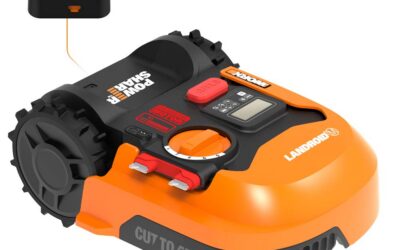
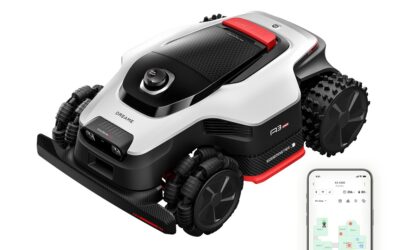
The Worx Landroid Vision Cloud 4WD (model WR344) is positioned as a next-generation robotic mower designed for lawns up to 1 acre. Unlike traditional models that rely on buried boundary wires for containment, this unit uses a combination of commercial-grade RTK Cloud technology for positioning, Vision AI for mapping and obstacle recognition, and V-SLAM sensor fusion for shaded areas. It features four-wheel drive with a terrain-adaptive chassis claimed to handle slopes up to 84% (approximately 40 degrees), front-wheel steering for precise turns, and an offset blade system marketed as Cut-to-Zero for closer edge trimming.
Key selling points from the manufacturer include automatic lawn mapping that purportedly understands any shape and boundary type from day one, infinite mowing zones managed via app, multiple cutting patterns (Parallel, Checkerboard, Diamond, or Natural), night mowing with FiatLux lighting, and Find My Landroid GPS tracking with cellular connectivity for security. App control allows remote monitoring, no-go zone editing, and pathway customization. The system emphasizes “no additional cloud costs” and no local RTK antenna installation.
At its core, this Worx Landroid Vision Cloud 4WD Wire-Free Robot Mower aims to replace manual or wire-based mowers for larger properties with uneven ground, borders, and obstacles. Battery-powered and self-charging (implied via standard docking), it prioritizes continuous operation. However, claims like “AI understands objects” and “confident traction on extreme terrain” use broad, emotive language that warrants scrutiny—neural networks processing “up to 10 trillion operations per second” sound impressive but do not guarantee perfect real-world reliability. The product’s value hinges on whether these tech features reduce maintenance more effectively than cheaper alternatives.
Pros
Despite the modest rating, several advantages stand out for the right user. Here are the primary strengths based on the design and reported capabilities:
- True wire-free operation with advanced navigation: The biggest draw is eliminating perimeter wire installation, a tedious and permanent process for many yards. RTK Cloud delivers claimed centimeter-level accuracy without a base station, while Vision AI auto-maps the lawn and V-SLAM handles shade. This flexibility suits irregular properties far better than wire systems, allowing easier seasonal adjustments or multi-zone setups.
- Impressive slope and terrain handling via 4WD: Rated for 84% grades with a chassis that keeps all wheels planted and true front-wheel steering, this addresses a common limitation of robot mowers that struggle beyond 20-30% inclines. For hilly landscapes with raised borders or transitions, the adaptive design promises better coverage without getting stuck or damaging turf.
- Intelligent AI obstacle avoidance and Cut-to-Edge features: The neural network “understands” objects rather than just detecting them, aiming for smoother, uninterrupted mowing. Paired with Cut-to-Zero offset blade and boundary-type recognition (crossing ridable edges while respecting fixed ones), it reduces—though does not eliminate—manual string trimming. This is a genuine practical benefit for busy owners.
- Robust app control and multi-zone management: Unlimited zones, custom pathways, no-go areas, map editing, and remote monitoring put significant control in the user’s hands. Pattern selection for aesthetic stripes or natural looks adds customization rare in entry-level models. Night mowing with automatic FiatLux lights further extends usability.
- Security and tracking with Find My Landroid: GPS plus cellular connectivity enables location even when powered off, plus remote locking and alerts. In an era of theft concerns for outdoor equipment, this premium feature provides peace of mind not always found in competitors.
- Sensor fusion for reliable navigation: Seamless handover from RTK to V-SLAM in partial cover maintains precision where pure satellite systems falter. Combined with auto-mapping for fuller coverage, it targets the incomplete mowing paths that plague some vision-only robots.
- Potential time savings for large lawns: For 1-acre properties, the continuous mowing, self-return charging, and hands-off operation can free up hours weekly, especially with infinite zones for complex layouts.
These features collectively position the unit as a capable high-end Worx Landroid Vision Cloud 4WD Wire-Free Robot Mower when the technology performs as advertised.
Cons
No product is flawless, and this one carries notable drawbacks that explain the 3.4-star average. We challenge the hype directly:
WORX WR344 4WD Robot Mower: Ambitious No-Wire Design, but Early Reliability Signals Give Pause
As an Amazon Associate we earn from qualifying purchases. Product prices and availability are accurate as of the date/time indicated.
- High price with unproven long-term value: At approximately $2,646, it sits in premium territory. Vague assurances of “no additional cloud costs” raise questions about future service dependency—what happens if Worx changes the cloud infrastructure? Early adopters pay for cutting-edge tech that may still mature, and cheaper wire-based or hybrid options often deliver solid results for less.
- Setup complexity and documentation shortfalls: Marketing touts “auto mapping from day one” with “smooth paths,” yet real-user experiences frequently report sparse documentation, confusing app icons, and endemic connection issues. One detailed account described hours wasted, inability to identify screen icons, and eventual app lockout after repeated connection attempts, rendering the unit and even prior models unusable. Customer service was called “a joke,” with techs admitting widespread setup problems. This contradicts the plug-and-play implication.
- AI and navigation reliability still evolving: Phrases like “Vision AI not only recognizes objects, but understands them” and “10 trillion operations per second” are classic marketing inflation. While processing power is solid, limited reviews suggest inconsistent obstacle handling, incomplete coverage on complex yards, or struggles in dense shade/variable weather. Extreme 84% slope claims sound ambitious; real-world traction on wet grass or soft soil may fall short, risking stuck units or turf damage despite the adaptive chassis.
- Dependency on connectivity and potential edge cases: Cloud RTK and cellular tracking require reliable signals. Night mowing sounds convenient but introduces safety risks around wildlife, pets, or unseen hazards despite lights. Cut-to-Zero reduces but does not erase manual edging needs, as fixed borders still demand care. Battery endurance and charging cycle details remain vaguely addressed in promotional materials.
- Limited review volume and mixed early feedback: Only 23 ratings leave room for improvement. The 3.4 average points to frustrations outweighing delight for many, including returns due to tech glitches rather than mechanical failure.
These issues mean the product does not universally “serve the reader’s needs”—setup friction and cost can outweigh benefits for less tech-tolerant buyers.
Customer Reviews Analysis
The official Amazon rating of 3.4 out of 5 stars from 23 reviews paints a picture of cautious optimism tempered by frustration. Positive comments typically praise the wire-free freedom, 4WD traction on hills, and app-based zone management once operational. Users with open 1-acre lots often note cleaner patterns and reduced physical labor. Night mowing and security features also earn mentions as differentiators.
However, critical feedback dominates the mid-to-low scores and aligns with external reports. Setup emerges as the primary pain point: sparse manuals, app connectivity failures, and mapping that requires more intervention than “automatic” suggests. One user with prior Worx experience called a similar Vision Cloud model “garbage” after extensive troubleshooting, citing locked-out app access that bricked both the new and old units, plus inadequate support. Returns for refunds are common themes. Other recurring notes include occasional incomplete obstacle avoidance (pets or small debris), battery runtime shorter than expected on slopes, and the learning curve for full map editing.
Overall sentiment reflects an innovative but immature product. Enthusiasts who persist through initial hurdles report satisfaction with coverage and aesthetics. Those expecting seamless out-of-box performance often leave disappointed. With so few reviews in August 2026, the data sample is small—performance may improve with firmware updates, but buyers should budget time for configuration and verify return policies.
Frequently Asked Questions
Does this Worx Landroid Vision Cloud 4WD Wire-Free Robot Mower require a perimeter wire or local RTK antenna?
No. It uses cloud-delivered RTK for positioning and Vision AI/V-SLAM for boundaries and mapping. This is a core advantage over older models, though signal quality and cloud reliability become critical factors.
How well does it handle steep slopes and uneven terrain?
The manufacturer claims 84% (~40°) capability with 4WD and adaptive chassis. This exceeds most competitors, making it suitable for hilly yards. Real-user validation is limited; wet or very soft ground may still challenge traction, so test carefully if your property approaches that extreme.
Is the AI obstacle avoidance reliable enough for pets and kids?
It employs a trained neural network for “understanding” rather than simple detection, aiming for intelligent responses. However, no AI is perfect—reviewers note occasional interruptions or missed small objects. Supervision during initial runs and defining no-go zones are recommended. Night mode adds lights but does not remove all risks.
What about long-term costs and cloud dependency?
Worx states no additional cloud fees and no antenna install. Cellular for Find My may involve data considerations (details sparse). Battery replacement and blade maintenance will be ongoing, as with any robotic unit. The high upfront cost is the main financial commitment.
How long does setup and mapping take?
Marketing emphasizes “from day one” auto-mapping with smooth paths. In practice, expect several hours to days for full optimization, especially multi-zone yards. App familiarity and potential troubleshooting add time—patience is essential.
Who Should Buy This Product
This Worx Landroid Vision Cloud 4WD Wire-Free Robot Mower suits a specific buyer profile: owners of medium-to-large lawns (approaching 1 acre) featuring slopes, complex shapes, raised borders, or multiple zones who strongly dislike wire installation and manual mowing. Tech-comfortable individuals willing to invest setup time and who value app customization, night operation, and theft protection will extract the most value. Those seeking aesthetic stripe patterns or reduced edging labor also benefit.
It is less ideal for small flat yards (overkill and expensive), buyers on tight budgets, or anyone expecting zero-learning-curve reliability. If your property is simple and under half an acre, more affordable wire or basic vision models often suffice. Renters or those planning major landscaping changes should consider the permanence of the investment carefully. Ultimately, if free time is scarce and terrain is challenging, the genuine autonomy can justify the cost once configured.
Final Verdict
The Worx Landroid Vision Cloud 4WD represents a bold step forward in Worx Landroid Vision Cloud 4WD Wire-Free Robot Mower technology by combining cloud RTK, Vision AI, 4WD, and wire-free design for ambitious 1-acre coverage. Strengths like extreme slope capability, multi-zone app control, security tracking, and closer edge cutting deliver real utility that can transform lawn care for the right properties. After challenging the hype—”understands objects,” “confident” traction, and “from day one” perfection—the underlying engineering still holds promise for reducing labor significantly.
Yet honesty demands acknowledging the 3.4-star reality: setup hurdles, sparse support experiences, and evolving AI reliability prevent it from being a universal recommendation. At $2,646 it is an investment, not an impulse buy. In August 2026, it earns a conditional nod—buy if your yard matches the hard-to-mow profile and you are prepared for initial configuration effort. For others, wait for more mature reviews or firmware refinements. When it works, this Worx Landroid Vision Cloud 4WD Wire-Free Robot Mower frees you from the mower; when it does not, the premium price amplifies frustration. Assess your terrain, technical comfort, and return options carefully to make the smart purchase decision.