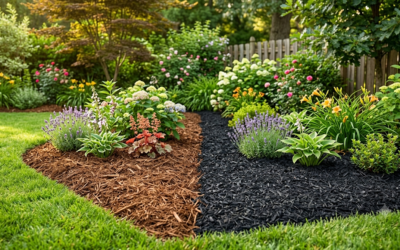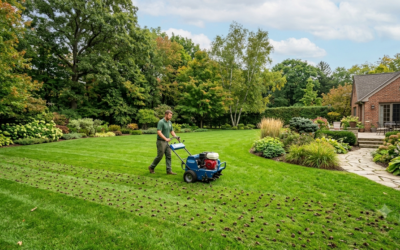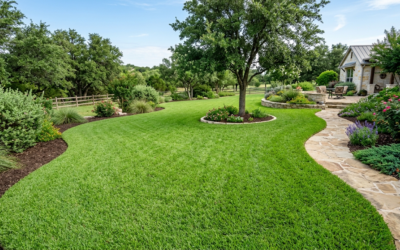

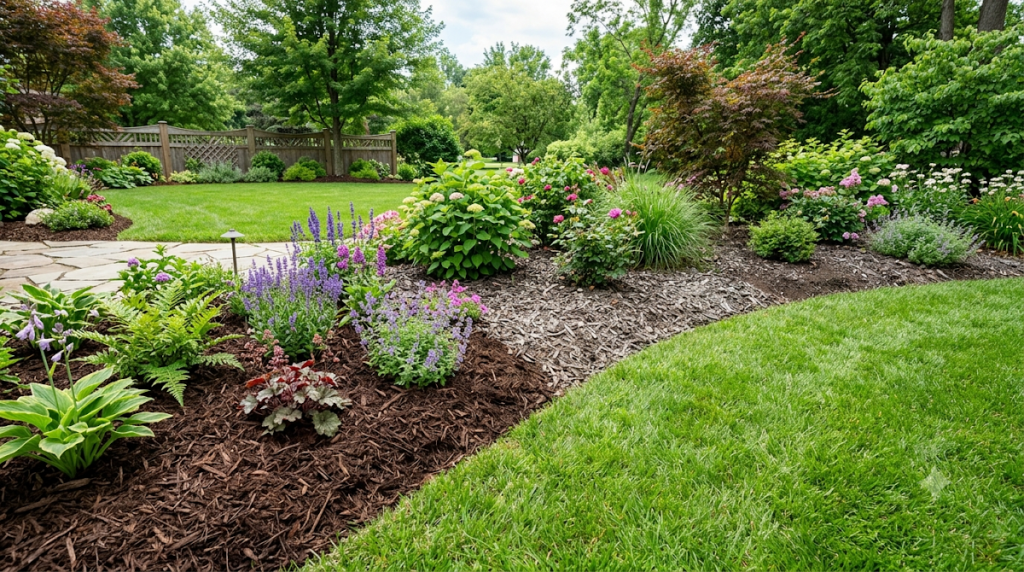
Quick Answer: Bark mulch typically lasts 1 to 3 years before it breaks down and loses its color and weed-suppressing power. Fine shredded bark needs replacing every 1\u20132 years, while large bark nuggets can last 3 years or more. Replace when the layer thins to under 2 inches or the color fades to gray.
How Long Does Bark Mulch Last?
Bark mulch is the most popular organic mulch for flower beds, tree rings, and pathways\u2014and for good reason. It suppresses weeds, retains soil moisture, moderates soil temperature, and slowly feeds your soil as it decomposes. But unlike stone or rubber mulch, bark is a living material that breaks down over time.
On average, bark mulch lasts 1 to 3 years. The exact lifespan depends on the bark type, particle size, your climate, and how deep you applied it. Here’s the honest breakdown:
| Bark Mulch Type | Typical Lifespan | Best Use | Replacement Signal |
|---|---|---|---|
| Shredded bark (fine) | 1\u20132 years | Flower beds, slopes | Layer under 2″, color faded |
| Double-shredded bark | 1.5\u20132.5 years | General beds, borders | Thinning, gray surface |
| Bark nuggets (medium) | 2\u20133 years | Trees, shrubs, paths | Nuggets crumbling, layer thin |
| Large bark nuggets | 3\u20134 years | High-traffic paths, play areas | Severe breakdown, compaction |
| Pine bark fines | 1\u20132 years | Acid-loving plants | Disappearing, soil exposed |
Why Bark Mulch Breaks Down (The Science)
Bark decomposes through the action of soil microbes, fungi, and insects that consume the organic matter. The rate of decomposition is driven by three factors:
- Moisture: Wet, humid conditions accelerate breakdown. Bark in rainy climates may lose 30\u201350% of its volume in a single year.
- Heat: Warm soil temperatures (above 70\u00b0F) speed up microbial activity. Hot, humid summers are the fastest decomposition window.
- Particle size: Fine, shredded bark has more surface area per volume, so it decomposes faster than large, chunky nuggets.
As bark breaks down, it turns into a soil-like material called humus. This is actually beneficial\u2014it enriches your soil\u2014but it means the mulch layer physically shrinks. A 3-inch layer of shredded bark can drop to 1.5 inches within 18 months.
How to Know When Bark Mulch Needs Replacing
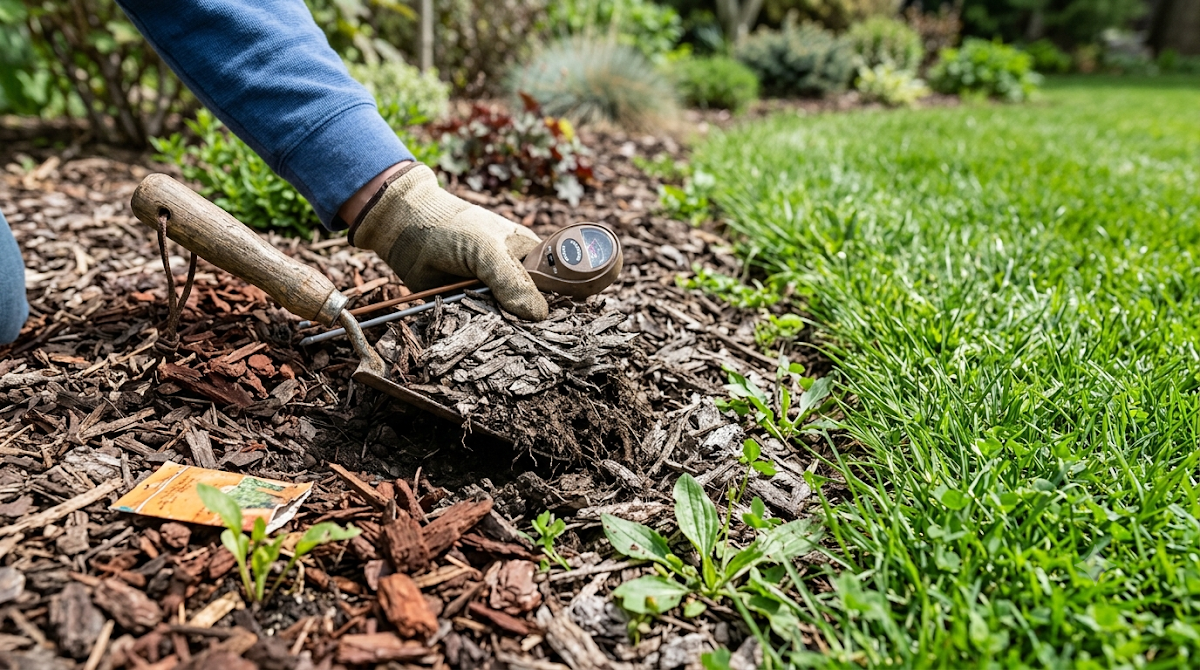
Don’t rely on the calendar alone. Check your mulch beds every spring and fall with these four diagnostic tests:
- The Depth Test: Push a ruler or screwdriver through the mulch to the soil. If the layer is under 2 inches, it’s time to top up or replace.
- The Color Test: Fresh bark has a rich reddish-brown or dark brown hue. When it fades to gray or silver, the protective compounds have washed out\u2014and so has the visual appeal.
- The Texture Test: Pick up a handful. If it crumbles easily into fine, soil-like particles, decomposition is well advanced.
- The Weed Test: If weeds are sprouting through the mulch layer, it’s no longer dense enough to block sunlight and seeds.
Step-by-Step: How to Replace Bark Mulch
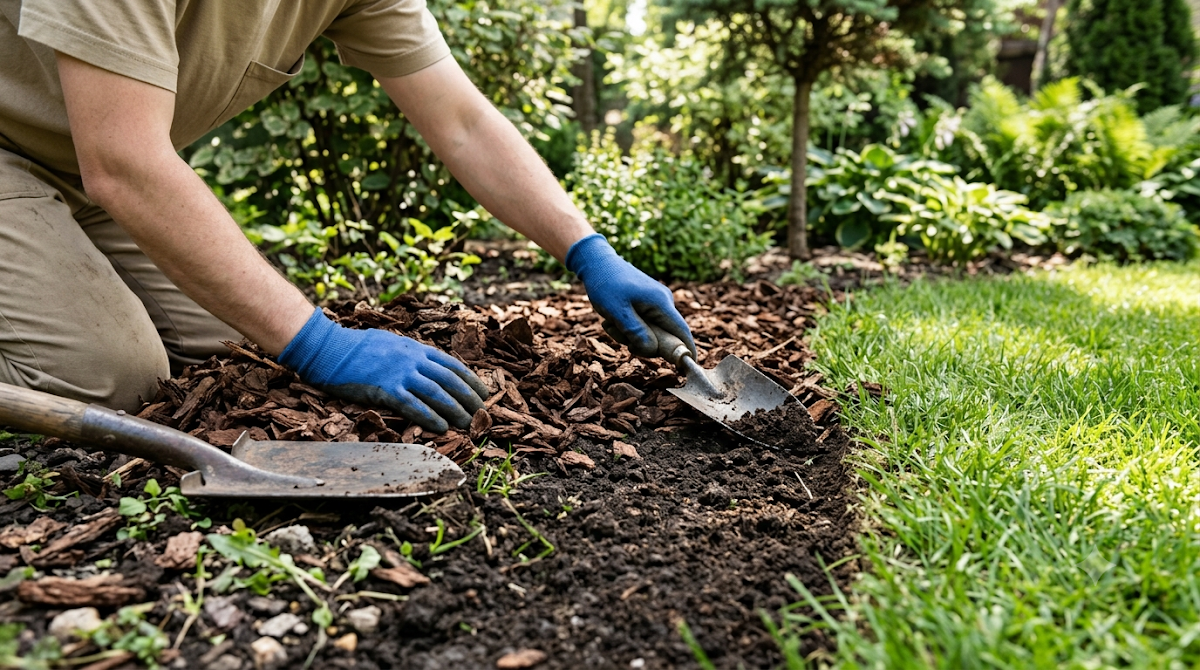
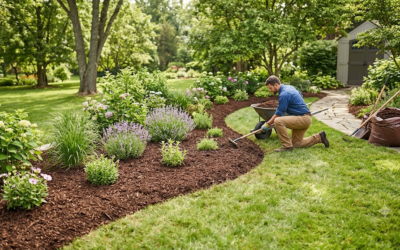
Replacing bark mulch is straightforward, but doing it right protects your plants and saves money. Here’s the exact procedure:
- Wait for dry weather. Mulch is much easier to remove and spread when it’s dry. Aim for a stretch of 2\u20133 days without rain.
- Remove the old layer. Rake up the decomposed bark with a garden rake. You don’t need to remove every particle\u2014a thin layer of humus is fine to leave as soil amendment.
- Check the soil. While the bed is bare, inspect for compaction, exposed roots, or drainage issues. Add compost if the soil looks depleted.
- Edge the bed. Cut a clean edge along lawn borders with a half-moon edger to keep new mulch contained and tidy.
- Apply landscape fabric (optional). For weed-heavy areas, lay permeable landscape fabric before mulching. Skip this in beds with spreading perennials\u2014they need to breathe.
- Spread fresh bark 2\u20133 inches deep. Use a rake to level it. Keep mulch 2\u20133 inches away from tree trunks and plant stems to prevent moisture rot and pest damage.
- Water lightly. A gentle watering settles the mulch and helps it knit together, reducing wind blow-away.
Safety and Turf Health Checks
Two common mistakes ruin mulch beds: piling it too deep and mounding it against trunks. Both cause serious problems:
- Mulch volcanoes: Piling bark against a tree trunk traps moisture, inviting fungal disease, insect borers, and root girdling. Always leave a visible gap around the trunk.
- Over-mulching (4+ inches): Thick layers block oxygen from reaching roots and can cause root rot, especially after heavy rain. Stick to 2\u20133 inches.
- Fresh bark and young plants: Fresh bark can temporarily tie up nitrogen in the soil as it decomposes. If you’re planting new annuals, mix compost into the soil first.
Expert Troubleshooting
What if I mowed or replaced mulch too early?
If you top up mulch in early spring and a late frost hits, don’t panic. Bark mulch actually insulates the soil and protects roots from temperature swings. The main risk is that fresh mulch can delay soil warming, slowing early growth. If your plants look sluggish, pull the mulch back a few inches around stems to let the soil warm up.
Wet weather delays
If rain has soaked your beds and you can’t spread fresh mulch, wait it out. Spreading wet bark creates a dense, matted layer that blocks water and air. If you must work in damp conditions, spread the mulch thinner (1.5\u20132 inches) and rake it lightly to keep it loose. Never walk on saturated beds\u2014you’ll compact the soil.
Mulch keeps washing or blowing away
On slopes or windy sites, shredded bark is the culprit. Switch to medium or large bark nuggets, which are heavier and interlock less. For steep slopes, consider a geotextile fabric under a 3-inch layer of nuggets, or use a tackifier spray to bind the mulch.
Bark Mulch vs. Other Mulch Types
How does bark compare to the alternatives? Here’s a quick reference for planning:
| Mulch Type | Lifespan | Cost per sq ft | Weed Control | Soil Benefit |
|---|---|---|---|---|
| Bark mulch | 1\u20133 years | $0.10\u2013$0.30 | Excellent | Adds organic matter |
| Wood chips | 2\u20134 years | $0.05\u2013$0.15 | Good | Slow decomposition |
| Grass clippings | 1\u20132 months | Free | Fair | Fast nitrogen release |
| Straw | 6\u201312 months | $0.05\u2013$0.10 | Fair | Adds organic matter |
| Rubber (inorganic) | 10+ years | $0.50\u2013$1.00 | Excellent | None |
| Stone/gravel | Permanent | $0.50\u2013$1.50 | Excellent | None |
Frequently Asked Questions
How often should I replace bark mulch?
Most homeowners should replace or top up bark mulch every 1 to 2 years. Fine shredded bark breaks down fastest and needs annual attention, while large nuggets can go 2\u20133 years. The best approach is to check depth and color each spring\u2014if the layer is under 2 inches or looks gray, it’s time to act.
Does bark mulch need to be removed before adding new mulch?
Not always. If the old layer is still 2+ inches deep and intact, you can simply top it up with 1 inch of fresh bark. But if the old mulch has decomposed into a thin, soil-like layer, remove it first. Piling new mulch on top of fully decomposed bark can create a thick, water-blocking mat and raise the bed level too high.
What’s the best time of year to replace bark mulch?
Late spring (after the last frost) and early fall are ideal. Spring replacement gives you fresh color for the growing season and helps retain moisture through summer heat. Fall replacement protects roots through winter and gives the mulch time to settle. Avoid mulching in the heat of midsummer\u2014fresh bark can trap too much heat around shallow roots.
How deep should bark mulch be applied?
Aim for 2 to 3 inches for most beds. Less than 2 inches won’t suppress weeds effectively; more than 4 inches can suffocate roots and encourage fungal disease. For tree rings, keep the mulch 2\u20133 inches away from the trunk and never mound it up against the bark.
Final Verdict
Bark mulch is a smart, budget-friendly choice for most landscapes, but it’s not a set-and-forget material. Plan to refresh your beds every 1 to 2 years, check depth and color each spring, and always keep it 2\u20133 inches deep and away from trunks. With this simple schedule, your beds will stay vibrant, weed-free, and healthy for years to come. For related insights, see our detailed guide on Plant Perennial Ryegrass Seed.