
Quick Answer: Apply a pre-emergent herbicide when soil temperatures consistently reach 55\u00b0F for 3-5 days, typically in early spring. Use a spreader for granular products or a pump sprayer for liquids, applying evenly across your lawn. Water lightly within 3 days to activate the chemical barrier before weed seeds germinate.
Pre-emergent herbicides are the single most effective tool for preventing crabgrass, foxtail, and dozens of other annual weeds before they ever appear. Unlike post-emergent treatments that kill existing weeds, pre-emergents create a chemical barrier in the top inch of soil that stops seed germination at the cellular level.
As a turfgrass agronomist with over two decades of field experience, I’ve seen homeowners waste hundreds of dollars on poorly timed applications. The difference between a weed-free lawn and a crabgrass-infested mess comes down to timing, product selection, and application technique. This guide covers everything you need to know to get it right the first time.
Understanding Pre-Emergent Herbicide Timing
The cardinal rule of pre-emergent application is simple: timing beats product selection every time. You can buy the most expensive herbicide on the market, but apply it two weeks too late and you’ll have crabgrass all summer.
Pre-emergents must be applied before weed seeds germinate. Once crabgrass or other weeds break through the soil surface, pre-emergent products become useless. You’ll need post-emergent herbicides to kill established weeds, which is always a less desirable approach.
Soil Temperature: Your Application Trigger
Forget calendar dates. The only reliable indicator for pre-emergent timing is soil temperature at a 4-inch depth. Here’s what the research shows:
| Soil Temperature | Action Required | Weed Risk Level |
|---|---|---|
| Below 50\u00b0F | Too early \u2014 product may break down before germination | Low |
| 50-54\u00b0F | Monitor closely \u2014 application window opening | Low-Medium |
| 55\u00b0F (3-5 consecutive days) | Apply immediately \u2014 optimal window | Medium |
| 58-65\u00b0F | Late but still effective \u2014 apply ASAP | High |
| Above 65\u00b0F | Too late for first application \u2014 some germination likely occurred | Very High |
Invest in a soil thermometer (typically $10-15) and check temperatures at 8 AM daily starting in late February for warm-season grasses or mid-March for cool-season lawns. Consistency matters \u2014 a single warm day doesn’t count. You need 3-5 consecutive days at or above 55\u00b0F to trigger application.
Choosing Between Granular Weed Killer and Liquid Formulations
Both formats work effectively, but each has distinct advantages depending on your situation:
Granular Pre-Emergents
Granular products like Scotts Halts or The Andersons Barricade are applied with a broadcast spreader. They’re ideal for homeowners because they’re easier to apply evenly, don’t require mixing, and pose less risk of drift onto desirable plants. Most granular formulations include fertilizer, giving you a two-in-one application.
Liquid Pre-Emergents
Liquid formulations like Quali-Pro Prodiamine 65 WDG provide more precise coverage and faster soil absorption. Professional lawn care companies prefer liquids because they can calibrate exact application rates and achieve more uniform coverage. However, they require a pump sprayer or hose-end applicator and careful calibration to avoid over- or under-application.
Active Ingredients Compared
Understanding active ingredients helps you select the right product for your grass type and weed pressure:
| Active Ingredient | Best For | Duration | Notes |
|---|---|---|---|
| Pendimethalin | General use, most grass types | 60-90 days | Found in Scotts Halts; requires repeat application for season-long control |
| Prodiamine | Longer residual control | 90-120 days | Found in Barricade and Quali-Pro; better single-application coverage |
| Dithiopyr | Established lawns, post-emergent activity | 90-120 days | Unique ability to kill young crabgrass (1-2 tillers) while preventing new germination |
| Indaziflam | Extended control landscapes | 120+ days | Found in Specticle; not for use on residential turf |
Step-by-Step Application Procedure

Follow this exact sequence for optimal results:
Step 1: Prepare Your Lawn (Day Before Application)
Mow your lawn to normal height and bag clippings. Remove any debris, leaves, or thatch buildup that could prevent the product from reaching the soil surface. Mark sprinkler heads and landscape features to avoid overspray or over-application in concentrated areas.
Step 2: Calibrate Your Equipment
For granular products, set your broadcast spreader to the manufacturer’s recommended setting for your specific product. Walk at a consistent pace (approximately 3 mph) and overlap passes by 6-12 inches to prevent gaps. For liquid applications, calibrate your sprayer to deliver the exact rate specified on the label \u2014 typically 1-2 gallons of solution per 1,000 square feet.
Step 3: Apply the Product
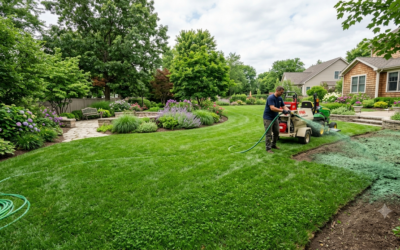
Apply in a systematic pattern, starting along the perimeter and working inward with parallel passes. Maintain consistent speed and overlap. Avoid stopping and starting in the same area, which creates hot spots of over-application that can damage turf.
Step 4: Activate with Water
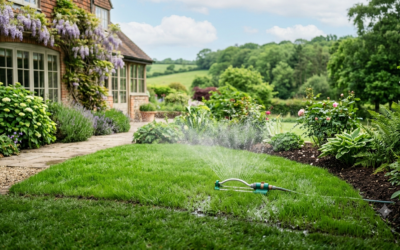
Water your lawn with 0.25 to 0.5 inches of irrigation within 3 days of application. This moves the herbicide into the top 1-2 inches of soil where weed seeds germinate. Without activation, the product sits on the surface and provides minimal protection. If rain is forecast within 3 days, skip irrigation.
Grass Type Compatibility Guide
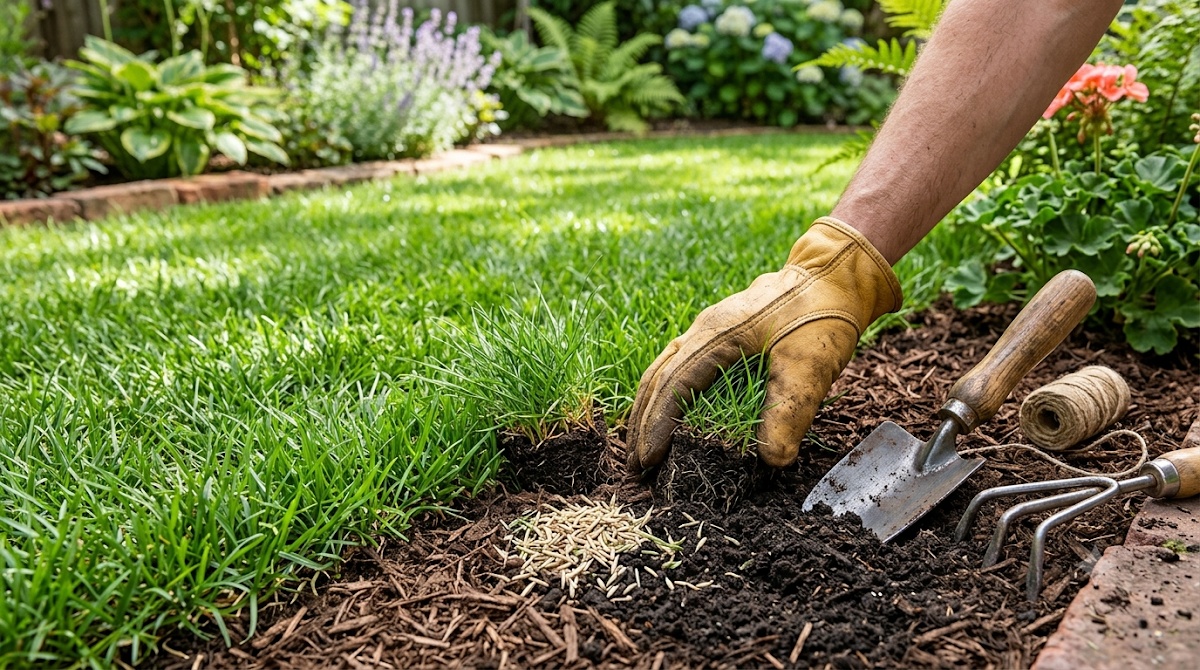
Not all pre-emergents are safe for all grass types. Applying the wrong product can damage or kill your lawn:
| Grass Type | Safe Pre-Emergents | Products to Avoid |
|---|---|---|
| Kentucky Bluegrass | All standard pre-emergents | None \u2014 very tolerant |
| Fine/Fescue Tall Fescue | Pendimethalin, Prodiamine, Dithiopyr | High-rate applications in heat |
| Ryegrass | Pendimethalin, Prodiamine | Avoid application during germination period |
| Bermudagrass | All standard pre-emergents | None \u2014 very tolerant |
| Zoysiagrass | Pendimethalin, Prodiamine | Avoid excessive rates |
| St. Augustinegrass | Prodiamine (low rate), Dithiopyr | Pendimethalin at high rates |
| Centipedegrass | Prodiamine (low rate only) | Pendimethalin \u2014 phytotoxic risk |
Expert Troubleshooting: Common Mistakes and Solutions
Problem: You Applied Too Early
If you applied pre-emergent when soil temperatures were below 50\u00b0F, the product may break down before weed seeds germinate in late spring. Solution: Mark your calendar for a second application 8-10 weeks after the first, following the product’s maximum annual rate guidelines.
Problem: You Applied Too Late
If soil temperatures exceeded 65\u00b0F before application, some germination has likely occurred. Pre-emergent won’t kill existing seedlings. Solution: Apply a post-emergent herbicide containing quinclorac or dicamba to kill young crabgrass, then apply pre-emergent to prevent additional germination throughout the season.
Problem: Wet Weather Delays
If heavy rain prevents application during the optimal window, you have two options. First, apply as soon as the lawn is dry enough to walk on without creating ruts. Second, if the delay pushes you past 65\u00b0F soil temperature, combine pre-emergent with a post-emergent product for immediate and preventive control.
Problem: Uneven Application
Striping or patchy results indicate inconsistent spreader speed or improper overlap. Unfortunately, there’s no fix after application. Prevention is key: practice your walking pattern before loading product, use marking flags to track completed passes, and maintain a consistent 3 mph pace.
Fall Pre-Emergent Applications
Most homeowners focus on spring applications, but fall pre-emergent treatments prevent winter annuals like poa annua (annual bluegrass), henbit, and chickweed. Apply when soil temperatures drop below 70\u00b0F in early fall (typically September in northern regions, October in the South). This single application reduces spring weed pressure by 50-70%.
Frequently Asked Questions
Can I apply pre-emergent and seed at the same time?
No. Pre-emergent herbicides prevent all seeds from germinating, including grass seed. If you need to overseed, wait at least 12-16 weeks after pre-emergent application, or choose a product with a shorter residual period. Alternatively, apply pre-emergent in spring and seed in fall, or vice versa.
How long does pre-emergent last?
Most pre-emergent products provide 60-120 days of protection depending on the active ingredient, application rate, and environmental conditions. Pendimethalin typically lasts 60-90 days, while prodiamine can provide 90-120 days of residual control. Heavy rainfall and high temperatures accelerate breakdown.
Will pre-emergent kill existing weeds?
No. Pre-emergent herbicides only prevent seed germination \u2014 they have no effect on established weeds. If you have existing crabgrass or other weeds, you’ll need a post-emergent herbicide. Some products like dithiopyr can kill very young crabgrass seedlings (1-2 tiller stage), but this is the exception, not the rule.
Is it safe to apply pre-emergent around flower beds and gardens?
Exercise caution. Pre-emergent herbicides will prevent flower and vegetable seeds from germinating if they contact the soil. Keep granular products at least 3-6 feet away from garden beds. For liquid applications, use cardboard shields to prevent drift. Established perennials and shrubs are generally safe, but avoid direct contact with foliage.
Pre-emergent herbicides represent the foundation of a proactive lawn care strategy. By timing your application to soil temperature rather than calendar dates, selecting the right active ingredient for your grass type, and following proper application techniques, you’ll achieve the weed-free lawn that reactive treatments simply cannot match. Start monitoring soil temperatures now, and you’ll be ready to act when the window opens. For related insights, see our detailed guide on Plant Annual Ryegrass Seed.