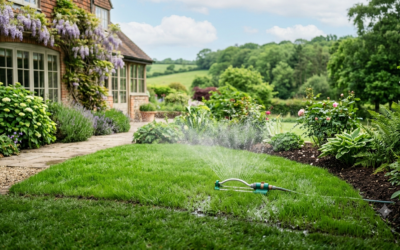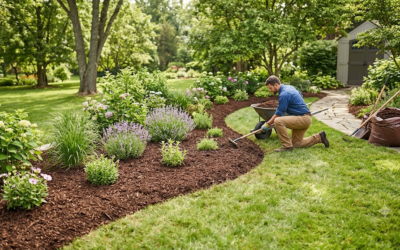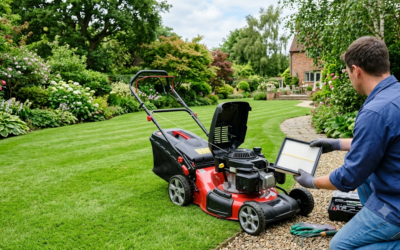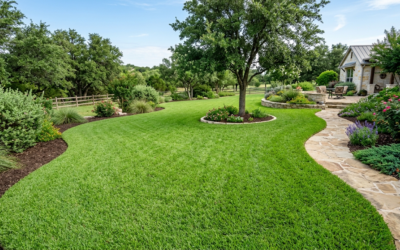

Quick Answer: Plant annual ryegrass seed when soil temperatures hit 55\u201365\u00b0F (usually 4\u20136 weeks before your first frost). Rake the soil, sow at 10\u201315 lbs per 1,000 sq ft, rake again, and roll. Water lightly twice daily until germination (5\u201310 days). Mow at 2\u20133 inches once seedlings reach 3 inches tall.
Annual Ryegrass vs. Perennial Ryegrass Seed: Know the Difference
Before you buy a single bag of seed, understand what you’re planting. Annual ryegrass (Lolium multiflorum) is a fast-growing, cool-season grass that lives for one growing season. Perennial ryegrass (Lolium perenne) returns year after year. The competitor’s guide covers perennial; this guide focuses on annual\u2014the smarter choice for temporary cover, winter overseeding, and erosion control.
| Feature | Annual Ryegrass | Perennial Ryegrass |
|---|---|---|
| Lifespan | 1 season (dies in summer heat) | 2\u20133+ years |
| Germination | 5\u201310 days | 5\u201310 days |
| Seed Rate (new lawn) | 10\u201315 lbs / 1,000 sq ft | 8\u201310 lbs / 1,000 sq ft |
| Mowing Height | 2\u20133 inches | 1.5\u20133.5 inches |
| Best Use | Winter overseeding, erosion, temporary cover | Permanent cool-season lawn |
| Heat Tolerance | Very low (dies above 85\u00b0F) | Low (goes dormant) |
| Cost per lb | $1.50\u2013$3.00 | $3.00\u2013$6.00 |
When to Plant Annual Ryegrass Seed: Timing Is Everything

Annual ryegrass is a cool-season grass that thrives in 60\u201375\u00b0F air temperatures. The single most important metric is soil temperature, not air temperature. Use a soil thermometer and check at 1-inch depth.
Optimal Soil Temperature Window
Plant when soil temperatures are consistently between 55\u00b0F and 65\u00b0F. Below 50\u00b0F, germination slows dramatically and can take 14\u201321 days. Above 75\u00b0F, seedlings stress and often bolt (produce seed heads prematurely), reducing turf quality.
Regional Planting Calendar
Count backward from your average first frost date:
- Northern states (Zone 5\u20136): Plant late August to mid-September.
- Transition zone (Zone 7): Plant mid-September to early October.
- Southern states (Zone 8\u20139): Plant October to November for winter overseeding of warm-season lawns.
You need 4\u20136 weeks of growing time before the first hard frost (28\u00b0F or below) for roots to establish.
Step-by-Step: How to Plant Annual Ryegrass Seed
Step 1: Prepare the Soil (7\u201310 Days Before Seeding)
Annual ryegrass tolerates poor soil, but it performs best with good seed-to-soil contact. Test your soil pH first\u2014aim for 6.0\u20137.0. If pH is below 5.5, apply lime at the rate recommended on your soil test and wait 7\u201310 days before seeding.
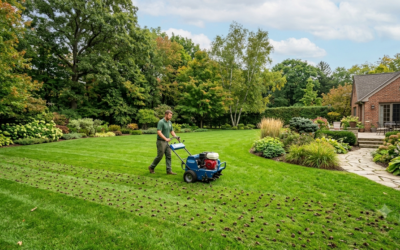
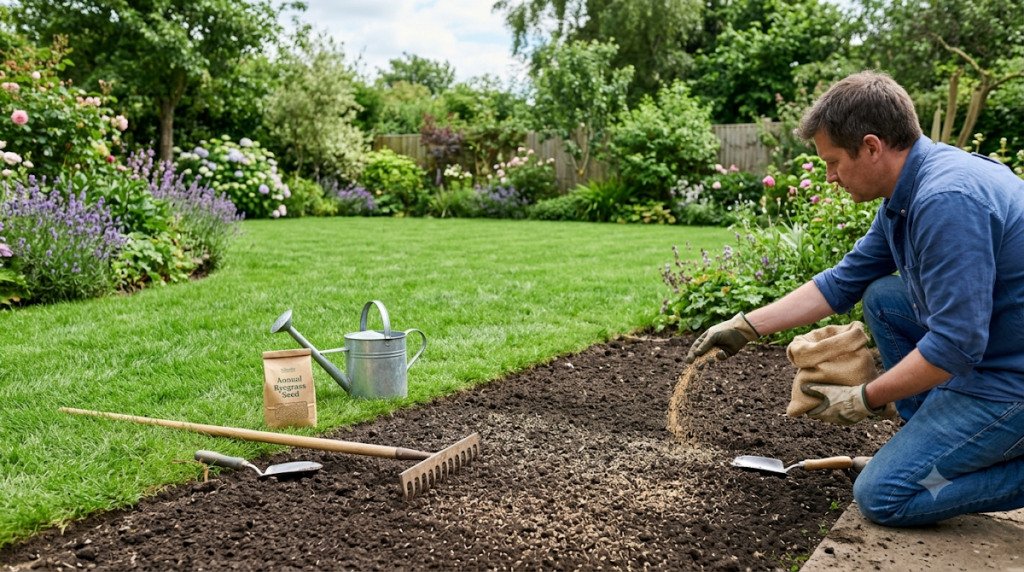
Remove debris, rocks, and existing weeds. Till or rake the top 1\u20132 inches of soil to create a loose, crumbly seedbed. Level low spots to prevent standing water, which rots seed.
Step 2: Sow the Seed (The Critical Window)
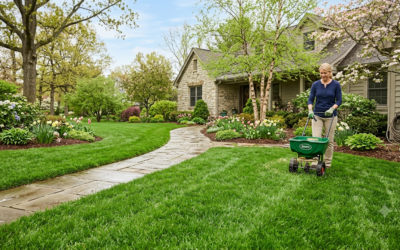
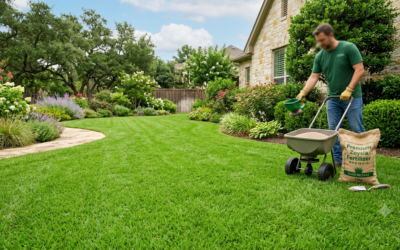
Use a broadcast spreader for even coverage. Set the spreader to the manufacturer’s setting for ryegrass (typically 4\u20136 on a 0\u201310 scale). Apply half the seed in one direction, then the other half perpendicular for uniform distribution.
Seed rate: 10\u201315 lbs per 1,000 sq ft for a new lawn. For overseeding an existing warm-season lawn, use 5\u201310 lbs per 1,000 sq ft.
Step 3: Rake and Roll for Seed-to-Soil Contact
Lightly rake the seeded area to work seed \u00bc to \u00bd inch deep. Deeper burial prevents germination. Then roll the area with a lawn roller (fill it one-third full of water) to press seed firmly against soil. This contact is non-negotiable\u2014seed sitting on the surface dries out and dies.
Step 4: Water Correctly (The #1 Failure Point)
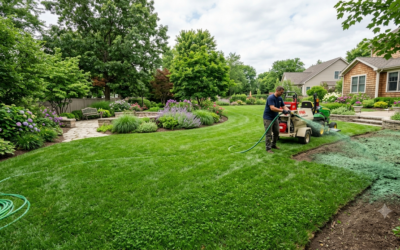
Keep the top \u00bd inch of soil consistently moist\u2014never saturated, never dry. Water 2\u20133 times daily for 5\u201310 minutes each session until germination (5\u201310 days). After germination, reduce to once daily, then taper to deep, infrequent watering (1 inch per week) once established.
Step 5: First Mow
Mow when seedlings reach 3 inches tall, cutting back to 2 inches. Use a sharp blade\u2014dull blades tear young seedlings and invite disease. Never remove more than one-third of blade height in a single mowing.
Expert Troubleshooting: When Things Go Wrong
You Mowed Too Early
If you mowed before roots established (before 3 inches tall), seedlings may pull up. Stop mowing immediately. Water lightly and wait 7\u201310 days for recovery. If large bare patches appear, reseed those areas at 10 lbs per 1,000 sq ft.
Wet Weather Delays Germination
Heavy rain can wash seed away or cause crusting. If seed washes into clumps, rake gently to redistribute. If soil crusts, break it with a light rake\u2014seedlings can’t push through hard crust. Skip watering on rainy days; overwatering causes damping-off disease (seedlings rot at soil line).
No Germination After 14 Days
Check soil temperature with a thermometer. If it’s below 50\u00b0F, germination will be slow\u2014wait. If soil is dry at \u00bd-inch depth, you’re underwatering. If seed was buried deeper than \u00bd inch, it likely rotted\u2014reseeding is your only fix.
Common Mistakes to Avoid
- Planting too early: Soil above 75\u00b0F causes poor germination and disease.
- Planting too late: Less than 4 weeks before frost means weak roots that winter-kill.
- Skipping soil prep: Seed on hard, compacted soil has poor contact and fails.
- Overwatering: Saturated soil rots seed and invites fungal disease.
- Using a dull mower blade: Tears seedlings, causing brown tips and disease entry points.
Annual Ryegrass Care After Establishment
Once established (3\u20134 weeks after germination), annual ryegrass needs minimal care:
- Water: 1 inch per week (adjust for rainfall).
- Mow: Keep at 2\u20133 inches; mow weekly during active growth.
- Fertilize: Apply 1 lb of nitrogen per 1,000 sq ft 3\u20134 weeks after germination, then again in late winter.
- Watch for disease: In humid, warm weather, watch for gray leaf spot and red thread. Improve airflow and avoid evening watering.
Frequently Asked Questions
1. How long does annual ryegrass take to germinate?
With soil temperatures at 55\u201365\u00b0F and consistent moisture, annual ryegrass germinates in 5\u201310 days. At cooler temperatures (50\u00b0F or below), expect 14\u201321 days. At soil temperatures above 75\u00b0F, germination is erratic and seedlings often fail.
2. Can I plant annual ryegrass in the spring?
Yes, but only in cooler climates (zones 5\u20136) and only in early spring (March\u2013April) before soil exceeds 65\u00b0F. In warmer zones, spring-planted annual ryegrass bolts quickly in summer heat and dies, wasting your seed and effort. Fall planting is almost always superior.
3. How much annual ryegrass seed do I need?
For a new lawn, use 10\u201315 lbs per 1,000 sq ft. For overseeding an existing warm-season lawn for winter color, use 5\u201310 lbs per 1,000 sq ft. A 50-lb bag covers roughly 3,300\u20135,000 sq ft depending on your rate.
4. Will annual ryegrass come back next year?
No. Annual ryegrass dies when summer temperatures exceed 85\u00b0F. Some seed may drop and germinate the following fall, but this is unreliable. If you want permanent green, plant perennial ryegrass or a cool-season blend instead. Annual ryegrass is strictly a temporary solution.
Written by Steven W. Halloway, Master Turfgrass Agronomist, GardenReview.us For related insights, see our detailed guide on Fall Lawn Care.