
Quick Answer: Zoysia grass requires 2-4 lbs of Nitrogen per 1,000 sq ft annually, applied in late spring when soil temperatures reach 65\u00b0F. Use a balanced 15-0-15 or slow-release granular fertilizer every 6-8 weeks during the active growing season (May-September) for optimal density and color.
Zoysia grass is a warm-season turfgrass prized for its dense growth, drought tolerance, and low maintenance requirements. However, achieving that lush, carpet-like appearance that makes zoysia the envy of the neighborhood requires understanding precisely when, how, and what to feed it. Over-fertilization is the number one mistake homeowners make with zoysia, leading to excessive thatch buildup, increased disease susceptibility, and unnecessary maintenance costs.
This comprehensive guide covers everything from soil testing to seasonal application schedules, ensuring your zoysia lawn thrives year after year without the guesswork.
Understanding Zoysia’s Nutrient Requirements
Zoysia grass has distinctly different nutritional needs compared to cool-season grasses like Kentucky bluegrass or tall fescue. As a warm-season grass, zoysia enters dormancy when soil temperatures drop below 55\u00b0F and doesn’t require fertilization during winter months. Its aggressive growth habit means it naturally produces dense turf, but this same characteristic makes it prone to thatch accumulation when over-fertilized.
The key metrics every zoysia owner should know:
Annual Nitrogen Requirement: 2-4 lbs per 1,000 sq ft (split across 3-4 applications)
Ideal N-P-K Ratio: 15-0-15, 24-0-10, or similar high-nitrogen formulations with potassium
Optimal Soil pH: 6.0-7.0
Thatch Tolerance: Keep below 0.5 inches to prevent disease and insect problems
When to Fertilize Zoysia Grass: The Soil Temperature Rule
Timing is everything with zoysia fertilization. Apply fertilizer too early, and you’re wasting money on dormant grass that can’t absorb nutrients. Apply too late in the season, and you risk stimulating tender growth that won’t harden off before winter dormancy.
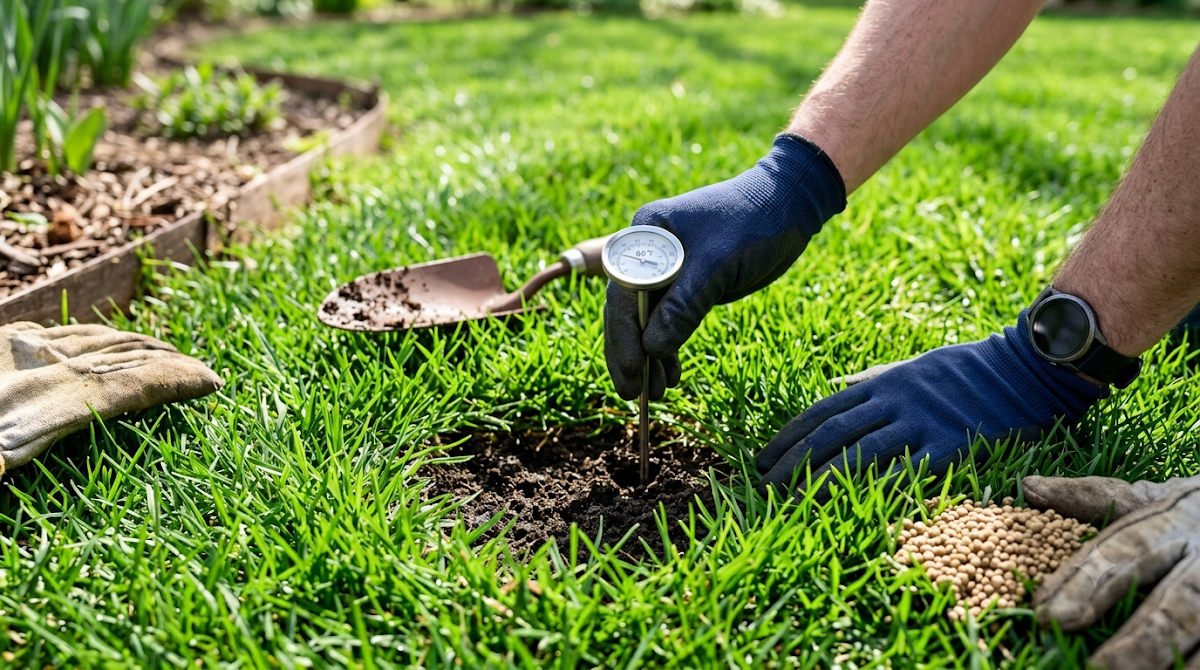
The Golden Rule: Wait until soil temperatures consistently reach 65\u00b0F at a 4-inch depth before your first application. Use a soil thermometer for accuracy\u2014don’t rely on air temperature alone, which can be misleading in spring.
For most transition zone and southern lawns, this translates to:
| Application Timing | Soil Temperature | Nitrogen Rate | Purpose |
|---|---|---|---|
| First Application | 65\u00b0F consistent | 1 lb/1,000 sq ft | Green-up and initial growth |
| Second Application | 6-8 weeks later | 1 lb/1,000 sq ft | Peak season maintenance |
| Third Application | 6-8 weeks later | 1 lb/1,000 sq ft | Mid-summer sustenance |
| Final Application | Late August/Early Sept | 0.5-1 lb/1,000 sq ft | Fall hardening (optional) |
Choosing the Right Fertilizer for Zoysia
Not all fertilizers are created equal for zoysia grass. The formulation you choose directly impacts growth rate, thatch development, and long-term lawn health.
Granular vs. Liquid Fertilizers
Granular (Recommended): Slow-release granular fertilizers provide consistent nutrient delivery over 6-8 weeks, reducing the risk of nitrogen burn and excessive growth spurts. Look for products with at least 50% slow-release nitrogen (SRN). Examples include Milorganite (6-4-0), Scotts Turf Builder Southern (32-0-4), or Lesco 24-0-11.
Liquid: Liquid fertilizers offer faster green-up but require more frequent applications (every 4-6 weeks). They’re useful for correcting deficiencies quickly but aren’t ideal for routine maintenance due to the risk of over-application.
What to Look For on the Label
When shopping for zoysia fertilizer, prioritize these label features:
High Nitrogen (N): The first number should be significantly higher than phosphorus and potassium for established lawns
Low or Zero Phosphorus (P): Unless soil test indicates deficiency, zoysia needs minimal phosphorus
Potassium (K): Essential for drought and disease resistance; look for at least 3-5% K
Slow-Release Formulation: Methylene urea, sulfur-coated, or polymer-coated nitrogen sources
Step-by-Step Fertilization Procedure
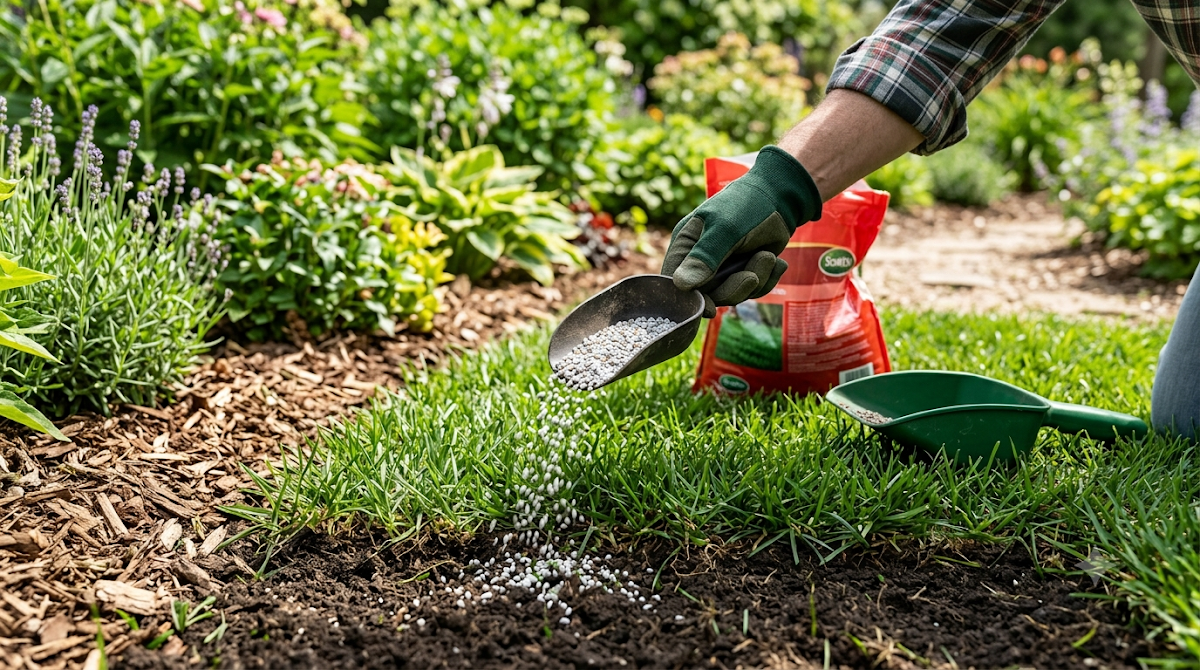
Follow this precise application process to maximize nutrient uptake and minimize waste:
Step 1: Soil Test (Do This First)
Before applying any fertilizer, conduct a soil test through your local cooperative extension service. This $15-25 test reveals pH levels, nutrient deficiencies, and organic matter content. Zoysia performs best at pH 6.0-7.0. If pH is below 6.0, apply lime at 50 lbs per 1,000 sq ft and wait 2-3 months before fertilizing.
Step 2: Mow to Proper Height
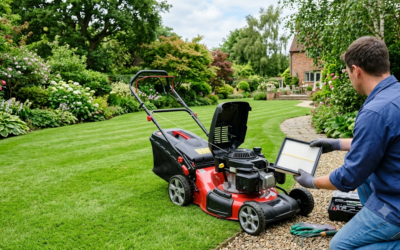
Mow zoysia to 2-2.5 inches 24-48 hours before fertilizing. This height allows fertilizer granules to reach the soil surface rather than getting trapped in tall grass blades. Ensure mower blades are sharp\u2014dull blades tear grass, creating entry points for disease, especially after fertilization when growth accelerates.
Step 3: Apply Fertilizer to Dry Grass
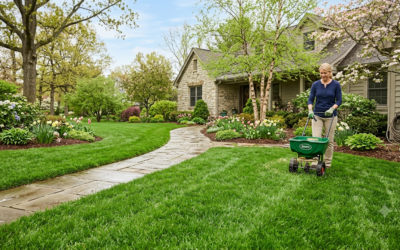
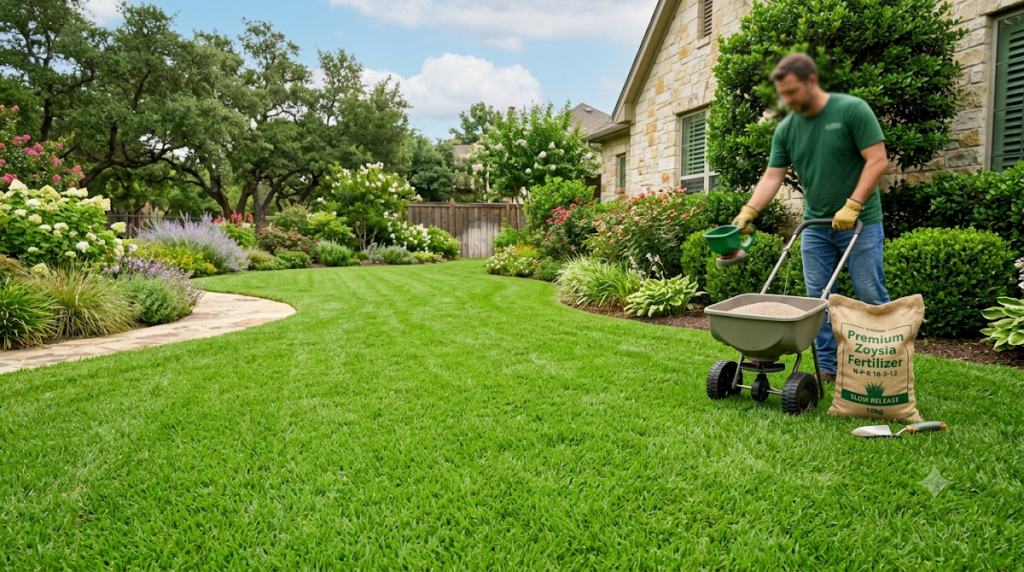
Apply granular fertilizer when grass is completely dry (morning dew has evaporated). Use a broadcast spreader for uniform coverage. Apply half the rate in one direction (north-south), then the remaining half perpendicular (east-west) to prevent striping and ensure even distribution.
Step 4: Water Immediately
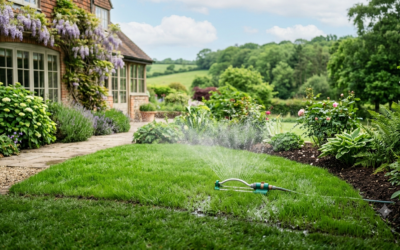
Water the lawn with 0.5 inches of water within 24 hours of application. This activates the fertilizer and begins nutrient absorption. For slow-release products, light daily irrigation for 3-5 days is preferable to one heavy watering.
Step 5: Wait Before Mowing Again
Wait 48-72 hours before mowing after fertilization. This allows granules to dissolve and nutrients to begin absorption. Mowing too soon removes the grass blades that are actively taking up fertilizer, reducing effectiveness by 30-40%.
Seasonal Fertilization Calendar
Here’s your month-by-month guide for zoysia fertilization across different climate zones:
Southern Zone (Zones 8-10): First application in early April, final application by late August
Transition Zone (Zones 6-7): First application in late April/early May, final application by mid-August
Northern Edge of Zoysia Range (Zone 5b-6a): First application in mid-May, final application by early August
Expert Troubleshooting: Common Fertilization Mistakes
Problem: You Fertilized Too Early
If you applied fertilizer before soil temperatures reached 65\u00b0F, the nutrients will sit in the soil unused until temperatures warm. This can lead to nutrient leaching (especially nitrogen) and wasted money. Solution: Don’t apply additional fertilizer when the season warms. Your early application will become available as the grass breaks dormancy. Monitor for excessive green-up in spring, which may require an additional mowing cycle.
Problem: Wet Weather Delays
If rain prevents application or forces you to delay, adjust your schedule accordingly. Never apply fertilizer to wet grass\u2014granules stick to blades and cause leaf burn. Solution: Wait for a 24-hour dry window. If the delay pushes you past your optimal window by more than 2 weeks, reduce the application rate by 25% to avoid late-season growth that won’t harden before dormancy.
Problem: Thatch Buildup
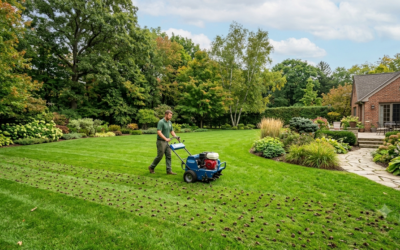
Zoysia’s aggressive growth creates thatch layers exceeding 0.5 inches when over-fertilized. This spongy layer harbors insects and disease while preventing water and nutrient penetration. Solution: Core aerate annually in late spring, reduce nitrogen applications by 25%, and consider dethatching if buildup exceeds 0.75 inches. Never remove more than 1/3 of the thatch layer in a single session.
Problem: Uneven Greening or Yellow Patches
Uneven color after fertilization indicates either uneven application, soil compaction, or drainage issues. Solution: Core aerate compacted areas, ensure your spreader is calibrated correctly (test on a tarp first), and address drainage problems before your next application. For immediate color correction, apply a liquid iron supplement at 2 oz per 1,000 sq ft.
Advanced Tips for Professional-Quality Results
Annual Soil Testing: Test soil every spring to track pH and nutrient levels. Zoysia lawns in acidic soils (pH below 6.0) often show iron and manganese deficiencies even when nitrogen is adequate.
Organic Matter Integration: Topdress with 0.25 inches of compost annually to improve soil biology and reduce fertilizer dependency. Healthy soil biology can reduce nitrogen requirements by 20-30%.
Edge Fertilization: Apply 50% more fertilizer along driveway edges, sidewalks, and high-traffic areas where runoff and wear deplete nutrients faster.
Fall Preparation: The final late-summer application (0.5 lb N per 1,000 sq ft) promotes root growth and carbohydrate storage for winter survival. Don’t skip this step, especially in transition zone climates where zoysia experiences winter stress.
Frequently Asked Questions
How often should I fertilize zoysia grass per year?
Most zoysia lawns require 3-4 fertilizer applications per year, spaced 6-8 weeks apart during the growing season (May through September). The total annual nitrogen should not exceed 4 lbs per 1,000 sq ft. For low-maintenance lawns, 2 applications (late spring and mid-summer) at 1.5 lbs N per 1,000 sq ft each are sufficient. High-traffic lawns or those with sandy soil may benefit from the full 4-application schedule.
Can I use weed-and-feed products on zoysia grass?
Yes, but with caution. Use only products specifically labeled for warm-season grasses. Many weed-and-feed formulations contain herbicides that can stress zoysia, especially during spring green-up. Apply weed-and-feed products when weeds are actively growing (spring or early fall) and temperatures are between 65-85\u00b0F. Avoid applying during summer heat stress or within 4 weeks of other herbicide applications.
What’s the best fertilizer for newly installed zoysia sod?
Newly installed zoysia sod requires a starter fertilizer with higher phosphorus content (10-20-10 or similar) to promote root establishment. Apply 1 lb of starter fertilizer per 1,000 sq ft immediately after installation, then switch to regular maintenance fertilization 6-8 weeks later. Water new sod daily for the first 2 weeks, then transition to deep, infrequent watering to encourage deep root growth.
Should I fertilize zoysia grass in the fall?
A light fall application (0.5 lb N per 1,000 sq ft) in late August or early September is beneficial for zoysia in transition zone climates. This promotes root growth and carbohydrate storage before dormancy. However, avoid fertilizing after mid-September in zones 6-7, as late-season nitrogen stimulates tender growth vulnerable to frost damage. In zones 8-10, the final application can extend to early October.
Conclusion
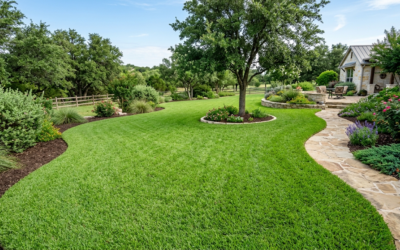
Proper zoysia grass fertilization isn’t about applying more\u2014it’s about applying the right amount at the right time with the right formulation. By following soil temperature guidelines, choosing slow-release products, and adhering to the 2-4 lbs annual nitrogen rule, you’ll develop a dense, disease-resistant lawn that requires less maintenance over time. Remember: the best zoysia lawns are those that receive just enough nutrition to thrive without excess growth that creates additional work.
Start with a soil test, mark your calendar based on soil temperature (not air temperature), and resist the temptation to over-fertilize. Your zoysia will reward you with years of beautiful, low-maintenance turf. For related insights, see our detailed guide on DIY Hydroseeding Guide.