
Are Honda Lawn Mowers Rear Wheel Drive? Complete Guide for 2026
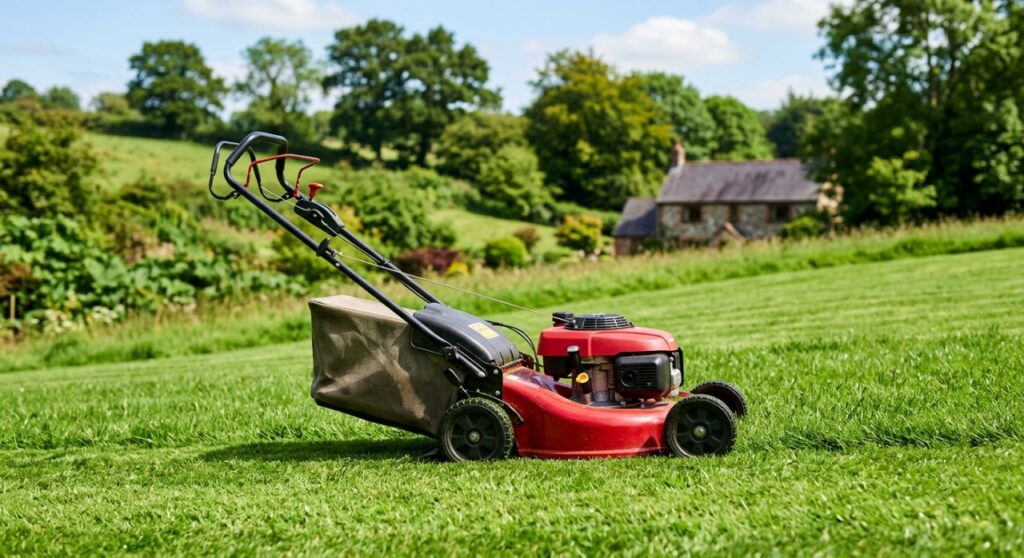
Most Honda self-propelled lawn mowers use rear-wheel drive (RWD). This gives you better traction on slopes, wet grass, and uneven terrain — making Honda one of the top choices for homeowners with challenging yards.
Expert Summary – Honda’s self-propelled mowers are predominantly rear-wheel drive, including the popular HRX, HRN, and HRC series. – Rear-wheel drive provides superior grip on hills and rough terrain compared to front-wheel drive (FWD) systems. – Honda’s Variable Speed Smart Drive system lets riders control ground speed independently of blade speed. – Electric lawn mowers from brands like EGO, Greenworks, and Ryobi also offer rear-wheel drive options, proving RWD is not exclusive to gas engines. – Self-propelled mowers use rear-wheel drive because the weight of the operator naturally shifts backward during mowing, keeping the drive wheels firmly planted.
What “Rear Wheel Drive” Means on a Lawn Mower
Rear-wheel drive means the back wheels power the mower forward, with the engine or motor sending torque to the rear axle.
On a push-style self-propelled mower, this matters enormously. The operator’s weight behind the handle presses down on the rear of the deck, which keeps RWD wheels in solid contact with the ground.
Front-wheel drive mowers, by contrast, can lose traction when you tilt the handle upward to turn or when going uphill — a common frustration that Honda’s RWD design specifically solves.
Are Honda Lawn Mowers Rear Wheel Drive? The Direct Answer
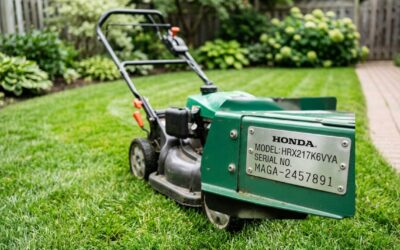
Yes — the majority of Honda self-propelled lawn mowers are rear-wheel drive. This applies to the flagship HRX217 series, the mid-range HRN216 series, and commercial HRC models.
Honda has enginered its drive systems around RWD because their testing consistently showed it outperforms FWD in real-world residential conditions: slopes between 10–15 degrees, thick turf, and damp morning lawns.
Not every Honda mower is self-propelled. The base HRS and HRR push models have no drive system at all — you supply all the propulsion manually.
Step 1: Identify Which Honda Mower Models Are Rear Wheel Drive
Check the model series first — Honda’s lineup splits clearly between drive types.
Honda Self-Propelled RWD Models (2026)
| Model Series | Drive Type | Engine | Best For |
|---|---|---|---|
| HRX217VKA | Rear-Wheel Drive | 187cc Honda GCV200 | Large yards, slopes |
| HRX217HZA | Rear-Wheel Drive | 187cc Honda GCV200 | Premium features, mulch |
| HRN216VKA | Rear-Wheel Drive | 166cc Honda GCV170 | Mid-size yards |
| HRN216VYA | Rear-Wheel Drive | 166cc Honda GCV170 | Variable speed |
| HRC216HDA | Rear-Wheel Drive | 160cc Honda GXV160 | Commercial use |
| HRS216PKA | None (Push) | 160cc Honda GCV160 | Small flat yards |
Key takeaway: If the model number contains a V or H after the deck size (e.g., HRN216V), it signals a self-propelled, variable-speed RWD system.
Step 2: Understand Why Honda Uses Rear-Wheel Drive
Honda chose rear-wheel drive because physics favors it for walk-behind mowers — and the data backs this up.
The Weight Distribution Logic
When you grip a mower handle and walk behind it, your hands exert slight downward pressure at the rear. This shifts the center of gravity toward the back wheels.
- RWD mowers use this natural weight shift as a traction advantage
- FWD mowers fight against it — the front wheels lift slightly on slopes, losing grip
- On a 15-degree incline, RWD can maintain traction where FWD spins or stalls
Why Self-Propelled Lawn Mowers Use Rear-Wheel Drive
Self-propelled lawn mowers use rear-wheel drive because the drive wheels need consistent ground contact, and the operator’s body position ensures that contact is always at the rear.
This is the same principle used in performance cars: power goes to the wheels with the most grip. For a mower being pushed by a human, that’s always the back.
Additional benefits include:
- Easier zero-radius turning — lift the front slightly to pivot without disengaging drive
- Reduced wheel slip on wet grass or morning dew
- Better hill-climbing without the nose dipping or wheels spinning
Step 3: Learn How Honda’s Drive System Actually Works
Honda’s self-propelled system uses a friction-disc transmission connected to the rear axle, controlled by the operator through a thumb-pad or bail lever.
Honda Smart Drive System (HRX Series)
The HRX217 features Honda’s Variable Speed Smart Drive — a thumb-operated control pad on the handle that lets you dial in speed from 0 to 4 mph without stopping.
- Squeeze harder = faster ground speed
- Release = mower slows but blade keeps spinning
- Blade speed and ground speed are completely independent
This is a significant engineering advantage. You can slow to a crawl in thick grass while maintaining full blade RPM — something basic cable-and-puley systems cannot do.
Standard Honda Self-Propel (HRN Series)
The HRN216 uses a simpler single-speed or variable-speed bail lever on the handle. Pull the lever back to engage RWD; release it to stop forward drive.
It’s less refined than the HRX Smart Drive but mechanically robust and easy to service.
Step 4: Compare Honda RWD Against Front-Wheel Drive Competitors
Honda’s RWD outperforms FWD on slopes and thick grass, but FWD has one specific advantage: easier turning on flat, open lawns.
| Feature | Honda RWD | Typical FWD Mower |
|---|---|---|
| Hill traction | ✅ Excellent | ❌ Poor above 10° |
| Wet grass grip | ✅ Strong⚠️ Moderate | |
| Tight turning | ⚠️ Requires slight lift | ✅ Easier pivot |
| Flat lawn use | ✅ Good | ✅ Good |
| Thick turf | ✅ Handles well | ❌ Wheel spin common |
| Operator fatigue | ✅ Lower on slopes | ⚠️ Higher on inclines |
| Drive complexity | ⚠️ More components | ✅ Simpler |
Bottom line: Unless your yard is completely flat and obstacle-free, Honda’s RWD system is the more capable setup.
Step 5: Determine If a Honda RWD Mower Fits Your Yard
Match the drive system to your terrain — not every yard needs the same setup.
You should choose a Honda RWD mower if:
- Your lawn has slopes of 10 degrees or more
- You mow in early morning when grass is wet
- Your turf is thick, dense, or overgrown between cuts
- You have long straight runs where speed variation helps
- You want a mower that holds value and resists mechanical failure
You may be fine with FWD or a push mower if:
- Your yard is under 1,500 sq ft and completely flat
- You rarely encounter slopes or wet conditions
- Budget is the primary concern and terrain is forgiving
- You are physically capable of push mowing without fatigue
Step 6: Do Electric Lawn Mowers Have Rear Wheel Drive?
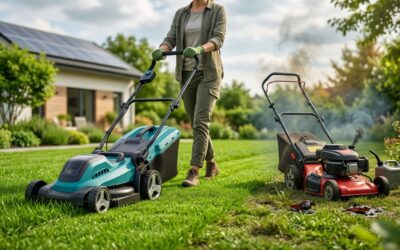
Yes — electric lawn mowers can and do have rear-wheel drive, and the technology is increasingly common in 2026.
Does Electric Lawn Mowers Have Rear Wheel Drive?
Several leading battery-powered electric mowers now offer rear-wheel drive self-propelled systems:
| Brand & Model | Drive Type | Battery | Notable Feature |
|---|---|---|---|
| EGO LM2135SP | Rear-Wheel Drive | 56V 7.5Ah | 21″ deck, Select Cut blade |
| Ryobi RY40180 | Rear-Wheel Drive | 40V 6Ah | Self-propelled, 20″ deck |
| Greenworks MO40L410 | Rear-Wheel Drive | 40V 4Ah | Brushless motor |
| Honda HRX217HZA (gas) | Rear-Wheel Drive | N/A | Benchmark for RWD |
| CRAFTSMAN M275 | Front-Wheel Drive | N/A | Budget FWD option |
Electric RWD mowers use a brushless hub motor or a belt-driven rear axle powered by the battery pack. The physics are identical to gas — the rear wheels still benefit from operator weight distribution.
One key difference: Electric motors deliver instant torque, which means RWD engagement on electric mowers feels more responsive than cable-operated gas systems, especially on inclines.
Step 7: Maintain Your Honda RWD Drive System
Regular maintenance of the drive system adds years to its service life and prevents the most common failure mode: worn friction discs.
Tools Needed for Honda Drive System Maintenance
| Tool / Material | Purpose |
|---|---|
| Honda GCV engine oil (10W-30) | Engine lubrication |
| Drive disc replacement kit | Friction disc wear repair |
| Needle-nose pliers | Cable adjustment |
| Flat-head screwdriver | Belt tension check |
| Brake cleaner spray | Clean drive disc contact surface |
| Torque wrench | Axle bolt re-tightening |
| Work gloves | Hand protection |
Maintenance Steps
- Check drive cable tension at the start of each season. A loose cable means slugish RWD engagement.
- Inspect the friction disc every 50hours of use. A glazed or worn disc slips instead of gripping the drive plate.
- Clean the drive disc contact surface with brake cleaner — never grease it. Lubricant on the friction surface destroys traction.
- Verify rear wheel engagement by engaging the drive on flat ground and watching for wheel spin or hesitation.
- Replace the drive belt every 2–3 seasons or when you notice slipping under load.
Pro Tip: Honda drive discs are inexpensive (typically $8–$15) and a DIY swap takes about30 minutes. Replacing a worn disc immediately prevents damage to the more expensive drive plate.
Pro Tips for Getting the Most from Honda Rear-Wheel Drive
- Engage drive before hitting thick patches — don’t wait until the mower bogs down. Pre-engaging keeps RPMs stable.
- Mow slopes across the face, not up-and-down, even with RWD. Lateral passes are safer and reduce slipping.
- Keep tire pressure consistent — low tire pressure one rear wheel creates uneven traction and pulls the mower sideways.
- Don’t yank the handle to turn — instead, slightly lift the front wheels while pivoting. This prevents premature RWD cable wear.
- Store the mower with the drive disengaged — constant tension on the friction disc during off-season storage accelerates wear.
Common Mistakes to Avoid with Honda RWD Mowers
Mistake 1: Assuming all Honda mowers are self-propelled.
The HRS216 and HRR216 are push models with zero drive assist. Always verify the model suffix before buying.
Mistake 2: Over-lubricating the drive system.
Grease on the friction disc kills traction instantly. Only lubricate the cable ends and pivot points — never the drive disc surface.
Mistake 3: Ignoring drive cable stretch.
A stretched cable makes RWD feel sluggish and unresponsive. Cables are adjustable at the handlebar end — a2-minute fix most owners never do.
Mistake 4: Mowing only in one direction.
Repeated uni-directional mowing causes the RWD system to wear unevenly one side. Vary your mowing pattern each session.
Mistake 5: Comparing RWD Honda to AWD mowers unfairly.
All-wheel drive mowers (like the Toro TimeMaster AWD) cost significantly more and are built for very steep or highly irregular terrain. For most residential lots, Honda RWD is genuinely sufficient.
FAQ: Honda Lawn Mowers and Rear-Wheel Drive
Are all Honda lawn mowers rear-wheel drive?
No. Only Honda’s self-propelled models are rear-wheel drive. Push models like the HRS216 have no drive system. Always check the product description for “self-propelled” before assuming RWD.
Why are self-propelled lawn mowers using rear-wheel drive instead of front?
Self-propelled mowers use rear-wheel drive because operator weight naturally loads the rear wheels, creating the traction needed to pull the mower forward. Front-wheel drive loses contact with the ground on slopes and when the handle is lifted for turning.
Does electric lawn mowers have rear-wheel drive options in 2026?
Yes. Models like the EGO LM2135SP and Ryobi RY401180 featureWD systems powered by brushless electric motors. Electric RWD delivers instant torque and is increasingly competitive with Honda’s gas-powered RWD systems.
Is Honda HRX217 rear-wheel drive?
Yes. The Honda HRX217 is a rear-wheel drive self-propelled mower featuring the Variable Speed Smart Drive thumb control. It is widely considered the benchmark for residential RWD mower performance.
Can I convert a Honda push mower to rear-wheel drive?
Technically possible but not practical. The HRS/HRR push frames lack the drive cable brackets, friction disc housing, and rear axle provisions of the RWD models. Buying a purpose-built HRN216 is far more cost-effective than retrofitting.
Conclusion
Honda lawn mowers — specifically the HRX, HRN, and HRC self-propelled series — are rear-wheel drive, and that design choice is backed by practical physics, field testing, and decades of refinement.
RWD wins on slopes, wet lawns, and dense turf. FWD has a narrow advantage only on small, flat, dry grass — a scenario where a basic push mower often works just as well.
If you’re evaluating electric mowers, RWD options from EGO and Ryobi close the gap significantly in 2026, giving you zero-emission operation without sacrificing drive performance.
Ready to choose? Start with the Honda HRN216VKA for mid-range value or the HRX217VKA for the best residential RWD system available. Both will outperform FWD alternatives on any lawn that isn’t perfectly flat.