
Quick Answer / TL;DR: Scotts lawn mowers were made by several licensed manufacturers — not one factory. John Deere built the well-known Scotts riding tractors (roughly 1998–2002, sold mainly through The Home Depot), while Murray supplied many Scotts walk-behind gas mowers, and American Lawn Mower Company produces modern Scotts-branded reel mowers. Check the model and serial number to confirm your machine’s maker.

“The brand on the hood tells you almost nothing. On licensed brands like Scotts, the model number and serial plate are the only reliable way to identify who actually built the machine — and, more importantly, where to get correct parts.”
— Senior Small-Engine Technician, 20+ years servicing lawn tractors
What You Need
You don’t need a workshop to identify who made your Scotts mower — just the machine’s identification labels and internet access. Important: engine branding alone cannot confirm who built the complete mower. A John Deere-built Scotts tractor may carry a Briggs & Stratton or Kohler engine.
Tools & Information Checklist:
- Model number — found on the frame, deck, rear panel, or operator platform; reveals the product family and likely manufacturer.
- Serial number / Product Identification Number (PIN) — found under the seat, on the rear frame, or near the transmission; confirms production year and configuration.
- Engine model and spec number — found on the blower housing or valve cover; identifies the engine maker (often different from the mower maker).
- Camera or phone — photograph faded labels from several angles before cleaning them.
- Flashlight and soft brush — to expose hidden ID plates under the seat and around frame rails.
- Operator’s manual or parts diagram — online manual archives and dealer parts catalogs reveal shared OEM components.
Key distinction: Scotts is the brand displayed on the machine. The company that licensed the name, assembled the mower, supplied the engine, and sold it through retail may be four different entities.
Step-by-Step Guide: Identifying Who Made Your Scotts Mower
Step 1: Identify Which Type of Scotts Mower You Have
Classify the machine before researching its manufacturer. The answer changes depending on whether you own a riding tractor, gas walk-behind, electric mower, or manual reel mower.
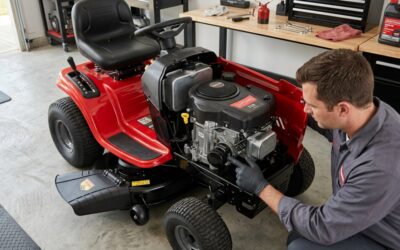
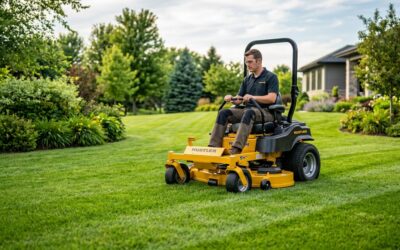
- Scotts riding lawn tractors — The familiar green Scotts tractors were generally built by John Deere in the late 1990s and early 2000s, positioned as retail-channel alternatives to John Deere dealer models. Common examples: S1642, S1742, S2046, S2546.
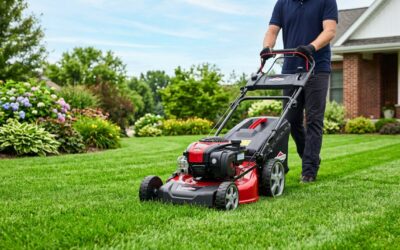
- Scotts walk-behind gas mowers — Many were supplied by Murray under a brand-licensing arrangement.
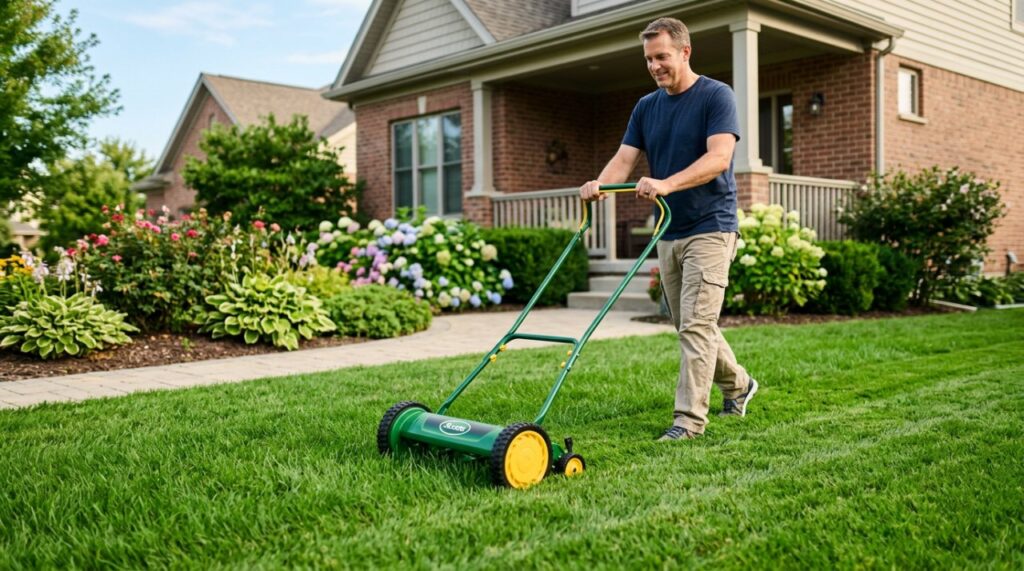
- Scotts reel and electric mowers (modern) — Typically manufactured or distributed by American Lawn Mower Company under license.
💡 Pro Tip: The model code itself offers clues. In the S-series tractors, for example, the number after the “S” indicates horsepower and deck size — an S1742 is roughly a 17 HP machine with a 42-inch deck. These naming conventions mirror John Deere’s internal product codes from the era.
Step 2: Locate and Photograph the Model and Serial Labels
Find the ID plate — under the seat, on the rear frame, or near the transmission on tractors; on the deck or rear housing on walk-behinds. Photograph it from several angles before wiping anything down.
⚠️ Warning: Never scrub identification labels with a wire brush or solvent. Original plates on 20+ year-old machines are frequently the only surviving record of the model and serial number, and dealers need them for parts lookups.
Step 3: Cross-Reference the Model Number
Enter the full model and serial number into the manufacturer’s parts catalog or a reputable parts-database website. If the diagram returns John Deere part numbers for a Scotts S-series tractor, you’ve confirmed a John Deere-built machine. Murray-built walk-behinds typically cross-reference to Murray/Troy-Bilt-era parts systems.
Step 4: Check the Engine Brand Separately
Read the engine’s model and specification number on the blower housing or valve cover. Briggs & Stratton, Kohler, and Tecumseh engines were commonly fitted to Scotts-branded equipment regardless of who assembled the chassis.
💡 Pro Tip: When ordering engine parts, always use the engine’s model and spec number — never the mower’s model number. Two Scotts S1742 tractors from different production runs can carry entirely different engines.
Step 5: Confirm the Production Year and Parts Availability
Use the serial/PIN number to date the machine. John Deere-built Scotts tractors date primarily from 1998 through 2002. Once you’ve confirmed the manufacturer and year, you can source correct filters, blades, belts, and deck components from the matching OEM parts system.
Common Mistakes & Troubleshooting
- Assuming the engine brand is the mower brand. A Briggs & Stratton engine on a Scotts tractor does not mean Briggs built the mower. Always verify the chassis manufacturer through the model/PIN plate.
- Trusting the label color or decals. Aftermarket decal kits and repainted hoods are common on machines this old. Repainted tractors can be misidentified as John Deere or Scotts units. Confirm with the serial number, not cosmetics.
- Cleaning or discarding the ID plate before photographing it. Labels on 1990s–2000s machines are often brittle or faded. If the plate is unreadable, the parts diagram shared with the equivalent John Deere model (for tractors) can help reverse-identify it by deck size and features.
- Confusing Scotts (mowers) with Scotts (fertilizer and seed). The Scotts Miracle-Gro company owns the brand today, but it never manufactured the mowers itself — licensing partners like John Deere, Murray, and American Lawn Mower Company did.
- Ordering parts using only “Scotts + model number.” Many parts sellers don’t list Scotts-branded equipment. If your tractor won’t show up in a parts catalog, search the equivalent John Deere model designation instead — components are frequently identical.
Frequently Asked Questions
Who made Scotts lawn mowers?
Scotts mowers were produced under license by several manufacturers. John Deere built the best-known Scotts riding tractors (S-series, ~1998–2002, sold mainly at The Home Depot), Murray supplied many Scotts walk-behind gas mowers, and American Lawn Mower Company makes modern Scotts-branded reel and electric mowers.
Are Scotts and John Deere mowers the same?
Not the same machine, but closely related. John Deere assembled the Scotts S-series tractors on its own production lines as retail-channel alternatives to dealer-sold John Deere models. Many components — decks, spindles, belts, filters — cross-reference directly between Scotts and equivalent John Deere models.
What years did John Deere make Scotts lawn tractors?
Most John Deere-built Scotts tractors date from approximately 1998 through 2002. Exact model-year confirmation requires the Product Identification Number (PIN), typically located under the seat or on the rear frame.
Where is the model number on a Scotts riding mower?
On riding tractors, check under the seat, on the rear frame, or near the transmission. On walk-behind mowers, look on the deck housing or rear discharge area. Use a flashlight and photograph the label before cleaning it — original plates are often faded.
Does Scotts still make lawn mowers?
Scotts-branded mowers still appear at retail, but the brand is licensed out rather than manufactured in-house. Modern Scotts reel and electric products are generally made or distributed by American Lawn Mower Company. The John Deere-built tractor era ended in the early 2000s.
Who makes the engines in Scotts mowers?
The engine manufacturer is usually different from the mower manufacturer. John Deere-built Scotts tractors commonly used Briggs & Stratton or Kohler engines, while Murray-built walk-behinds often carried Briggs & Stratton or Tecumseh engines. Always order engine parts using the engine’s model and spec number.