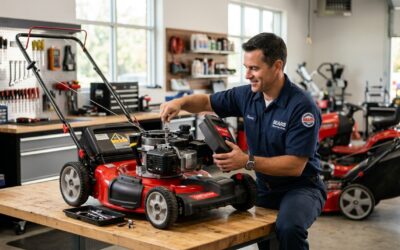

Quick Answer / TL;DR: Most lawn mowers — push, riding, and zero-turn models — are not road legal for regular travel because they lack required safety equipment like lights, mirrors, turn signals, and road-rated tires. Many jurisdictions allow short crossings or brief road travel for agricultural or maintenance work, but this often requires registration, insurance, an SMV emblem, and a valid driver’s license. Always confirm with your local DMV or police department before driving on any public road.
Planning equipment upgrades? Our who makes dewalt lawn mowers guide breaks down the major brands, and our ego power+ z6 rear bumper for rundown covers top accessories at a glance.
What You Need
Before you can determine whether your mower can legally travel on or across a road, gather the following:
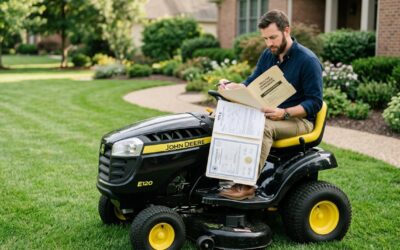
- Your mower’s manufacturer paperwork — the official classification (lawn tractor, garden tractor, agricultural tractor) matters more than appearance.
- Your state or local DMV / motor vehicle authority contact information — rules vary dramatically by jurisdiction.
- Details of your intended route — whether you’re crossing a road, traveling along it, or moving between properties changes the legal treatment.
- Documentation of purpose — agricultural or maintenance use often qualifies for limited exemptions that recreational use does not.
- Potential equipment additions — slow-moving vehicle (SMV) emblem, reflectors, lighting, and flags if your authority permits limited road use.
Step-by-Step Guide
Step 1: Identify What Type of Lawn Mower You Have
Classify the mower before checking road rules. The law may treat a push mower, riding mower, zero-turn mower, and commercial tractor-style mower very differently. The key question is not simply whether the machine cuts grass — authorities consider how it moves, how it is constructed, and why it is being operated on a public road.
Use this comparison to place your machine in the right category:
| Machine type | Typical purpose | Usually road legal? | Main concern |
|---|---|---|---|
| Push mower | Small residential lawns | No | Not designed as a vehicle |
| Riding lawn mower | Residential or commercial mowing | Usually no | Missing road-safety equipment |
| Zero-turn mower | Fast, precise mowing | Usually no | Steering and stability limitations |
| Garden tractor | Mowing and light property work | Usually no | Classification varies |
| Agricultural tractor | Farming and pulling implements | Sometimes, with restrictions | Lighting, registration, and slow speed |
| Municipal mowing machine | Roadside and public-land maintenance | Yes, under official use | Operated under government authority |
Distinguish between push and riding mowers
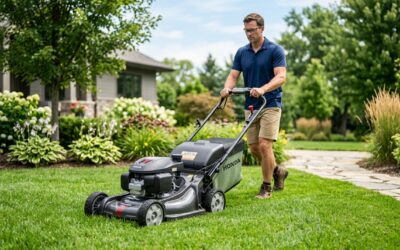
A push mower is a walk-behind machine controlled by a person on foot. It is generally treated as equipment rather than a road vehicle. A riding lawn mower has a seat and carries its operator — but moving under its own power does not automatically make it a legal motor vehicle.
Recognize zero-turn mowers
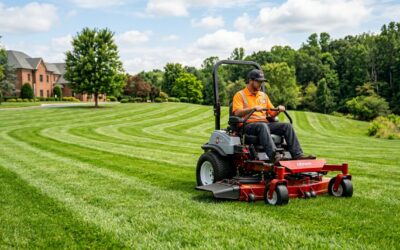
A zero-turn mower pivots almost in place by controlling its drive wheels independently. Zero-turns are particularly unsuitable for road use: their steering is designed for lawns, not stable travel at traffic speeds, and most lack road tires, suspension, turn signals, mirrors, and adequate lighting.
Separate lawn tractors from agricultural tractors
A garden tractor accepts attachments like plows and trailers and may resemble a small farm tractor, but appearance alone does not establish legal road status. An agricultural tractor is built primarily for farm work, and some jurisdictions grant it limited road privileges. A residential lawn tractor usually does not receive the same exemption — calling a mower “farm equipment” does not legally make it so.
Step 2: Check Whether Crossing Is Treated Differently From Traveling
In many jurisdictions, crossing a public road (for example, mowing fields on both sides of a rural property) is treated far more leniently than driving along the road. Crossing is often permitted for agricultural or maintenance equipment, while continuous road travel typically requires registration, insurance, lighting, and licensing.
💡 Pro Tip: Even where crossing is legal, do it at a controlled, perpendicular angle during daylight, and dismount foot-traffic obstacles first. Most mower-related road incidents happen during poorly planned crossings.
Step 3: Contact Your Local Motor Vehicle Authority
Because rules vary by state, county, and even municipality, the only definitive answer comes from your local DMV, police department, or road agency. Ask specifically:
- Is my mower classified as a motor vehicle, agricultural vehicle, or implement of husbandry?
- Is road crossing allowed, and under what conditions?
- What equipment is mandatory (SMV emblem, lights, reflectors, flags, mirrors)?
- Is registration or insurance required for limited road use?
- What license class does the operator need?
⚠️ Warning: Operating an unregistered mower on a public road can result in fines, vehicle impoundment, and — if an accident occurs — denial of insurance coverage and personal liability. Never assume an exemption applies without written confirmation.
Step 4: Fit Required Safety Equipment (If Road Use Is Permitted)
If your authority permits limited road travel, you will typically need to install or verify:
- A slow-moving vehicle (SMV) emblem mounted rear-facing, clean and visible
- Working headlights and taillights for dawn, dusk, or low-visibility operation
- Reflectors on the sides and rear
- A safety flag (often required for machines traveling under 25 mph)
- Functional brakes capable of holding the machine on a grade
💡 Pro Tip: Photograph your compliant setup after installation. If you’re ever stopped, dated photos showing the SMV emblem and lighting in place can support your case.
Common Mistakes & Troubleshooting
1. Assuming “agricultural exemption” covers a lawn tractor. The most common error. Exemptions apply to machines genuinely classified and used as farm equipment — a residential mower doesn’t qualify just because it crosses farmland. Fix: Check your manufacturer’s official classification and confirm it with your DMV in writing.
2. Treating a short trip as “not really road use.” Driving a mower half a mile to a neighbor’s property is still public-road operation in most jurisdictions. Fix: Trailer the mower instead, or get explicit permission for the route.
3. Driving a zero-turn on a road shoulder. Zero-turn steering becomes unstable at higher speeds and on uneven shoulders, creating rollover risk even at low speeds. Fix: Transport zero-turns on a trailer; never ride them along a road.
4. Ignoring the SMV emblem requirement. Missing or faded emblems are the most-cited violation for slow equipment. Fix: Mount the emblem at least 2–10 feet above the ground, centered or left of center, and replace sun-faded triangles every few seasons.
5. Riding at dawn or dusk without lighting. Reduced visibility dramatically increases collision risk, and many laws require lighting whenever visibility is poor — not just at night. Fix: Schedule road crossings for full daylight, or install proper lighting before any low-light use.
When to Replace / Gear Consideration
If you regularly need to move a mower between properties or across roads, a road-legal towing setup or a machine designed for transport may serve you better than pushing legal limits. Consider trailers, SMV emblem kits, and lighting packages designed for slow-moving equipment.
Frequently Asked Questions
Can I drive my riding lawn mower on the road to get to another property?
Usually not legally. Some rural jurisdictions allow agricultural equipment to travel short distances, but most require registration, insurance, lighting, and an SMV emblem even for that. Trailer transport is almost always the safer and simpler legal option.
Is it legal to cross a road with a lawn mower?
Often yes, especially for agricultural or maintenance purposes on rural roads, but permission is never automatic. Crossing is generally treated differently from traveling along the road — confirm the specific rules with your local road authority before doing it routinely.
What makes a lawn mower street legal in states that allow it?
Where limited road use is permitted, requirements typically include registration or an implement-of-husbandry designation, insurance, working lights and reflectors, an SMV emblem, adequate brakes, and a licensed operator. A stock residential mower meets almost none of these requirements out of the box.
Do I need a driver’s license to operate a mower on a public road?
In nearly all jurisdictions that permit any road use, yes — a valid driver’s license is required. Operating a mower on a public road without a license can carry the same penalties as driving any unlicensed motor vehicle, and your homeowner’s insurance may exclude resulting accidents.
Are zero-turn mowers ever road legal?
Practically speaking, no. Their lever steering, low-speed drivetrains, lack of suspension, and missing road-safety equipment make them both legally disqualified and physically unsafe for road travel. Always trailer a zero-turn.
What happens if I’m caught driving a mower on the road illegally?
Penalties range from a warning to fines, impoundment, and license points depending on your jurisdiction. More seriously, if you’re in a collision while operating an unregistered mower on a public road, insurers may deny claims and you could face personal liability for injuries or property damage.