
Are Lawn Mowers Bad for the Environment? Direct Answer
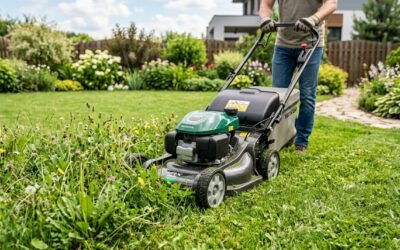
Yes, gas-powered lawn mowers can be harmful to the environment because they release carbon dioxide, nitrogen oxides, carbon monoxide, and unburned hydrocarbons. You can reduce this impact by mowing less often, maintaining equipment correctly, avoiding fuel spills, and switching to a reel, corded-electric, or battery-powered mower.
Expert Summary>
– Gas lawn mowers create direct exhaust emissions, while electric mowers produce no pollution at the point of use. – Older two-stroke engines generally pollute more than modern four-stroke engines because they burn an oil-and-gas mixture less completely. – Four-stroke lawn mowers still emit pollution, including greenhouse gases and pollutants that contribute to ground-level ozone. – A mower’s total environmental footprint includes manufacturing, fuel or electricity, maintenance, noise, battery replacement, and disposal. – The lowest-impact solution is usually to reduce the area and frequency of mowing, then use the smallest mower capable of maintaining the remaining lawn.
Step 1: Understand How Lawn Mowers Affect the Environment
Identify the mower’s power source first. Gas, battery, corded-electric, robotic, and manual reel mowers have very different environmental effects.
When people ask “how do lawn mowers affect the environment,” they usually focus on exhaust. However, a complete assessment should also include noise, fuel spills, manufacturing, battery production, grass disposal, and effects on wildlife.
What do lawn mowers emit?
Gas lawn mowers can emit:
- Carbon dioxide (CO₂): A greenhouse gas produced when gasoline burns.
- Carbon monoxide (CO): A toxic gas caused by incomplete combustion.
- Nitrogen oxides (NOx): Pollutants involved in ground-level ozone formation.
- Volatile organic compounds (VOCs): Chemicals that can contribute to smog.
- Unburned hydrocarbons: Fuel compounds that escape without complete combustion.
- Fine particles: Small airborne particles associated with combustion and engine wear.
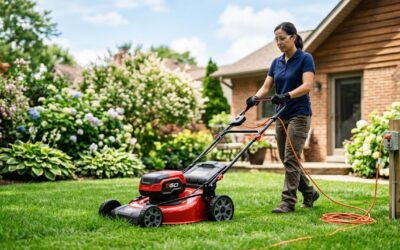
Electric lawn mowers do not produce tailpipe emissions. Their indirect emissions depend on how the electricity is generated, as well as the environmental cost of manufacturing and eventually replacing the battery.
How do lawn mowers affect climate change?
Lawn mowers affect climate change primarily by burning fossil fuels, consuming electricity, and requiring energy-intensive manufacturing. Gasoline models create emissions every time they operate, while electric models shift most operational emissions to the electricity supply.
Lawn care can also create indirect emissions through synthetic fertilizer production, irrigation, leaf blowing, grass transportation, and the decomposition of clippings in landfills.
How bad are lawn mowers for the environment?
The severity depends on five variables:
- Engine type and age
- Lawn size
- Mowing frequency
- Maintenance condition
- Local electricity generation
A small mower used occasionally on a compact lawn has a lower annual impact than a ride-on mower cutting several acres every week. Poorly maintained engines can also burn fuel less efficiently and release more pollutants.
Step 2: Compare the Environmental Impact of Each Mower Type
Choose the lowest-powered machine that can complete the job safely and reliably. Oversized equipment consumes more energy, costs more to maintain, and requires more material to manufacture.
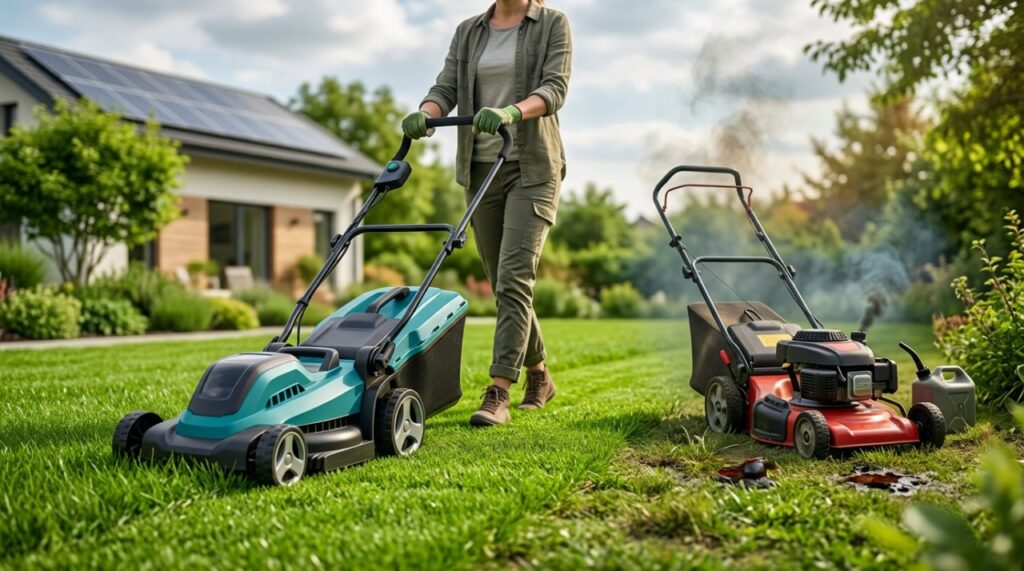
| Mower type | Direct exhaust | Noise | Maintenance | Best use | Main environmental trade-off |
|---|---|---|---|---|---|
| Manual reel mower | None | Very low | Very low | Small, flat lawns | Human effort; less effective on tall or wet grass |
| Corded-electric mower | None | Low | Low | Small lawns near outlets | Electricity source and extension-cord limitations |
| Battery mower | None | Low | Low | Small to medium lawns | Battery manufacturing and eventual replacement |
| Robotic mower | None | Very low | Moderate | Frequently maintained lawns | Continuous electricity use, battery replacement, wildlife risk |
| Four-stroke gas mower | Yes | High | High | Medium or demanding lawns | Exhaust, fuel use, spills, oil, and noise |
| Two-stroke gas mower | Yes, often higher | High | High | Mostly older equipment | Oil-and-fuel combustion and relatively high pollution |
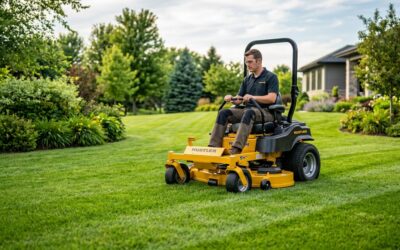
| Gas ride-on mower | Yes | Very high | High | Large properties | High fuel use, weight, noise, and material footprint |
| Electric ride-on mower | None | Moderate | Moderate | Large properties | Large, expensive battery pack |
Are gas lawn mowers bad for the environment?
Yes. Gas lawn mowers produce direct greenhouse-gas emissions and local air pollution, require petroleum fuel, and create a risk of fuel and oil spills.
Their environmental disadvantage is clearest on small residential lawns where a manual, corded, or battery mower could perform the same work. Gas equipment may remain practical on very large or demanding sites, but convenience does not eliminate its emissions.
Are four-stroke lawn mowers still emitting pollution?
Yes. Four-stroke lawn mowers still emit pollution, even though they generally burn fuel more cleanly than older two-stroke designs.
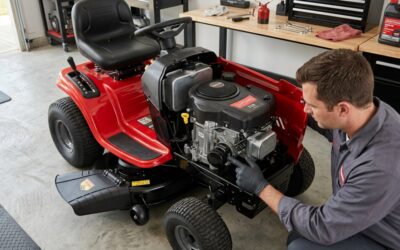
A four-stroke engine separates gasoline from lubricating oil, which typically improves combustion. It still releases carbon dioxide, carbon monoxide, nitrogen oxides, hydrocarbons, and other combustion by-products.
Why do lawn mowers pollute so much?
Small gas engines have historically used less sophisticated emissions controls than road vehicles. Many mowers lack the complex fuel management, catalytic systems, and continuous emissions monitoring found in modern cars.
Pollution can increase when an engine has:
- A dirty air filter
- Old or contaminated fuel
- A fouled spark plug
- Incorrect carburetor settings
- Worn piston rings or seals
- Excessive oil consumption
- Long periods of idling
Step 3: Estimate How Much Lawn Mowers Pollute
Calculate annual impact instead of relying on a dramatic per-hour comparison. The most useful measurement is the mower’s total fuel or electricity use across an entire mowing season.
How much pollution do lawn mowers produce?
There is no single number that applies to every mower. Engine size, emissions certification, load, maintenance, grass height, terrain, and operating time all affect the result.
For gasoline, a practical carbon estimate begins with fuel consumption. Burning one US gallon of gasoline releases approximately 8.9 kilograms of carbon dioxide, excluding upstream emissions from extraction, refining, and transportation.
Use this formula:
Annual direct CO₂ = gallons of gasoline used per year × approximately 8.9 kg
For example, a mower consuming eight gallons in one season would create roughly 71 kilograms of direct CO₂. This example does not include other pollutants or the fuel supply chain.
How much air pollution comes from lawn mowers?
The amount of air pollution varies substantially between an older carbureted mower and a newer emissions-compliant engine. Carbon dioxide tracks fuel consumption, but pollutants such as VOCs and carbon monoxide depend heavily on combustion quality and engine design.
For credible model-specific information, look for:
- The engine’s emissions-compliance label
- Manufacturer fuel-consumption data
- Regulatory certification documents
- Independent laboratory testing
- Local air-quality agency guidance
Avoid applying one viral emissions statistic to every mower. Comparisons based on old equipment may not accurately represent a newer four-stroke engine.
Do lawn mowers pollute more than cars?
Some gas lawn mowers can emit more smog-forming pollution per hour than a modern car, but they usually do not exceed a car’s total annual carbon emissions. The result depends on which pollutant, engine, vehicle, and operating period are being compared.
Cars generally burn much more fuel annually. Modern cars, however, have advanced emissions controls that small engines may lack, so a mower can perform poorly in a short-duration comparison involving hydrocarbons or carbon monoxide.
A responsible comparison must state:
- Whether it measures CO₂, VOCs, NOx, or CO
- Whether it compares one hour, one mile, or one year
- The age and condition of both engines
- Whether upstream fuel and electricity emissions are included
Step 4: Measure Your Lawn’s Current Environmental Footprint
Record real usage for one mowing season. Your fuel receipts, battery charging habits, mowing time, and lawn area provide a more useful answer than a generic national average.
Tools and information needed
| Tool or record | Purpose | Low-cost alternative |
|---|---|---|
| Property map or measuring wheel | Measure the mowed area | Online satellite map |
| Mowing log | Track frequency and duration | Phone notes |
| Fuel container with markings | Measure gasoline use | Fuel receipts |
| Plug-in electricity meter | Measure charging energy | Charger specifications |
| Maintenance records | Track oil, filters, and parts | Dated photographs |
| Local electricity emissions data | Estimate indirect emissions | Utility fuel-mix disclosure |
| Calculator or spreadsheet | Calculate annual totals | Paper worksheet |
Record these six measurements
- Mowed area: Exclude gardens, natural areas, and hard surfaces.
- Mows per year: Include partial cuts and leaf-mulching sessions.
- Minutes per mow: Count actual operating time.
- Fuel or electricity consumed: Measure rather than guess when possible.
- Maintenance materials: Include oil, filters, spark plugs, belts, and blades.
- Equipment life: Divide manufacturing and purchase impacts across realistic years of use.
Calculate annual operating emissions
For a gas mower:
Annual fuel use × emissions per unit of fuel = estimated operating emissions
For an electric mower:
Annual electricity use × local grid-emissions factor = estimated indirect operating emissions
This comparison is imperfect because it does not automatically include manufacturing. It is still useful for comparing machines that perform the same amount of work.
Step 5: Reduce Pollution Without Immediately Replacing the Mower
Change mowing behavior before purchasing new equipment. Mowing less often can reduce emissions, noise, maintenance, and equipment wear at no additional cost.
Mow only when the grass needs cutting
Avoid mowing automatically on the same day every week. Growth changes with rainfall, temperature, season, and grass species.
A needs-based schedule can reduce operating hours while protecting grass health. Do not remove more than roughly one-third of the grass blade in a single session unless the turf species requires different care.
Keep the blade sharp
A sharp blade cuts cleanly and reduces repeated passes. A dull blade tears grass, increases operating time, and can make the lawn more vulnerable to stress.
Inspect the blade regularly and sharpen it according to the manufacturer’s instructions. Replace blades that are bent, cracked, or excessively worn.
Avoid mowing wet grass
Wet grass clumps, blocks airflow, and increases resistance. This can make a gas engine consume more fuel or cause a battery mower to drain faster.
Wet mowing also increases slipping risk and can create an uneven finish. Wait until the surface and grass blades are reasonably dry.
Eliminate unnecessary idling
Turn off a gas mower when clearing branches, opening gates, or taking a prolonged break. Idling consumes fuel without cutting grass.
Follow the manufacturer’s restart and safety instructions. Never leave a running mower unattended.
Mulch clippings when appropriate
Mulching returns nutrients and organic matter to the lawn. It can reduce the need for bagging, hauling, and some fertilizer applications.
Do not leave thick piles that smother grass. If clippings are too long to disappear into the turf, compost them or use them as suitable garden material.
Step 6: Maintain a Gas Mower to Reduce Emissions
Service the engine at the recommended intervals. Correct maintenance improves combustion, reduces wasted fuel, and extends the machine’s useful life.
Follow this maintenance sequence
- Read the manual. Confirm fuel, oil, filter, and spark-plug specifications.
- Replace or clean the air filter. Restricted airflow can reduce performance.
- Inspect the spark plug. Replace it when worn or fouled.
- Change the oil when required. Use the correct grade and dispose of used oil responsibly.
- Use fresh fuel. Stale fuel can cause hard starting and poor combustion.
- Check the blade and deck. Remove buildup only after disabling the machine safely.
- Repair smoke or fuel leaks. Persistent exhaust smoke is not normal maintenance behavior.
Never pour gasoline, oil, or contaminated fuel onto soil or into a drain. Take hazardous fluids to an approved collection or recycling facility.
Prevent evaporative emissions and spills
Use a sealed, approved fuel container with a controlled-flow nozzle. Fill the mower on a stable outdoor surface only when the engine is cool.
Do not overfill the tank. Gasoline spilled during refueling can release VOCs and contaminate soil or water.
Step 7: Decide Whether to Repair or Replace Your Mower
Keep a functioning mower when a minor repair can restore safe, efficient operation. Replacing equipment too early creates avoidable manufacturing and disposal impacts.
Replacement becomes more reasonable when:
- The engine repeatedly burns oil or produces visible smoke
- Fuel leaks continue after professional repair
- Major structural parts are corroded or cracked
- Safety systems no longer work
- Replacement parts are unavailable
- Repair costs approach the price of a suitable lower-emission mower
- The machine is significantly oversized for the lawn
Durability after 18 months
A mower that performs well in its first month may become less efficient after 18 months if the blade dulls, the battery deteriorates, filters clog, or fuel-system deposits develop. Long-term environmental performance depends more on maintenance and repairability than showroom specifications.
Before purchasing, examine:
- Warranty length and exclusions
- Availability of blades, wheels, switches, and control cables
- Battery and charger replacement prices
- Service-center coverage
- Deck material and corrosion resistance
- Whether batteries work with other tools
- Manufacturer history of supporting discontinued platforms
Software support history
Software support matters mainly for robotic and connected mowers. An otherwise functional robotic mower can lose value if its app, cloud service, boundary system, or replacement battery is discontinued.
Prefer manufacturers that provide:
- Published firmware updates
- Clear security-support periods
- Replaceable batteries
- Manual controls that work without a cloud account
- Accessible service documentation
- Long-term parts availability
- A process for transferring ownership
A conventional manual, corded, or basic battery mower has little software dependency. That simplicity can improve long-term reliability.
Step 8: Compare the True Annual Cost of Ownership
Divide all ownership costs by the mower’s realistic service life. Purchase price alone can make a cheap gas mower look more economical than it is.
Use this formula:
Annual ownership cost = purchase depreciation + energy + maintenance + repairs + battery replacement + disposal fees
| Cost category | Gas mower | Battery mower | Corded mower | Reel mower |
|---|---|---|---|---|
| Initial purchase | Low to high | Medium to high | Low to medium | Low to medium |
| Fuel or electricity | Highest | Low | Usually lowest powered option | None |
| Routine maintenance | High | Low | Low | Very low |
| Likely major replacement | Engine components | Battery pack | Cord or motor | Blades or wheels |
| Noise burden | High | Low | Low | Very low |
| Expected complexity | High | Medium | Low | Very low |
Battery replacement changes the calculation
A battery mower may be inexpensive to operate but costly when its pack fails. Before buying, add at least one plausible battery replacement to a long ownership estimate.
Check the battery’s:
- Current replacement price
- Warranty terms
- Rated capacity in watt-hours
- Compatibility across product generations
- Availability from authorized sellers
- Repair or recycling options
A proprietary battery ecosystem creates lock-in. A widely supported platform can reduce long-term cost if the same batteries power a trimmer, blower, hedge cutter, or other frequently used tools.
Example annual-cost comparison
Suppose one mower costs less initially but requires annual fuel, oil, filters, and periodic repairs. Another costs more upfront but uses inexpensive electricity and needs a replacement battery later.
Calculate each option over five to eight years, not only the first season. Use your local prices because fuel, electricity, parts, and labor costs vary widely.
Step 9: Choose an Environmentally Friendly Lawn Mower
Match the mower to the lawn rather than choosing one technology for every property. The most environmentally friendly mower is the smallest durable machine that can complete the job without excessive passes or premature replacement.
Are there any environmentally friendly lawn mowers?
Yes. Manual reel, corded-electric, and battery-powered mowers are environmentally friendlier alternatives to gas equipment during operation. None is impact-free because every mower requires raw materials, manufacturing, transport, and eventual disposal.
The best option depends on the site:
- Small, flat lawn: Manual reel mower
- Small lawn with convenient outlets: Corded-electric mower
- Small to medium lawn: Battery mower
- Large lawn: Efficient electric ride-on or appropriately sized battery system
- Steep or complex site: Lightweight self-propelled battery mower
- Wildlife-focused property: Reduced mowing area plus manual or supervised electric mowing
Search variations such as “are there any environmentally-friendly lawn mowers” and “are there any environmentallyfriendly lawn mowers” describe the same practical question. The answer is yes, but durability and lawn reduction matter as much as the power source.
What is the best eco-friendly lawn mower?
A manual reel mower has the lowest operating emissions for a small, manageable lawn. A durable corded or battery mower is usually more practical when the grass is thick, the terrain is uneven, or the lawn is larger.
Prioritize these features:
- Replaceable and affordable battery
- Brushless motor
- Steel or durable composite deck
- Readily available blades and wheels
- Adjustable cutting height
- Mulching capability
- Repairable controls
- Long warranty with local service
- Battery compatibility with other tools
Avoid buying a larger voltage platform solely because its marketing implies greater power. Cutting performance depends on motor design, blade geometry, deck airflow, and sustained output—not voltage alone.
Step 10: Reduce the Amount of Lawn That Requires Mowing
Convert low-use lawn into planted or naturalized areas. Reducing mowing demand can deliver a larger environmental benefit than replacing one mower with another.
Suitable options may include:
- Native groundcovers
- Pollinator beds
- Shade gardens
- Trees and shrubs
- Rain gardens
- Clover or regionally appropriate mixed lawns
- Mulched paths
- Unmowed meadow zones where permitted
Choose plants suited to local rainfall, soil, light, and invasive-species guidance. A poorly planned conversion can increase irrigation, chemical use, or maintenance rather than reduce it.
Protect insects and small animals
Inspect tall grass before cutting. Mow during daylight at a moderate pace so wildlife has a better chance to move away.
Robotic mowers may injure nocturnal animals if used overnight. Operate them during daylight, supervise initial runs, and use the highest practical cutting height.
Understand ride-on mower disruption
The query “how are ride on lawn mowers disruping the nevironment” generally concerns fuel use, noise, soil compaction, and habitat disturbance. Ride-on mowers are heavier and typically consume more energy than walk-behind machines.
They can also encourage owners to maintain larger areas as short turf. Use a ride-on mower only where the area and physical requirements justify it.
Pro Tips for Lower-Impact Lawn Care
- Raise the cutting height: Taller grass can shade soil and may reduce watering needs, depending on the species.
- Plan an efficient route: Reduce overlap, reversing, and repeated passes.
- Share infrequently used equipment: One durable mower serving several small properties may reduce manufacturing demand.
- Buy repairable equipment: Parts availability is often more important than a small efficiency difference.
- Recycle batteries correctly: Lithium-ion batteries should not go into household trash.
- Use renewable electricity where available: Cleaner electricity reduces a battery mower’s operational footprint.
- Keep a seasonal log: Track runtime, repairs, and energy consumption to identify declining performance.
Common Mistakes to Avoid
Replacing a working mower only for environmental reasons
Manufacturing a new mower also has an environmental cost. Repairing and continuing