
How to Flip Lawn Mowers: Turn Cheap Finds Into Real Profit
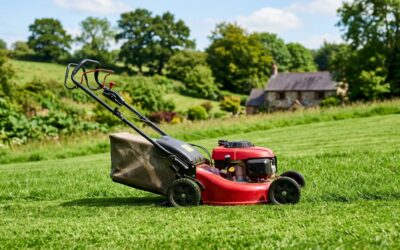
Flipping lawn mowers means buying used, undervalued mowers, repairing or cleaning them, and reselling them at a higher price. Done right, each flip can net $50–$300+ in profit per unit, making it one of the most accessible small-engine side hustles available — no storefront, no inventory system, no employees required.
🧠 Expert Summary
- Flipping lawn mowers is profitable with average margins of 40–70% per unit when sourced correctly from Facebook Marketplace, Craigslist, or estate sales.
- The most flippable mowers are self-propelled gas push mowers and riding mowers — they have highest resale demand and repair-to-value ratios.
- Most successful flippers spend $30–$150acquiring a mower and resell for $120–$500, keeping repair costs under $40 per unit.
- Basic mechanical skills — cleaning a carburetor, replacing a spark plug, sharpening a blade — are enough to get started.
- Seasonality matters: source in fall/winter when prices drop and sell in spring/summer for maximum return.
Step1: Understand How to Flip Lawn Mowers (The Business Model)
Flipping lawn mowers works because most sellers don’t know what’s wrong, and most buyers don’t want to deal with repairs. You sit in the middle: you buy low, fix fast, and sell at market rate.
The core profit formula is simple:
Profit = Sale Price − (Acquisition Cost + Repair Cost + Listing Time)A realistic example:
| Item | Cost |
|---|---|
| Used self-propelled mower (Facebook Marketplace) | $45 |
| New spark plug + air filter + carburetor cleaner | $18 |
| Fresh gasoline + oil change | $8 |
| Your time (2 hours) | — |
This is a repeatable model. Volume is where the real money is — flipping 4–6 mowers per month in peak season can generate $400–$1,500 in monthly side income.
Step 2: Source Lawn Mowers at the Right Price
The deal is made when you buy, not when you sell. Overpaying at acquisition kills your margin before you touch a wrench.
Where to Find Cheap Mowers
- Facebook Marketplace — highest volume, easiest negotiation, local pickup
- Craigslist — still active in most U.S. regions, good for bulk finds
- Estate sales and garage sales — owners rarely know real value, prices are often 30–50% below market
- Goodwill Outlet / Thrift stores — occasional finds, especially in suburban areas
- Nextdoor app — neighbors posting free or cheap gear
- Curb alerts — free mowers left at the curb, often neding only minor work
What to Pay (Maximum Acquisition Prices)
| Mower Type | Max Buy Price | Target Resale | Target Profit |
|---|---|---|---|
| Basic push mower (no propel) | $20–$40 | $80–$120 | $40–$80 |
| Self-propelled push mower | $40–$80 | $150–$250 | $70–$170 |
| Riding mower (small, older) | $150–$300 | $400–$700 | $100–$400 |
| Zero-turn mower | $400–$800 | $1,200–$2,500 | $400–$1,500 |
Pro Tip: Use the 50% rule — never pay more than 50% of the realistic resale price, before repairs. Leave room for parts, time, and unexpected issues.
How to Evaluate a Mower Before Buying
Ask the seller three questions before you drive over:
- Does it start? (Cold start is the most honest test.)
- Why are you selling it? (Reveals known issues.)
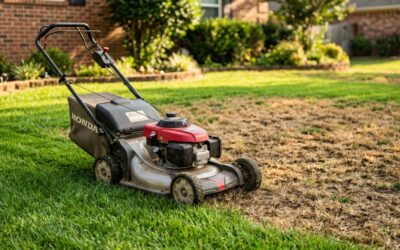
- How old is it and what brand? (Toro, Honda, Husqvarna, and Craftsman are high-demand brands.)
On-site, always:
- Pull the starter cord — note resistance and compression feel
- Check the oil — black sludge or milky oil signals engine damage
- Look for cracks in the deck, bent blades, or frame damage
- Check wheels for broken axles or missing hardware
Walk away from: seized engines, cracked engine blocks, heavily rusted decks with holes, or missing safety components that are expensive to source.
Step 3: Diagnose the Mower Before Spending on Parts
Diagnose before you buy parts. Spending $60 on parts before confirming the engine runs is a common beginner mistake.
The10-Minute Diagnosis Routine
- Check fuel — drain old gas, add fresh premium fuel. Old fuel is the #1 cause of no-starts.
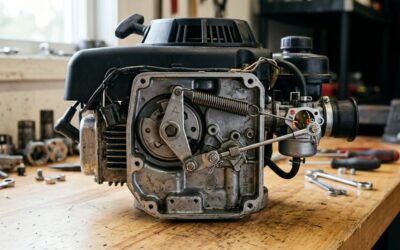
- Inspect the spark plug — remove it, check the gap, look for carbon fouling or cracks.
- Check the air filter — a clogged paper filter chokes the engine; costs $4–$8 to replace.
- Test compression — place your thumb over the spark plug hole and pull the cord. Resistance = good compression.
- Check the oil level — running a mower dry causes permanent engine damage.
- Attempt a start — with fresh gas and a clean/new spark plug, most “broken” mowers fire right up.
Common Issues and Repair Cost Estimates
| Problem | Likely Fix | Parts Cost | Time |
|---|---|---|---|
| Won’t start | Fresh fuel + new spark plug | $3–$6 | 15min |
| Runs rough / surges | Carburetor clean or rebuild | $8–$20 | 30–60 min |
| Blows white smoke | Oil overfill (drain, check) | $0 | 10 min |
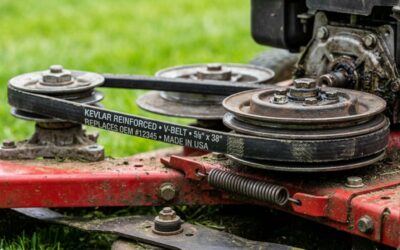
| Self-propel not working | Drive belt or cable replacement | $12–$25 | 45 min |
| Blade dull / uneven cut | Blade sharpen or replace | $5–$15 | 20 min |
| Pull cord broken | Recoil starter replace | $10–$20 | 30 min |
| Oil leak | Gasket or drain plug | $5–$12 | 20 min |
Know your ceiling: If total repair cost exceeds 30% of resale value, reconsider the unit or lower your resale expectations.
Step 4: Repair and Recondition the Mower
Fix only what affects function and appearance. Over-repairing — replacing cosmetic parts that don’t affect value — destroys your margin.
Essential Repairs (Always Do These)
- Replace the spark plug (cheap, always improves starts — $3–$5)
- Install a fresh air filter ($5–$8)
- Do a full oil change (communicates maintenance to buyer — $5–$8)
- Sharpen or replace the blade (cutting performance is what buyers test)
- Clean the underside of the deck — caked grass is a major visual red flag
Tools You Need for Most Flips
| Tool | Purpose | Approx. Cost |
|---|---|---|
| Spark plug socket (5/8″) | Remove/install spark plugs | $8 |
| Carburetor cleaner spray | Clean jets and fuel passages | $6 |
| Blade balancer + file | Sharpen and balance blades | $10 |
| Oil drain pan + funel | Oil changes | $8 |
| Wire brush + degreaser | Deck cleaning | $10 |
| Basic socket set (3/8″) | General fasteners | $25 |
| Starter fluid | Diagnose hard-start engines | $5 |
| Pressure washer (optional) | Fast visual cleanup | $80–$150 |
Total starter toolkit investment: ~$70–$150 — recouped on your first two flips.
Cosmetic Reconditioning (High ROI Steps)
- Pressure wash or hand-scrub the deck, housing, and wheels
- Touch up any significant rust spots with spray paint (match color)
- Wipe down all plastic panels with a damp cloth + tire shine for rubber parts
- Verify all safety features work: blade brake, dead-man handle, wheel drive engagement
A clean mower sells for 20–40% more than an identical dirty one. Presentation is pricing.
Step 5: Price the Mower Correctly to Sell Fast
Pricing too high sits inventory. Pricing too low kills margin. Use real market data, not guesswork.
How to Research Your Resale Price
- Search the exact model on Facebook Marketplace, eBay sold listings, and Craigslist in your region.
- Filter by “sold” or “completed” listings oneBay — this shows actual transaction prices, not asking prices.
- Check local demand: rural areas have higher riding mower demand; suburbs have higher push mower demand.
- Factor brand premium: Honda and Toro command15–25% more than Craftsman or Murray for equivalent specs.
Pricing Strategy by Mower Type
| Mower Type | Aggressive (fast sale) | Standard | Premium (clean/newer) |
|---|---|---|---|
| Basic push mower | $75 | $100 | $130 |
| Self-propelled push mower | $130 | $175 | $240 |
| Riding mower (older) | $350 | $475 | $650 |
Price 5–10% above your minimum acceptable price to leave room for negotiation — most buyers will ask for a discount.
Step 6: List the Mower to Attract Serious Buyers
A well-written listing with clear photos sells 3–5x faster than a vague one. Most flippers underprice their listings through poor presentation.
How to Write a High-Converting Listing
Photos first. Take 6–10 photos:
- Front, both sides, rear
- Engine close-up (clean engine signals care)
- Blade and underside (shows deck cleanliness)
- A short video of the cold start(**this eliminates most buyer objections instantly*)
Write the description like a buyer’s checklist:
- Model name and year (if known)
- Engine brand and horsepower
- What you repaired or replaced (“new spark plug, fresh oil, cleaned carburetor”)
- What works and what doesn’t (honest disclosures reduce no-shows)
- Starts on first or second pull — state this explicitly if true
Example listing headline:
Self-Propelled Toro Recycler — Runs Great, New Plug + Oil — Ready to Mow — $195Firm
Best Platforms for Selling Lawn Mowers
| Platform | Best For | Fee |
|---|---|---|
| Facebook Marketplace | Local cash sales, fastest turnover | Free |
| Craigslist | Local, cash-only, no accounts needed | Free |
| eBay (local pickup) | Reaches more buyers, brand-name models | ~10–13% |
| OferUp | Mobile-first, growing user base | Free / optional boost |
| Nextdoor | Hyper-local, trusted community | Free |
Avoid shipping unless you’re experienced — mowers are heavy, contain fuel/oil, and damage claims are complex.
Step 7: Close the Sale Safely
Meet in a visible, safe location and let buyers test-start the mower. Confident sellers with running equipment get asking price more often than not.
How to Handle the Pickup
- Meet in your driveway or a public parking lot with good visibility.
- Have the mower started and warm when the buyer arrives — removes any doubt.
- Let the buyer inspect and run it themselves.
- Accept cash or Zelle/Venmo — avoid PayPal Goods & Services for local sales if you want to avoid fee disputes.
- Do not hold a mower without a deposit — serious buyers pay to hold.
Handling Negotiations
- If a buyer asks for a discount, offer 10% max or offer to throw in a free spare blade.
- If they walk away, let them — serious buyers come back or you find the next one.
- Don’t get emotionally attached to a unit. It’s inventory, not a possession.
Is Flipping Lawn Mowers Profitable? The Real Numbers
Yes — flipping lawn mowers is profitable as a side hustle, especially during spring and summer months, with realistic monthly earnings of $300–$1,500 depending on volume and mower type.
Annual Profit Projection (Part-Time Fliper)
| Scenario | Flips/Month | Avg Profit/Unit | Monthly Income | Annual Income |
|---|---|---|---|---|
| Beginner (spring only) | 2–3 | $80 | $160–$240 | $800–$1,200 |
| Consistent part-time | 4–6 | $120 | $480–$720 | $2,400–$7,200 |
| Riding mower specialist | 2–3 | $350 | $700–$1,050 | $3,500–$12,600 |
| High-volume operation | 10–15 | $900–$1,350 | $10,000–$16,000 |
Key caveats:
- Profitability drops sharply in fall/winter in cold climates — plan sourcing accordingly.
- Your first 3–5 flips will take longer as you learn what to buy and how to diagnose.
- Riding mower flips require a trailer and more storage space.
Pro Tips From Experienced Lawn Mower Flippers
- Buy in fall, sell in spring. End-of-season sellers are motivated; spring buyers are desperate. This timing difference alone increases margins by 20–40%.
- Batch your repairs. If you have 3 mowers neding new carburetors, order bulk rebuild kits — cost drops from $14/unit to $6/unit.
- Specialize in one type first. Mastering self-propelled push mowers before touching riding mowers means faster flips and fewer diagnosis mistakes.
- Build a parts inventory. Keep common spark plugs (NGK BR6HS, Champion RJ19LM), air filters, and belts on hand — eliminates waiting for shipping delays between flips.
- Learn carburetor cleaning. It’s the single most valuable skill in this business. 60–70% of “won’t run right” issues are carburetor-related, and cleaning takes 20–30 minutes once you’ve done it twice.
- Track every unit. Use a simple spreadsheet: acquisition cost, parts cost, sale price, profit. You’ll quickly identify which mower types are your best earners.
Common Mistakes to Avoid
-❌ Overpaying because the brand sounds good — always validate resale prices before buying, even for Honda or Toro.
- ❌ Skipping the oil check — a seized engine from oil starvation is not flippable at a profit.
- ❌ Listing without a start video — buyers distrust static photos; a 10-second start video eliminates most skepticism.
- ❌ Holding for “the right price” too long — capital tied up in inventory isn’t earning. Turn units fast at fair prices.
- ❌ Ignoring safety recalls — check the CPSC recall database for older models, especially riding mowers. Selling a recalled product creates liability.
- ❌ Underestimating repair time on first units — your first carburetor rebuild will take 2 hours. Your fifth will take 25 minutes. Don’t price your time at zero.
FAQ: How to Make Money Flipping Lawn Mowers
Q: How much money can you realistically make flipping lawn mowers?
Most part-time flippers earn $300–$800/month during peak season (April–July). Full-time or high-volume operations can reach $1,500–$3,000/month. Riding mower specialists with a trailer and storage space report the highest per-unit profits.
Q: Do you need mechanical experience to start flipping lawn mowers?
No formal experience is required. Most profitable repairs — spark plug replacement, carburetor cleaning, blade sharpening, oil changes — can be learned from YouTube in a few hours. Start with push mowers before attempting riding mower engine work.
Q: What is the best time of year to sell lawn mowers?
March through June is peak selling season in North America. List mowers in late March when buyers are actively searching. Source mowers in October through December when sellers are motivated to clear storage space and prices are at their lowest.
Q: What mower brands sell fastest?
Honda, Toro, and Husqvarna sell fastest and at the highest prices. Craftsman (Briggs & Stratton engine models) and Ariens also sell well. Avoid off-brand or store-brand mowers — parts are harder to source and resale demand is lower.
Q: How do I scale from flipping mowers to a full business?
Start by reinvesting profit into acquiring more inventory rather than cashing out. Add a trailer for riding mowers, build a small parts inventory, and list on multiple platforms simultaneously. At 10+ flips/month, consider registering as an LLC for tax benefits and liability protection.
Conclusion
Flipping lawn mowers is one of the most accessible and repeatable side hustles available — no storefront, no staff, and no specialized degree required. The core skill set is sourcing smart, diagnosing fast, repairing efficiently, and presenting well.
Start with one push mower. Buy it under $60, invest $20in basic parts, clean it thoroughly, list it with a start video, and sell it for $150–$200. That first flip teaches you everything you need to scale.
The people making $1,000+/month flipping lawn mowers aren’t more talented — they’re more systematic. Track your numbers, learn from each unit, and reinvest your profits into more inventory.
Your next flip is sitting on someone’s curb right now.