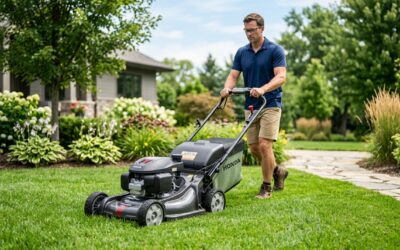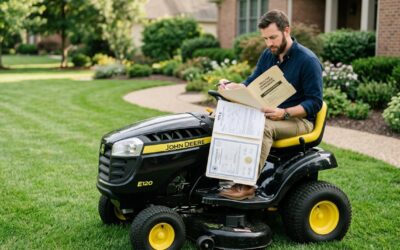

Quick Answer / TL;DR: Yes, most homeowners insurance policies cover a lawn mower as personal property (Coverage C) when it’s damaged or stolen by a covered peril like fire, theft, or vandalism. Flood damage, mechanical breakdown, and wear-and-tear are excluded. Your deductible applies, and off-premises theft may be capped at 10% of your personal property limit.

What You Need

  • Your homeowners policy documents — the declarations page showing Coverage C (personal property) limits and your deductible.
  • Proof of ownership — purchase receipt, serial number, or photos of the mower (riding mowers can run $1,500–$4,000+, so documentation matters).
  • Photos of the damage or theft scene — including where the mower was stored and any signs of forced entry.
  • A police report number — required for nearly all theft and vandalism claims.
  • A repair estimate or replacement quote — from a dealer or repair shop, to support your claim value.

Preparation: Before filing, confirm whether you have actual cash value (ACV) or replacement cost value (RCV) coverage. ACV subtracts depreciation — a 6-year-old mower may be worth very little on paper. Also check whether your mower was being used for your own residence (covered) or commercially (generally excluded).

If you’re comparing policies after a loss, our who makes dewalt lawn mowers guide covers what brands and price points mean for replacement value. More hands-on guidance lives in our how-to guides.

Step-by-Step Guide

Step 1: Confirm the Peril Is Covered

Check that the event causing the loss is a named peril: fire, lightning, theft, vandalism, falling objects, or windstorm are typical. A mower destroyed by flood, a seized engine, or a rusted deck is not covered under a standard policy.

⚠️ Warning: Do not dispose of the damaged mower or repair it before your adjuster has inspected it. Doing so can get your claim denied.

Step 2: Determine Where the Loss Occurred

Theft at home is straightforward. Theft away from home (say, at a storage unit or in a truck bed) is usually covered but often capped at 10% of your personal property limit under the off-premises clause.

💡 Pro Tip: If the mower was stolen from a vehicle, check your auto policy first — some auto policies cover contents stolen from a locked vehicle, which may be faster than a homeowners claim.

Step 3: Check Riding Mower Endorsements

Some insurers treat riding mowers and garden tractors with higher value as other structures or scheduled property rather than personal property. Review your declarations page or call your agent to confirm how yours is classified.

💡 Pro Tip: If your riding mower is worth more than $2,000, ask about a scheduled personal property endorsement. It removes the deductible question and typically pays replacement cost.

Step 4: File the Claim

Contact your insurer’s claims line or file online. Provide the peril date, police report number, photos, serial number, and your repair or replacement estimate. Expect an adjuster contact within a few days.

⚠️ Warning: Only file if the loss clearly exceeds your deductible. A $1,500 mower loss on a $2,500 deductible means you pay everything out of pocket — and the claim inquiry still lands on your claims history (CLUE report), which can raise premiums.

Step 5: Document the Settlement

If approved, insurers typically pay ACV first, then the depreciation holdback once you submit proof of replacement. Keep every receipt.

Common Mistakes & Troubleshooting

  • Filing for a mechanical breakdown. Engine failure, dead batteries, and worn blades are maintenance issues — excluded on every standard policy. Route these to a small-engine repair shop or a manufacturer warranty instead.
  • Assuming flood damage is covered. Flood is excluded from homeowners insurance nationwide. You’d need separate flood insurance (NFIP or private), and even then, coverage for detached equipment is limited.
  • Commercial use voids coverage. Using your mower for a side lawn-care business usually requires a business policy. If the adjuster sees commercial decals or an invoiced client list, the claim can be denied.
  • Ignoring the deductible math. Small claims often cost more in premium increases than they return. Rule of thumb: don’t file for anything under roughly 1.5× your deductible.
  • No proof of ownership. Claims for high-value mowers stall without receipts or photos. After you replace a mower, photograph it, record the serial number, and store both in the cloud.

Shopping for a replacement mower with your settlement? Our ego power+ z6 rear bumper for breakdown puts one popular zero-turn in context.

Frequently Asked Questions

Does homeowners insurance cover a stolen lawn mower?

Yes. Theft is a covered peril, so a stolen mower is treated as personal property. Your deductible is subtracted, and if it was stolen off your property, the off-premises limit (typically 10% of Coverage C) may cap the payout.

Is a riding lawn mower covered differently from a push mower?

Often, yes. Push mowers are almost always personal property. Riding mowers and lawn tractors may be classified as other structures or require a scheduled endorsement, depending on the insurer and the mower’s value. Confirm with your agent in writing.

Does homeowners insurance cover lawn mower damage I caused myself?

Generally no. Accidental damage you inflict — running over a hose, hitting a rock, tipping the mower — falls under wear, neglect, or mechanical breakdown, all standard exclusions.

Will filing a claim for my lawn mower raise my premium?

It can. Claims go on your CLUE report for up to seven years, and even small property claims can trigger non-renewal or rate increases with some carriers. Weigh the payout against your deductible and long-term cost before filing.

Are lawn mowers covered if damaged in a garage fire?

Yes — fire is a core covered peril, and equipment stored in an attached garage or shed is covered whether it’s classified as personal property or contents of an other structure. Document the loss thoroughly, since garage fires often destroy multiple items at once.

How do I know if I have actual cash value or replacement cost coverage?

Check your declarations page for the phrase “replacement cost” under personal property. If it’s absent, assume ACV, which pays depreciated value. An RCV endorsement is usually inexpensive and worth adding for higher-value equipment.