
Quick Answer: Apply autumn grass fertilizer when soil temperatures drop to 50-65\u00b0F, typically 4-6 weeks before the first hard frost. Cool-season grasses need high-nitrogen formulas (24-0-10 or 26-0-4), while warm-season grasses require potassium-heavy blends (18-0-24) with minimal nitrogen. Always conduct a soil test first to determine exact nutrient needs.
Choosing the right autumn grass fertilizer is one of the most critical lawn care decisions you’ll make all year. Fall fertilization sets the foundation for winter survival, root development, and spring green-up. Get it wrong, and you risk winter damage, nutrient runoff, or weak growth when temperatures rise.
As a turfgrass agronomist with over two decades of field experience, I’ve seen countless homeowners waste money on the wrong products or apply at the wrong time. This guide gives you the precise technical metrics, step-by-step procedures, and expert troubleshooting advice to ensure your fall fertilization succeeds.
Why Autumn Grass Fertilizer Is Non-Negotiable
Fall fertilization serves a fundamentally different purpose than spring feeding. While spring fertilizers promote rapid leaf growth, autumn grass fertilizer focuses on:
Root system expansion: Cool-season grasses develop 60-70% of their annual root growth in fall. Adequate nitrogen and phosphorus fuel this development, creating a deeper, more resilient root network that accesses water and nutrients during summer stress.
Carbohydrate storage: Grass plants convert fertilizer nutrients into stored energy (sugars and starches) in crowns and roots. These reserves fuel spring green-up before soil temperatures warm enough for active nutrient uptake.
Winter hardiness: Potassium strengthens cell walls and improves cold tolerance. Lawns receiving proper fall potassium fertilization show 40-50% less winter kill and spring desiccation damage.
Disease resistance: Well-nourished turf entering dormancy resists snow mold, dollar spot, and other fall/winter diseases significantly better than nutrient-depleted grass.
Decoding NPK Ratios for Autumn Grass Fertilizer
The three numbers on every fertilizer bag represent Nitrogen (N), Phosphorus (P), and Potassium (K) as percentages by weight. Understanding which nutrients matter most in fall is essential:
Nitrogen (N): Drives leaf growth and chlorophyll production. In fall, moderate nitrogen supports continued photosynthesis without excessive top growth that’s vulnerable to frost damage.
Phosphorus (P): Fuels root development and energy transfer. Many regions restrict phosphorus application without a soil test due to environmental concerns. Only apply if soil tests show deficiency below 25 ppm (Bray-1 test).
Potassium (K): The “winterizer” nutrient. Potassium regulates water movement, strengthens cell walls, and improves disease resistance. Fall is the optimal time for potassium application because uptake is efficient and the benefits last through dormancy.
Autumn Grass Fertilizer Selection by Grass Type
Your grass type determines the ideal NPK ratio, application timing, and total nutrient rate. Applying the wrong formula can cause more harm than no fertilization at all.
| Grass Type | Recommended NPK | Nitrogen Rate | Application Window | Key Considerations |
|---|---|---|---|---|
| Kentucky Bluegrass | 24-0-10 or 26-0-4 | 1.0-1.5 lbs N/1,000 sq ft | Late Sept – Mid Oct | High nitrogen for recovery; avoid late applications that delay dormancy |
| Tall Fescue | 24-0-11 or 32-0-4 | 1.0-1.5 lbs N/1,000 sq ft | Mid Sept – Early Nov | Deep roots benefit from potassium; tolerates slightly later application |
| Perennial Ryegrass | 20-0-10 or 24-0-10 | 0.75-1.0 lbs N/1,000 sq ft | Late Sept – Mid Oct | Lower nitrogen tolerance; excessive N causes winter injury |
| Bermudagrass | 18-0-24 or 12-0-24 | 0.5 lbs N/1,000 sq ft max | Early – Mid Oct | Potassium-focused; nitrogen promotes disease and delays dormancy |
| Zoysiagrass | 15-0-20 or 18-0-24 | 0.5 lbs N/1,000 sq ft max | Early – Mid Oct | Similar to Bermuda; prioritize potassium for winter hardiness |
| St. Augustinegrass | 15-0-20 or 18-0-24 | 0.5 lbs N/1,000 sq ft max | Early Oct (warm zones) | Minimal nitrogen; excessive N increases chinch bug susceptibility |
Slow-Release vs. Quick-Release: Which Autumn Grass Fertilizer Form?

The nitrogen release mechanism dramatically affects fall fertilization outcomes:
Slow-release nitrogen (70-100% of total N): Coated urea, polymer-coated products, or organic sources that feed gradually over 6-12 weeks. Ideal for fall because they provide sustained nutrition without growth surges. Look for products with at least 30% slow-release nitrogen for the first fall application.
Quick-release nitrogen (immediately available): Urea, ammonium sulfate, or nitrate sources that feed within days. Acceptable for the final “winterizer” application (last 4-6 weeks before dormancy) when you want rapid nutrient uptake before soil temperatures drop below 50\u00b0F.
Best practice: Use a blended product with 50-70% slow-release nitrogen for the primary fall application, then a quick-release or high-potassium product for the final winterizer feeding.
Optimal Timing: When to Apply Autumn Grass Fertilizer
Timing is everything with fall fertilization. Apply too early, and you stimulate growth vulnerable to frost. Apply too late, and nutrients won’t uptake before dormancy.
Primary application: 4-6 weeks before your average first hard frost (28\u00b0F or below). For most regions, this means late September through mid-October. Soil temperatures should be between 50-65\u00b0F for optimal uptake.
Winterizer application (optional): 2-3 weeks after the primary application, or when soil temperatures approach 50\u00b0F. Use a quick-release, high-potassium formula for this final feeding.
How to check soil temperature: Use a soil thermometer inserted 4 inches deep, measured at 8-10 AM for the most accurate reading. Consistent readings below 50\u00b0F indicate the uptake window is closing.
Step-by-Step Application Procedure
Follow this precise procedure for optimal autumn grass fertilizer results:
Step 1: Conduct a Soil Test (2-3 weeks before application)
Collect 10-15 soil samples from different areas of your lawn, 4 inches deep. Mix thoroughly and send to your local extension lab or use a quality home test kit. This determines your exact NPK needs and prevents over-application.
Step 2: Mow and Prepare the Lawn (1-2 days before application)
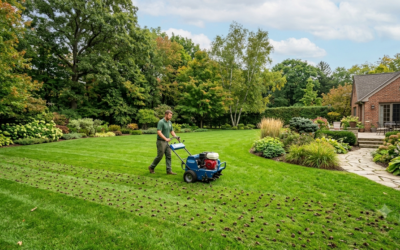
Mow your lawn to 2.5-3 inches (cool-season) or 2-2.5 inches (warm-season). Remove debris, leaves, and thatch exceeding 0.5 inches. Aeration is beneficial if soil compaction is present\u2014core aerate before fertilizing for better nutrient penetration.
Step 3: Calculate Application Rate
Determine your lawn’s square footage (length \u00d7 width for rectangular areas). Calculate the amount needed based on the nitrogen rate from the table above. For example, a 5,000 sq ft lawn needing 1.0 lb N/1,000 sq ft requires 5 lbs of actual nitrogen. If your fertilizer is 24% nitrogen, you need approximately 21 lbs of product (5 \u00f7 0.24).
Step 4: Apply with Proper Equipment
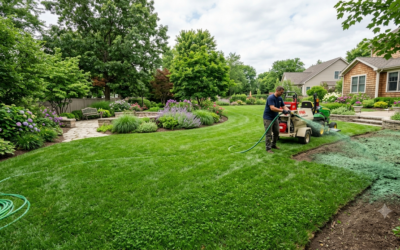
Use a broadcast or drop spreader for granular products. Set the spreader according to the bag’s recommended settings, then calibrate by weighing the product and measuring a test area. Apply in two perpendicular passes at half-rate each to ensure even coverage. For liquid applications, use a pump sprayer with 1 gallon of solution per 1,000 sq ft.
Step 5: Water In (Within 24 hours)
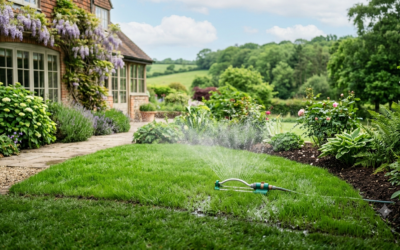
Apply 0.25-0.5 inches of water immediately after fertilization to move nutrients into the root zone. This prevents leaf burn from granular products sitting on foliage and activates slow-release formulations. Skip this step if rain is forecast within 24 hours.
Expert Troubleshooting: Common Autumn Grass Fertilizer Mistakes
Problem: Applied too early (soil temps above 70\u00b0F)
Solution: Excessive fall growth depletes carbohydrate reserves and increases disease susceptibility. Mow at normal height to remove stressed leaf tissue, but do not apply additional fertilizer. Monitor for brown patch and treat with fungicide if lesions appear.
Problem: Applied too late (soil temps below 45\u00b0F)
Solution: Nutrient uptake is minimal below 45\u00b0F. The fertilizer will remain in the soil until spring, potentially causing excessive early growth and increased disease pressure. If you must apply late, use a quick-release, high-potassium formula and accept reduced effectiveness.
Problem: Wet weather delays
Solution: If rain prevents application within your target window, prioritize the winterizer application (high-potassium, quick-release) over the primary nitrogen feeding. Potassium uptake continues at lower soil temperatures than nitrogen, so you’ll still achieve meaningful winter hardiness benefits.
Problem: Uneven application (striping or burning)
Solution: Water heavily (0.5-1 inch) to dilute concentrated areas. For severe burns, rake affected areas to distribute granules, then water. In future applications, calibrate your spreader more carefully and use the two-pass perpendicular method.
Organic vs. Synthetic Autumn Grass Fertilizer
Both organic and synthetic autumn grass fertilizers can be effective, but they have distinct characteristics:
Organic options (composted manure, bone meal, kelp meal, feather meal): Release nutrients slowly as microorganisms break down organic matter. They improve soil structure and microbial activity but provide less precise nutrient ratios. Best for lawns with moderate fertility needs and homeowners prioritizing soil health over rapid results.
Synthetic options (granular blends, liquid concentrates): Offer precise NPK ratios, immediate availability, and easier application. They’re more cost-effective for large lawns and provide predictable results. Choose products with slow-release nitrogen coatings for fall applications to mimic organic release patterns.
My recommendation: For most homeowners, a synthetic fertilizer with 50-70% slow-release nitrogen provides the best balance of precision, effectiveness, and value for autumn grass fertilization.
Frequently Asked Questions About Autumn Grass Fertilizer
Can I apply autumn grass fertilizer and seed at the same time?
Yes, but with caution. Use a starter fertilizer with phosphorus (18-24-12) for new seedlings, and apply at half the normal rate to avoid burning germinating seed. Alternatively, fertilize first, wait 2-3 weeks for seedling establishment, then apply your primary fall fertilizer at full rate.
How do I know if my lawn needs phosphorus in the fall fertilizer?
Only a soil test can determine phosphorus needs. Many regions have phosphorus-rich soils from years of over-application. If your soil test shows phosphorus above 30 ppm (Bray-1), skip phosphorus in your fall fertilizer to prevent environmental runoff and save money. Many “winterizer” products are phosphorus-free for this reason.
Should I fertilize warm-season grasses in fall?
Warm-season grasses (Bermuda, Zoysia, St. Augustine) should receive minimal nitrogen in fall\u2014excessive nitrogen promotes disease and delays dormancy. Instead, apply a potassium-focused product (18-0-24 or similar) in early to mid-October to improve winter hardiness without stimulating growth. Stop all fertilization 6-8 weeks before your average first frost.
What happens if I skip fall fertilization entirely?
Your lawn will survive but show measurable decline: reduced root depth (30-40% less), slower spring green-up (2-3 weeks delayed), increased disease susceptibility, and lower tolerance to summer stress. Over 2-3 years of skipped fall fertilization, you’ll notice thinning turf, increased weed invasion, and higher irrigation needs. The investment in autumn grass fertilizer pays dividends for 9-12 months.
Give Your Lawn the Best Autumn Grass Fertilizer This Fall
Autumn grass fertilization is a science, not a guessing game. By matching your NPK ratio to your grass type, timing applications to soil temperature, and following proper application procedures, you’ll build a lawn that survives winter and thrives next spring. For related insights, see our detailed guide on Grass Seed for Washington State (2025 Guide).
Start with a soil