

Quick Answer: Hydroseeding typically costs between $0.07 and $0.21 per square foot, which translates to an average total cost of $700 to $2,100 for a standard residential lawn. While this is often 50% cheaper than sod, the final price depends heavily on your total acreage, the specific seed blend selected, and whether soil amendments like tackifiers or fertilizers are included.
Understanding the True Cost of Hydroseeding
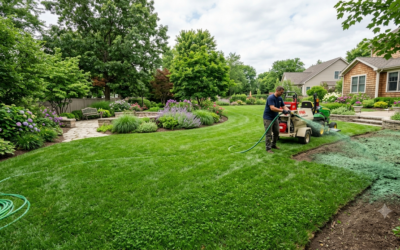
Hydroseeding\u2014often referred to as hydro-mulching\u2014is the process of spraying a slurry of seed, mulch, fertilizer, and a tackifying agent onto prepared soil. It bridges the gap between the low cost of dry seeding and the instant gratification of sod. However, to accurately budget for this project, you need to look beyond the basic per-square-foot average and understand the specific variables that will dictate your invoice.
Unlike sod installation, where pricing is relatively static, hydroseeding slurry is a custom mix. A “economy” mix for a large acreage will differ significantly from a “premium” mix designed for a sloped front yard with erosion issues. Below, we break down the exact costs you can expect in 2026, analyzed by project size, labor, and material requirements.
Hydroseeding Costs by Project Size
The most significant factor in your total cost is the total square footage of the area to be seeded. Hydroseeding companies almost always have a minimum service fee to cover the cost of truck mobilization and setup. For very small jobs, the cost per square foot will appear higher on paper; for large acreage, you will see significant bulk discounts.
| Project Size | Average Cost (Total) | Cost Per Sq. Ft. | Notes |
|---|---|---|---|
| Small Lawn (Up to 5,000 sq. ft.) | $300 \u2013 $500 | $0.10 \u2013 $0.15 | Subject to minimum service fees. |
| Standard Residential (5,000 \u2013 10,000 sq. ft.) | $700 \u2013 $2,100 | $0.07 \u2013 $0.18 | The “sweet spot” for value. |
| Large Yard (10,000 \u2013 20,000 sq. ft.) | $1,400 \u2013 $3,800 | $0.07 \u2013 $0.15 | Rate may decrease as size increases. |
| Estate/Acreage (1 Acre +) | $3,000 \u2013 $4,900+ | $0.07 \u2013 $0.11 | Measured per acre; lowest per-unit cost. |
Breakdown of Hydroseeding Components
When a contractor quotes you a price, they are calculating three main expenses: the materials (the “soup”), the labor (the application), and the equipment. Understanding these components helps you identify where you can save money.
1. The Slurry Mixture (Materials)
This is the most variable cost. A basic mix uses wood cellulose mulch and standard rye grass seed. A premium mix might include paper mulch (which holds moisture better), a tackifier (glue to prevent erosion), and a starter fertilizer. Specialty grasses, such as tall fescue blends for drought-prone areas or fine fescues for shade, will also increase the material cost compared to standard annual ryegrass.
2. Labor and Application
Hydroseeding is generally faster than sodding. A two-man crew can typically hydroseed a standard residential lot in 1 to 2 hours. Labor rates usually range from $50 to $100 per hour per worker. Because the application is so fast, the labor cost per square foot is lower than almost any other landscaping service, provided you hire a professional with a high-capacity truck.
3. Soil Preparation and Equipment
The price of hydroseeding usually assumes the ground is already graded and ready. If your lot requires significant rototilling, rock removal, or leveling, this will be an additional charge. Most hydroseeding trucks carry 2,500-gallon tanks; mobilizing this heavy equipment can add a delivery fee if you are located far from the contractor\u2019s base of operations.
Cost Comparison: Hydroseeding vs. Alternatives
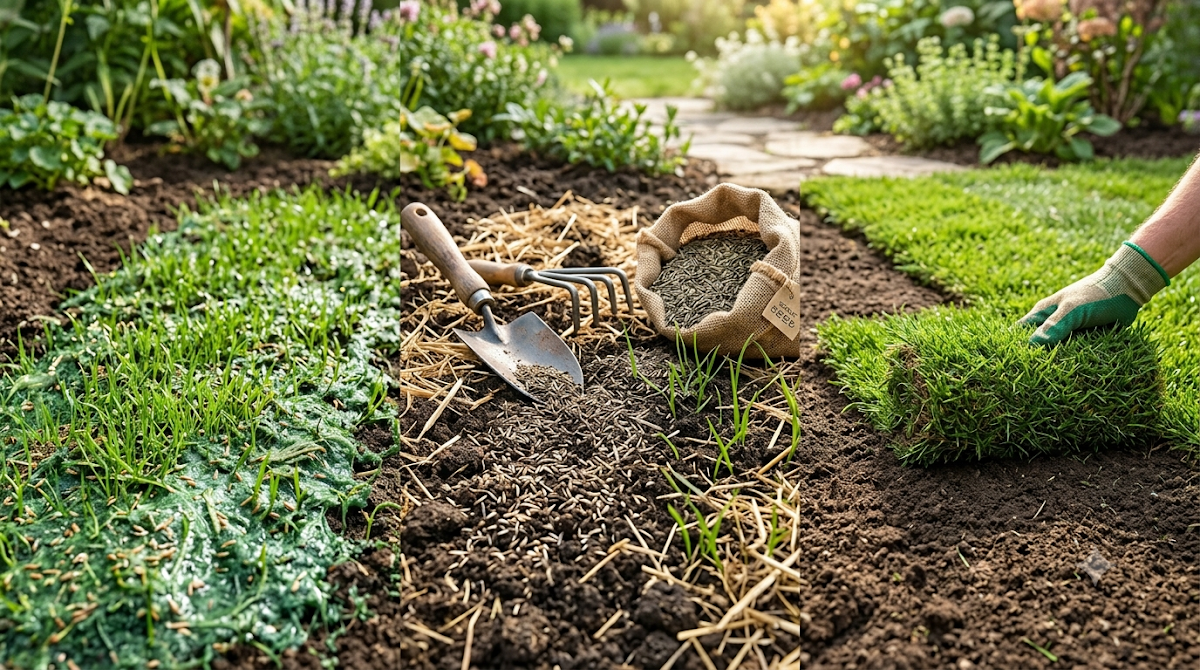
To determine if hydroseeding is the right financial choice, it must be compared to traditional dry seeding and sod installation. While hydroseeding is more expensive than simply throwing down seed by hand, it establishes the lawn significantly faster and with better erosion resistance.
| Method | Average Cost / Sq. Ft. | Time to Establish | Pros / Cons |
|---|---|---|---|
| Dry Seeding | $0.03 \u2013 $0.06 | 8 \u2013 12 Weeks | Cheapest option, but high risk of washout and uneven coverage. |
| Hydroseeding | $0.07 \u2013 $0.21 | 4 \u2013 8 Weeks | Fast germination, erosion control, moderate price. |
| Sod Installation | $0.45 \u2013 $1.05 | Instant (2 Weeks to root) | Immediate lawn, but most expensive and requires more water initially. |
Expert Guide: When to Hydroseed and What to Expect
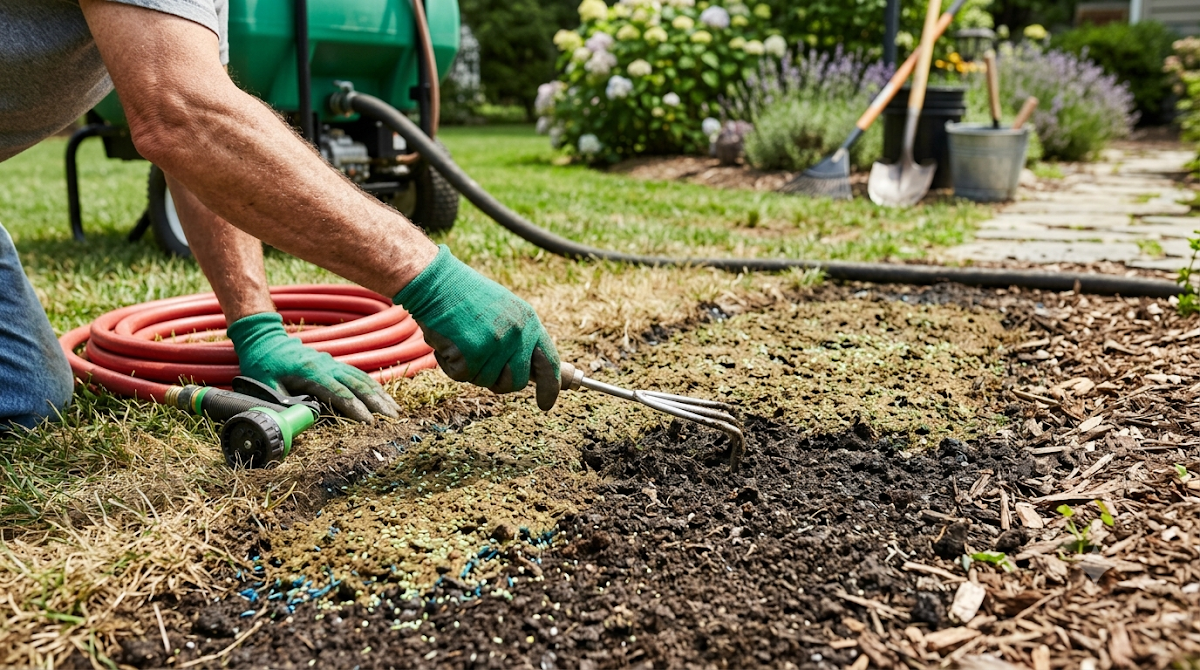
As a turfgrass agronomist, I advise homeowners that timing is just as critical as the mixture used. Hydroseeding is not “set it and forget it.” The success of the slurry depends on specific environmental conditions.
The Temperature Threshold
For cool-season grasses (Kentucky Bluegrass, Fescues, Ryegrass), the soil temperature must be consistently above 50\u00b0F (10\u00b0C). For warm-season grasses (Bermuda, Zoysia), you must wait until soil temperatures hit 65\u00b0F (18\u00b0C). Hydroseeding too early in the spring can result in seed rot before germination occurs.
Watering Schedule: The First 21 Days
The mulch in the slurry is designed to hold moisture, but it is not a substitute for irrigation. You must keep the seed bed consistently moist.
- Days 1\u20137: Light watering 2\u20133 times daily. The goal is to prevent the mulch from drying out and turning white.
- Days 8\u201314: Transition to 1\u20132 times daily to encourage root depth.
- Days 15\u201321: Water deeply once a day, allowing the soil to dry slightly between sessions.
Expert Troubleshooting: Common Hydroseeding Issues
Even with professional application, homeowners often face challenges. Here is how to diagnose and fix common problems immediately.
Problem: The mulch has turned white and looks fuzzy
Cause: This is usually harmless fungal growth on the wood mulch, caused by over-watering or lack of airflow. It indicates the mulch is staying too wet.
Fix: Reduce your watering frequency immediately. Allow the surface to dry out for a few hours during the heat of the day. If the white fungus persists, lightly rake the surface to aerate the mulch.
Problem: Patchy germination or bare spots
Cause: This is often due to “washout” where heavy rain moved the seed before the tackifier could bind it to the soil, or uneven application by the hose operator.
Fix: Wait until the existing grass reaches 3 inches. Then, spot-treat the bare areas by hand-seeding with a compatible mix and covering lightly with a thin layer of straw or peat moss. Do not re-hydroseed just for small patches; it is not cost-effective.
Problem: Erosion on slopes
Cause: While hydroseeding is excellent for slopes, steep inclines (greater than a 3:1 ratio) may still experience runoff if hit by a heavy storm before the roots establish.
Fix: Install erosion control blankets (jute or biodegradable netting) over the hydroseeded area if you live in a high-rainfall zone. This physically holds the slurry in place until the grass establishes.
Frequently Asked Questions (FAQ)
How long after hydroseeding can I walk on the lawn?
You should avoid walking on a newly hydroseeded lawn for at least 4 weeks. The young grass blades are fragile, and foot traffic can dislodge the mulch and damage the developing root systems. Wait until the grass has been mowed at least once before allowing regular foot traffic.
Does hydroseeding work in the summer?
Yes, provided you have an irrigation system. Hydroseeding in the summer (June-August) requires significantly more water to prevent the seed from drying out and dying. It is often best to hydroseed in early fall or spring when temperatures are moderate and rainfall is more consistent.
How soon after hydroseeding should I fertilize?
Most professional hydroseeding mixes already contain a starter fertilizer (high in phosphorus) to jumpstart root growth. You should wait at least 6 to 8 weeks\u2014until the lawn has been mowed 2 or 3 times\u2014before applying any additional fertilizer.
Is hydroseeding safe for pets?
The slurry is generally non-toxic once it dries, which takes about 24 to 48 hours. However, you should keep dogs and cats off the lawn for at least one week to prevent them from digging up the wet mulch or eating the seeds, which can cause minor stomach upset. For related insights, see our detailed guide on Autumn Grass Fertilizer.