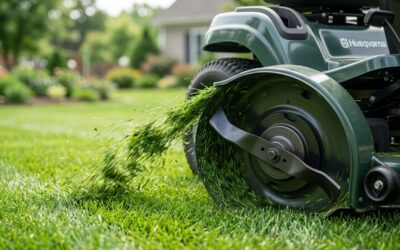

Are Cicadas Attracted to Lawn Mowers? The Direct Answer
Yes, some cicadas may approach an operating lawn mower because its engine produces loud, repetitive sound and vibration that can resemble a cicada chorus. This behavior is usually temporary and most noticeable during large seasonal or periodical emergences. Cicadas are not interested in the mower as food, shelter, or a nesting site.

Expert Summary>
– Some male cicadas may mistake lawn mower noise for the calls of other cicadas, particularly when engine frequencies overlap with parts of a loud chorus. – Cicadas are responding mainly to sound and vibration, not gasoline, cut grass, engine heat, or the mower itself. – Gas-powered lawn mowers are generally more likely to provoke a response than quieter electric or manual reel mowers. – Mowing early in the morning, using a lower-noise mower, and avoiding peak emergence days can reduce unwanted cicada activity. – A cicada landing on a person or mower is usually harmless confusion rather than aggression.
Step 1: Understand Why Cicadas React to Lawn Mowers
Recognize the mower as a possible sound signal. The simplest answer to why are cicadas attracted to lawn mowers is that a running engine can create frequencies, rhythms, and vibrations that resemble elements of cicada communication.
Adult male cicadas produce calls to attract females and communicate within a chorus. They generate those calls using specialized structures called tymbals on the abdomen.
Cicadas also have sound-detecting organs known as tympana. These structures help them respond to other cicadas, environmental sounds, and potential threats.
A mower engine does not produce a perfect cicada call. However, it does not always need to sound perfect to get a temporary reaction.
What a cicada may detect
A running lawn mower creates several signals at once:
- A loud, repeating engine tone
- Rapid mechanical pulses
- Low-frequency ground vibration
- Changes in pitch as engine speed rises or falls
- Sound reflected by trees, fences, and buildings
During a major emergence, cicadas are already surrounded by intense sound. An additional mechanical noise may become part of that confusing acoustic environment.
I would not describe this as cicadas “loving” a lawn mower. A more accurate explanation is that some cicadas investigate, approach, or land near a machine after misinterpreting its noise.
Why this happens more during large emergences
The effect is easier to notice when cicada numbers are already high. If thousands of adults are active nearby, normal random flight alone can place several around a mower.
Their mating behavior also makes them especially responsive to strong sounds. In that situation, mower noise can trigger investigation or interfere with their normal orientation.
This distinction matters. One cicada flying toward a mower does not prove that every mower attracts cicadas, while dozens appearing during a mass emergence may reflect both sound response and the unusually high local population.
Step 2: Identify Whether the Mower Is Actually Attracting Cicadas
Observe the insects before, during, and after mowing. This simple comparison helps separate a response to mower noise from ordinary cicada activity in the yard.
I recommend watching the area for about five minutes before starting. Note whether cicadas are already flying between trees, sitting in the grass, or landing on equipment.
Start the mower and remain in an open area where you can see around it safely. Do not reach toward the blade deck, engine, exhaust, or moving components.
Signs that mower noise may be influencing them
The mower may be provoking a response if:
- Cicadas approach shortly after the engine starts
- Activity increases when the engine runs at full speed
- Cicadas circle or land on the mower handle
- They land on the operator more often while the mower is running
- The activity decreases after the engine stops
- The same pattern occurs during several mowing sessions
A cicada sitting on a nearby tree before mowing is not evidence of attraction. Neither is finding empty cicada shells on the mower after it has been stored outdoors.
Signs that the activity is probably coincidental
The mower is less likely to be the main cause if:
- Cicadas are equally active before and after mowing
- They are emerging directly from soil throughout the lawn
- Adults are covering trees, sheds, fences, and vehicles
- The insects do not change direction when the mower starts
- Activity continues long after the mower is turned off
During a dense emergence, cicadas can land almost anywhere. The mower may simply be another large object in a crowded environment.
A safe observation method
Use this basic sequence:
- Observe the yard for five minutes with all equipment off.
- Run the mower in place for one to two minutes without beginning to cut.
- Watch from the normal operating position.
- Turn the engine off.
- Compare activity over the next five minutes.
- Repeat on another day if needed.
This is not a controlled scientific experiment. Weather, temperature, time of day, tree cover, and the number of cicadas present can all affect the result.
Step 3: Compare How Different Mowers Affect Cicadas
Choose the quietest practical mower if cicada encounters bother you. Gas engines usually create more sound and vibration than cordless electric or manual reel mowers, so they have a greater chance of triggering investigation.
| Mower type | Relative noise and vibration | Likelihood of a noticeable cicada response | Main trade-off |
|---|---|---|---|
| Gas-powered mower | High | Higher during active emergences | Powerful, but loud and produces exhaust |
| Corded electric mower | Moderate | Low to moderate | Quieter, but requires careful cord management |
| Battery mower | Low to moderate | Lower | Quieter, but runtime depends on battery capacity |
| Manual reel mower | Low | Lowest | Quiet, but requires more effort and suits shorter grass |
| Riding mower | High | Moderate to high | Efficient for large lawns, but creates prolonged engine noise |
These are practical comparisons rather than guarantees. A battery mower may still receive cicada visitors when the surrounding population is extremely dense.
Gas-powered lawn mowers
A gas mower combines engine noise, metal vibration, exhaust, and a rotating blade. Of those signals, sound and vibration are the most plausible reasons for a cicada response.
Engine speed also changes under load. Thick grass may cause the pitch to fluctuate, creating additional acoustic variation.
If someone asks, do lawn mowers attract cicadas, gas models are the type most likely to produce a noticeable effect. Even then, the response varies by cicada species, local abundance, weather, and timing.
Battery and corded electric lawn mowers
Electric mowers are not silent, but they usually produce a smoother and less intense sound. I consider them a practical option for anyone who already wants lower noise, less vibration, and fewer encounters with curious cicadas.
They still generate blade noise. Therefore, switching to an electric mower may reduce the response without eliminating it completely.
Manual reel mowers
A reel mower has no motor, so it lacks the repeating engine note that may confuse cicadas. It is the least likely mower type to provoke sound-related investigation.
The downside is physical effort. Reel mowers also perform poorly when grass is very tall, wet, or full of tough weeds.
Step 4: Choose a Better Time to Mow
Mow when cicadas are cooler and less active. Early morning is often the most practical window because cicada flight and calling generally increase as conditions become warmer.
Temperature affects insect activity. A cool cicada is usually less mobile than one warmed by midday sun.
Mow early in the morning
I recommend mowing after there is enough daylight to see hazards clearly but before the hottest part of the day. This can reduce cicada flight around the mower and make outdoor work more comfortable.
Local noise rules still apply. Do not start a loud gas mower so early that it violates an ordinance or disturbs neighbors.
Avoid the loudest chorus periods
Cicada calling patterns vary by species. Some call heavily during the day, while others become active closer to dusk.
Listen to your yard for a few days. If the chorus consistently becomes intense at a certain hour, schedule mowing outside that period.
Wait after rain or when grass is wet
Cicadas may be less active during cool or rainy conditions, but mowing wet grass creates other problems. Wet clippings can clog the mower, form clumps, and produce an uneven cut.
The better strategy is to wait until the grass surface dries while mowing as early as practical. Do not trade a cicada inconvenience for unsafe footing or poor mowing performance.
Consider delaying nonessential mowing
Peak periodical cicada activity lasts for a limited part of the season. If the lawn is still manageable, delaying a cut for several days can be easier than dealing with a dense emergence.
Avoid letting the grass become excessively tall. Removing too much leaf length at once can stress turf and may overwhelm some mowers.
Step 5: Prepare the Right Tools and Protective Clothing
Wear basic yard-work protection rather than insect-defense gear. Cicadas do not sting, and they are not equipped to bite people in the way mosquitoes or biting flies do.
Their sudden flight can still be distracting. Eye and hearing protection are particularly useful when mowing through an active emergence.
| Tool or material | Why it helps | Essential? |
|---|---|---|
| Safety glasses | Prevents insects, dust, and debris from reaching the eyes | Yes |
| Hearing protection | Protects hearing and reduces stress from mower and chorus noise | Yes for loud equipment |
| Closed-toe shoes | Protects feet from debris and equipment hazards | Yes |
| Long sleeves | Reduces the sensation of insects landing on skin | Optional |
| Brimmed hat | Keeps cicadas away from hair and face | Optional |
| Leaf blower or soft brush | Moves insects away after the mower is off | Optional |
| Battery mower | Reduces engine noise and vibration | Optional |
Avoid wearing loose clothing that could catch on vegetation or equipment. Secure long hair before operating the mower.
Protect your hearing
A loud mower combined with a dense cicada chorus can create an uncomfortable sound environment. Proper earmuffs or earplugs are useful even when cicadas are not present.
Hearing protection should fit correctly. Loose earmuffs and poorly inserted earplugs provide less protection than their labels suggest.
Protect your eyes
A cicada colliding with safety glasses may be startling, but it is much safer than an insect striking an unprotected eye. Glasses also protect against stones, sticks, and clippings thrown by the mower.
Choose impact-rated safety glasses rather than ordinary fashion glasses. Wraparound designs provide better side coverage.
Skip unnecessary insecticides
I do not recommend spraying the lawn simply because adult cicadas are present. Broad insecticide use may affect pollinators and other non-target organisms without solving the sound-response issue.
Cicadas are temporary visitors, and their adult stage above ground is limited. Noise management and timing are usually more practical than chemical control.
Step 6: Reduce Noise and Vibration Before Mowing
Maintain the mower so it does not create unnecessary rattling or irregular noise. A damaged, loose, or poorly maintained machine may be louder than it needs to be.
Maintenance will not make a gas mower silent. It can, however, reduce abnormal mechanical sounds while improving safety and cut quality.
Inspect the mower while it is off
Before each use:
- Turn the mower off completely.
- Allow a gas engine and exhaust to cool.
- Disconnect the spark-plug wire or follow the manufacturer’s lockout instructions.
- Check for loose guards, handles, and fasteners.
- Inspect the blade area only as directed in the owner’s manual.
- Remove accumulated dry clippings after the machine is safe to handle.
Never place hands beneath a mower deck unless the machine has been secured according to the manufacturer’s instructions. A blade can move unexpectedly even when the engine is not running.
Replace damaged components
Bent blades, loose covers, worn bearings, and damaged engine parts can produce abnormal vibration. These conditions are more important as safety issues than as cicada attractants.
Stop using a mower that suddenly becomes louder, shakes excessively, or produces a new metallic sound. Have it inspected before mowing again.
Avoid unnecessary idling
Start the mower when you are ready to work and shut it down when the job is complete. Long periods of idling extend the time that cicadas are exposed to the engine sound.
This also reduces wasted fuel and neighborhood noise. Follow the manufacturer’s starting and stopping procedures.
Step 7: Respond Safely When Cicadas Approach
Stay calm and keep both hands in control of the mower. A cicada landing on your clothing is not an emergency, but swatting at it while operating machinery can create a genuine hazard.
The mower blade, uneven ground, hidden debris, and nearby people deserve more attention than the insect.
If a cicada lands on you
Use this response:
- Keep walking steadily if you are comfortable.
- Stop the mower on level ground if the insect distracts you.
- Disengage the blade or shut the machine off.
- Step away from the mower.
- Brush the cicada away gently.
- Restart only when you can focus on mowing.
Do not release the handle of a walk-behind mower unless doing so activates its normal safety shutoff. Always prioritize the equipment’s operating instructions.
If cicadas land on the mower
Continue only if they do not block controls, vents, or your view. Most will move away as the mower changes direction.
If several collect on the equipment, stop and shut it down. Wait for moving and hot parts to become safe before using a soft brush or blower.
Never remove an insect from near a blade, belt, wheel, exhaust, or engine while the mower is operating.
If cicadas seem unusually aggressive
Cicadas are not normally aggressive toward people. Repeated collisions or landings usually reflect confused flight, crowding, or sound investigation.
If activity becomes overwhelming, postpone the job. Finishing the lawn is not worth losing concentration around powered equipment.
Step 8: Avoid Harming Emerging Cicadas
Inspect the lawn before mowing during a major emergence. Cicadas may crawl across the ground, climb tree trunks, or rest on low plants while their new adult bodies harden.
Freshly emerged adults can be pale and soft. They are less able to fly away from approaching equipment.
Look around tree bases
Cicada nymphs emerge from soil, often near trees that supported their underground development. Small exit holes may appear in the surrounding ground.
Walk the mowing route first. Pay special attention to:
- Mature tree bases
- Exposed roots
- Fence posts
- Shrubs and low branches
- Retaining walls
- Dense clusters of shed skins
If many cicadas are actively emerging, delay mowing that section. Returning later can prevent unnecessary harm and reduce clogging around the mower deck.
Avoid damaging young trees
Adult females of some cicada species cut small slits in twigs when laying eggs. Established trees usually tolerate this better than young or newly planted trees.
Where a dense periodical emergence is expected, fine mesh netting may protect vulnerable young trees. The mesh must be installed correctly so it does not trap wildlife or damage branches.
Do not apply pesticide to a flowering tree without considering risks to bees and other pollinators. Local extension services can provide region-specific tree protection guidance.
Leave empty shells alone
Shed cicada exoskeletons are harmless. They may cling to trunks, fences, tires, and mower handles.
I usually see no need to remove them unless they are creating a mess in a doorway or on equipment controls. They will eventually break down or fall away.
Why Are Cicadas Attracted to Lawn Mowers but Not Every Other Machine?
Cicadas may respond when a machine’s sound overlaps with signals that are meaningful to them, but the response is inconsistent. Engine pitch, pulse pattern, volume, vibration, cicada species, distance, and local population size all affect what happens.
A mower is especially noticeable because it moves through cicada habitat. It operates close to the ground and beneath trees where cicadas emerge, call, and fly.
Other machines may provoke similar behavior, including:
- String trimmers
- Leaf blowers
- Chainsaws
- Motorcycles
- Generators
- Power tools
- Small engines
That does not mean cicadas identify every machine as another cicada. It means certain mechanical sounds may be close enough to trigger investigation or disrupt normal orientation.
Do Cicadas Like Lawn Mowers?
No, cicadas do not “like” lawn mowers in the human sense. They receive no food, breeding site, or long-term shelter from the equipment.
The phrase do cicadas like lawn mowers oversimplifies an acoustic response. A cicada may approach the sound and then leave when it finds no useful biological signal.
Heat is also an unlikely main explanation. Although insects depend on environmental temperature, a running engine is dangerously hot and does not provide a suitable resting site.
Gasoline and fresh-cut grass are not established reasons for the response either. Sound, vibration, crowding, and random flight provide more reasonable explanations.
Pro Tips for Mowing During Cicada Season
Combine quieter equipment, careful timing, and calm operation for the easiest experience. No single method can guarantee a cicada-free lawn during a major emergence.
- Use a battery mower: It usually produces less engine noise and vibration than a gas model.
- Mow after the grass dries in the morning: Cicadas may still be relatively inactive, while the turf is safer to cut.
- Walk the lawn first: Check for emerging insects, branches, stones, and other hazards.
- Wear safety glasses: They protect against both flying insects and mower-thrown debris.
- Keep tree branches trimmed: Low branches can place resting cicadas directly in your mowing path.
- Take a break if distracted: Shut the equipment down rather than trying to swat insects while moving.
- Mow in shorter sessions: This helps when the combined mower noise and cicada chorus becomes tiring.
- Delay optional yard work: Dense emergences are temporary, so postponing a cosmetic cut may be reasonable.
I find that the best practical solution is rarely a chemical product. It is usually a quieter mower, a better time of day, and a willingness to pause when insects become distracting.
Common Mistakes to Avoid
The biggest mistake is treating harmless cicada behavior as an emergency while operating dangerous equipment. Sudden reactions around a moving mower create more risk than the cicadas themselves.
Swatting while mowing
Do not take both hands off the handle to remove an insect. Stop the machine safely first.
A cicada landing on a shirt may be annoying, but it cannot justify losing control of powered equipment.
Spraying the entire lawn
Broad insecticide treatment is unlikely to address the mower noise that prompted the behavior. It can also affect beneficial insects and add unnecessary cost.
If tree damage is a concern, seek advice from a qualified arborist or local agricultural extension service. Tree protection and mower management are separate issues.
Mowing over dense emergence areas
Fresh adults may be unable to escape quickly. Inspecting the route takes only a few minutes and can prevent unnecessary harm.
It also protects the mower from heavy accumulations of insects and shed material around the deck.
Assuming every cicada was attracted by the engine
During a mass emergence, cicadas are already abundant across the landscape. Some landings will be random.
Look for a repeatable change after the mower starts before concluding that the sound is responsible.
Ignoring abnormal mower vibration
Do not assume a loud rattle is merely attracting insects. Excessive vibration may indicate a damaged blade, loose part, or mechanical fault.
Shut the mower down and inspect it according to the manual. Repair safety matters more than completing the cut.
Trying to touch the insects near moving parts
Never pull a cicada from a vent, belt, blade area, or hot engine while the mower is running. Turn off the equipment and wait until it is safe to handle.
If the insect is not interfering with operation, it will often leave without help.
Quick Troubleshooting Guide
| Situation | Likely explanation | Best response |
|---|---|---|
| One cicada lands on the handle | Random landing or brief sound investigation | Continue if safe, or stop and brush it away |
| Several arrive when the engine starts | Possible response to sound and vibration | Switch mowing time or use quieter equipment |
| Cicadas cover the entire yard | Large local emergence | Delay nonessential mowing |
| Activity continues after shutdown | Normal cicada abundance, not just mower attraction | Wait or work in another area |
| Insects repeatedly hit the operator | Dense flight activity or acoustic confusion | Wear eye protection and postpone if distracting |
| Mower shakes or rattles heavily | Possible mechanical problem | Stop and inspect or obtain professional service |
| Pale cicadas are crawling near trees | Recent emergence and body hardening | Avoid mowing that area temporarily |
Frequently Asked Questions
Are cicadas attracted to lawn mowers?
Some cicadas may approach running lawn mowers because the engine creates sound and vibration that can resemble parts of a cicada chorus. The response is temporary and does not mean they want food or shelter from the mower.
Why do cicadas like lawn mowers?
They probably do not like the mower itself. The best explanation for why do cicadas like lawn mowers is that some individuals misinterpret the engine’s repetitive sound or investigate it as a possible biological signal.
Do lawn mowers attract cicadas every time?
No. Whether a mower receives attention depends on the cicada species, local population, temperature, time of day, engine noise, vibration, and distance from active insects.
Can cicadas sting or bite me while I mow?
Cicadas do not sting and are not normally aggressive toward people. Their legs can grip skin or clothing, and a collision may feel startling, but they are not trying to attack.
Will an electric mower keep cicadas away?
An electric mower may reduce sound-related attention, but it cannot guarantee that cicadas will stay away. Blade noise, nearby choruses, and high insect numbers can still lead to occasional landings.
Conclusion: Mow Safely Without Worrying About Cicadas
Some cicadas can be temporarily attracted to lawn mower sound and vibration, especially during a dense emergence, but they are not seeking the machine itself. Gas mowers are more likely to produce a noticeable response, while battery and manual mowers are generally quieter alternatives.
I recommend mowing during a cooler, less active period, wearing eye and hearing protection, and inspecting the lawn before starting. If cicadas become distracting, shut the mower down safely and return later rather than spraying the yard or taking risks around moving equipment.
Use the observation steps above during your next mowing session. A short before-and-after check will help you determine whether your mower is influencing cicada activity or whether you are simply seeing the normal effects of a busy emergence.