
Do Electric Lawn Mowers Need to Be Plugged In? Complete Guide
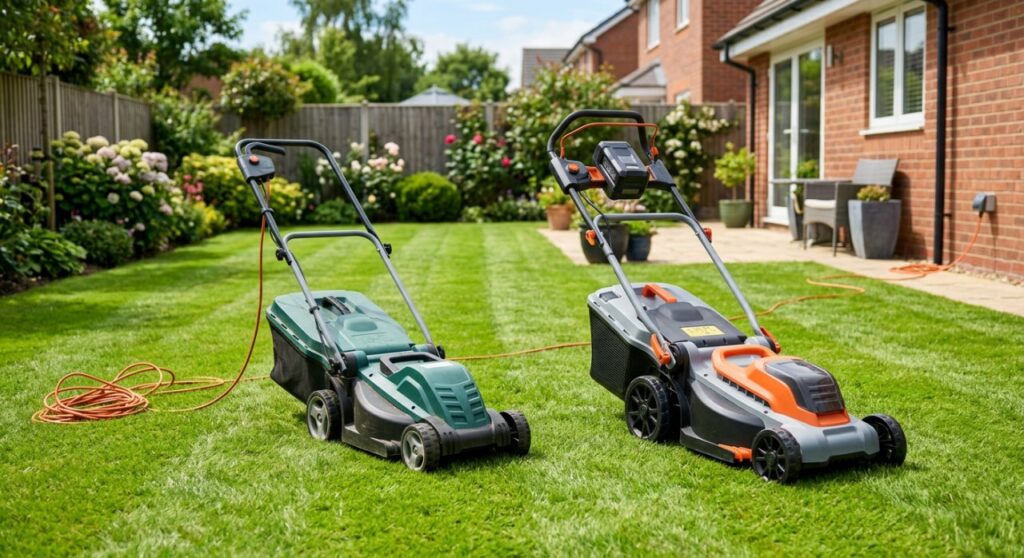
Not all electric lawn mowers need to be plugged in. Corded electric mowers require a constant power outlet connection, while cordless (battery-powered) models run on rechargeable lithium-ion batteries. Understanding the difference helps you choose the right mower and use it safely and effectively.
🔋 Expert Summary
- Corded electric mowers must stay plugged into a power outlet during use via an extension cord — no battery required.
- Cordless electric mowers use rechargeable lithium-ion battery packs (typically 40V, 56V, or 80V) and do not need to be plugged in while mowing.
- Battery-powered mowers must be charged before use — most take 30 minutes to 2 hours to fully charge depending on voltage.
- Corded mowers offer unlimited runtime but limit mobility; cordless mowers offer freedom of movement but are limited by battery capacity.
- Choosing between corded and cordless depends on yard size, terrain, and convenience preferences — neither is universally better.
Step 1: Understand the Two Types of Electric Lawn Mowers
The first step is knowing which type of electric mower you have or are considering — corded or cordless. This single distinction determines everything about how you power and operate the machine.
Corded Electric Mowers — Always Plugged In
Corded electric mowers must be plugged into a standard electrical outlet at all times during operation. They draw continuous power through a cord, which means zero battery charging wait time.
Key characteristics of corded mowers:
- Require a 120V standard household outlet
- Need a heavy-duty outdoor extension cord (12-gauge or 14-gauge, rated for outdoor use)
- Provide unlimited runtime — as long as they’re plugged in, they run
- Typically lighter and less expensive than cordless models
- Best suited for small to medium yards (up to ½ acre)
⚠️ Warning: Never use a standard indoor extension cord with a corded mower. Always use a UL-listed outdoor extension cord of the correct gauge to prevent overheating and electrical hazards.
Cordless (Battery-Powered) Electric Mowers — No Plug During Use
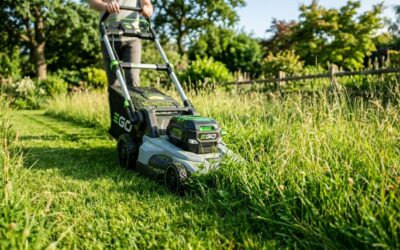
Cordless electric mowers do not need to be plugged in while mowing. They run on removable, rechargeable battery packs that you charge before heading outside.
Key characteristics of cordless mowers:
- Powered by lithium-ion battery packs (most common voltages: 40V, 56V, 60V, or 80V)
- Must be charged before use using the included charger
- Typical runtime ranges from 30 to 90 minutes per charge
- Offer full mobility — no cord to manage or trip over
- Best suited for small to large yards depending on battery voltage and capacity
Step 2: Identify Which Type of Mower You Own
Check the back or underside of your mower, or review the product manual, to confirm whether it is corded or cordless. This takes less than 60 seconds.
How to Identify a Corded Mower
Look for these signs:
- A permanent power cord attached directly to the mower body
- A cord management hook near the handle
- No battery slot or compartment on the deck or handle
- Product label reads terms like “corded,” “electric,” or lists wattage (e.g., 12 amps)
How to Identify a Cordless Mower
Look for these signs:
- A removable battery pack clipped to the handle or deck
- A charging port or separate charger included in the box
- Product label lists voltage (e.g., 40V, 56V, 80V) and amp-hour (Ah) rating
- No permanent cord attached to the mower
Step 3: Learn How to Power Each Type Correctly
Powering your electric mower correctly ensures safety, performance, and long equipment life. Mistakes here are the most common cause of mower damage and safety incidents.
How to Power a Corded Electric Mower
Follow these steps every time:
- Check the outlet — Confirm the outdoor outlet is GFCI-protected (ground fault circuit interrupter). This is required for outdoor electrical safety.
- Select the right extension cord — Use a 12-gauge cord for runs up to 100 feet or a 14-gauge cord for up to 50 feet. Never daisy-chain two cords together.
- Connect cord to mower first — Plug the extension cord into the mower’s inlet before plugging into the wall outlet.
- Loop the cord through the cord hook — This prevents accidental disconnection and keeps the cord from being run over.
- Plug into the wall outlet — The mower is now ready to start.
- Mow in a pattern that keeps cord behind you — Always start near the outlet and work away from it to avoid running over the cord.
How to Power a Cordless Electric Mower
Follow these steps before and during use:
- Check battery charge level — Most batteries have an LED indicator. A full charge shows all indicator lights solid green.
- Charge the battery fully before first use — Insert the battery into the charger and plug it into a standard outlet. Most 40V batteries take 60–90 minutes; 80V batteries may take up to 2 hours.
- Insert the battery into the mower — Slide or click the battery pack firmly into the mower’s battery slot until you hear or feel it lock.
- Confirm the battery is seated — Gently tug the battery to ensure it’s secure before starting.
- Start mowing — Press the safety key (if equipped) and squeeze the handle bail to engage the motor.
- Monitor battery level during use — Stop and recharge when the indicator drops to one light to avoid deep discharge, which shortens battery life.
Step 4: Choose the Right Power Option for Your Yard
Matching your mower type to your yard size and layout is the most important buying decision you’ll make. Using the wrong type leads to frustration, poor cut quality, or the mower running out of power mid-job.
Comparison Table: Corded vs. Cordless Electric Mowers
| Feature | Corded Electric | Cordless (Battery) |
|---|---|---|
| Needs to be plugged in during use | ✅ Yes — always | ❌ No |
| Needs charging before use | ❌ No | ✅ Yes |
| Runtime | Unlimited | 30–90 min per charge |
| Mobility | Limited by cord length | Full freedom of movement |
| Best yard size | Up to ½ acre | ¼ acre to 1+ acre |
| Typical price range | $100–$300 | $200–$700+ |
| Weight | Lighter (20–30 lbs) | Heavier (30–60 lbs) |
| Maintenance | Very low | Low (battery care needed) |
| Upfront cost | Lower | Higher |
| Long-term cost | Very low | Moderate (battery replacement) |
| Best for | Small, simple yards | Medium to large, complex yards |
Step 5: Maintain Your Electric Mower’s Power System
Proper maintenance of your power system — whether cord or battery — directly extends the life of your mower and prevents unexpected failures.
Maintaining a Corded Mower’s Power Setup
- Inspect the cord before each use — Look for cuts, fraying, or exposed wires. Replace damaged cords immediately.
- Store the extension cord properly — Coil loosely and hang indoors. Never leave it kinked or compressed.
- Keep the mower’s power inlet dry — Cover the inlet when not in use to prevent moisture damage.
- Check the GFCI outlet monthly — Press the “Test” and “Reset” buttons to confirm it’s functioning.
Maintaining a Cordless Mower’s Battery
- Store batteries at room temperature — Extreme heat or cold degrades lithium-ion cells. Ideal storage temperature is 50°F–77°F (10°C–25°C).
- Do not store a fully depleted battery — Charge to approximately 50–80% before long-term storage (winter months).
- Avoid leaving the battery on the charger indefinitely — Modern chargers have overcharge protection, but it’s good practice to remove the battery once fully charged.
- Clean battery contacts — Wipe the contact points with a dry cloth occasionally to ensure a strong connection.
- Replace batteries when runtime drops significantly — Most lithium-ion mower batteries last 3–5 years or 500 charge cycles before needing replacement.
Pro Tips From Lawn Care Experts
These insights separate beginner mower users from experienced lawn care operators:
- 🔌 For corded mowers: Buy an extension cord 10–20 feet longer than you think you need. Running short of cord mid-row is a common frustration.
- 🔋 For cordless mowers: Purchase a second battery pack if your yard exceeds ¼ acre. Swapping batteries takes 10 seconds versus waiting 60+ minutes for a recharge.
- ⚡ Higher voltage = more power, not necessarily more runtime. An 80V 2.0Ah battery may have less runtime than a 40V 5.0Ah battery — always check amp-hours (Ah).
- 🌧️ Never mow in rain with a corded mower. Water and exposed electrical connections are a serious electrocution hazard. Cordless mowers are generally safer in light damp conditions, but always check the manufacturer’s guidelines.
- 🌡️ Cold weather reduces battery performance. In temperatures below 40°F (4°C), expect 20–30% less runtime from your cordless mower.
- 🔧 Use the same brand’s batteries across tools. Brands like EGO, Greenworks, Ryobi, and Kobalt have cross-compatible battery systems — one battery can power your mower, trimmer, and blower.
Common Mistakes to Avoid
Avoiding these errors protects your equipment, your safety, and your lawn:
| Mistake | Why It’s a Problem | Fix |
|---|---|---|
| Using an indoor extension cord | Overheating, fire risk, voided warranty | Use a UL-listed 12-gauge outdoor cord |
| Letting battery fully drain repeatedly | Reduces battery lifespan significantly | Recharge at 20–30% remaining |
| Running corded mower over the cord | Cuts wire, creates electrocution risk | Always mow away from the outlet |
| Storing battery in a hot garage | Heat degrades lithium-ion cells fast | Store indoors at room temperature |
| Ignoring GFCI outlet requirement | Electrocution risk in wet conditions | Always use a GFCI-protected outlet outdoors |
| Buying wrong voltage battery | Mower won’t start or performs poorly | Match battery voltage exactly to mower specs |
| Skipping battery break-in | Reduces long-term capacity | Complete 2–3 full charge cycles before regular use |
Frequently Asked Questions
Do cordless electric mowers need to be plugged in to charge?
Yes — the battery must be removed from the mower and plugged into a charger connected to a wall outlet. The mower itself never needs to be plugged in. Charging typically takes 30 minutes to 2 hours depending on battery voltage and capacity.
Can I use an electric lawn mower without an extension cord?
Corded electric mowers cannot be used without an extension cord unless your outlet is within 5–6 feet of the mowing area. Most manufacturers recommend using the shortest cord possible to maximize power delivery. Cordless mowers require no cord at all during operation.
How long does a cordless lawn mower battery last on one charge?
Most cordless electric mowers run for 30 to 90 minutes per charge, depending on battery voltage, amp-hour (Ah) rating, grass thickness, and terrain. A 40V 4.0Ah battery typically covers ¼ to ½ acre per charge under normal conditions.
Is it safe to leave an electric mower plugged in?
For corded mowers, always unplug from the wall outlet when not in use, when clearing clogs, or when performing maintenance. For cordless mowers, remove the battery from the charger once fully charged to maintain battery health over time.
What happens if a cordless mower runs out of battery mid-mow?
The mower will simply stop running — there is no damage to the motor or battery from running out of charge. Insert a spare battery to continue immediately, or wait for the battery to recharge. Most modern chargers provide a rapid charge mode that delivers usable power in 20–30 minutes.
Conclusion: Corded or Cordless — Know Your Power Source
The bottom line: whether your electric mower needs to be plugged in depends entirely on the type you own. Corded models stay connected to a wall outlet throughout every mowing session. Cordless models charge up beforehand and give you complete freedom of movement while cutting.
Here’s a quick recap of what you’ve learned:
- ✅ Corded mowers = always plugged in during use, unlimited runtime, best for small yards
- ✅ Cordless mowers = charged before use, no plug during mowing, best for medium to large yards
- ✅ Battery care matters — store properly, avoid deep discharge, and replace every 3–5 years
- ✅ Safety first — always use GFCI outlets, outdoor-rated extension cords, and never mow in heavy rain
Ready to choose or upgrade your electric mower? Compare models from trusted brands like EGO, Greenworks, Ryobi, Honda, and Toro at your local hardware store or online retailer. Match the mower’s power type to your yard size, and you’ll have a reliable, low-maintenance lawn solution for years to come.